Doi Suthep is the forested mountain northwest of Chiang Mai best known for Wat Phra That Doi Suthep, a sacred temple above the city. At the summit, the gold chedi, shrines and detailed tilework reward a slow visit, while the viewpoint looks across Chiang Mai. Reach the temple by climbing the naga-flanked staircase of more than 300 steps or taking the funicular. The mountain’s founding legend tells of a white elephant carrying a Buddha relic to the site. Wat Pha Lat, a forest temple with waterfalls and moss-covered remains, is another stop on the mountain.
The mountain and its temple
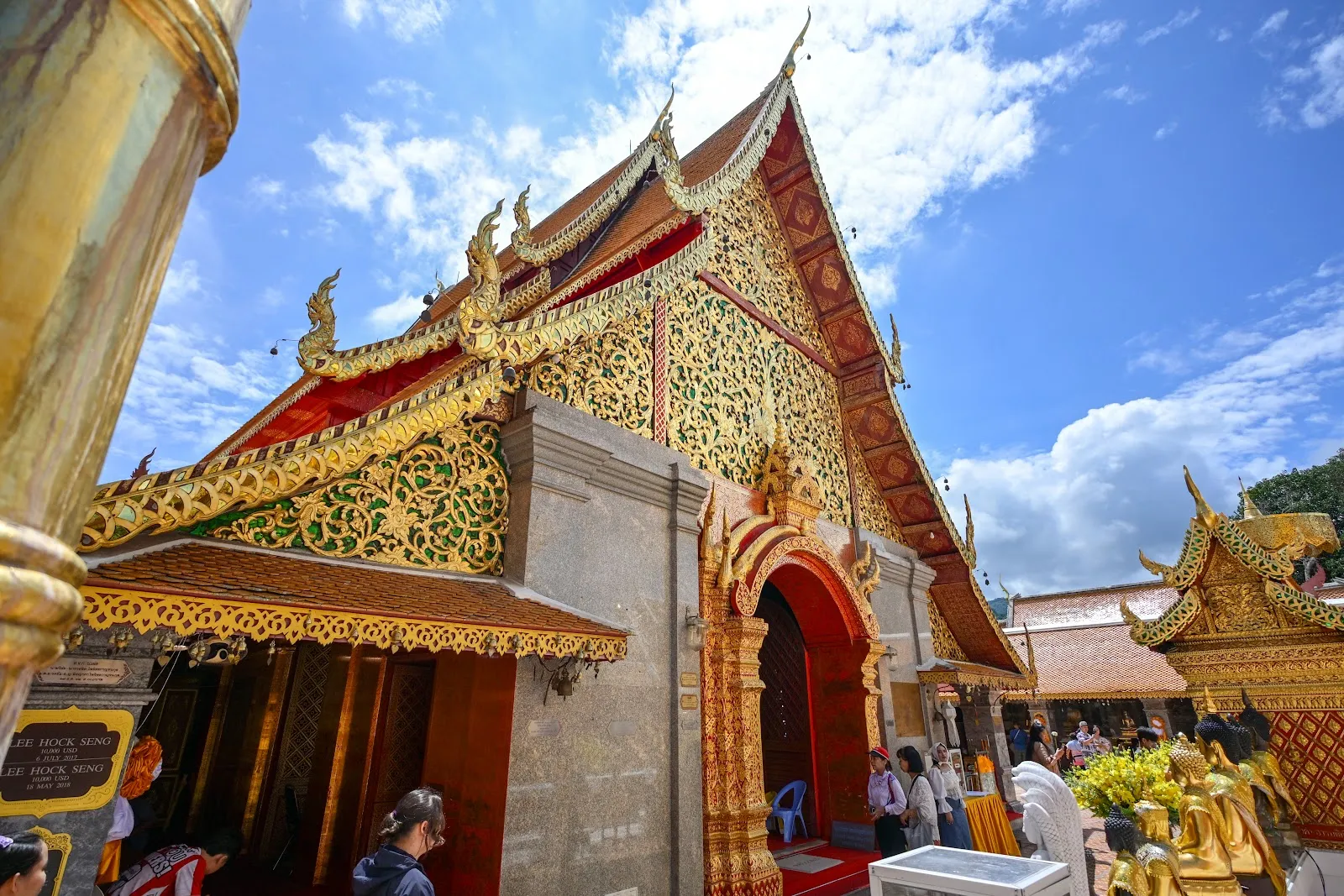
Doi Suthep is the mountain northwest of Chiang Mai; Wat Phra That Doi Suthep, the temple commonly called Doi Suthep, stands high above the city. The mountain forms part of Doi Suthep-Pui National Park, and its forested slopes make the trip feel distinct from a visit to the temples in town.
The temple is a sacred place for many Thai people and a pilgrimage destination. Its founding story centers on a Buddha relic and a white elephant. In the legend, the elephant carried the relic up the mountain, trumpeted three times and fell at the summit. The site was chosen for the temple, which became a landmark closely tied to Chiang Mai.
The golden chedi and naga staircase
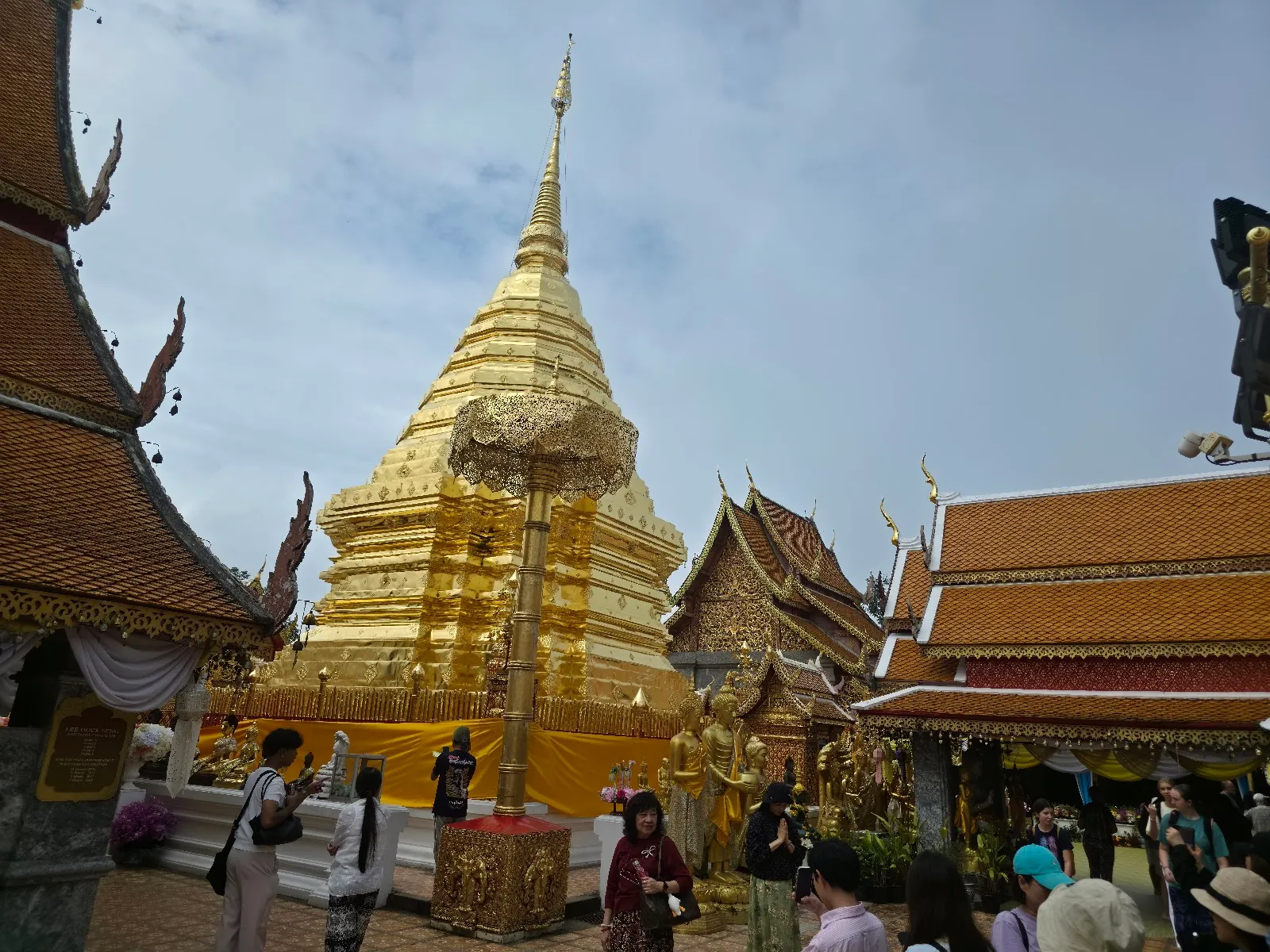
The golden chedi is the focal point of the temple grounds. Its form is linked to Mount Meru, a sacred cosmic mountain in Buddhist belief. Shrines, statues and decorative tilework surround it; take time to look closely at the details rather than heading straight to the viewpoint.
A staircase guarded by naga serpents leads up to the temple. It has more than 300 steps, with accounts giving slightly different totals. The naga railings make the approach part of the visit, but the climb is demanding. A funicular provides an alternative for visitors who would rather avoid the stairs.
Views over Chiang Mai
From the temple, look out across Chiang Mai and the valley below. On a clear day, the city is visible from the elevated viewpoint. The chedi and temple buildings look different as the light changes: daylight brings out their gold, red and green colors, while illumination after dark makes the chedi stand out against the night sky.
Early morning can bring a quieter visit, and the mountain is also a popular place to watch the sunset. If the view matters most, allow time to pause at the viewpoint rather than treating the temple as a quick photo stop.
Wat Pha Lat and the mountain route
Wat Pha Lat is a forest temple on the way up Doi Suthep. Its moss-covered remains and waterfalls offer a more shaded, quieter contrast to the main temple. Some visitors reach it on the Monk’s Trail, which continues uphill toward Doi Suthep; the route includes a steep section, so allow time and be prepared for a hike.
Songthaews and Grab are options for reaching Doi Suthep from central Chiang Mai. The mountain journey is also possible by hired transport. If you want to include both temples, plan for extra time on the mountain rather than expecting to see everything in a brief stop.
FAQ
How many steps are there at Doi Suthep?
The naga-flanked staircase has more than 300 steps. The exact total differs across accounts.
Can you reach the temple without climbing the stairs?
Yes. A funicular is available as an alternative to the staircase.
How long should you allow for a visit?
About an hour is enough to explore the temple grounds, though you will need more time if you add Wat Pha Lat or a hike.
What is the legend behind Wat Phra That Doi Suthep?
The founding legend says a white elephant carrying a Buddha relic climbed the mountain, trumpeted three times and fell at the summit, where the temple was built.