The Temple of the Emerald Buddha, or Wat Phra Kaew, is inside Bangkok’s Grand Palace complex. Its sacred green Buddha image sits in the main chapel, surrounded by richly decorated buildings, colourful glass mosaics and detailed murals. Take time to look closely at the architecture and wall paintings, including scenes from the Ramakien. This is an active place of reverence as well as a major sight, so dress modestly and follow the rules inside the chapel. Arriving early can mean cooler weather and fewer people.
A royal temple in the Grand Palace
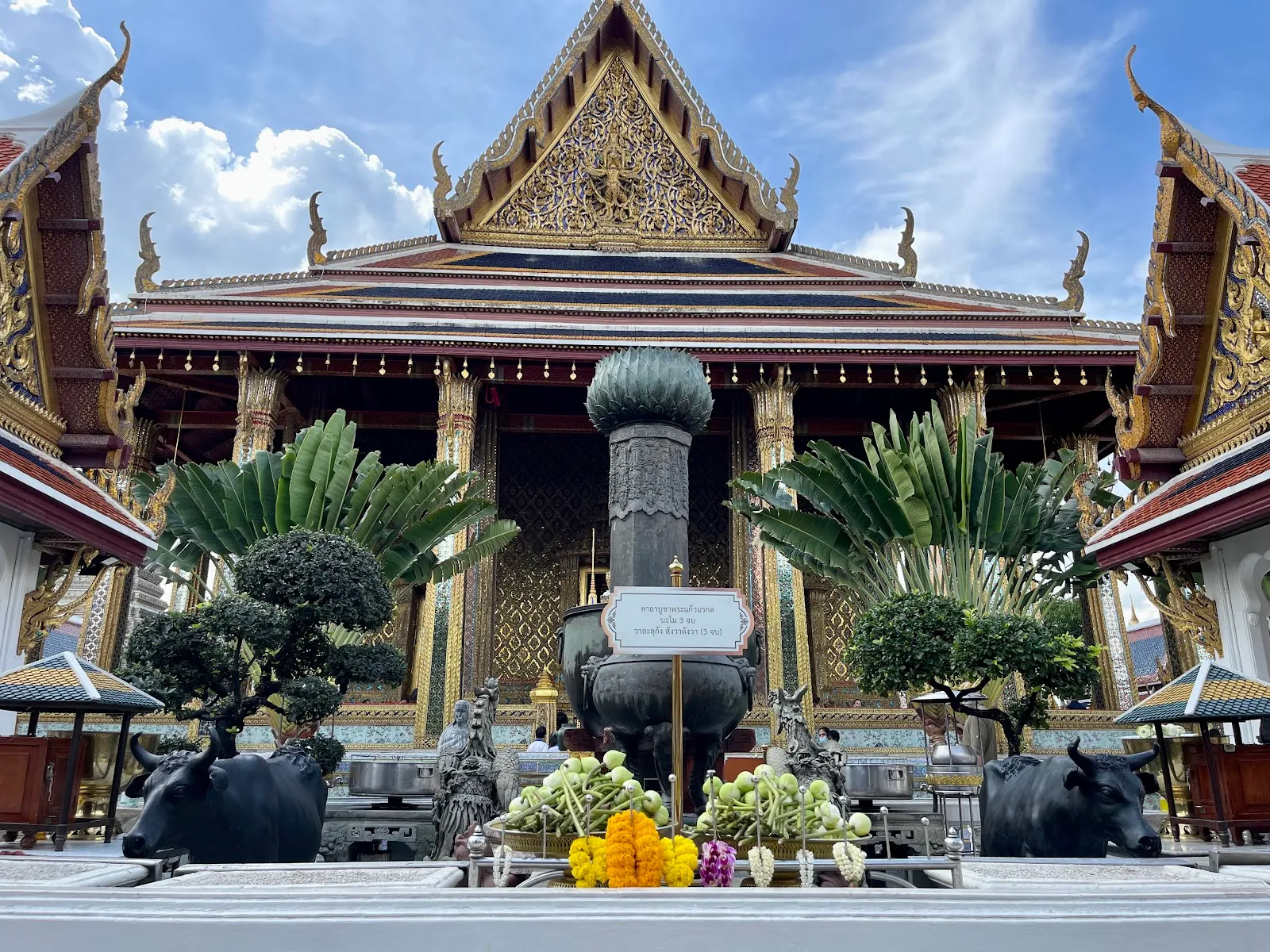
Wat Phra Kaew, the Temple of the Emerald Buddha, stands within the Grand Palace grounds in Bangkok’s historic centre. Its full name is Wat Phra Si Rattana Satsadaram. The temple was founded during King Rama I’s reign, when Bangkok became the capital in 1782, and was built to house the revered Buddha image. The temple is a national religious site associated with both the monarchy and the country.
The Grand Palace is a complex of buildings, halls, courtyards, temples, lawns and gardens. It was the official residence of Thailand’s monarchs, though the royal residence later moved elsewhere. Wat Phra Kaew is the sacred temple within those grounds, not a separate site from the palace complex.
The Emerald Buddha and the main chapel
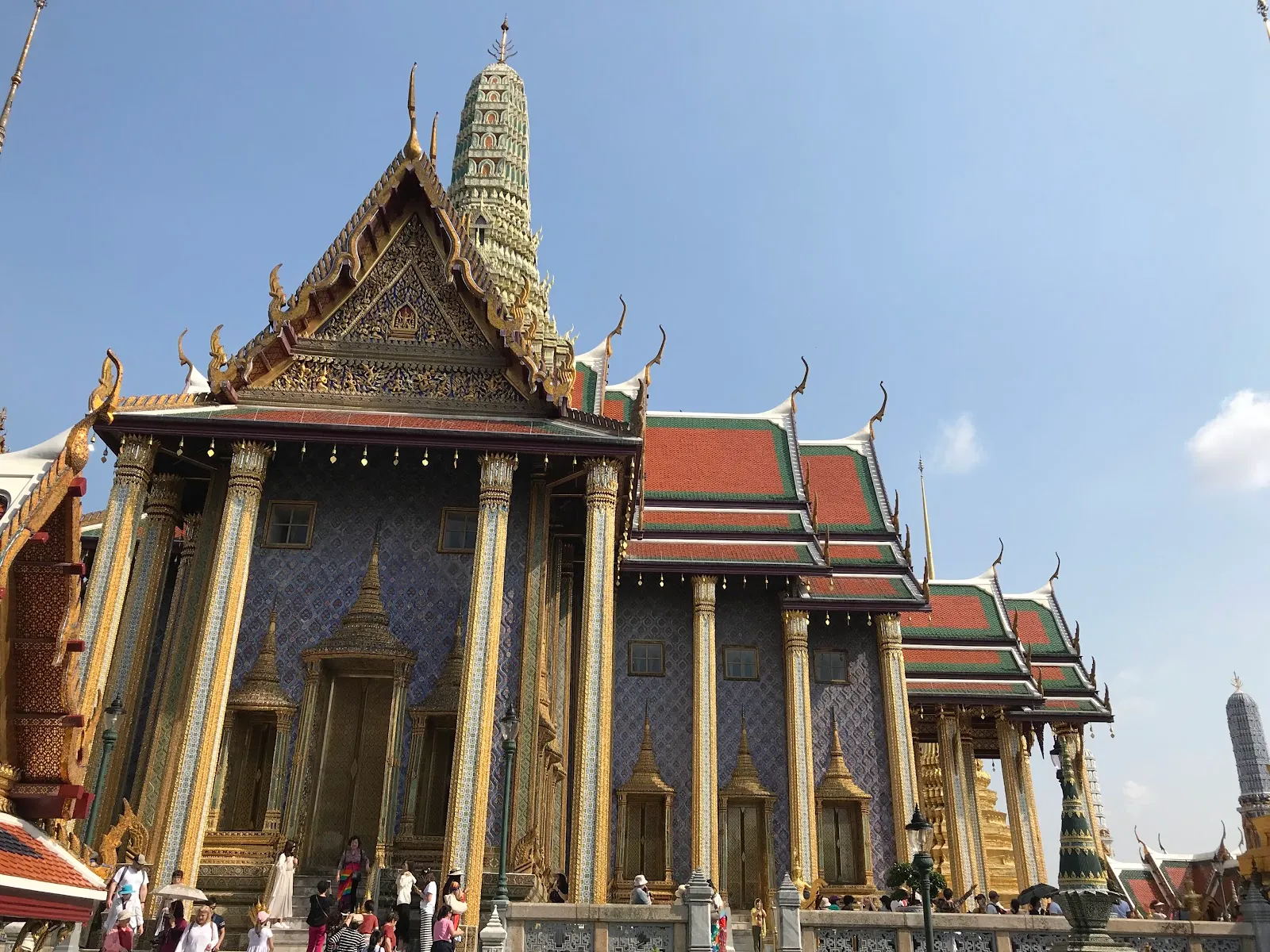
The temple’s central image is the Emerald Buddha, also known as Phra Kaeo Morakot. Despite its name, the small green statue is made from a single block of jade or jasper, not emerald. It is among Thailand’s most revered Buddha images and is kept in the main chapel, known as the Phra Ubosot.
The image’s origins are not clear. One account says it was found inside a larger stucco Buddha in the 15th century. The statue was later brought to Bangkok from Vientiane. Its religious importance is central to the temple, so visitors are expected to behave quietly and respectfully in the chapel. The king is the only person permitted to handle the image.
Murals, mosaics and temple details
Give yourself time to look beyond the central shrine. The buildings are decorated with golden details and colourful glass mosaics, and the temple’s walls carry intricate murals. These include scenes from the Ramakien, the Thai epic based on the Ramayana, as well as depictions of the Buddha’s life.
The complex brings together Thai architectural forms, statues and richly worked surfaces. Looking carefully at the walls and decorative details gives the visit a different pace from simply crossing the grounds to see the Buddha. The murals also reward a closer look: their narrative scenes offer more to notice than the colour and scale of the buildings alone.
Dress and conduct inside the temple
The clothing rules are strict. Wear a top that covers your shoulders and trousers or a skirt that covers your knees; avoid see-through clothing. If you enter the main chapel, remove your shoes before going inside. Photography is not allowed there, so put your camera away while you are in the Buddha’s presence.
Arriving early is a practical choice, especially in Bangkok’s midday heat. The temple draws large crowds, and an early start gives you more time to take in the grounds. Keep your attention on the buildings and murals as you move through the complex, and follow the instructions posted for sacred spaces.
FAQ
Where is the Temple of the Emerald Buddha?
It is inside the Grand Palace complex in Bangkok’s historic centre.
What should I wear to Wat Phra Kaew?
Wear clothing that covers your shoulders and knees. The dress code is strictly enforced.
Can you take photos of the Emerald Buddha?
Photography is not allowed inside the main chapel where the Emerald Buddha is housed.
Do you have to remove your shoes?
Yes. Remove your shoes before entering the main chapel.