Yinshan Temple, also called Denggong Temple, is a Hakka place of worship in Tamsui, New Taipei City. Built by immigrants from Tingzhou in the Qing dynasty, it is dedicated to Dingguang Ancient Buddha and preserves its traditional form. Look for the detailed clay figures beside the main entrance, then take in the half-moon pond and garden. Its history connects the temple to the Hakka communities that settled around Tamsui, making it a worthwhile cultural stop alongside the district’s other sights.
A temple built by Hakka settlers
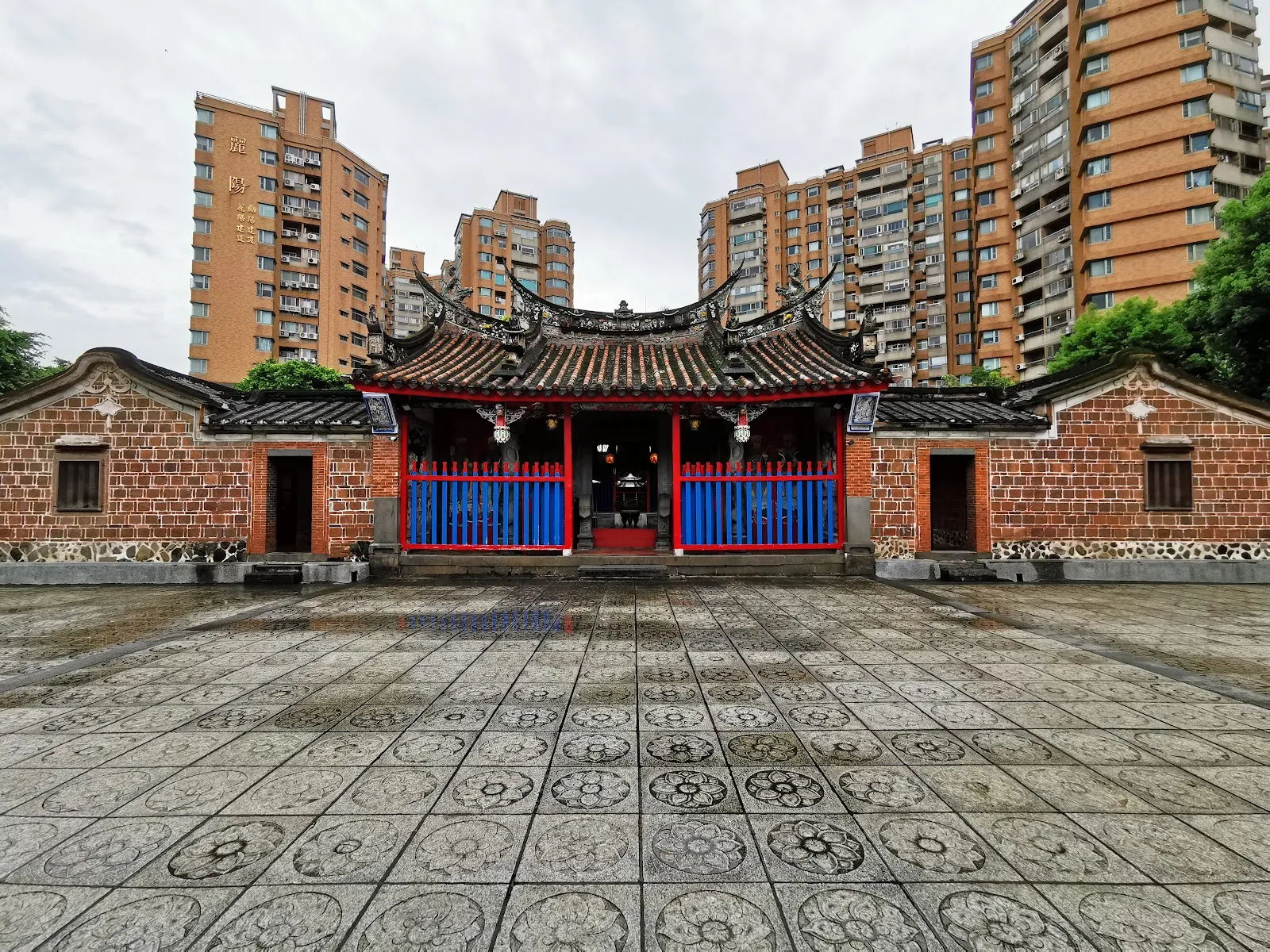
Yinshan Temple is also known as Denggong Temple. Hakka immigrants from Tingzhou established it in Tamsui as a place to worship Dingguang Ancient Buddha, a guardian deity associated with their home region. The temple also gave arriving Hakka people a place to stay temporarily, linking religious life with the practical needs of settlement.
The project began in 1822 and was completed in 1824. Funding came from immigrants connected to eight counties under Tingzhou Prefecture. Local figures Luo Kebin and Luo Kerong donated the land at Denggong Village, now near the intersection of Xuefu Road and Denggong Road. The temple became a shared institution for people whose communities were spread across the area.
Tingzhou Hakka were among the early groups to develop parts of the Taipei Basin. Families from Yongding and other counties settled in and around Tamsui and moved into nearby areas. Yinshan Temple’s history preserves one part of that migration and community story in a place still used for worship.
The layout and its water features
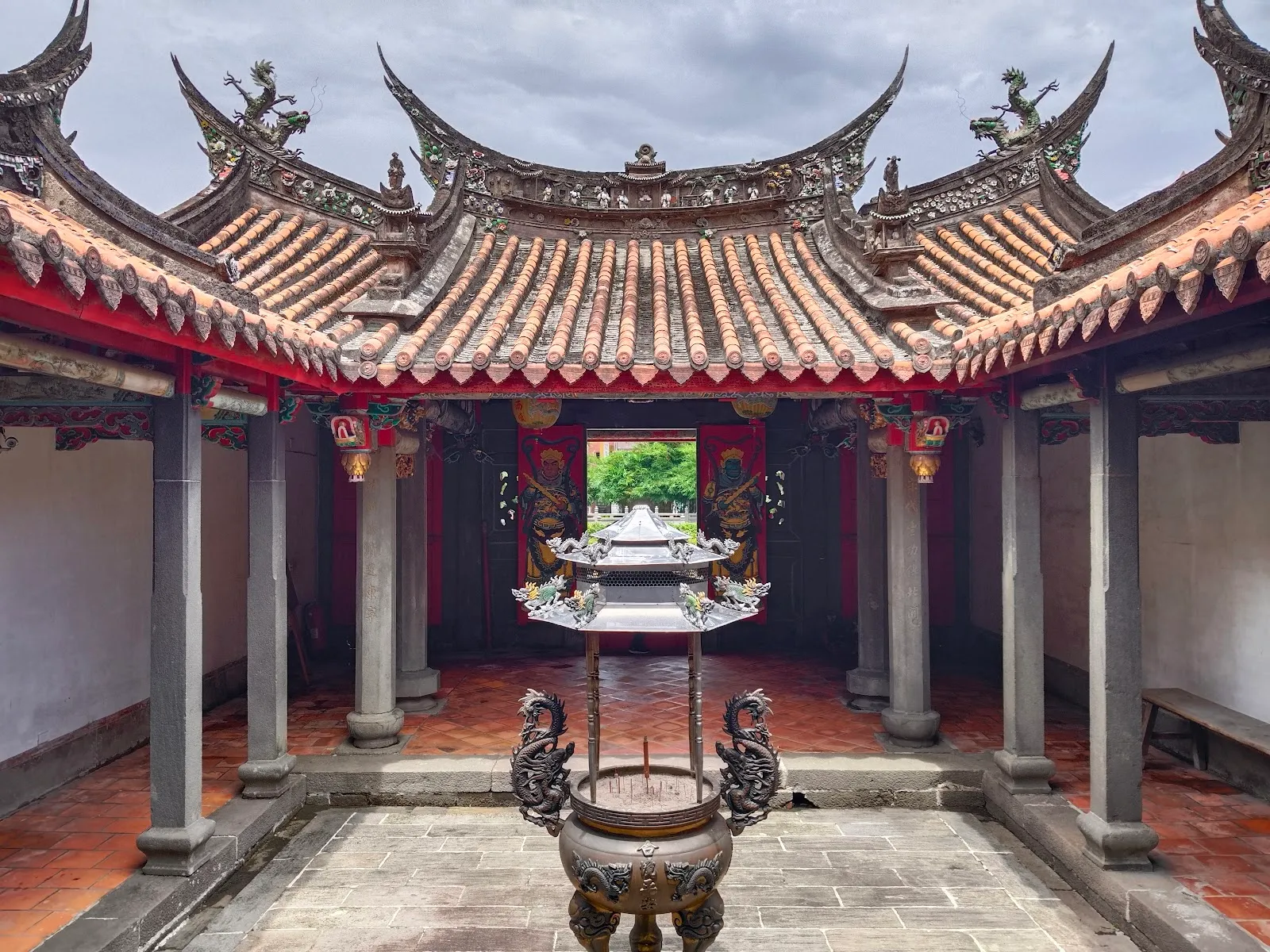
The temple follows a two-hall, two-corridor, two-side-room layout. It stands on a slope with its back toward Datun Mountain and its front facing west. The arrangement is symmetrical, and the building steps with the terrain. These features are associated with traditional architecture from the Yongding area of western Fujian.
A half-moon-shaped pond sits in front of the temple. Two wells behind it are described as the eyes of a toad, with the pond representing its mouth. The wells are said to differ in the clarity of their water. Together, the pond, wells, and mountain setting form a landscape arrangement tied to the site’s traditional geomantic interpretation.
Take time in the forecourt and garden to see how the water features sit in relation to the building. The clay sculptures on both sides of the main gate are another detail to examine up close; they depict stories connected with Dingguang Ancient Buddha.
Details from the temple grounds
A pavilion-like structure to the temple’s left is the tomb of the Luo brothers, who donated the land for the temple. In the front courtyard, look for a stone stele dated to 1893 that prohibits gambling on the grounds. Its presence reflects the temple’s role as a place where people gathered and stayed, as well as a site for religious observance.
Yinshan Temple was designated a national historic site in 1985. It is counted among Tamsui’s four major temples, alongside Qingshui Temple, Longshan Temple, and Fuyou Temple. A visit here gives you a chance to see both a functioning place of worship and a historic building connected to the Hakka communities of Tamsui. Keep your conduct considerate while exploring the halls and grounds.
FAQ
When was Yinshan Temple built?
Construction began in 1822 and the temple was completed in 1824.
Who is worshipped at Yinshan Temple?
The temple is dedicated to Dingguang Ancient Buddha, a guardian deity associated with the Tingzhou Hakka community.
What should I look for at Yinshan Temple?
See the clay sculptures beside the main gate, the half-moon pond, the two wells behind the temple, the Luo brothers’ tomb, and the courtyard stele dated 1893.
Is Yinshan Temple a historic site?
Yes. It was designated a national historic site in 1985.