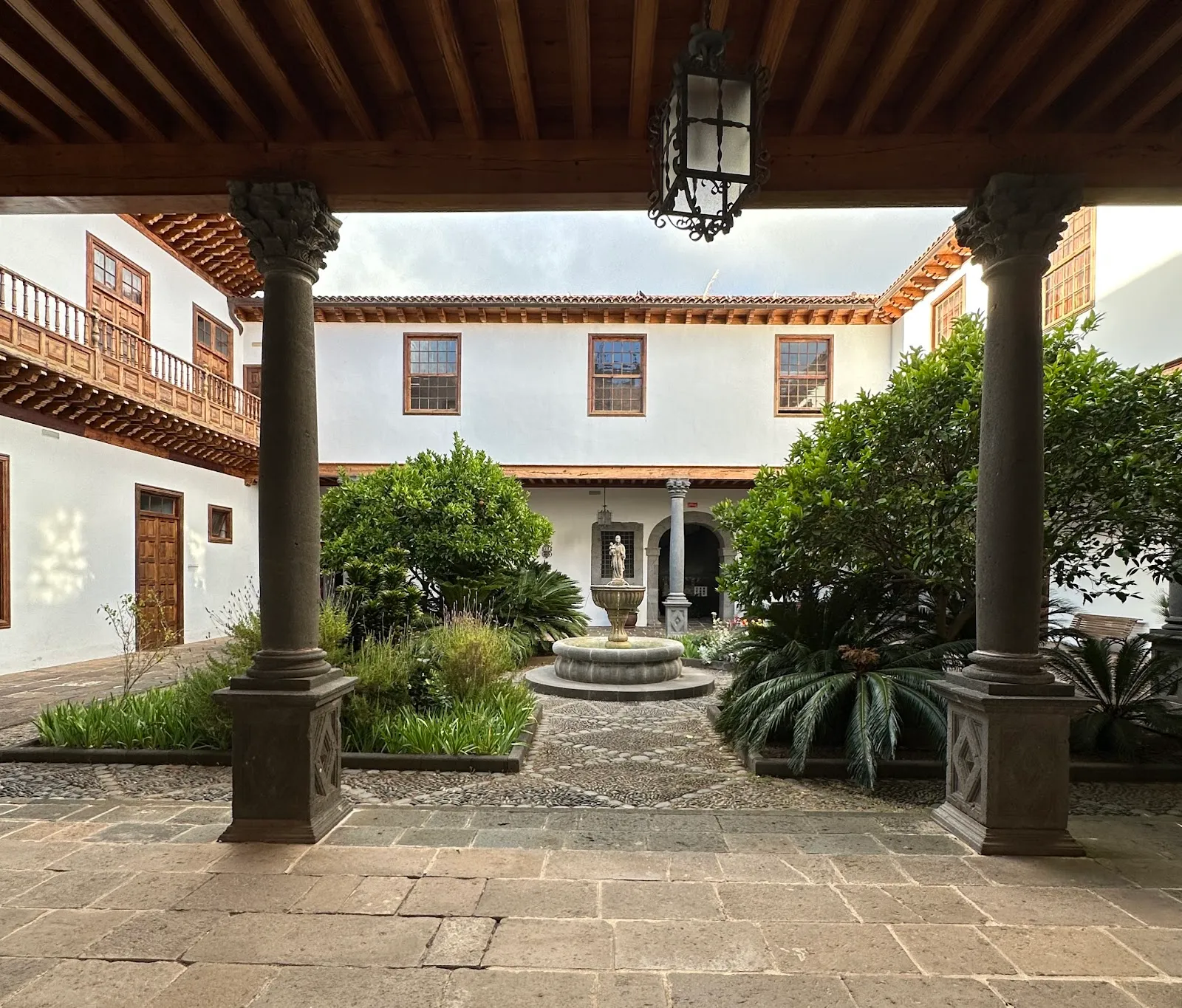
Casa Salazar, or Palacio de Salazar, is a 17th-century palace on Calle San Agustín in San Cristóbal de La Laguna. Its dark volcanic-stone façade is carved with ornamental details, Corinthian columns and the Salazar family crest in marble. If the interior is accessible during your visit, look for the restored courtyard, with traditional Canarian woodwork, basalt columns and greenery. The building was badly damaged by a fire in 2006 and later restored. You can admire the exterior for free; guided tours organised by the Tourist Office offer more historical context.
A palace on Calle San Agustín
Casa Salazar stands on Calle San Agustín, among the historic buildings of San Cristóbal de La Laguna. The palace was commissioned by the Counts of the Valle de Salazar in the 17th century. Construction of its façade was completed in 1681 by local stone masons, working to a design by Juan González de Castro Illada.
The building later became the seat of the Diocese of Nivariense. It is also known as Palacio de Salazar, a name that reflects its connection to the Salazar family and its later role as an episcopal palace.
Read the stone façade
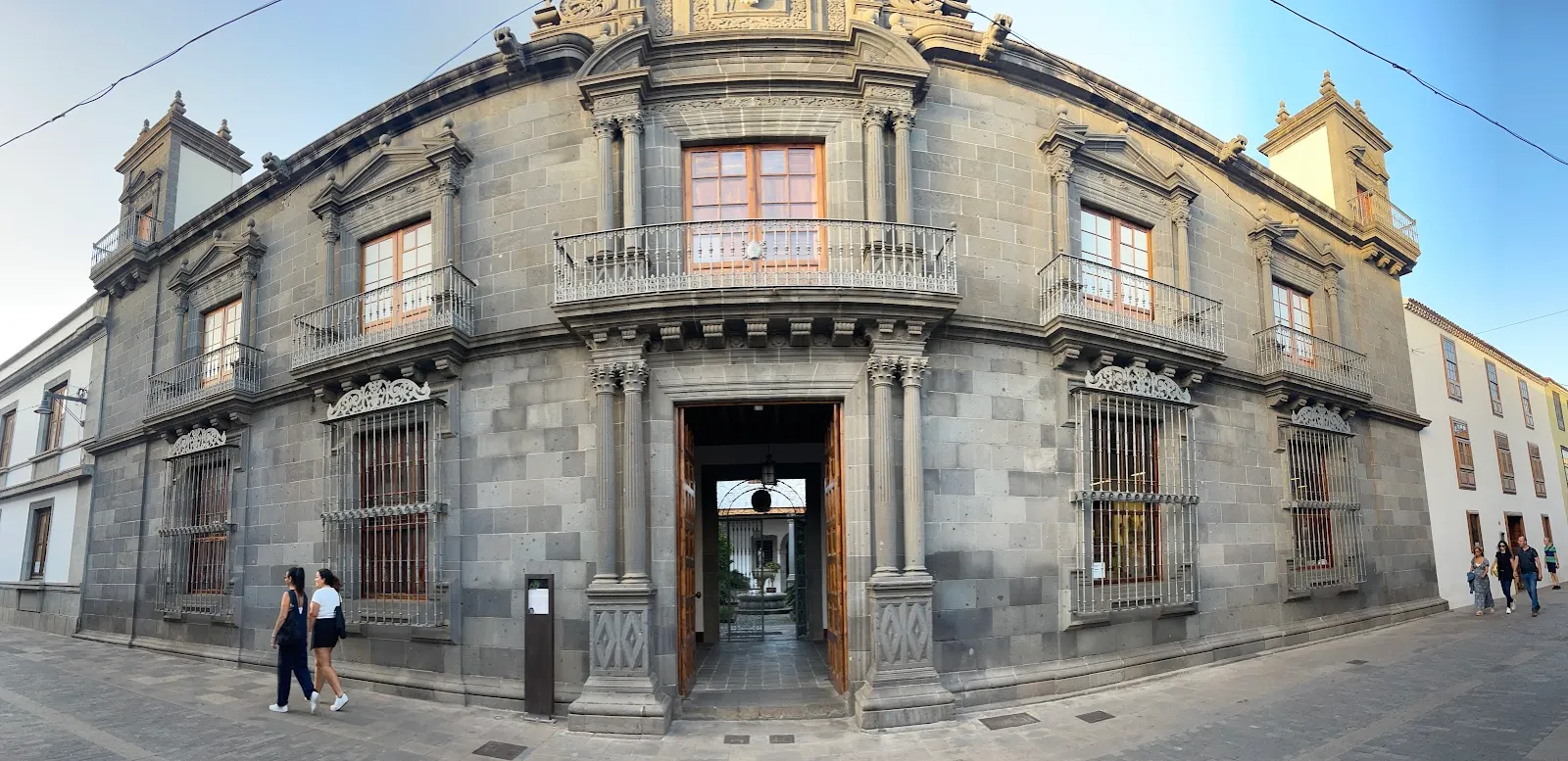
The dark volcanic stone gives the front of the palace a strong contrast with its finely worked ornament. Look for Corinthian columns, carved details and the Salazar family crest, made from Carrara marble. Animal-shaped gargoyles add another layer to the façade.
The building is associated with Canarian Baroque architecture, alongside Mannerist and Neoclassical details. Much of the interior was lost in the 2006 fire, but the façade survived. The palace was subsequently restored and reopened in 2009.
Courtyard and interior access
Behind the façade are restored patios with traditional Canarian woodwork, basalt columns and planted greenery. The courtyard’s galleries are another reason to look inside when access is available. The palace also hosts cultural events and, at times, exhibitions; some events may charge an entrance fee.
Interior access can depend on what is taking place, so check current arrangements before setting out. If the doors are closed, the exterior remains a free stop on Calle San Agustín. For a guided visit, ask the Tourist Office about its tours, which include Casa Salazar and other historic buildings in the street.
FAQ
Is Casa Salazar free to visit?
You can admire the exterior from the street for free. Some events or exhibitions inside may charge an entrance fee.
What can you see inside Casa Salazar?
When access is available, the restored patios have traditional Canarian woodwork, basalt columns and greenery. The building also hosts cultural events and occasional exhibitions.
How can I learn more about the palace’s history?
The Tourist Office organises guided tours that include Casa Salazar. Ask the office about current tour arrangements.