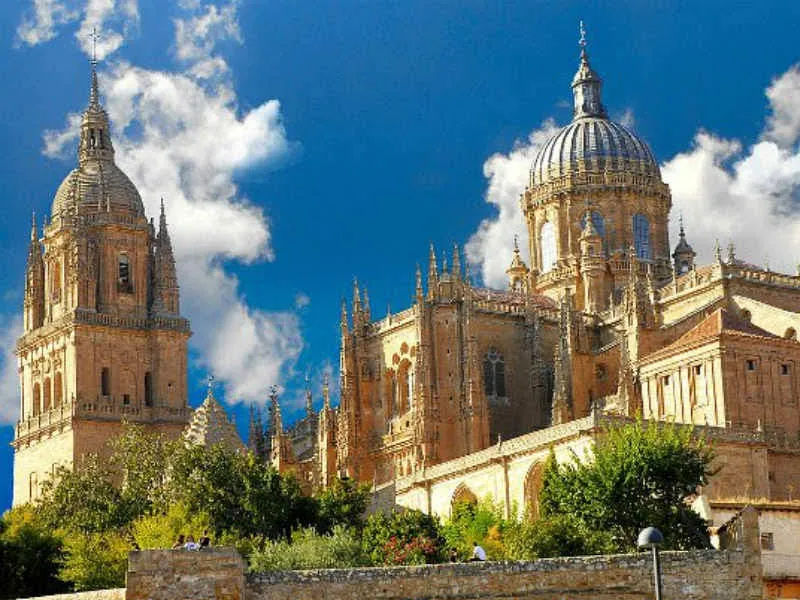
Catedral Vieja, Salamanca’s Old Cathedral, stands beside the larger New Cathedral at Plaza Juan XXIII. Built from the 12th century onward, it brings together Romanesque structure and Gothic details in a more intimate medieval interior. Look for the painted panels of the main altarpiece, the murals in St. Martin’s Chapel and the distinctive dome known as the Tower of the Rooster. The cathedral also holds historic tombs and an old organ, and its story is closely connected with the University of Salamanca.
A cathedral beside its successor
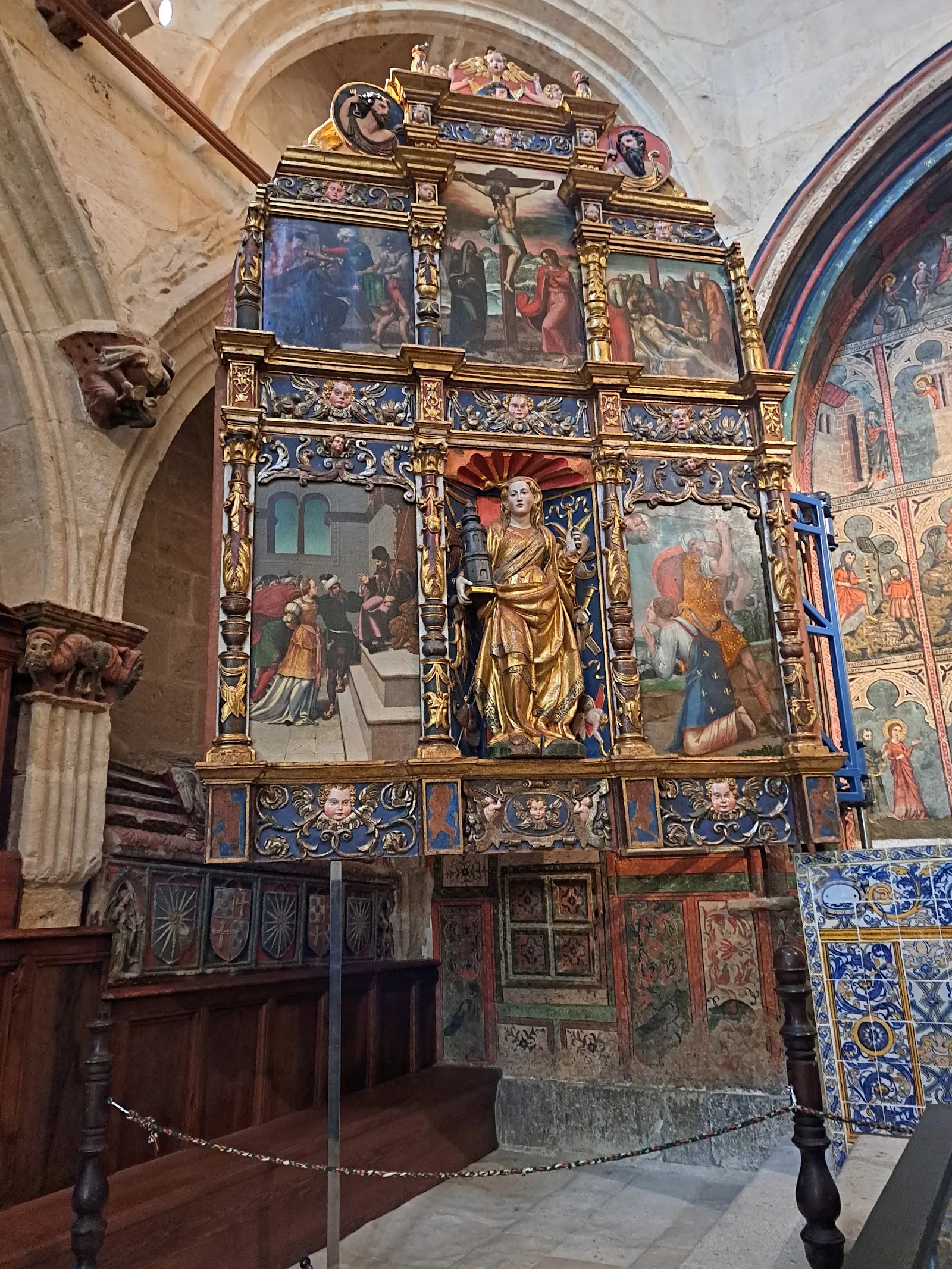
Catedral Vieja is the older of Salamanca’s two cathedrals. Dedicated to Saint Mary of the See, it was founded by Bishop Jerome of Perigord, and construction began in the 12th century. Work continued across the 13th century and into later periods. Its design is mainly Romanesque, with Gothic elements in the vaulted interior.
The New Cathedral was built alongside it as Salamanca’s population grew. Rather than replacing the earlier church, the newer building was attached to it, leaving both cathedrals in place. Their different scale and architectural character make the two buildings useful to explore together: the Old Cathedral is the smaller, more intimate space, while the New Cathedral is larger.
The dome, nave and chapels
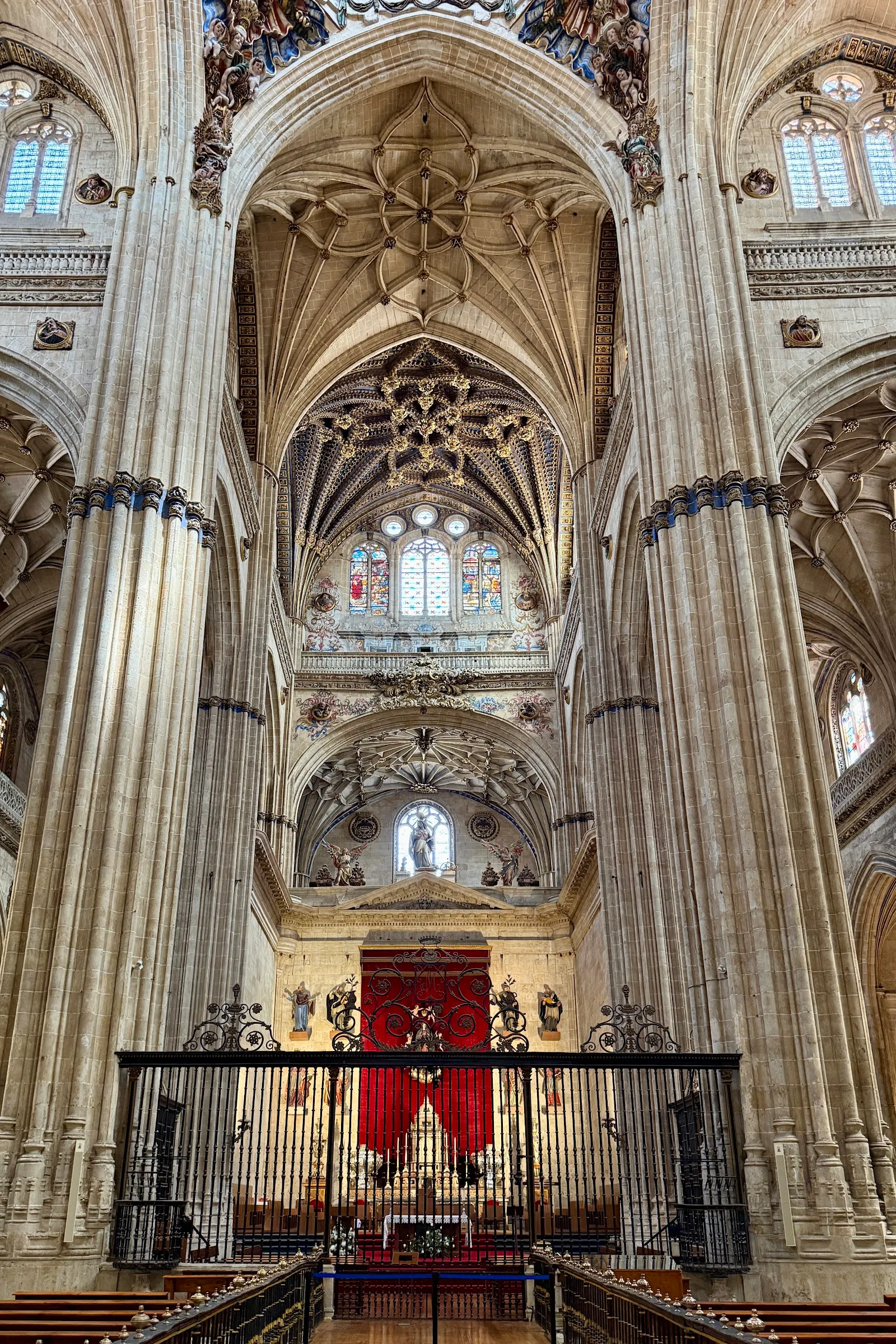
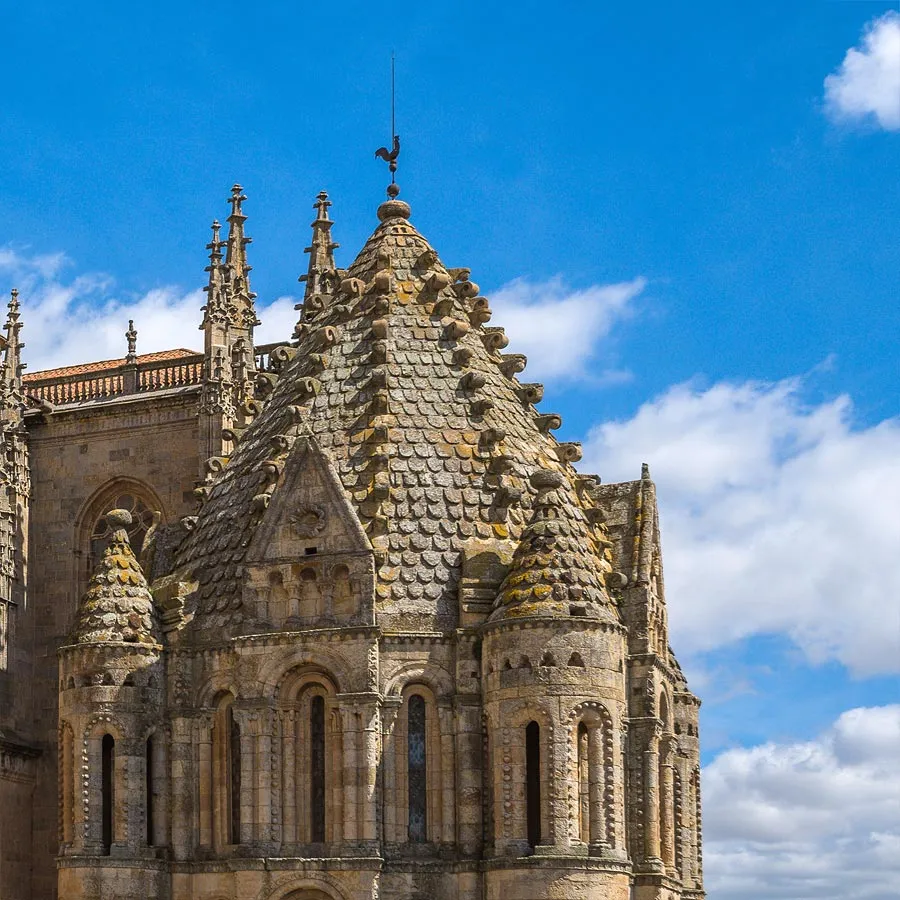
The Old Cathedral has a Latin-cross plan, three naves and a transept. Gothic transitional vaults cover its Romanesque interior. Above the crossing, the dome is known as the Torre del Gallo, or Tower of the Rooster. Its outer surface has a scale-like pattern, and a rooster-shaped weather vane sits at the top.
Look for the murals in St. Martin’s Chapel, also known as the Chapel of the Olive Oil. The cathedral contains medieval tombs and an old organ, as well as artworks held in its smaller exhibition rooms. The cloister and historic chapels form part of the wider cathedral visit, though access to individual areas can vary.
The main altarpiece and university links
The main altarpiece is one of the cathedral’s central works. Its painted panels form a sequence of scenes associated with the Final Judgement, created by Italian painter Dello Delli and his brothers. Take time to look across the panels rather than treating the altarpiece as a single image.
The cathedral’s history is closely tied to the University of Salamanca, founded in 1218. Some of the university’s early lectures took place inside the cathedral. The Chapel of Santa Bárbara later hosted doctoral examinations and faculty appointments until 1843. These connections help explain why the building’s role extended beyond worship into the academic life of the city.
Planning a visit
Catedral Vieja is at Plaza Juan XXIII, beside the New Cathedral. A combined ticket is available for the two cathedrals and other spaces listed with the cathedral visit; check the official ticket information for current access and terms. Small museum rooms display cathedral antiquities and artworks.
The cathedral has a wheelchair-accessible entrance. The Old and New Cathedrals are part of the same complex, so you can include both in one outing. For a calmer look at the interior, choose a quieter time rather than arriving when the site is busy.
FAQ
Where is Catedral Vieja?
It is at Plaza Juan XXIII in Salamanca, beside the New Cathedral.
Can you visit the Old and New Cathedrals on one ticket?
A combined ticket covering both cathedrals and other listed spaces is available. Check the official ticket information for current details.
What should you see inside Catedral Vieja?
Look for the painted main altarpiece, the murals in St. Martin’s Chapel, the dome known as the Tower of the Rooster and the small rooms displaying cathedral works.
Is Catedral Vieja wheelchair accessible?
The entrance is listed as wheelchair accessible.