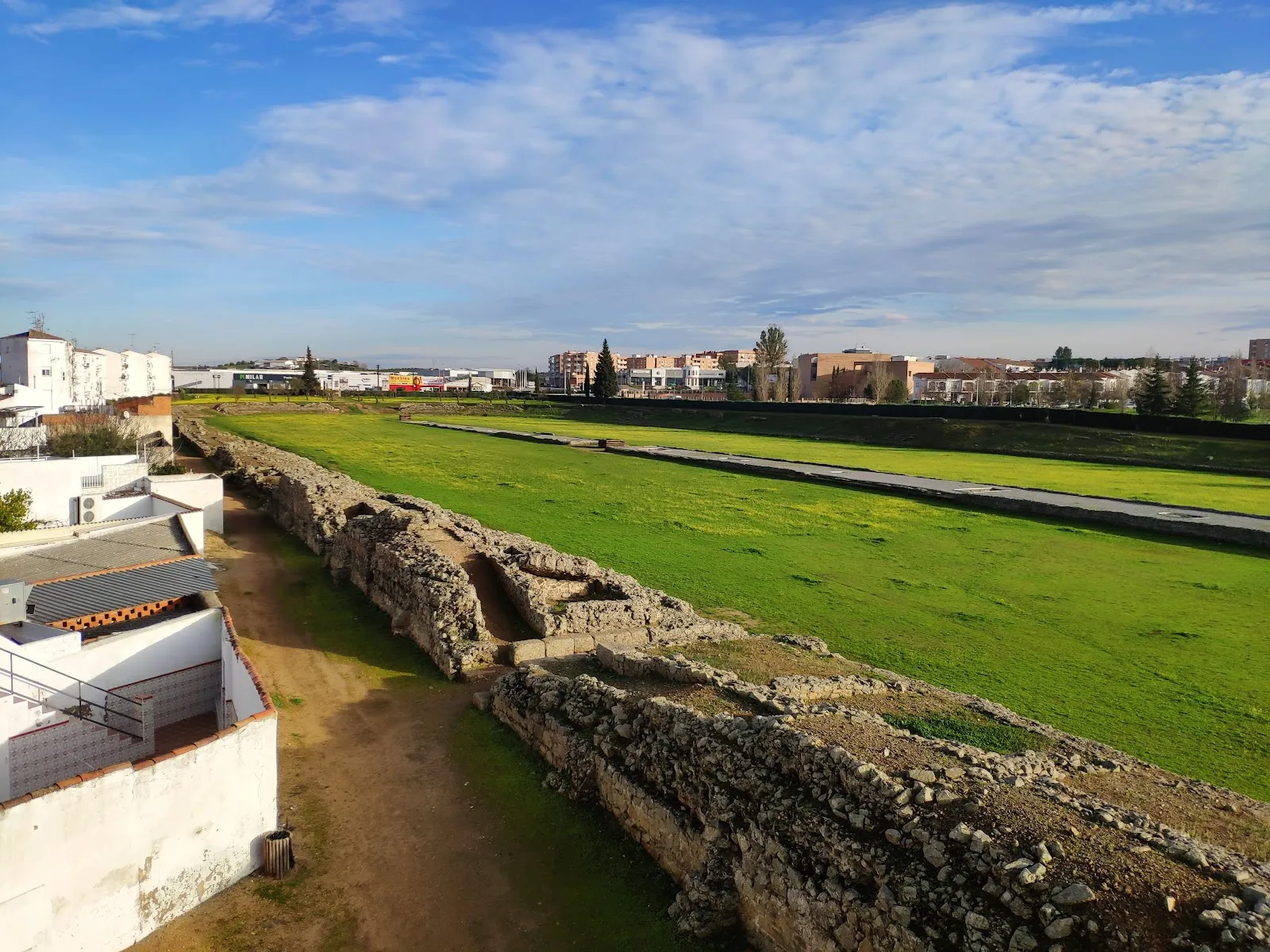
The Roman Circus of Mérida is a chariot racing ground on the eastern edge of the city, in a residential district that was farmland outside the walls in Roman times. It is about 400 metres long and 100 metres wide, and it could seat around 30,000 spectators. The central spine, the spectator stands and the starting gates are still visible, so you can picture how the races were run. Allow time for the information boards and the small exhibition with a model of how the site once looked.
Origins and the Circus Maximus comparison
The Roman Circus was built outside the city walls, and it is possibly from the 1st century AD. The exact date of construction is not known for certain. It was changed several times, and one of the last changes was made in the 4th century AD.
The circus is often compared with the Circus Maximus in Rome. It had the same purpose: a venue for chariot races, one of the most popular spectacles of the Roman world. The races drew large crowds from the city, and the building reflects how important these events were in daily life in Augusta Emerita.
The layout and what remains
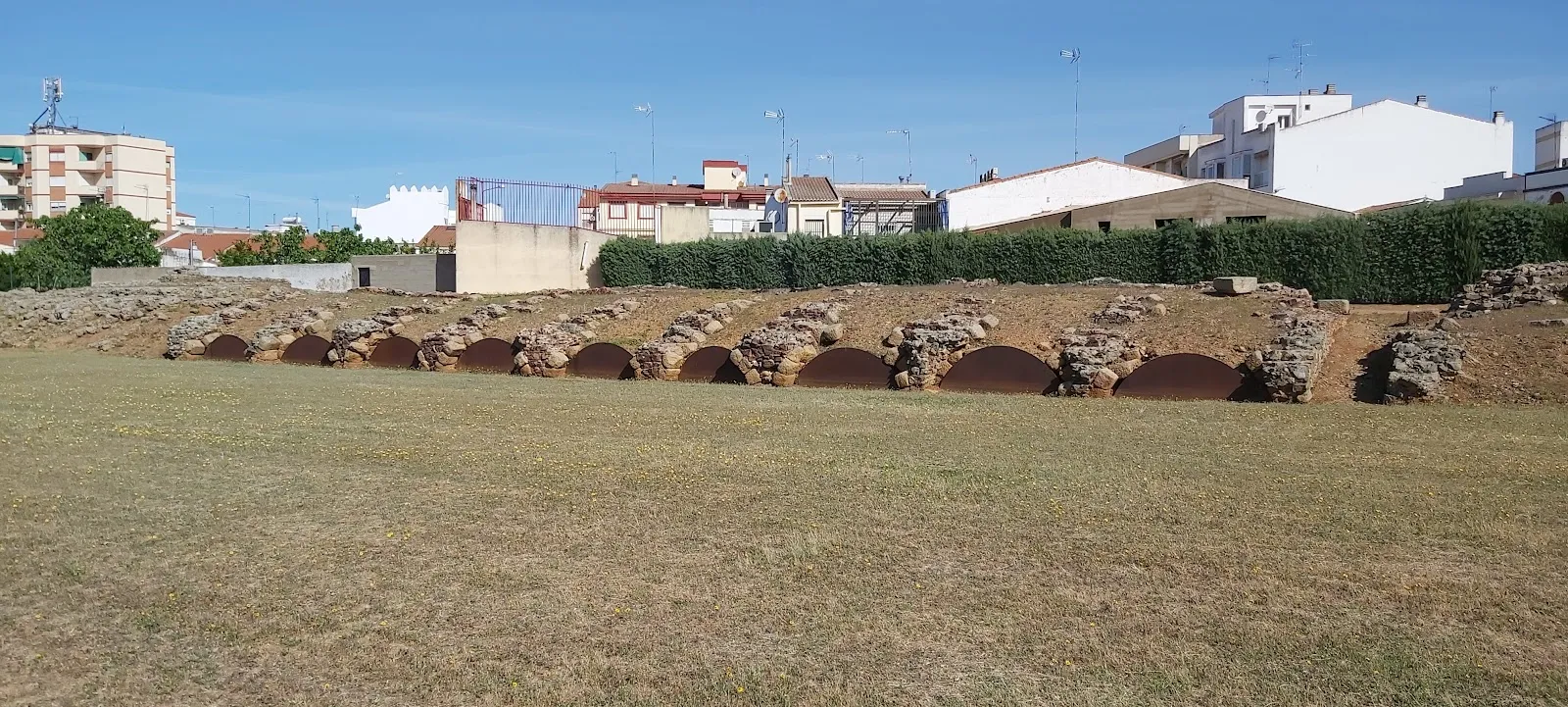
The arena track is an elongated U shape, with one end rounded and the other flattened. This gave a continuous track for chariots. The central spine, the spectator stands and the gates where the horses and chariots entered can still be seen. The gates have been restored enough to show how they worked.
A road once ran across part of the site. It has since been moved, which allowed the area to be cleared and the remains to be restored. The site also has a nearby neighbour: the Aqueduct of Saint Lazarus, one of three that supplied water to the city. What survives is three pillars and two arches, built from thick granite blocks.
How a visit works
The site has a small exhibition centre with photographs and a model of the complex as it would have looked. A short film is shown, but only in Spanish. The staff at reception are friendly and knowledgeable, and they can explain more about the area and its festivals if you ask.
One ticket covers the main Roman monuments in Mérida, including the Roman Theatre and Amphitheatre, the House of Mitreo and Columbaria, the Alcazaba, the crypt of Saint Eulalia, the Roman Circus and the Morerías archaeological area. The entrance is wheelchair accessible. Street parking is free nearby.
Nearby Roman sites
The Roman baths at Alange are about 30 kilometres from Mérida. They are built into a modern spa, and you can also see the remains of the town's fortress and a wide view over the area. The baths are part of Mérida's Roman archaeological site, which has UNESCO World Heritage status.
The Prosperpina reservoir, built by the Romans, is about five kilometres from the city.
FAQ
Do I need to book tickets in advance?
Booking in advance is recommended for the Roman Circus. A single ticket also covers the main Roman monuments in Mérida.
How big is the Roman Circus?
It is about 400 metres long and 100 metres wide. It could hold around 30,000 spectators.
Can I bring my dog?
No. Dogs on leads are not allowed at the site, so leave your dog at your accommodation.
Is the site accessible for wheelchair users?
Yes, the entrance is wheelchair accessible.