Jogyesa Temple is the chief temple of the Jogye Order of Korean Buddhism, in central Seoul near Insadong and within walking distance of Gyeongbokgung and Changdeokgung palaces. Its Daeungjeon prayer hall draws the eye with painted details and Buddha statues, while lanterns and old trees bring color to the courtyard. The temple hosts Buddhist ceremonies and festivals through the year; during Buddha’s birthday celebrations, lanterns decorate the grounds. It is an active religious site, so take time to look around quietly and respectfully.
A central temple with a long history
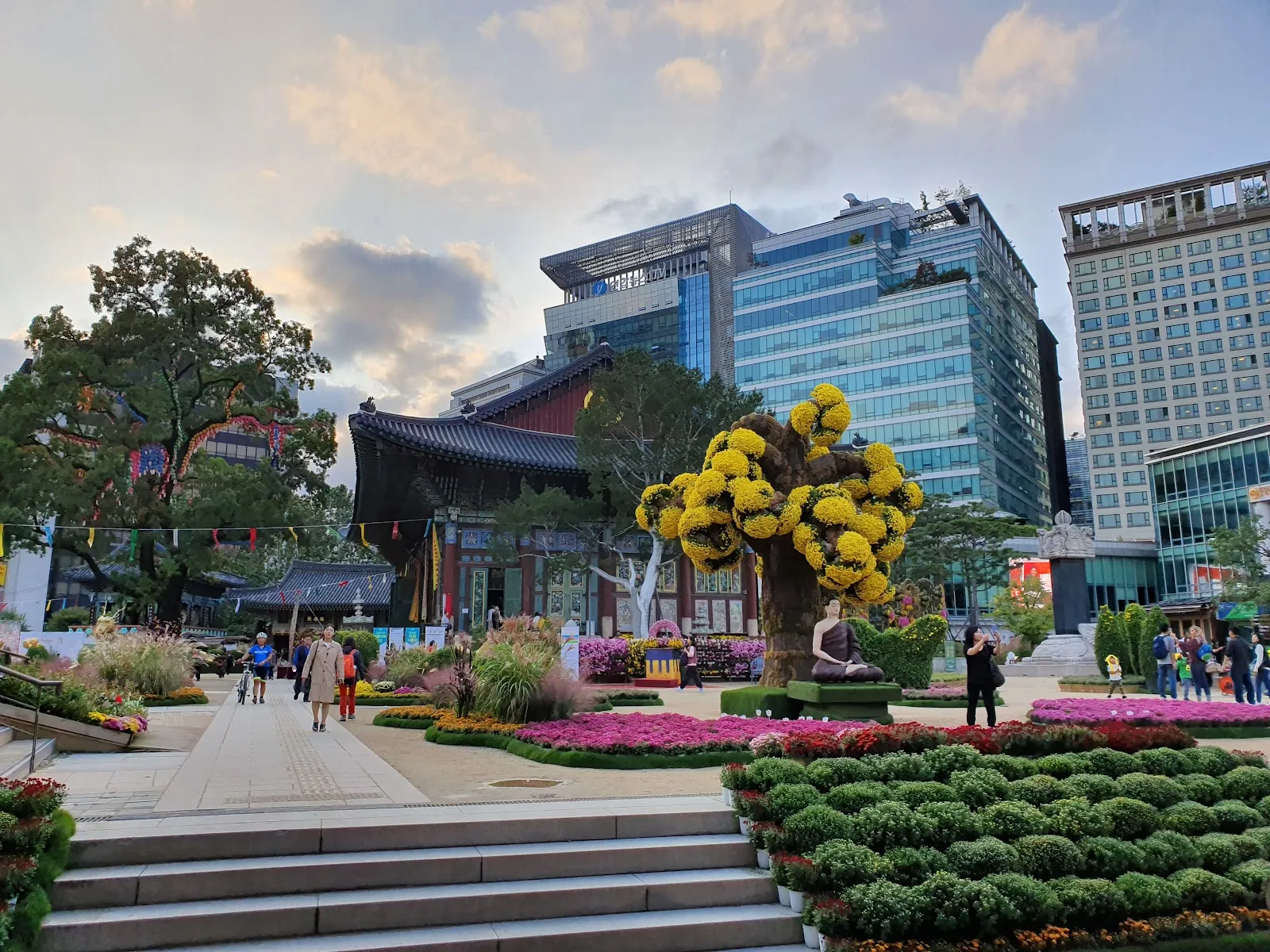
Jogyesa is the chief temple of the Jogye Order of Korean Buddhism and an important place for Buddhist ceremonies and events. The temple’s history reaches back to the late 14th century. Its present site and buildings reflect later changes: the temple was rebuilt in the early 20th century, and it became the Jogye Order’s chief temple in 1936.
The temple stands in downtown Seoul, close to Insadong and between the areas around Gyeongbokgung and Changdeokgung palaces. Its setting is striking: busy streets and tall buildings surround a compact religious complex. The grounds provide a place to pause, but they are also part of an active temple, not simply a scenic courtyard.
Daeungjeon and the temple grounds
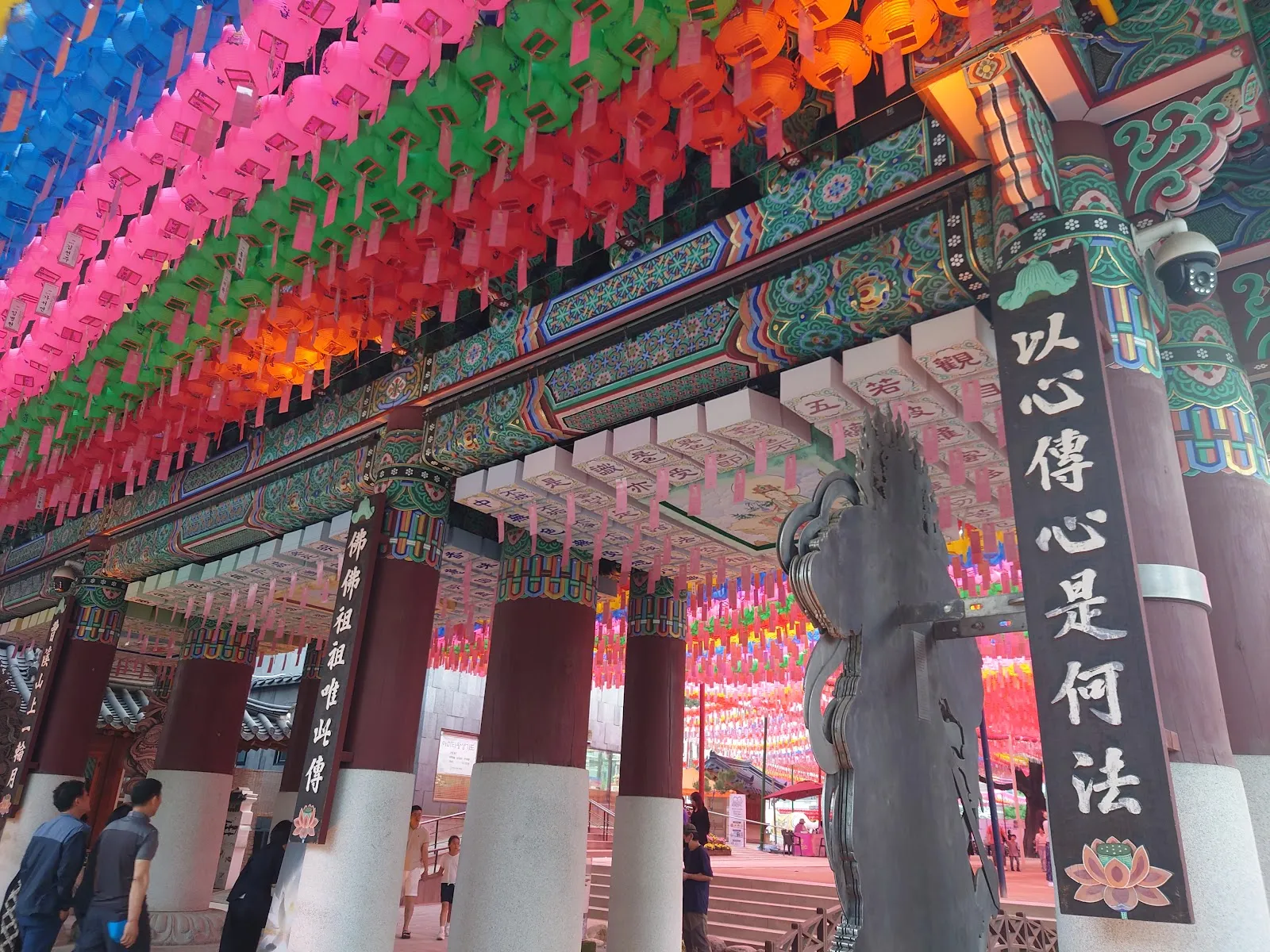
Daeungjeon, the main prayer hall, is a focal point of a visit. Look closely at its colorful painted exterior and detailed woodwork, then step inside to see the Buddha statues. The bright decoration continues through the grounds, where lanterns are often hung above the courtyard and around the buildings. Displays change with the season and Buddhist calendar, so the temple can look different from one visit to another.
Old trees add another layer to the courtyard. Pine trees beside the temple are estimated to be around 500 years old. The entrance is also marked by statues of the Four Heavenly Kings, guardians in Buddhist tradition. Take a moment to notice these details rather than crossing the grounds only for a photograph.
Lantern festivals and visiting respectfully
Jogyesa holds Buddhist events throughout the year. Buddha’s birthday is a particularly colorful time to visit, when lanterns cover the temple grounds. The celebrations are part of a religious occasion, so treat the displays and ceremonies with care: keep your voice low near prayer spaces and leave worshippers room to move and pray.
The temple is easy to combine with time in Insadong or a visit to one of the nearby palaces. If you are hoping to photograph the courtyard without as many people in the frame, a weekday is a practical choice. Allow time to look at the hall, trees and seasonal decorations, and remember that activity in the temple may continue while you are there.
FAQ
Where is Jogyesa Temple?
It is at 55 Ujeongguk-ro in Seoul’s Jongno District, near Insadong and within walking distance of Gyeongbokgung and Changdeokgung palaces.
What is Jogyesa Temple known for?
It is the chief temple of the Jogye Order of Korean Buddhism. Its painted Daeungjeon hall, old trees and seasonal lantern decorations are among the main sights.
When can I see the lantern displays?
Lanterns are especially prominent during celebrations for Buddha’s birthday, usually held in May.
How long should I spend at Jogyesa Temple?
Allow about 30 to 60 minutes to see the main hall and grounds.