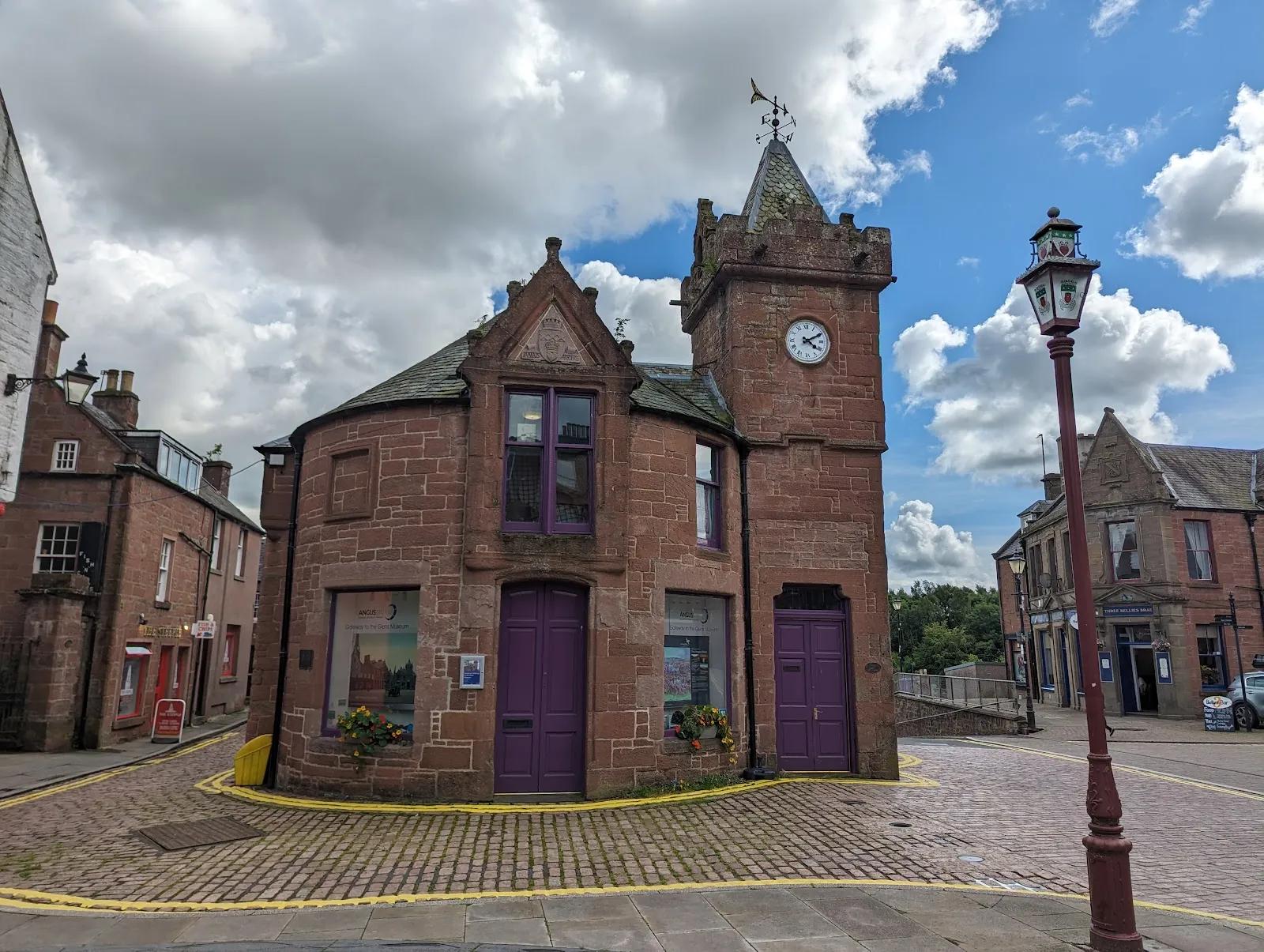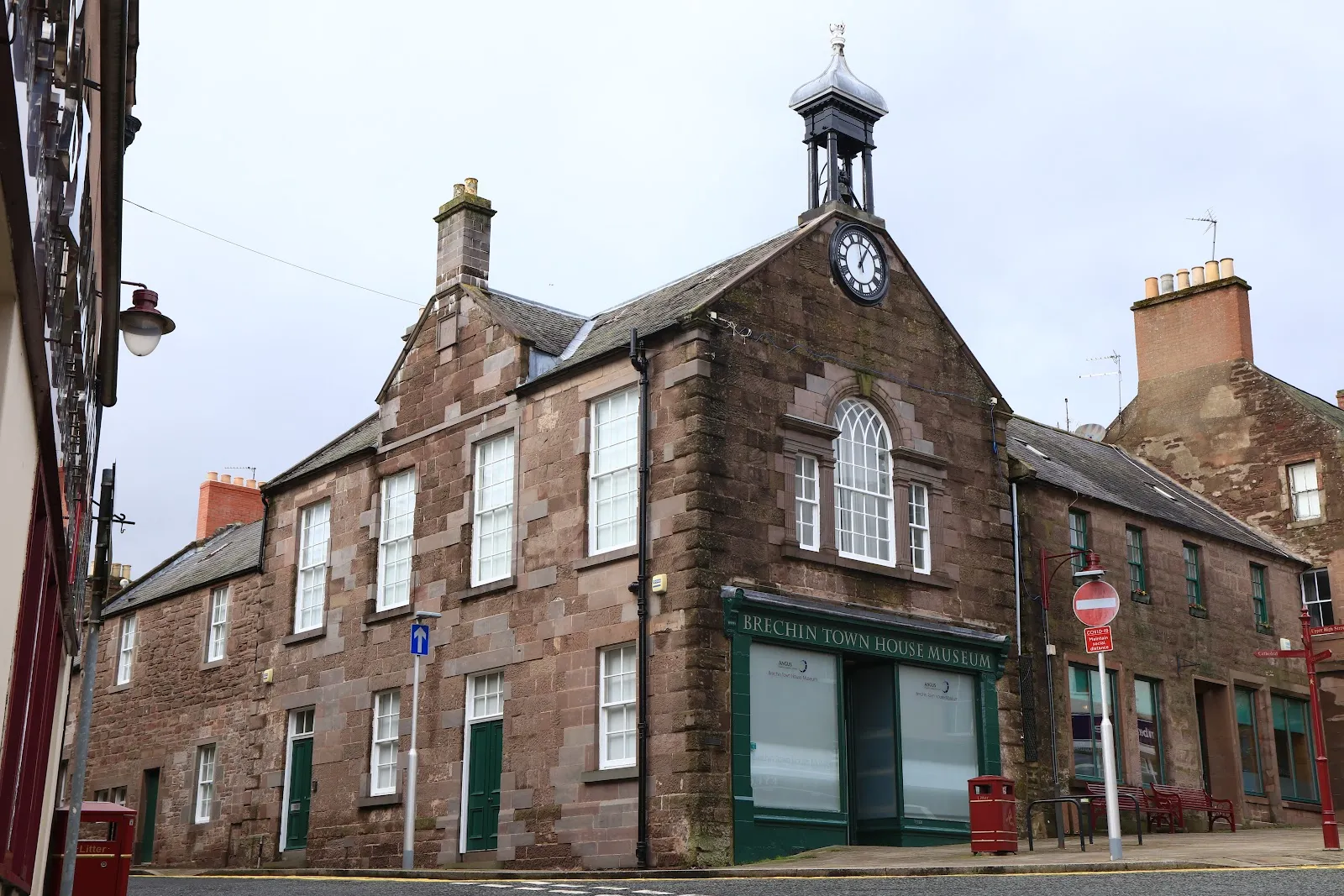
Set inside Brechin’s historic Town House on High Street, this small museum traces the city’s people and past through archaeology, photographs and personal memorabilia. Look for objects ranging from Bronze Age jewellery to a Jacobite sporran and a First World War soldier’s letter. The former courtroom building also has a cellar that once held cells. Entry is free, and temporary displays, including photography exhibitions, add to the collection. Allow around 30 minutes for a quick look or an hour to explore at a slower pace.
Objects from Brechin’s past
The museum’s collection brings together objects, photographs, archival material and ephemera connected with Brechin and its people. The objects span a long period of local history, from Bronze Age jewellery to a Jacobite sporran and a letter written by a soldier during the First World War.
Memorabilia offers a way to connect the city’s history with the lives of its residents. The museum is compact, so you can make a brief visit or take more time to read about the pieces on display.
Inside the Town House
The museum occupies a municipal building constructed around 1789 to 1790. Its former courtroom and cellar cells are part of the building’s history. A tourist information desk is also located inside.
Displays can change, with temporary exhibitions such as photography shows alongside the local history collection. Upstairs, a large room is used for meetings and can also host displays. The building has a lift to the upper floor and an accessible toilet.
FAQ
Is Brechin Town House Museum free to enter?
Yes, entry is free.
How long should I allow for a visit?
About 30 minutes is enough for a brief tour. Allow an hour or more to examine the objects and any exhibition in greater detail.
Is the museum accessible?
A lift provides access to the upstairs area, and the museum has an accessible toilet.
What can you see at the museum?
The collection includes local archaeology, photographs, archival material and memorabilia, including Bronze Age jewellery, a Jacobite sporran and a First World War letter.