The Bronze Horseman is an equestrian monument to Peter the Great on Senate Square, beside the Neva River in St Petersburg. Commissioned by Catherine the Great and made by French sculptor Étienne Maurice Falconet, it was unveiled in 1782. Peter sits astride a rearing horse above a serpent, a composition associated with the obstacles he faced. Look closely at the figure and its granite base, then walk along the river embankment or explore nearby St Isaac’s Cathedral. The monument is outdoors and can be visited at any time.
Peter the Great above the Neva
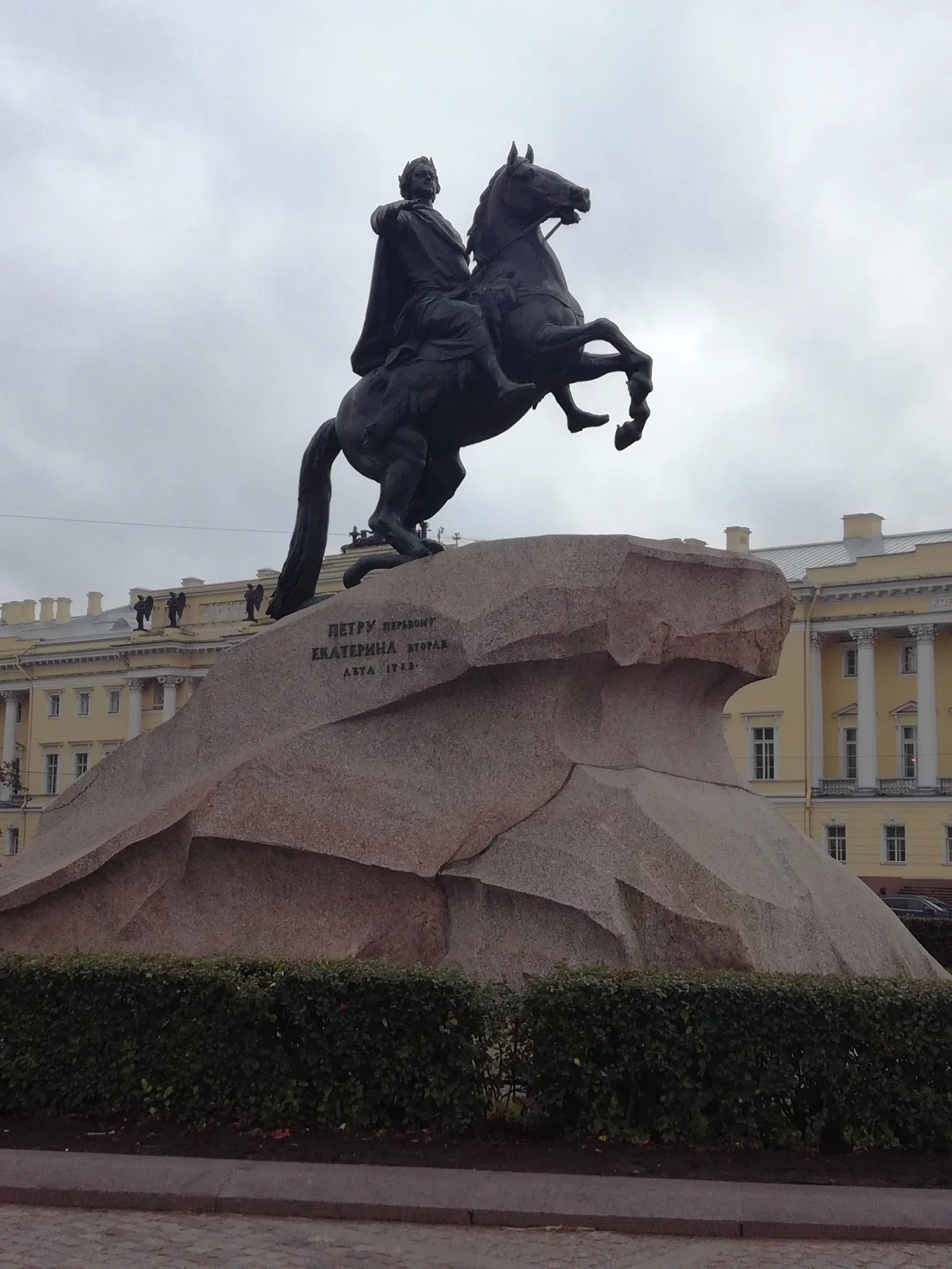
The Bronze Horseman stands on Senate Square near the Neva River. It depicts Peter the Great on a horse that rears above a serpent. The image is often read as Peter overcoming obstacles, and the monument has become one of St Petersburg’s most familiar symbols.
The name comes from Alexander Pushkin’s poem of the same title. The poem helped fix the statue in the city’s literary imagination, connecting Peter and St Petersburg in a story shaped by the devastating flood of 1824. The monument is also a reminder of Peter’s role in founding the city.
Catherine the Great’s commission
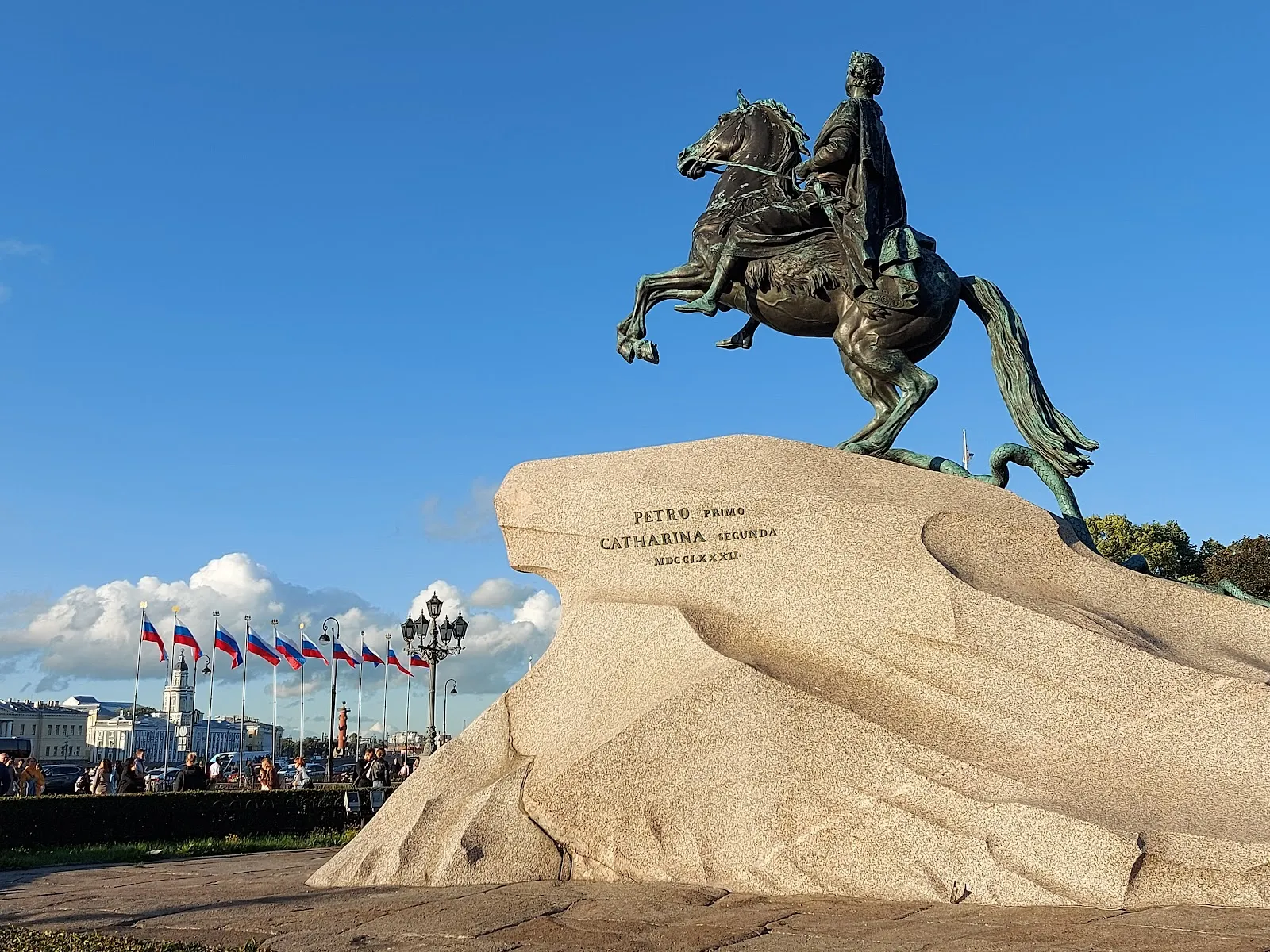
Catherine the Great commissioned the monument to honour Peter. Falconet, a French sculptor, chose to portray the ruler as a figure in motion, rather than in the Roman-style clothing and pose Catherine had initially envisioned. Peter’s gaze is directed towards the Neva, while the horse’s raised front legs give the composition its sense of movement.
The work and its pedestal took twelve years to complete. The statue was unveiled in 1782. Its base is the Thunder Stone, a large piece of granite associated with the challenges Peter faced in building his empire. The monument’s name can be misleading: despite the familiar title, the statue is made of copper.
What to see around Senate Square
Take time to view the monument from more than one angle. The horse, serpent and Peter’s posture form a single composition, set against the open square and river. The statue stands close to the Neva embankment, so a walk beside the water makes a natural extension of the visit.
St Isaac’s Cathedral is nearby, and Palace Square is about 700 metres from the monument. The Hermitage is also listed among the nearby landmarks. In summer, the lawns around the statue are a place to sit and watch the light change towards sunset. The monument is outdoors, so the experience depends on the weather; its setting remains accessible throughout the year.
FAQ
Where is the Bronze Horseman?
It stands on Senate Square beside the Neva River in St Petersburg.
Who made the Bronze Horseman?
French sculptor Étienne Maurice Falconet created the monument, commissioned by Catherine the Great.
When was the Bronze Horseman unveiled?
The monument was unveiled in 1782, after twelve years of work on the statue and pedestal.
What does the serpent beneath the horse represent?
The serpent is associated with the obstacles Peter the Great overcame.