
Lisbon Cathedral, or Sé de Lisboa, stands in the Alfama district and is the city’s oldest church. Founded in 1147 after Lisbon was retaken by Afonso Henriques, it was built on the site of a former mosque and has been altered after earthquakes and later restoration. Look for the twin towers and rose window on the Romanesque façade, then go inside to see the Gothic cloister, azulejo tiles and a blend of architectural styles. The cathedral’s upper levels and cloisters also give views across Lisbon.
A cathedral founded after Lisbon’s conquest
Construction began in 1147, after Afonso Henriques’s forces took Lisbon. The church rose on the site of a former mosque. The city had been a bishopric since the fourth century, and Christians were permitted to worship during the period of Muslim rule. After the conquest, Gilbert of Hastings, an English crusader, became bishop and a new cathedral was built.
The building has endured repeated earthquakes, including the major earthquake of 1755, and has undergone many rounds of rebuilding and restoration. Its present-day appearance reflects those changes. The cathedral is Romanesque at its core, with Gothic, Baroque and other later elements. It has been classed as a National Monument since 1910.
Romanesque exterior and Gothic interior
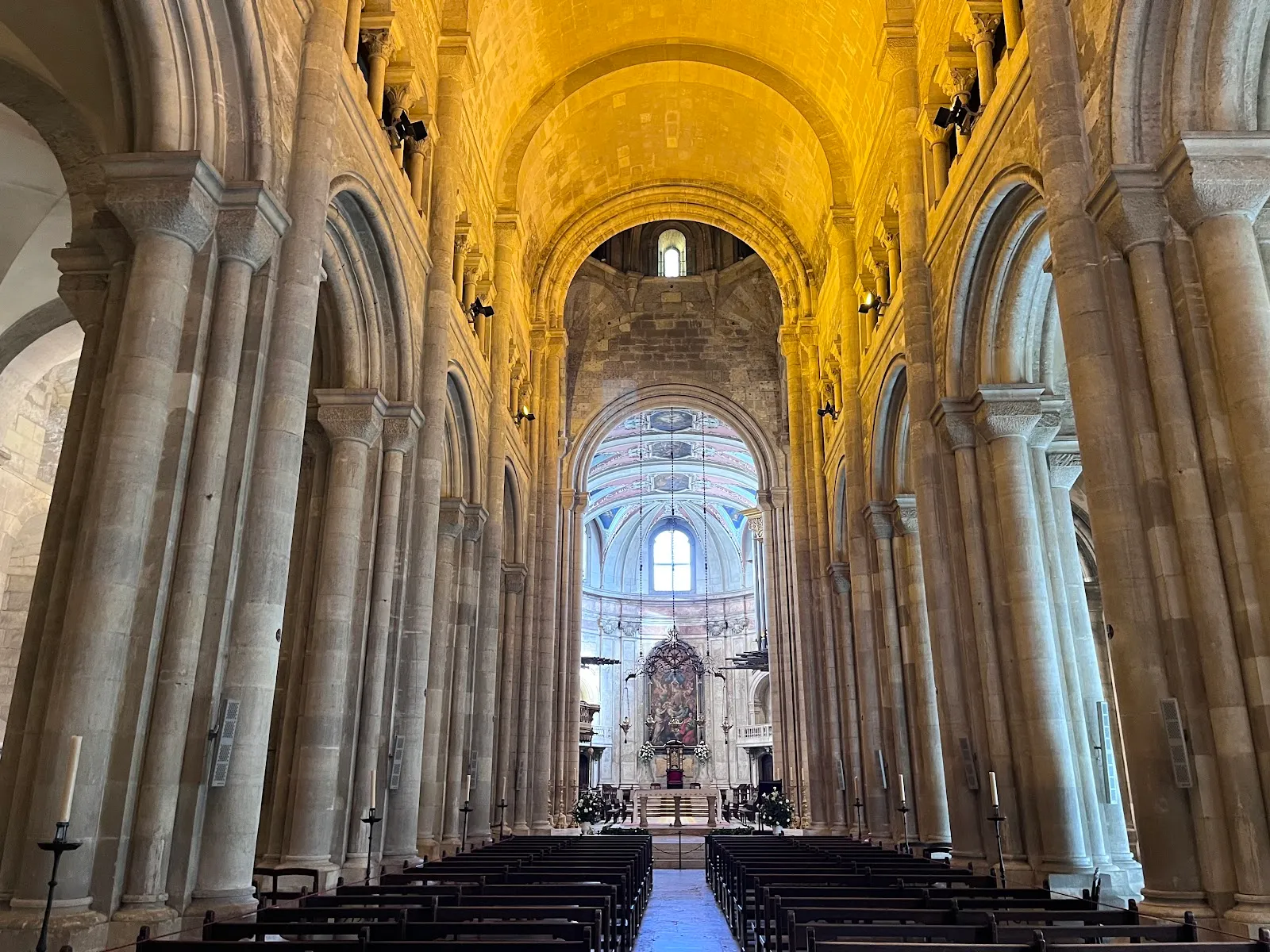
The cathedral’s twin towers and rose window give its façade a fortified appearance. Inside, the space is comparatively austere, with three naves and six bays. The Gothic ambulatory has radiant chapels, while the Gothic cloister was commissioned during the reign of King Dinis. Archaeological remains in the cloister point to earlier periods of the city’s history.
Look for the rose window above the entrance, stone carvings and azulejo tiles. The building also contains a Baroque main chapel, with tombs attributed to King Afonso IV and Queen Beatriz. The cathedral’s artistic and architectural details span several periods, so a walk through the interior is also a chance to see how the building changed over time.
Treasury and sacred remains
The cathedral’s collection includes the patriarchal treasure, known as Tesouro da Sé Patriarcal. It contains sacred art and historic objects. The remains of Saint Vincent, Lisbon’s patron saint, are held in an ark inside the cathedral. They were brought to Lisbon from Cape Saint Vincent.
The cathedral’s interior and the treasury are among the areas visitors can explore, though access and admission details are not consistent in the available information. Check the cathedral’s official website before planning a visit that depends on a particular area being open. Renovation work may also close some sections temporarily.
Seeing the cathedral in Alfama
The Sé sits in Alfama, close to the medieval streets that wind through the old neighbourhood. Tram 28 passes the cathedral, and the façade is a familiar backdrop for photographs. For a street-level view, wait nearby for the tram to come into frame; early light is another suggested time for photographing the stonework.
From the cloisters and upper levels, visitors can look out over Lisbon. Some areas may be cordoned off during renovation, so the route through the building can change. If you want more context about the cathedral’s history and architecture, a guided tour is one way to explore.
FAQ
Where is Lisbon Cathedral?
It is at Largo da Sé 1 in Lisbon’s Alfama district.
When was Lisbon Cathedral built?
Construction began in 1147, after Afonso Henriques’s forces took Lisbon. The cathedral was built on the site of a former mosque.
What architectural styles can you see at Lisbon Cathedral?
The cathedral combines Romanesque, Gothic and Baroque elements, alongside other details added during later rebuilding and restoration.
What should I look for inside Lisbon Cathedral?
Look for the Gothic cloister, azulejo tiles, the rose window, the Baroque main chapel and the ark containing Saint Vincent’s remains.


