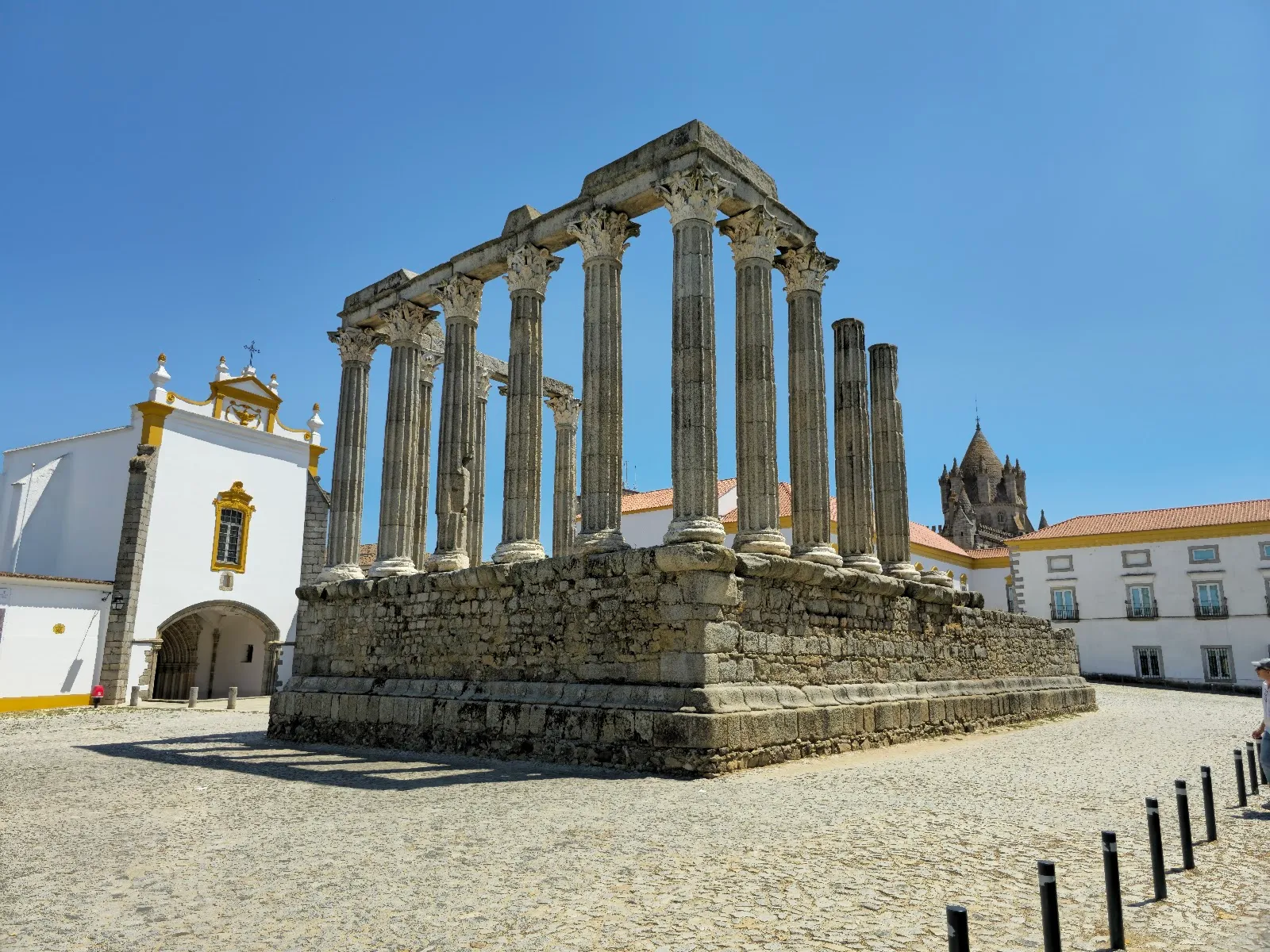
The Roman Temple stands in Largo do Conde de Vila Flor, at the highest point of Évora's old town, where the Roman forum once was. Fourteen Corinthian columns remain, with granite shafts and marble bases and capitals. It is among the best preserved Roman monuments in Portugal, inside the historic centre that UNESCO listed in 1986. The temple is open air and free to see from outside at any hour. The cathedral and the Évora Museum are next door, and the Diana Garden in front of the columns gives you a place to sit and look.
What stands in the square
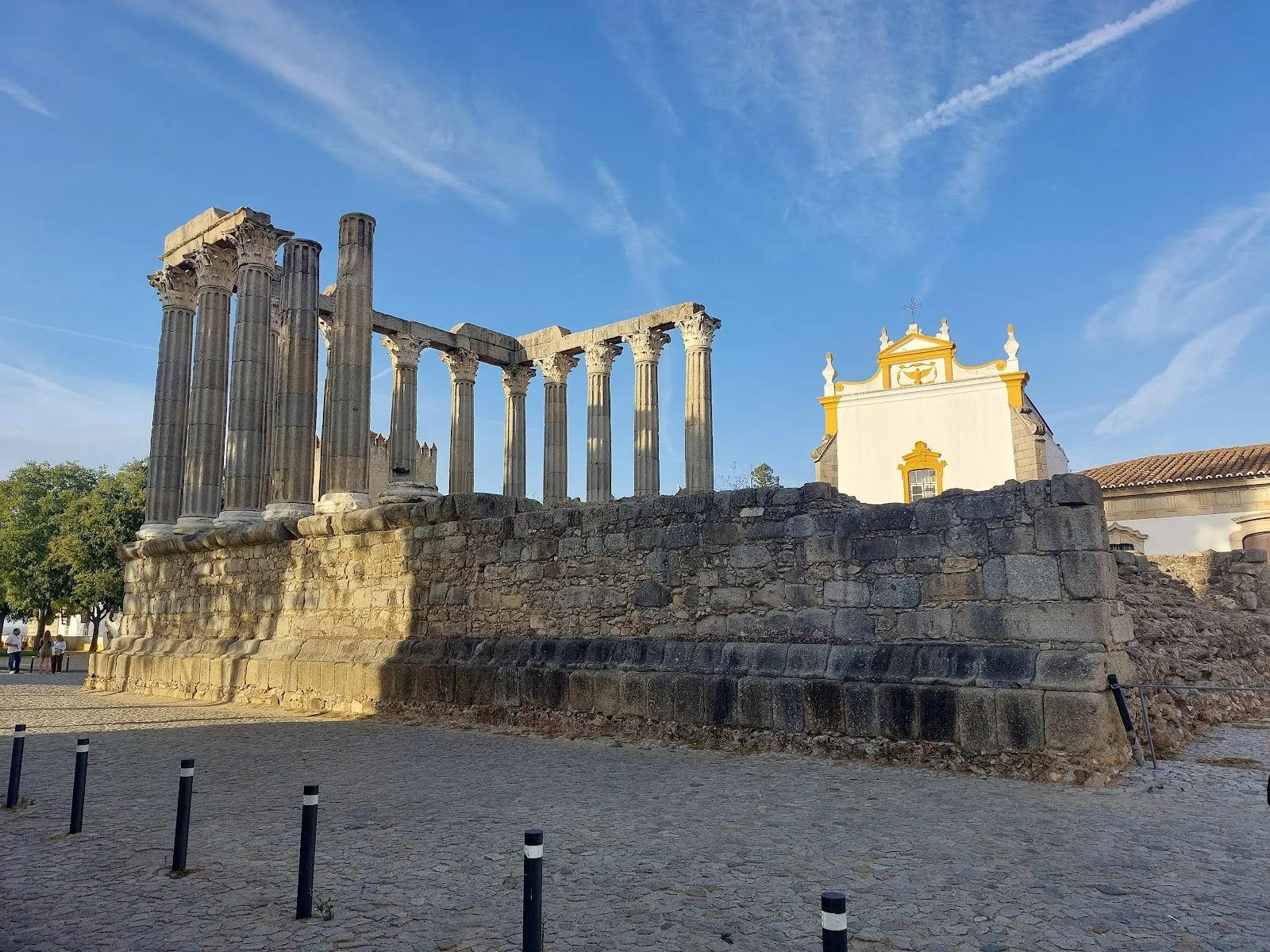
The temple occupies Largo do Conde de Vila Flor, on the highest ground in Évora. This was the site of the Roman forum of the city then known as Liberalitas Julia, and the temple was part of that civic and religious centre.
What survives is the podium and a group of fourteen columns. The fluted shafts are granite. The bases and the Corinthian capitals are marble, quarried at Estremoz, roughly 40 kilometres to the northeast. Up close you can see the change in stone where shaft meets capital.
The monument is an open-air ruin. You view it from outside, and there are no barriers or entrance fees. It sits inside the historic centre of Évora, a UNESCO World Heritage Site since 1986.
How it survived
Roman temples rarely come down to us this complete. In Évora the building kept being used. In the Middle Ages it was walled in and became part of a small fortress, and the walls around it protected the structure. Later it served as the town slaughterhouse and butchers' premises, well into the 19th century.
When its historical value was recognised in the late 19th century, the later additions were cleared away and the columns became visible again. Today the ancient stone stands against the surrounding buildings and the cathedral beside it.
The name Diana, and what is uncertain
Most people call it the Temple of Diana. That name goes back to a 17th-century priest and has no historical or archaeological basis. Archaeologists have not settled which deity or person the temple honoured. A common view is that it belonged to the imperial cult and honoured Emperor Augustus. Some scholars propose Julius Caesar, and Jupiter has also been suggested.
The date is given differently in different studies, from the 1st century AD to the 2nd or early 3rd. The safe summary is that it is a Roman-era temple, nearly two thousand years old.
Around the temple
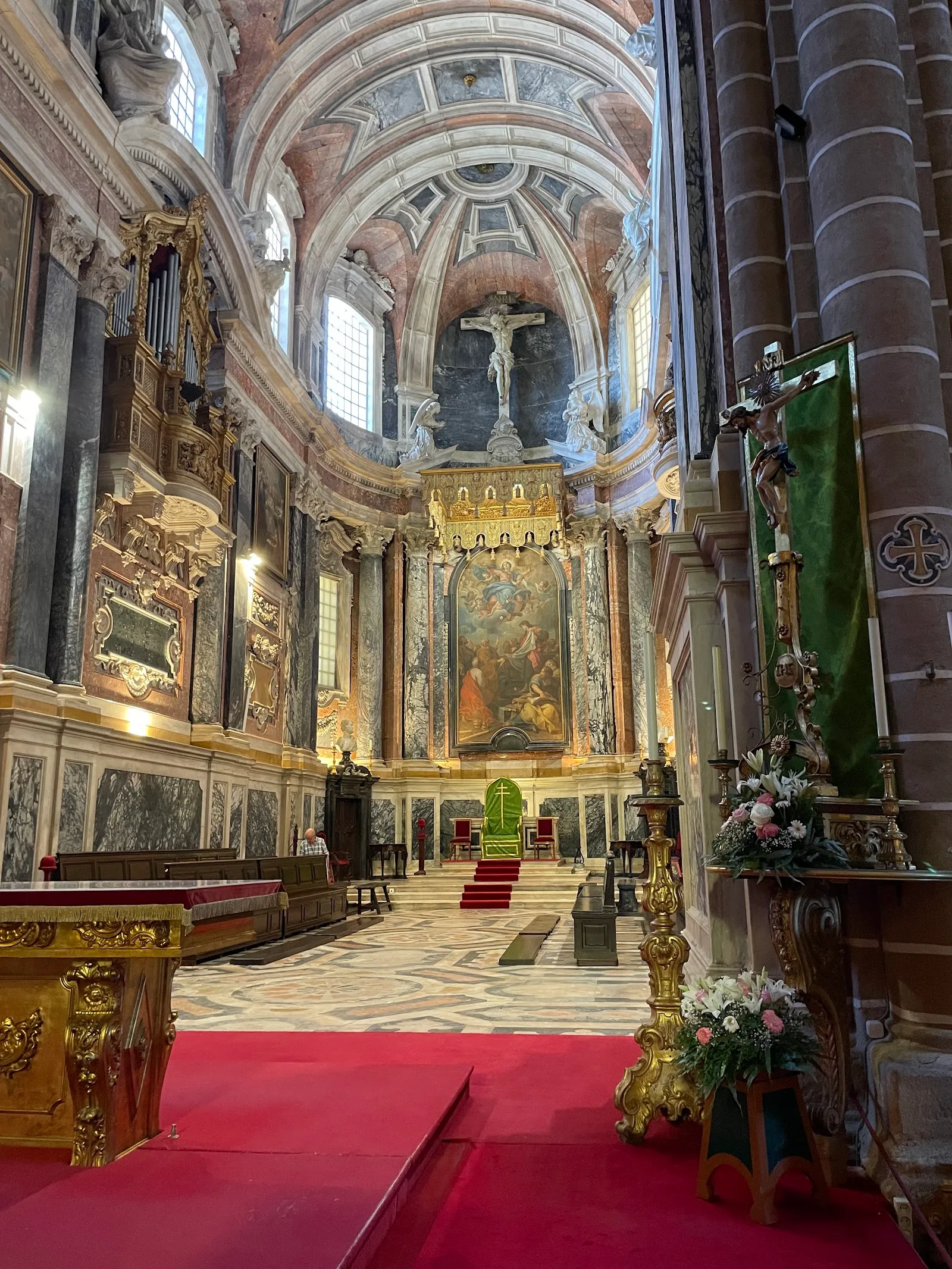
Évora Cathedral is next door, about 220 metres away. Its roof gives a view down onto the temple. The Évora Museum is in a 16th-century archbishop's palace between the temple and the cathedral. It opened in 1915 and covers the city's history, with archaeological pieces and art from former convents and churches.
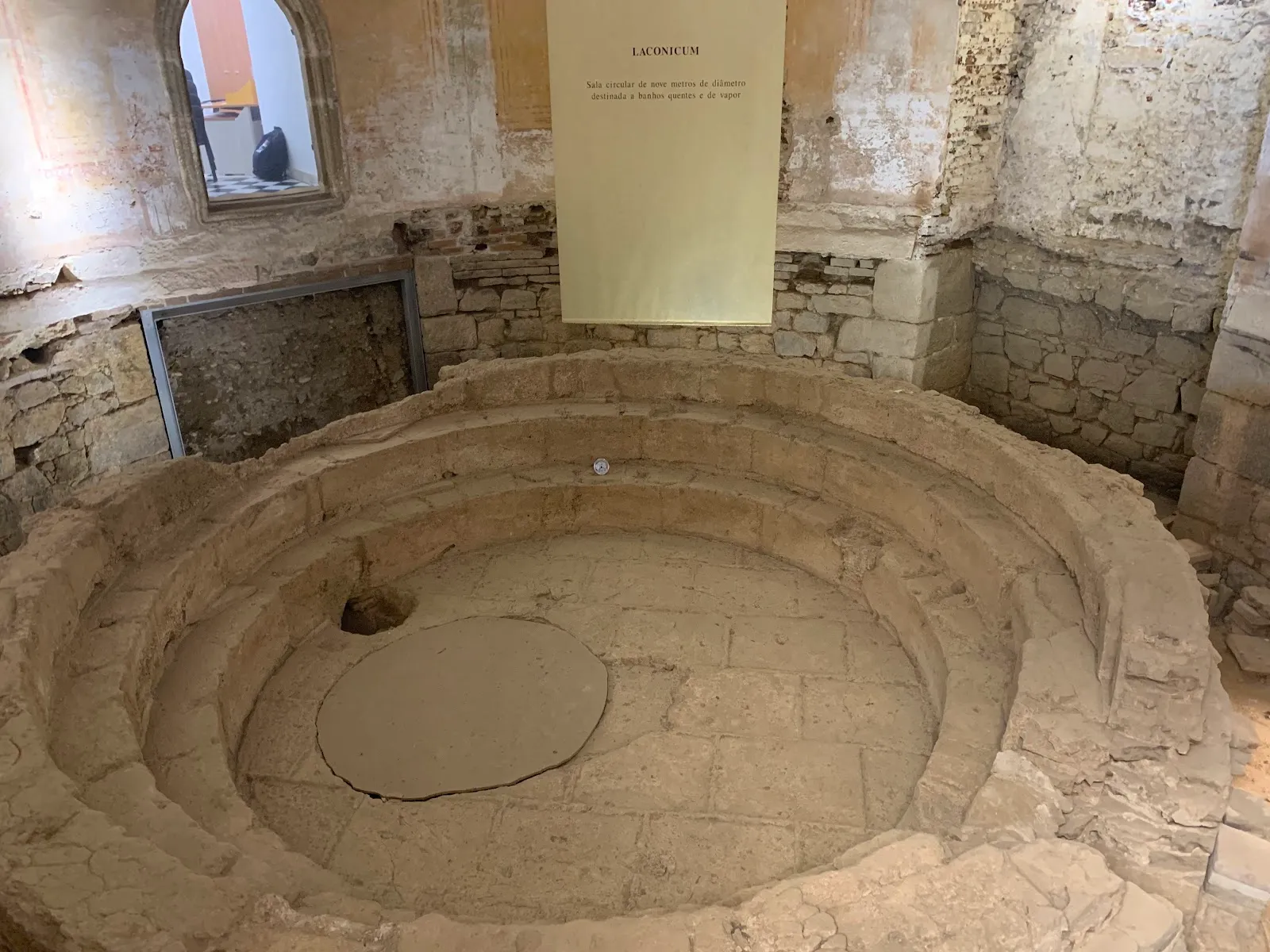
The Diana Garden lies in front of the temple, with a place to sit and a café where you can have a coffee while looking at the columns. Praça do Giraldo is a two-minute walk, about 140 metres. Other Roman remains are close by, including a stretch of the old wall and the baths found under the Town Hall in 1987. The Chapel of Bones is a short walk away, and the old town is small enough to cross on foot in about twenty minutes.
FAQ
Is there an entry fee for the Roman Temple of Évora?
No. The temple is an open-air monument and can be viewed free of charge, with no barriers or ticket desk.
Can you go inside the Roman Temple?
No. The columns and platform are seen from the outside, from the square and the Diana Garden.
How long do you need at the temple?
Allow 15 to 30 minutes to walk around it and take photos. Add time if you also visit the Évora Museum, the cathedral or the garden.
Why is it called the Temple of Diana?
The name comes from a 17th-century priest who linked it to the goddess. There is no historical or archaeological evidence for this, and the deity it honoured is still unknown. Many scholars think it was an imperial cult temple, possibly for Augustus.
When is the best time to visit?
Early morning, between about 9:00 and 10:00, is quiet and cooler. Sunset and after dark are also good, as the temple is lit at night.