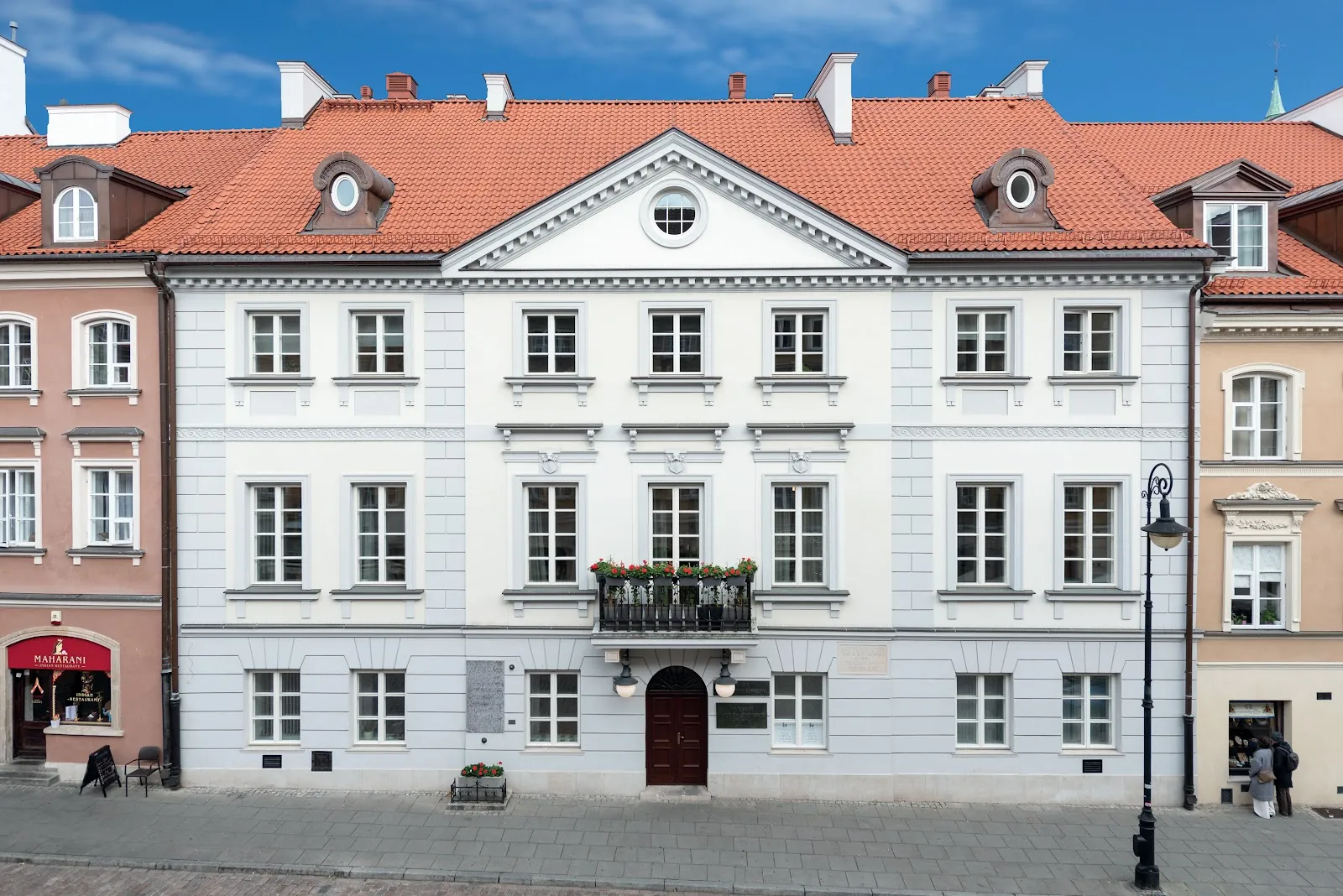
On Freta Street in Warsaw’s New Town, the Maria Skłodowska-Curie Museum follows the scientist’s life from her family and education in Poland to her work in Paris. Letters, photographs, personal belongings and laboratory instruments bring her story into focus, including the scientific work that earned her two Nobel Prizes. The compact exhibition is arranged chronologically, with information in Polish and English. An audio guide adds context as you move through the displays; allow about an hour, or longer if you want to read and listen in detail.
A life told through objects
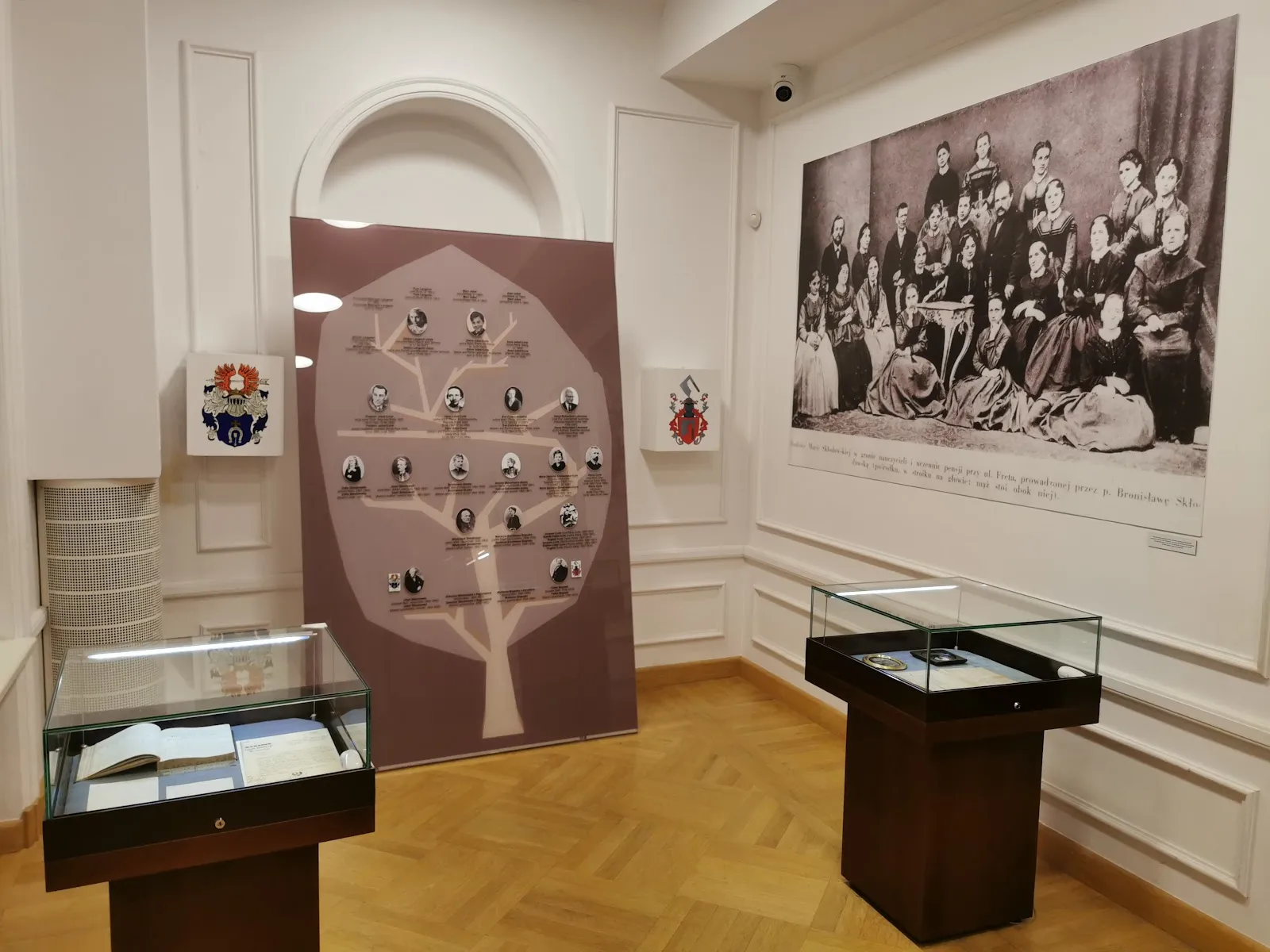
The exhibition follows Maria Skłodowska-Curie through the stages of her life, from her family and early years in Warsaw to her education and scientific career. The displays bring together photographs, documents, personal belongings and extracts from letters. These materials give space to both her work and her private life, including the people and experiences that shaped her.
The museum also presents her achievements in science. Skłodowska-Curie was the first woman to receive a Nobel Prize, and she won two, in Physics in 1903 and Chemistry in 1911. The displays explain her contribution to research on radioactivity and place her career within the story of a Polish scientist who later worked in France.
Letters, instruments and the laboratory
Original notes and letters sit alongside historical laboratory equipment and measuring instruments. A section arranged as a Paris laboratory recalls the work of Maria and Pierre Curie, including instruments designed by Pierre. The objects offer a close look at the practical tools behind scientific research, while the letters and photographs show other sides of the Curies’ lives.
The exhibition also touches on interests beyond laboratory work, including hobbies and experiments. Its chronological arrangement makes it straightforward to follow the changes in Skłodowska-Curie’s life and career as you move through the rooms.
Using the audio guide
Written information is presented alongside the objects, and the exhibition text is available in Polish and English. An audio guide is available online through a QR code; listening as you go can help explain the displays and connect details from different periods of her life. You can also visit by reading the panels at your own pace.
The museum is compact, but the amount of written and audio material affects how long you spend inside. A visit can take about an hour, with closer to two hours if you want to read and listen throughout. Busy periods can bring a short wait to enter.
FAQ
Is admission free on Tuesdays?
Yes, the museum has free admission on Tuesdays.
How long should I allow for a visit?
Allow about one to two hours, depending on how much of the exhibition you read and whether you use the audio guide.
Is there an audio guide?
Yes. An online audio guide is available through a QR code.
Is information available in English?
Yes. Exhibition information is available in English and Polish.