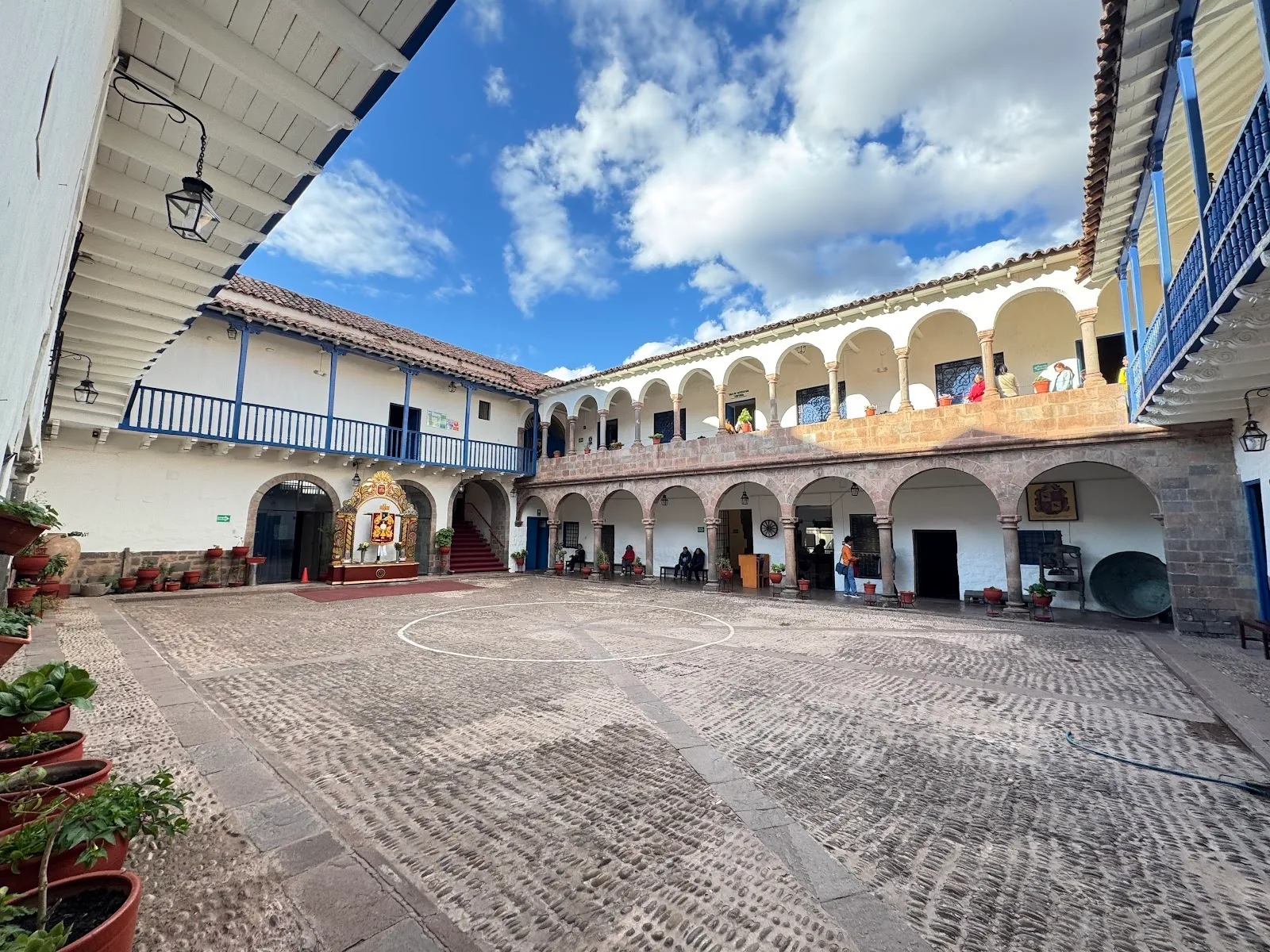
Qorikancha, on Santo Domingo street in Cusco, was the Inca Empire’s principal temple dedicated to the sun god Inti. The Convent of Santo Domingo was built over its foundations, so the complex brings Inca masonry and Spanish colonial architecture into direct view. Look closely at the precisely fitted stone walls, then explore the courtyards, gardens and archaeological displays. Higher parts of the site give views across Cusco. Allow time to read the explanations, or arrange a guide outside if you want more context.
An Inca temple beneath Santo Domingo
Qorikancha was the Inca Empire’s most important temple and was dedicated chiefly to Inti, the sun god. Its name is commonly translated as “Court of Gold.” Accounts of the complex describe walls and altars once covered with gold, along with precious objects and images of plants and animals. The temple also had religious and ceremonial importance, and its position within Cusco made it a central place in the Inca world.
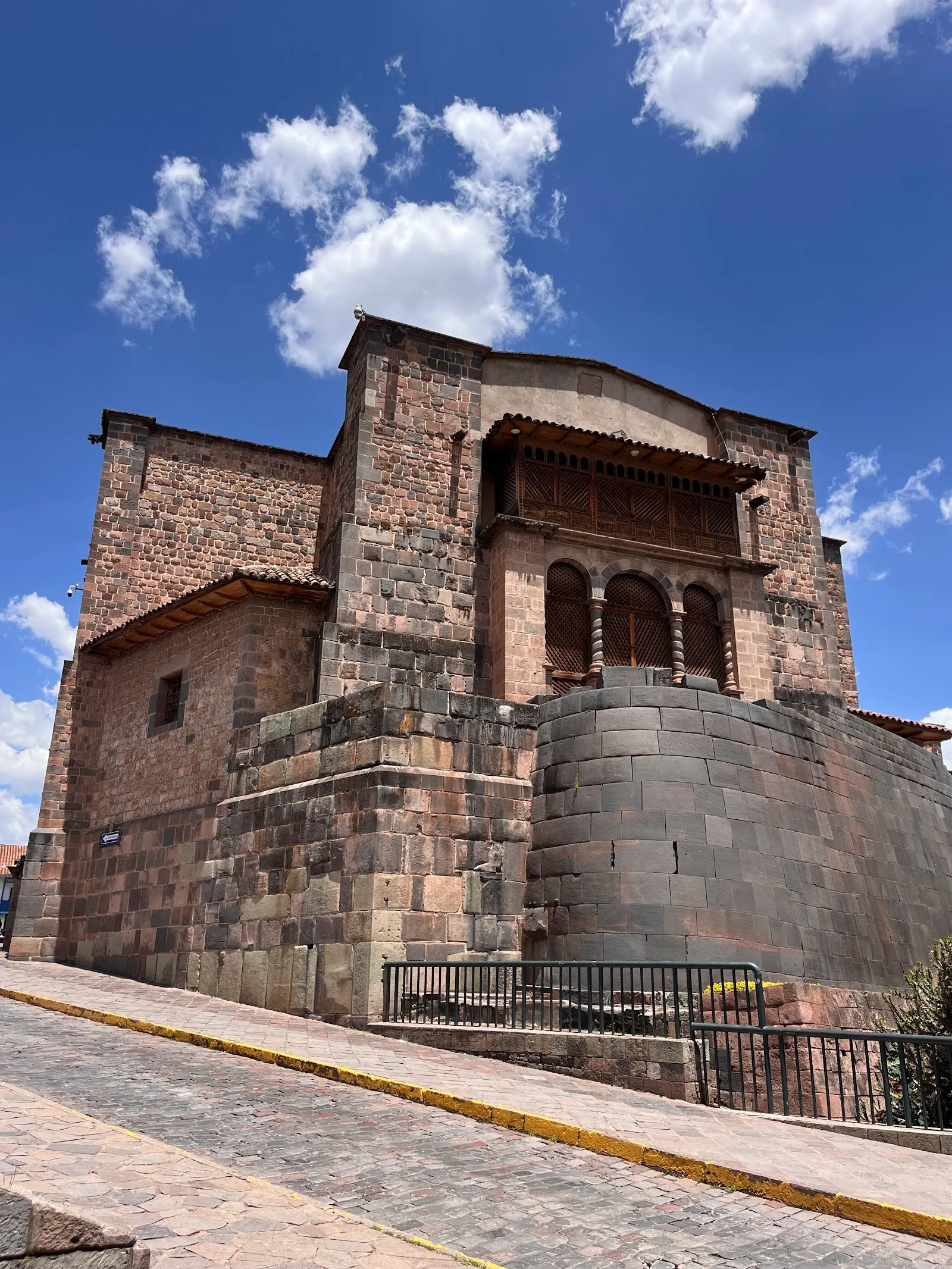
After the Spanish conquest, the temple’s wealth was taken and the Dominicans built the Convent of Santo Domingo on the site. The colonial complex rests on the Inca foundations. The result is visible in the surviving stonework set against the later church and convent: two periods of Cusco’s history occupy the same place, with the older construction still clearly legible beneath the newer one.
Reading the stonework
The surviving Inca walls are the main reason to look closely as you move through the complex. Individual stones fit together with remarkable precision, including along curved sections. The contrast between these foundations and the Spanish buildings above them helps explain how Qorikancha changed after the conquest.
The stonework also gives the site a physical record of the city’s history. The Inca walls remained standing through earthquakes that damaged Spanish structures built over them. Take time to examine the joints and the way the stones meet; the workmanship is easier to appreciate at close range than from across a courtyard.
The complex includes courtyards and garden areas, as well as archaeological displays. The site museum presents objects recovered during excavations, including ceramics and items made from stone and metal. Displays also cover human remains and models of the complex. This material offers a different way to understand the temple from the standing walls and church.
Planning your visit
You can explore the site independently using its written information, or arrange a guide outside the entrance for a more detailed account. Agree on the guide’s fee before the tour begins. The complex takes time to absorb, so set aside at least 90 minutes if you want to see the architecture and displays without rushing.
Bring cash for admission, since card payment may not be accepted. Access to higher points such as the bell towers can involve an extra charge; check the cost before choosing that option. Photography is prohibited inside the church, so follow the rule there. The church and the archaeological museum are distinct parts of the site, and the museum material is located in the complex’s lower area.
FAQ
What is Qorikancha in Cusco?
Qorikancha was the Inca Empire’s principal temple dedicated to Inti, the sun god. The Convent of Santo Domingo was later built over its foundations.
How long should I spend at Qorikancha?
Allow at least 90 minutes to explore the stonework, courtyards and displays without rushing.
Can I take photos inside Qorikancha?
Photography is not allowed inside the church.
Should I bring cash to Qorikancha?
Yes. Admission may need to be paid in cash, as card payment may not be available.