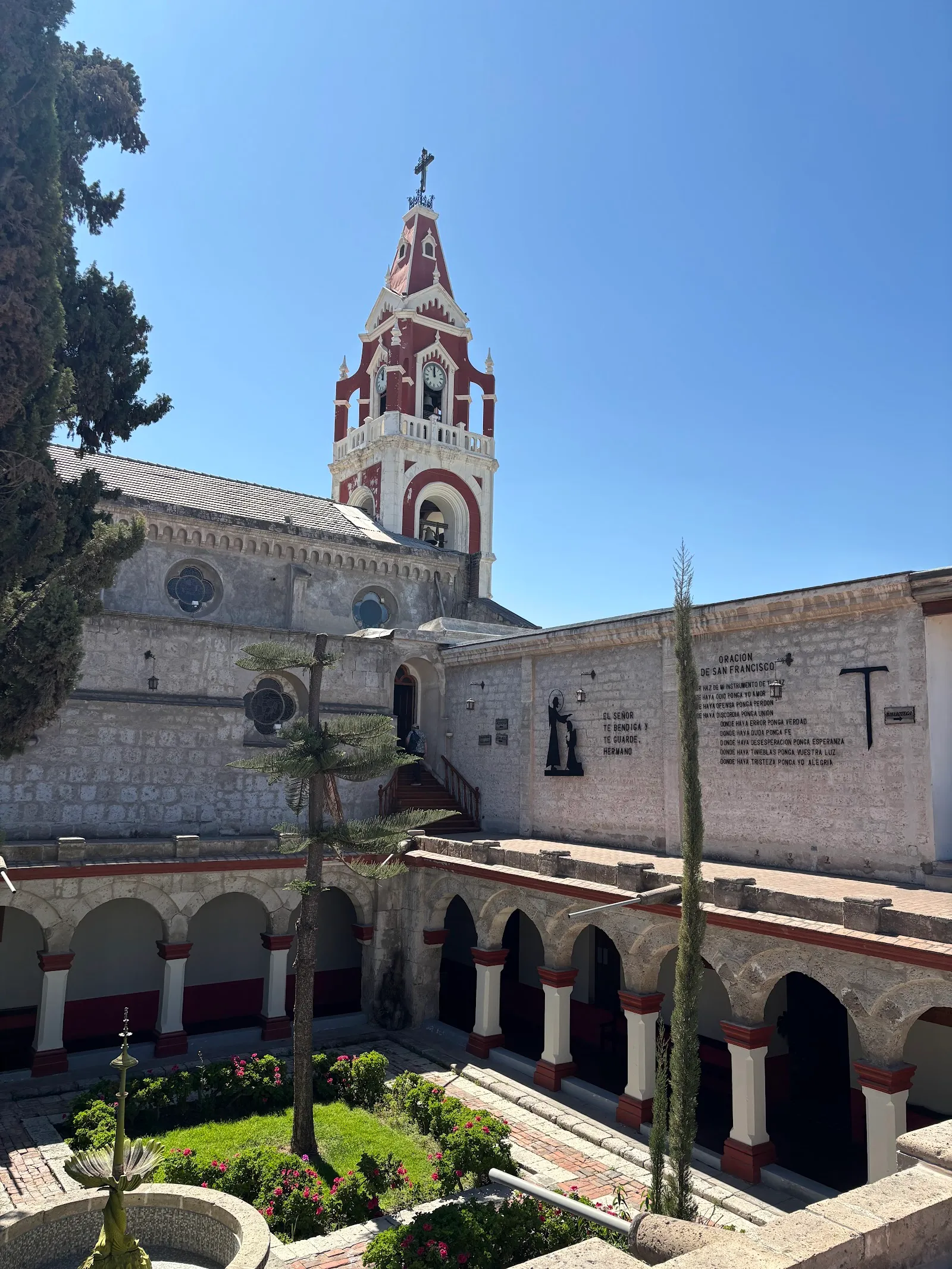
Santa Catalina Monastery is a walled convent in the historic center of Arequipa, Peru. It was founded in 1579 and still houses a small community of nuns. Its roughly 20,000 square meters hold narrow lanes, plazas, cloisters, gardens and chapels, with walls painted in deep reds, blues and whites. Walk the streets slowly, look into the courtyards and chapels, and take a break at the bakery or the small coffee shop.
Founding and early history
The monastery was founded in 1579 by Maria de Guzman, a wealthy widow, and it was built for Dominican nuns. It served as a total enclosure for nuns from the city's most distinguished families.
In Peru at that time, it was customary for the second son or daughter of a Catholic family to enter a lifetime of service to the church. Most of the women who lived here came from upper-class families, and the families of each resident had to pay a large dowry. The convent also housed servants and enslaved people, so it held far more people than the nuns alone.
In the 19th century the monastery's reputation shifted from a strictly religious house toward a social one, and it was reformed in response.
Materials and the walled complex
The buildings are made from sillar, a white volcanic stone, and pink sillar from the Misti volcano. The pink stone is a symbol of the city.
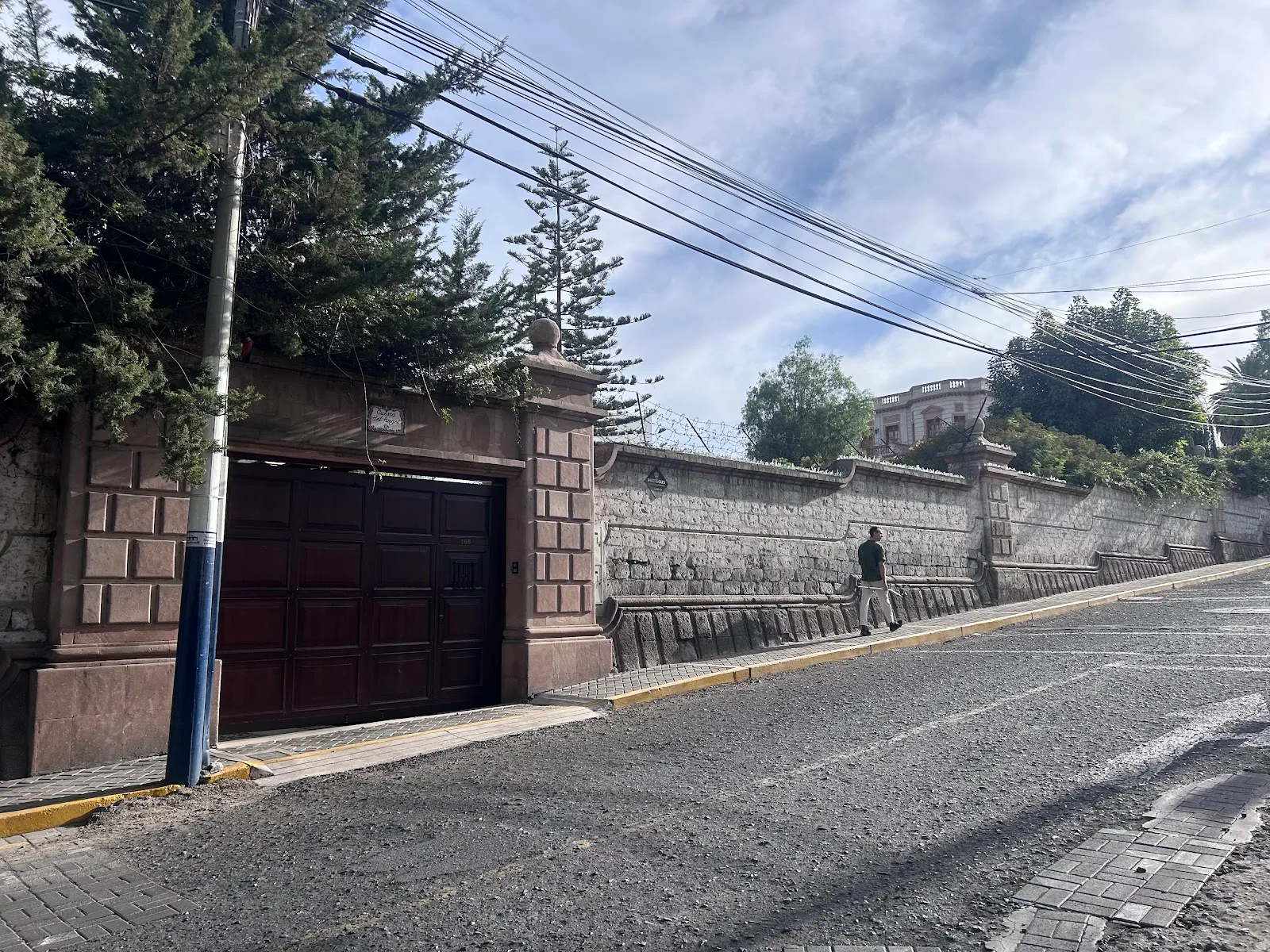
The architecture spans styles from the 16th to the 19th centuries. The complex is enclosed by high stone walls that give it the look of a fortress. Inside, the paving is cobblestone, the roofs are tiled, and arches frame the courtyards and plazas.
What the complex holds
The monastery is a labyrinth of cloisters, plazas, streets, chapels, gardens and fountains. Former cells and living quarters line the lanes, and kitchens and laundry areas show how the community ran its daily life.
The Courtyard del Silencio is where the nuns gathered to pray the Holy Rosary and to read the Bible in silence. Visitors can also find a souvenir shop, a bakery and a small coffee shop inside the walls.
Opening to visitors
For centuries the monastery was closed to outsiders, and the residents of Arequipa knew little of what lay behind its walls. The complex was opened to the public in 1970, after maintenance work was needed. Access was first allowed in the tourist areas, and visits have grown more open since then.
Guided tours take visitors through the main sections and explain the history of the complex. Night tours are offered on certain occasions, when the dim light adds to the atmosphere of the old streets.
FAQ
Is there an entry fee?
Entry was listed at 45 soles per person, and a guided tour costs an extra 20 soles. Check the current prices on the official website before you go.
How long do you need?
Plan two to three hours to see the courtyards, streets, cloisters and former cells.
Is there free entry?
Free entry is offered on the first Sunday of each month. Confirm this on the official website before you plan your visit.
Are nuns still living there?
Yes. A small community of nuns still lives in the complex, so keep noise low and be respectful when you take photos.
Is there food on site?
A bakery and a small coffee shop are inside the monastery.