The Lahore Museum sits on Mall Road near Anarkali Bazaar, in a red-brick building that blends Mughal and British colonial design. It is one of Pakistan's oldest and largest museums, with tens of thousands of objects and around 20 galleries covering the region from prehistoric times to the present. The collection includes Gandhara sculpture, Mughal miniature paintings, Islamic manuscripts and Indus Valley finds. Its best-known piece is the Fasting Buddha, a Gandhara sculpture carved from grey schist. Plan two to three hours to see the main galleries properly.
Origins and the move to Mall Road
The museum began in 1865 at Tollinton Market, a hall built for the Punjab Exhibition. Its collection moved to the present site on The Mall in 1894. Prince Albert Victor laid the foundation stone in 1890.
The red-brick building is in the Indo-Saracenic style, which combines Mughal and British colonial design. The collection started as the Industrial Arts Museum of Punjab, set up to show local arts and crafts. The museum is also known as the Central Museum.
Inside the galleries
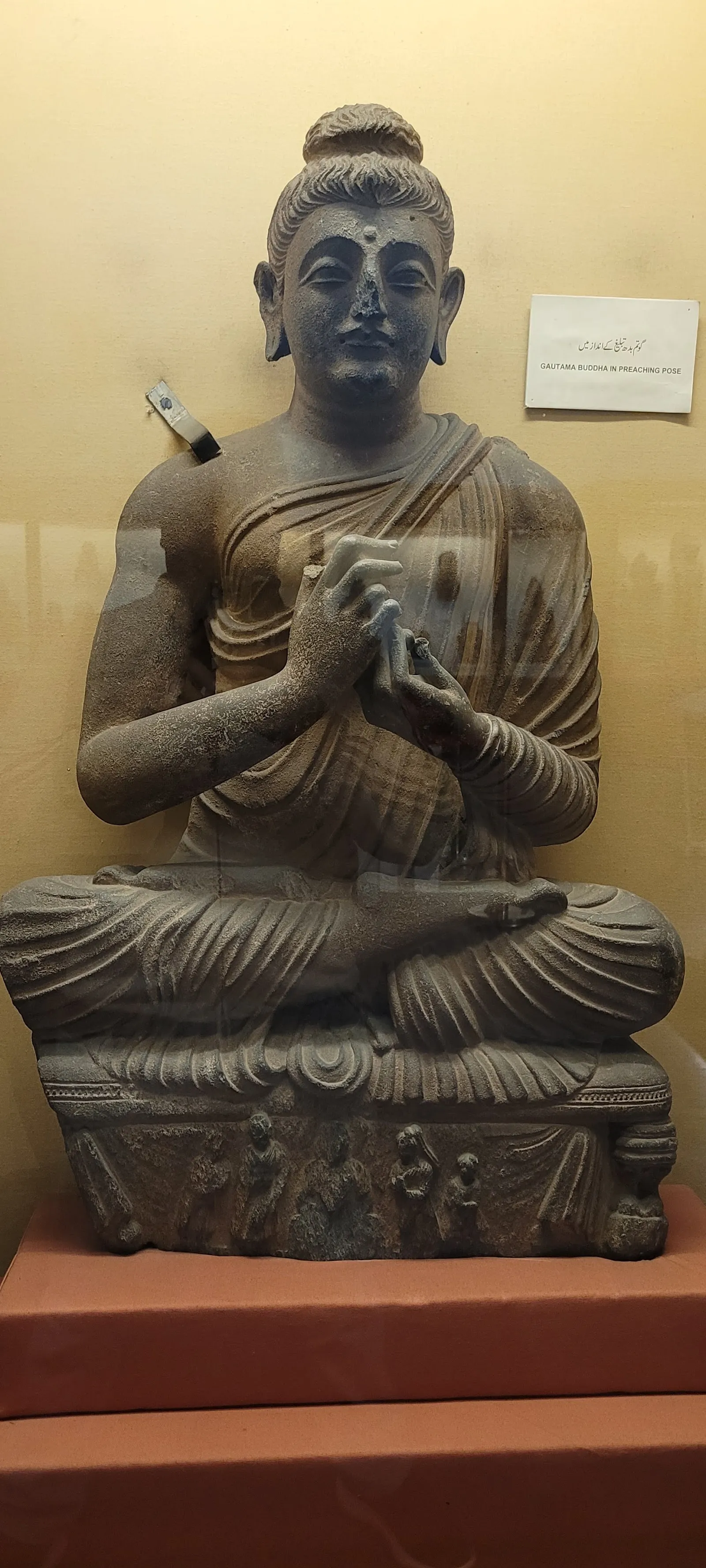
The galleries cover the region from the Stone Age and the Indus Valley cities of Mohenjo-daro and Harappa to the independence movement. Gandhara sculpture is at the core of the collection, and the Fasting Buddha is its best-known work.
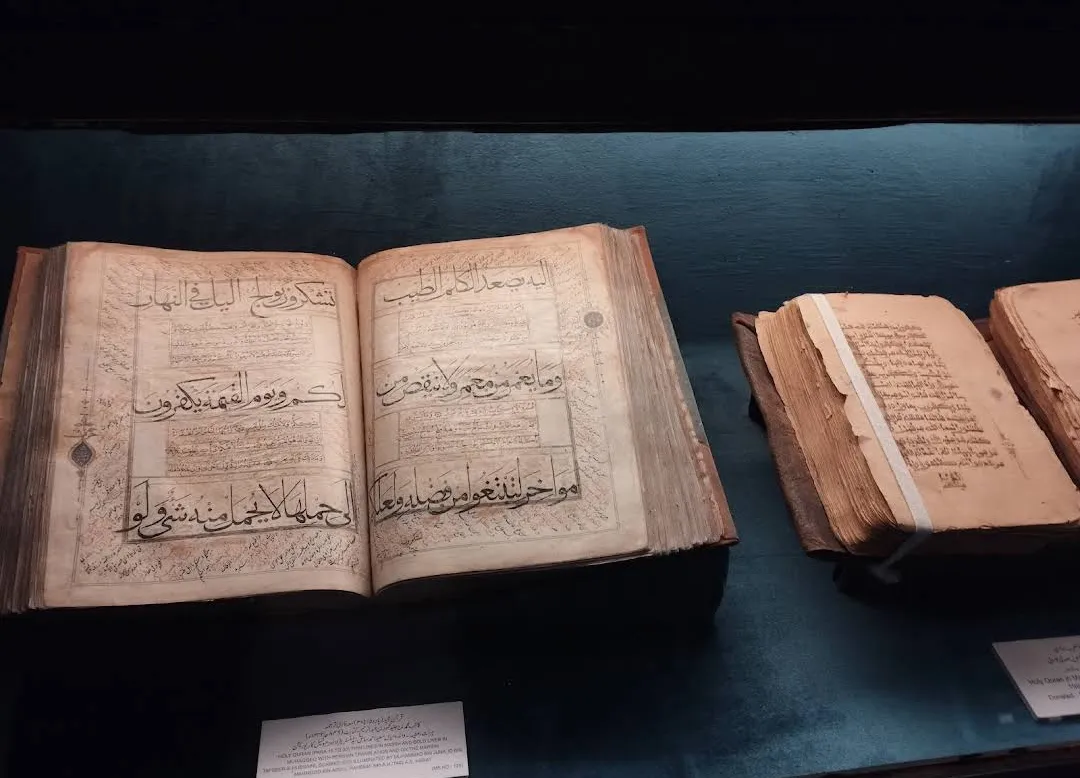
Other displays include Mughal miniature paintings, Islamic calligraphy, Qurans, carpets, arms and armour, Kangra and Mughal paintings, and early coins, including issues from the Achaemenid period. Sikh and British-era rooms cover the later history of the Punjab, and a Pakistan Movement gallery covers the road to independence.
The ceilings of the main hall carry a large mural, Evolution of Mankind, painted by Sadequain. John Lockwood Kipling, father of Rudyard Kipling, was one of the museum's early curators, and the museum appears in the opening scene of Rudyard Kipling's novel Kim.
Planning a visit
The entrance, elevator, restrooms and parking lot are listed as wheelchair accessible. The museum is family-friendly, with a changing table, kid-friendly activities and a discount for children. Parking is paid, both in the lot and on the street.
The galleries are well lit and labelled, and staff are known for being polite and willing to answer questions. Renovation work has been mentioned for 2026, so check the museum website before you go.
Souvenir shop
The shop is close to the exit. It sells handcrafted replicas of Gandhara statues, fridge magnets, Mughal-style jewellery, miniature paintings and books on Pakistan's history. Prices have been described as reasonable for the quality on offer.
FAQ
How long do you need at the Lahore Museum?
Plan at least two to three hours to see the galleries properly.
Is there an entry fee?
Yes, the museum charges admission. Children get a discount, and a reduced fare has been reported for students, so bring a student card.
Do I need to book tickets in advance?
Advance tickets are recommended. Weekends are crowded, and a guided tour is worth booking on those days.
Is the museum wheelchair accessible?
Yes. The entrance, elevator, restrooms and parking lot are listed as wheelchair accessible.
Where is the Lahore Museum?
It is on Mall Road in Lahore, near Anarkali Bazaar.