At the Moroccan Culinary Art Museum, near Bahia Palace in Marrakech’s medina, rooms trace the tools, ingredients and customs behind Moroccan cooking. See pots, pans and serving pieces from different regions, with displays on couscous, pastilla, herbs and spices. The museum occupies an 18th-century palace with two courtyards, zellige tilework and a marble fountain. When you are ready to eat, the cafe serves traditional dishes such as chekhchoukka and orange blossom pastilla, and there is also a rooftop restaurant and a tea salon.
Moroccan food traditions and tools
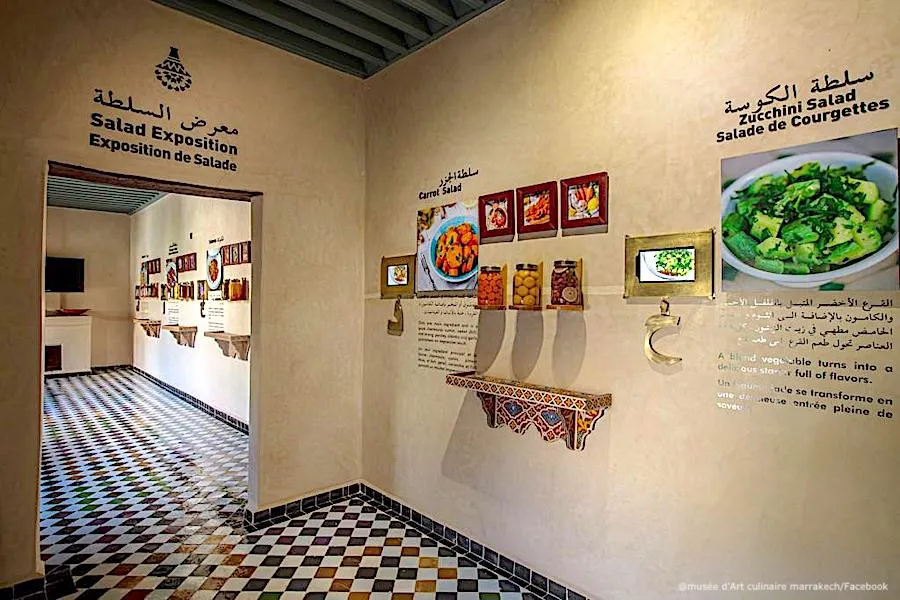
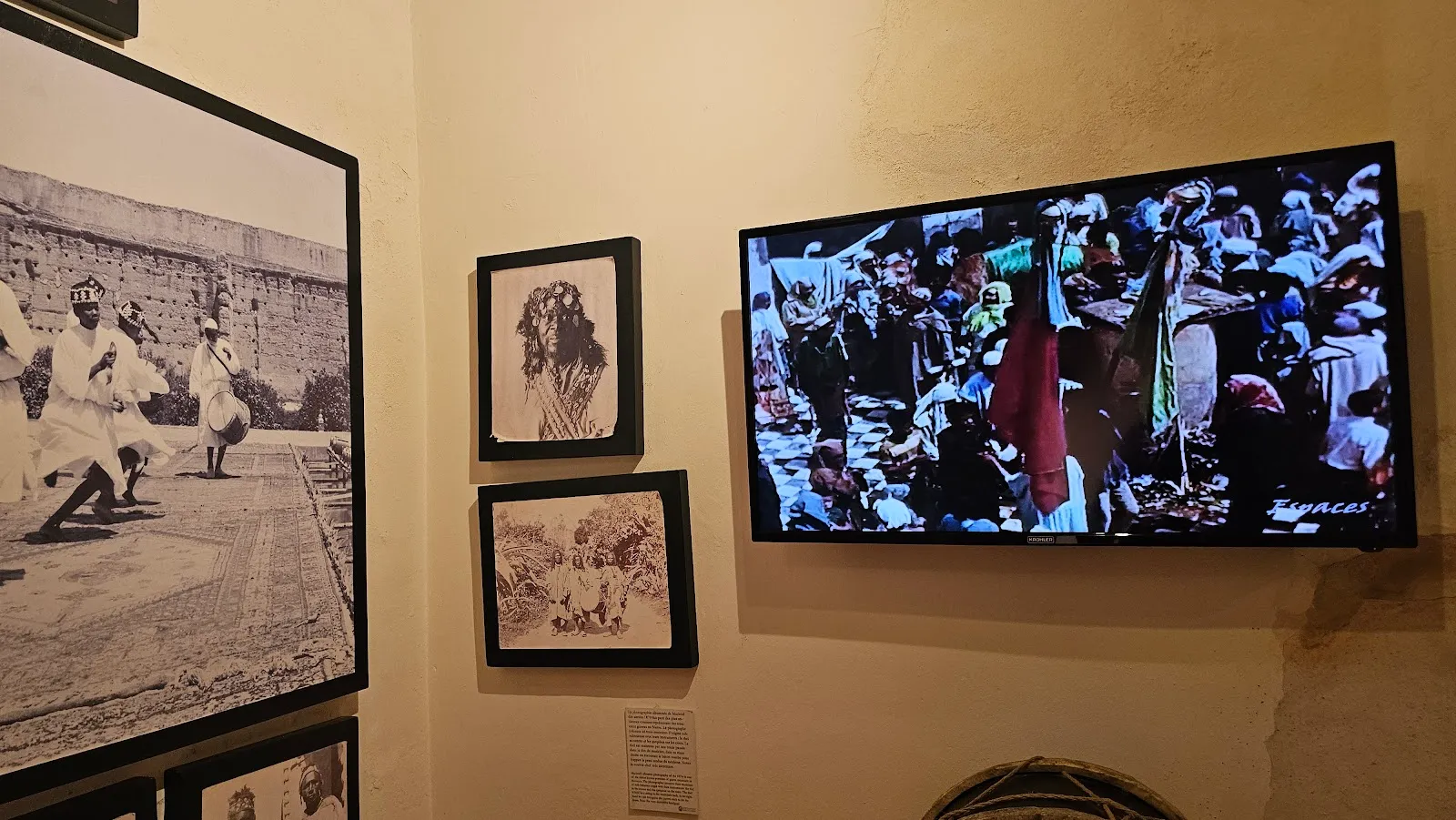
The museum focuses on the history and practice of Moroccan cooking. Its rooms cover ingredients such as herbs and spices, dishes including couscous and pastilla, and the equipment used to prepare food in different parts of the country. Pots, pans, plates and other kitchen items show how regional cooking has taken shape over time.
The displays also address the customs around hospitality and the influences that have shaped Moroccan cuisine, including Jewish contributions. Together, they give context to dishes you may encounter elsewhere in Marrakech, from familiar staples to local variations.
A palace with two courtyards
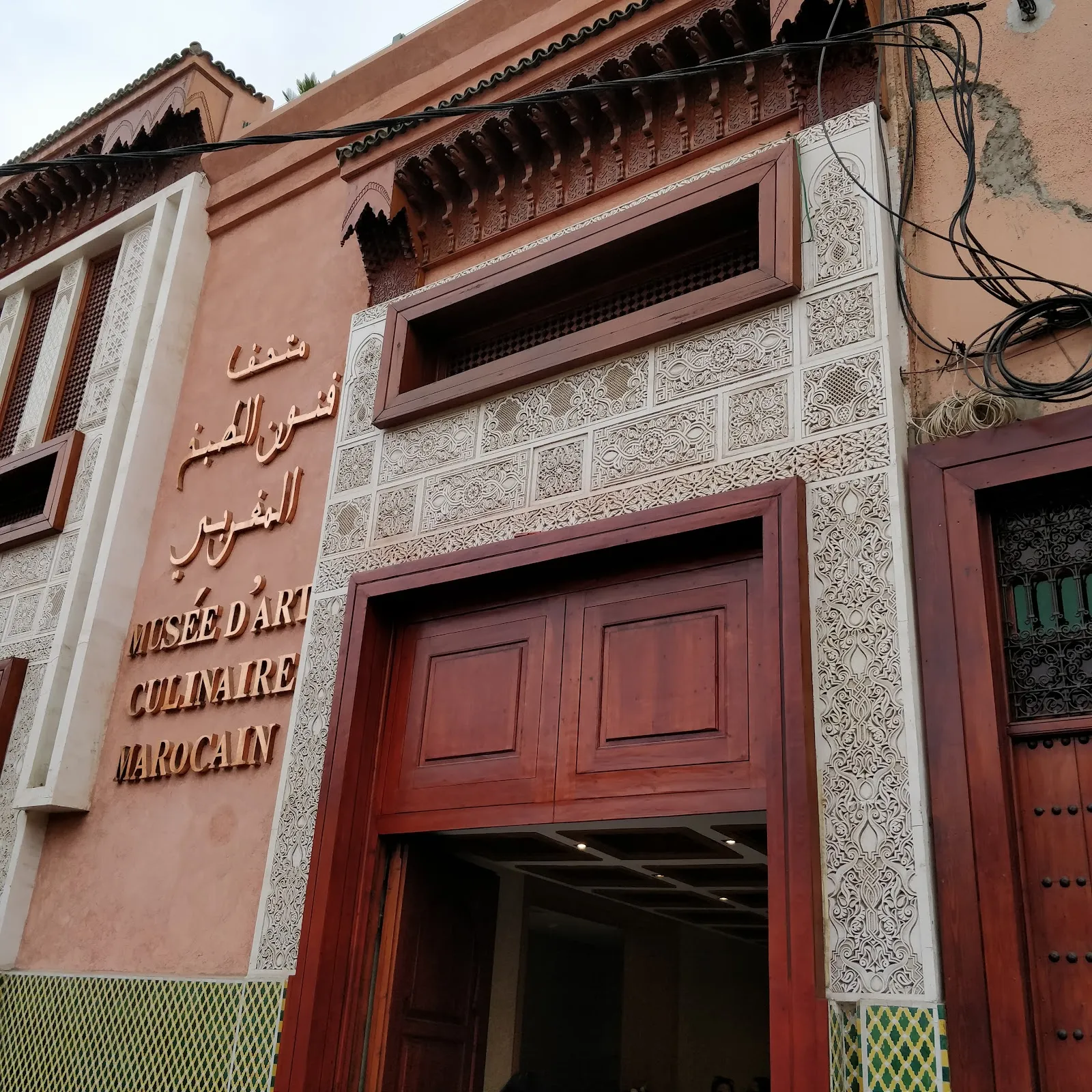
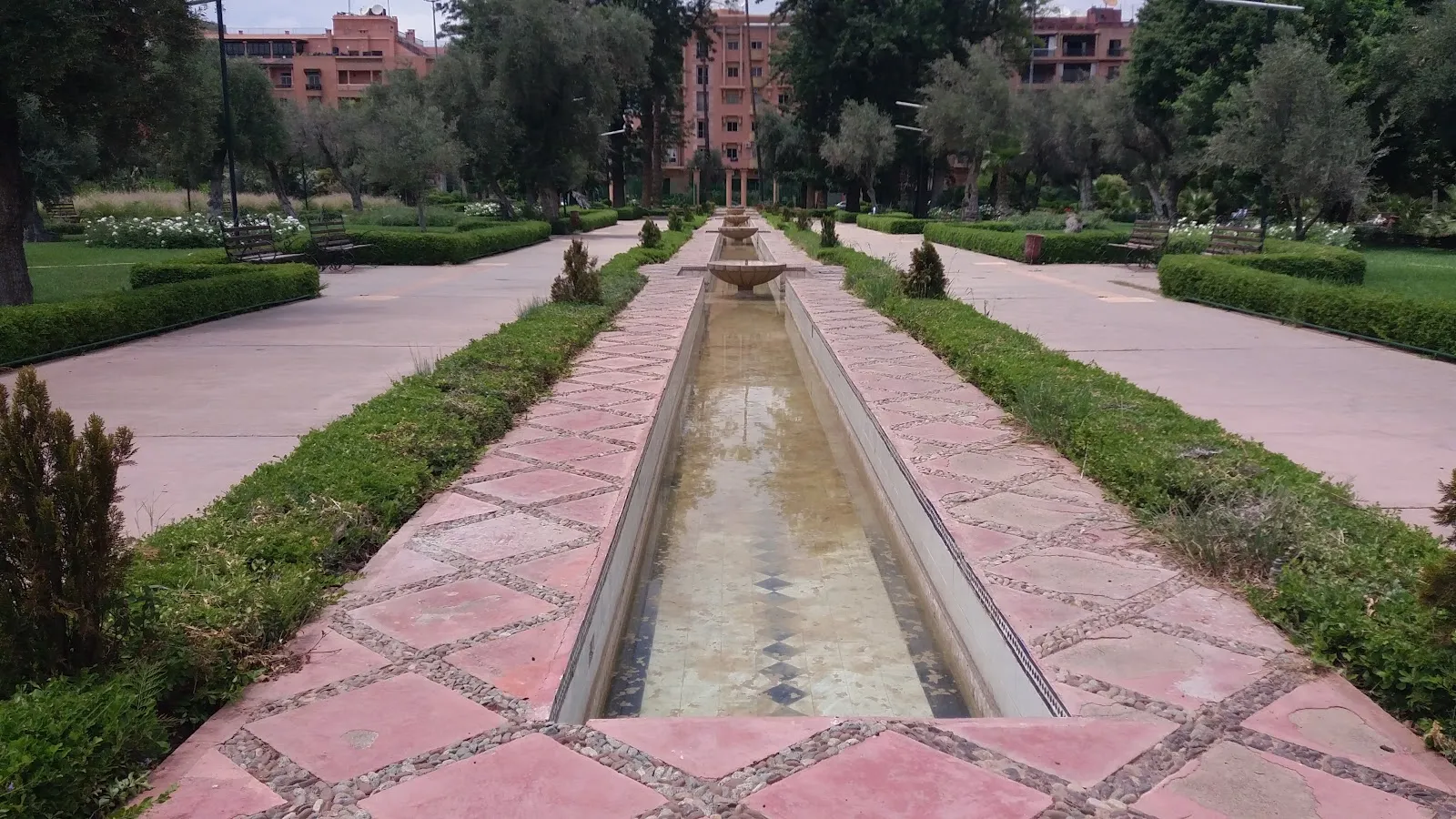
The museum is housed in an 18th-century palace in the southern medina, close to Bahia Palace. Two interior courtyards bring together zellige tilework, carved columns and salons. In the first courtyard, a Carrara marble fountain stands among olive trees.
The rooms are arranged around specific subjects, so you can move from cooking equipment to ingredients and food customs. The visit is described as relatively short, making it a focused stop alongside the historic sites nearby.
Classes, food and a break from the heat
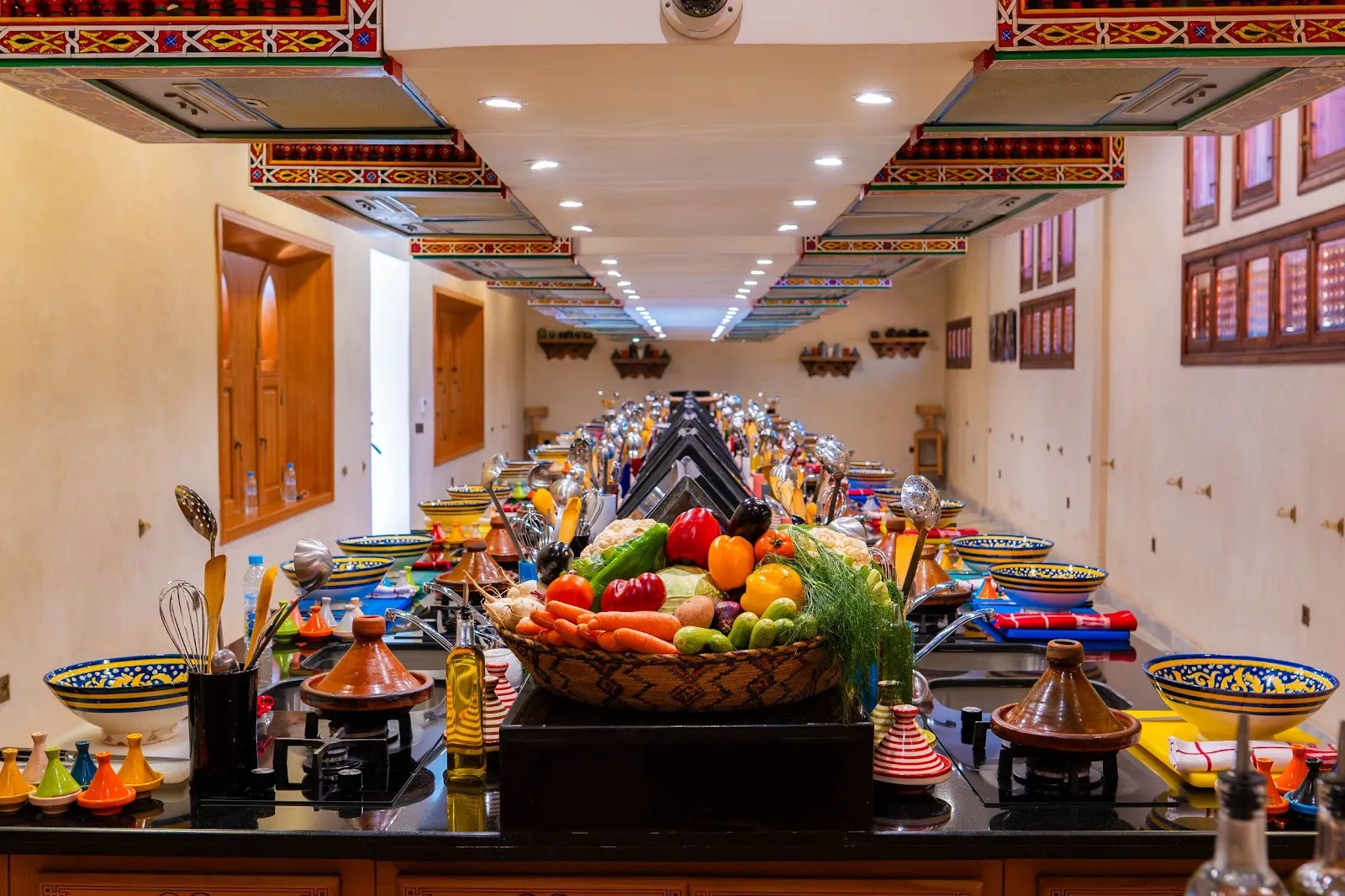
A cooking class gives you a chance to learn Moroccan recipes, while a guide can add context as you move through the museum. These options suit visitors who want more than a walk through the displays; arrange a class or guide in advance.
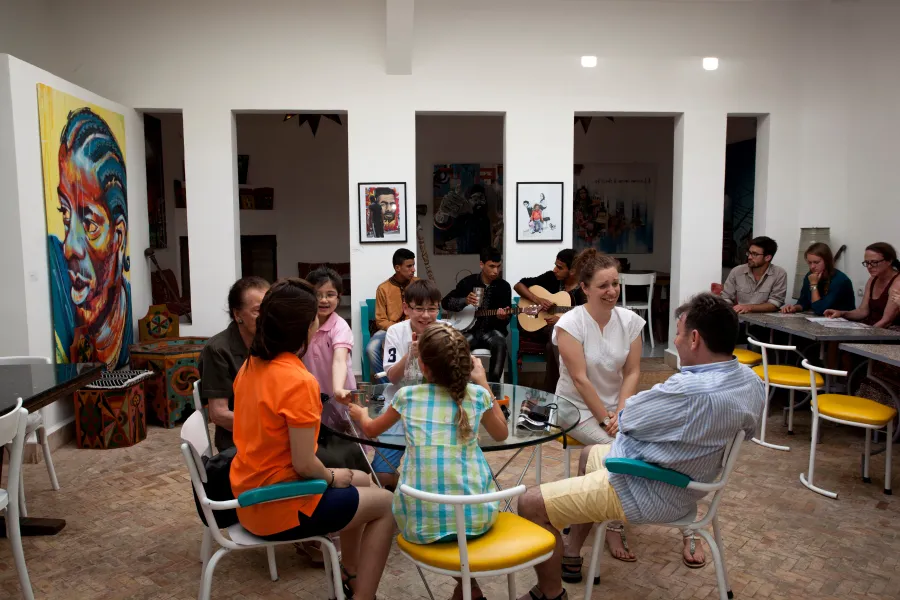
The cafe serves Moroccan dishes and pastries, including chekhchoukka and orange blossom pastilla. A rooftop restaurant also serves food, with tastings noted as an option. For a quieter pause, the tea salon has air conditioning, detailed woodwork and a broad menu of tapas and snacks. The museum has free entry; check the official website for current details about classes and food service.
FAQ
Is entry to the Moroccan Culinary Art Museum free?
The museum is described as having free entry. Check its official website for current visitor information.
What can you see at the museum?
Displays cover Moroccan cooking tools, ingredients, dishes and food customs, including regional utensils, spices, couscous and pastilla.
Can you eat at the Moroccan Culinary Art Museum?
Yes. There is a cafe serving Moroccan dishes and pastries, a rooftop restaurant and a tea salon with tapas and snacks.
Can you take a cooking class?
Cooking classes are available. Booking a class or a guide in advance is advised.