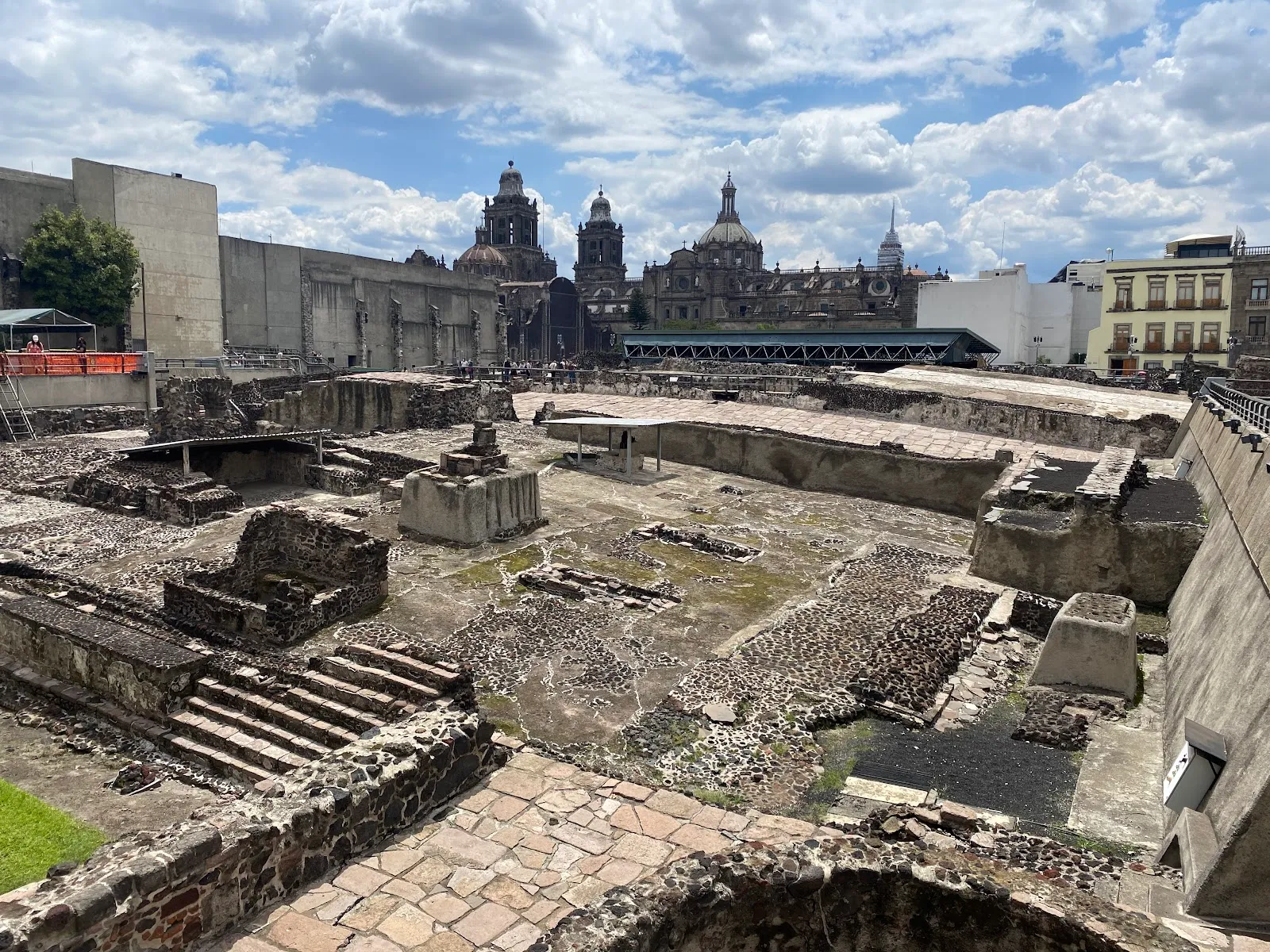
Templo Mayor Museum sits beside the Zócalo in Mexico City's Centro Histórico, next to the Metropolitan Cathedral. It combines an excavated archaeological zone with a museum of what was found there. The ruins are the main temple of Tenochtitlan, the Mexica (Aztec) capital. Walkways take you over and around the temple's stages, then the museum shows the objects recovered: the Coyolxauhqui stone disc, eagle warrior figures, serpent heads, obsidian knives and a model of the temples. Both parts are covered by one visit, and the entrance is on Calle Seminario.
How the temple was found in 1978
For centuries the exact location of the main temple of Tenochtitlan was forgotten. The Spanish destroyed it in 1521, and the Metropolitan Cathedral was built from its stones on the same ground.
In 1978, electrical workers digging in the center of the city uncovered a stone disc of about eight tons, carved with the goddess Coyolxauhqui. Archaeologists soon recognized that it belonged to the main temple. A decision followed to demolish colonial buildings above the site and excavate it.
The museum was built to hold what the dig produced. It opened on 12 October 1987.
The Great Temple of Tenochtitlan
Tenochtitlan was founded in 1325 on the shores of Lake Texcoco. Work on the temple began after that date, and it was rebuilt several times, each stage enclosing the one before. That is why the ruins show pyramids inside pyramids.
The Mexica regarded the temple as the center of the universe. At the top stood two shrines, one to Huitzilopochtli, god of war, and one to Tlaloc, god of rain and agriculture. Each shrine had its own staircase. A scale model in the museum shows how the two temples sat on the pyramid.
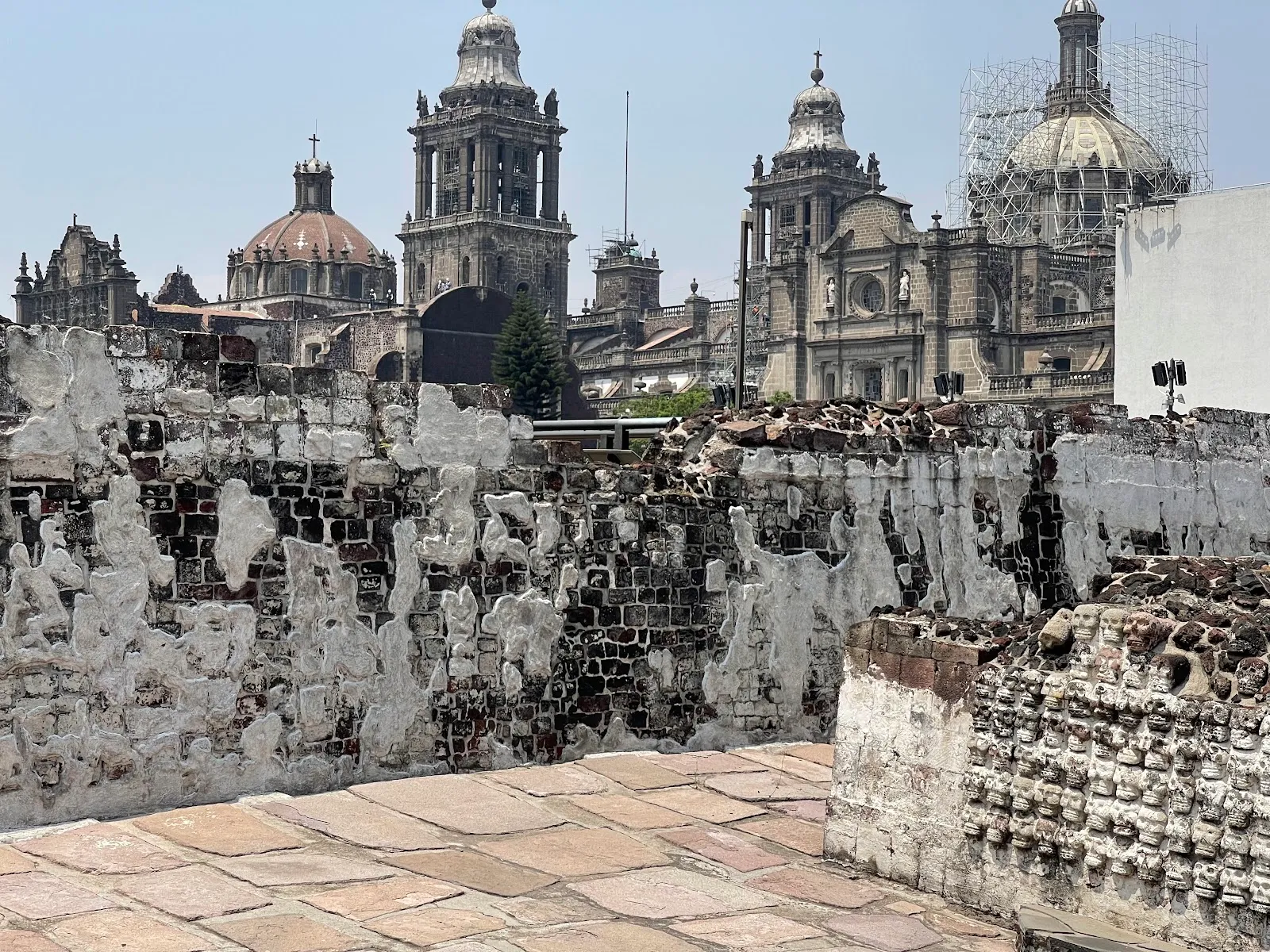
The temple was also a place of ritual sacrifice. Captives taken in the empire's wars were sacrificed here, and carvings of skulls are visible in the temple compound. The museum presents this plainly, alongside the offerings left at the temple and the wider story of Mexica life and society.
Walking the archaeological zone
The site is part indoor, part outdoor. A series of walkways runs over, through and around the excavated areas, so you see the construction stages from above and from the side. Serpent heads, the foundations of a tzompantli (skull rack) and other stonework are along the route.
The setting is unusual. Modern buildings surround the excavation, and the Cathedral rises directly behind it. Parts of the ruins can also be seen from viewing areas on the street outside, which is useful if you only want a look.
The ground is uneven stone, and much of the route is in the open, so plan for sun and good footwear.
What is in the museum
The museum holds thousands of pieces, from the temple site and from other places in central Mexico. The Coyolxauhqui disc is the centerpiece, and it is seen up close here. Other highlights include the figure of Tlaltecuhtli, eagle warrior sculptures, a Chac Mool, ceramic warriors, stone carvings, jewelry and obsidian knives. There are skulls of sacrificial victims and models of the temple.
One room covers the Spanish destruction of Tenochtitlan. The displays have enough detail that a visitor who reads the signs can take around an hour, and many people spend two. Dioramas and interactive models make it easier for children to follow.
Planning the visit
The entrance is at Seminario 8, just off the Zócalo between the Cathedral and the Palacio Nacional. The site has an admission fee, and tickets can be bought online or with cash. The entrance, restroom and an elevator are wheelchair accessible.
After the visit you are a short walk from the Zócalo, the Cathedral, the Diego Rivera murals in the Palacio Nacional, and the pedestrian street Paseo Madero, which has cafes and restaurants for lunch.
FAQ
Is there an entry fee at Templo Mayor Museum?
Yes, there is an admission fee. Tickets can be bought online or with cash, and buying in advance is recommended.
How long do you need at Templo Mayor?
Plan on one to two hours. If you read all the signs, the museum takes about an hour on its own, and the ruins come on top of that.
Which day is Templo Mayor closed?
It is closed on Mondays and open Tuesday to Sunday.
Where is the entrance?
The entrance is at Seminario 8, beside the Metropolitan Cathedral and a few steps from the Zócalo.
Is Templo Mayor wheelchair accessible?
The entrance, the restroom and an elevator are wheelchair accessible. The ruins themselves are uneven stone, so check the route on arrival.
Is it a good visit with children?
Yes. The museum has dioramas and interactive models, and the ruins show history on the spot where it happened.