Pianifica un viaggio
Lingua: Italiano
Pianificatore di viaggiPianifica il tuo viaggio su una mappa

Le migliori destinazioni

EnglishDeutschFrançaisEspañolPortuguêsPortuguês (BR)Italiano
Avviso di viaggio · MessicoCopper Canyon si trova in o vicino a un'area per cui i governi sconsigliano ogni viaggio non essenziale: Stato di Chihuahua.Le indicazioni dipendono dal tuo passaporto. Leggi quelle del tuo governo prima di prenotare.Indicazioni ufficiali
Aree con avvisi
  • Stato di Colima · evitare ogni viaggio · Canada, Germania, Francia, Regno Unito
  • Culiacán e dintorni · evitare ogni viaggio · Spagna, Francia
  • Stato di Guerrero · evitare ogni viaggio · Canada, Germania, Francia, Nuova Zelanda, Regno Unito
  • Stato di Sinaloa · evitare ogni viaggio · Canada, Germania, Spagna, Francia, Nuova Zelanda, Regno Unito
  • Acapulco · evitare i viaggi non essenziali · Spagna, Francia
  • Stato del Chiapas · evitare i viaggi non essenziali · Canada, Francia
  • Stato di Chihuahua · evitare i viaggi non essenziali · Canada, Francia, Regno Unito
  • Strada federale 199, Chiapas · evitare i viaggi non essenziali · Francia, Regno Unito
  • Guanajuato a sud della strada 45D · evitare i viaggi non essenziali · Canada, Nuova Zelanda, Regno Unito
  • Zona di confine con il Guatemala · evitare i viaggi non essenziali · Germania, Francia, Nuova Zelanda
  • Parco nazionale Lagunas de Zempoala · evitare i viaggi non essenziali · Canada, Nuova Zelanda
  • Stato del Michoacán · evitare i viaggi non essenziali · Canada, Germania, Nuova Zelanda, Regno Unito
  • Autostrada Monterrey–Nuevo Laredo · evitare i viaggi non essenziali · Spagna, Francia
  • Fascia di Nayarit entro 20 km dai confini con Sinaloa e Durango · evitare i viaggi non essenziali · Canada, Nuova Zelanda
  • Nuevo León (eccetto Monterrey) · evitare i viaggi non essenziali · Canada, Nuova Zelanda
  • Piedras Negras · evitare i viaggi non essenziali · Spagna, Francia
  • Stato di Sonora · evitare i viaggi non essenziali · Canada, Nuova Zelanda
  • Stato di Tamaulipas · evitare i viaggi non essenziali · Canada, Francia, Regno Unito
  • Tecate · evitare i viaggi non essenziali · Francia, Regno Unito
  • Tijuana · evitare i viaggi non essenziali · Francia, Regno Unito
  • Regione di confine con gli USA · evitare i viaggi non essenziali · Germania, Francia
  • Stato di Zacatecas · evitare i viaggi non essenziali · Canada, Germania, Spagna, Francia, Regno Unito

Segnalata anche da un solo governo: Tamaulipas settentrionale, a nord di Ciudad Victoria (Germania), Strada 129, Martínez de la Torre–Teziutlán (Francia), Strada 131, Tlapacoyan–Perote (Francia), Strada 40, Monterrey–Reynosa (Francia), Strade secondarie, strada 180, Martínez de la Torre–Papantla (Francia), Michoacán meridionale, da Uruapan alla costa (Francia), Michoacán meridionale, a sud di Morelia, inclusa la Tierra Caliente (Spagna), Triangolo Celaya, Irapuato, Salamanca (Guanajuato) (Francia), Bassa California (eccetto Tijuana e Tecate) (Francia), Fascia del Chiapas entro 40 km dal confine con il Guatemala (Regno Unito), Zone turistiche del Chiapas (Spagna), Ciudad Acuña (Spagna), Ciudad Juárez e dintorni (Spagna), Ciudad Obregón (Francia), Stato di Coahuila (eccetto la parte meridionale) (Nuova Zelanda), Coatzacoalcos (Francia), Quartieri a nord e nord-est dello Zócalo, Città del Messico (Francia), Stato di Durango (Francia), Nuevo León orientale (Francia), Ecatepec (Spagna), Sud dello stato di Guanajuato (Francia), Comuni settentrionali di Jalisco (Regno Unito), Sud e sudovest del lago di Chapala (Jalisco) (Regno Unito), Jalisco sudoccidentale e Los Altos (eccetto Puerto Vallarta) (Francia), Fascia di Jalisco entro 50 km dal confine con il Michoacán (Canada), Monclova (Spagna), Stato di Morelos (Francia), Naucalpan (Spagna), Stato di Nayarit (Francia), Nezahualcóyotl (Spagna), Nogales (Francia), Tamaulipas settentrionale, da San Fernando al confine con gli USA (Spagna), Veracruz settentrionale da Martínez de la Torre (Francia), Strada 150D, Puebla–Orizaba (Francia), Strada 190, Oaxaca–Santo Domingo Tehuantepec (Francia), Strada 95, Città del Messico–Cuernavaca (Francia), Strade 85 e 83, Monterrey–Ciudad Victoria–Tampico (Francia), Foresta Lacandona (Francia), Sud-Ovest del Michoacán (Francia), Sud-Ovest del Tamaulipas (Francia), Tepic (Nuova Zelanda), Toluca (Francia), Veracruz (Francia)

GovernoConsigliAggiornatoLeggi le indicazioni
Regno Unito (FCDO)No advice against the whole country (regional advisories)–Leggi le indicazioni
Stati Uniti (Dipartimento di Stato)Exercise increased caution29 mag 2026Leggi le indicazioni
Canada (Affari globali)Exercise a high degree of caution (regional advisories)–Leggi le indicazioni
Germania (Auswärtiges Amt)Besondere Vorsicht walten lassen (Sicherheitslage) (regional advisories)19 ott 2026Leggi le indicazioni
Nuova Zelanda (SafeTravel)Exercise increased caution (regional advisories)–Leggi le indicazioni
Francia (Ministero per l'Europa e gli Affari esteri)Vigilance renforcée pour le reste du pays (regional advisories)–Leggi le indicazioni

Verificato ogni giorno dalle indicazioni pubblicate dai governi; ultima verifica 3 nov 2026.RoamLedger riassume le indicazioni ufficiali; non è un consiglio di alcun governo.

Metropolitan Cathedral of Chihuahua
Chiesa

Metropolitan Cathedral of Chihuahua

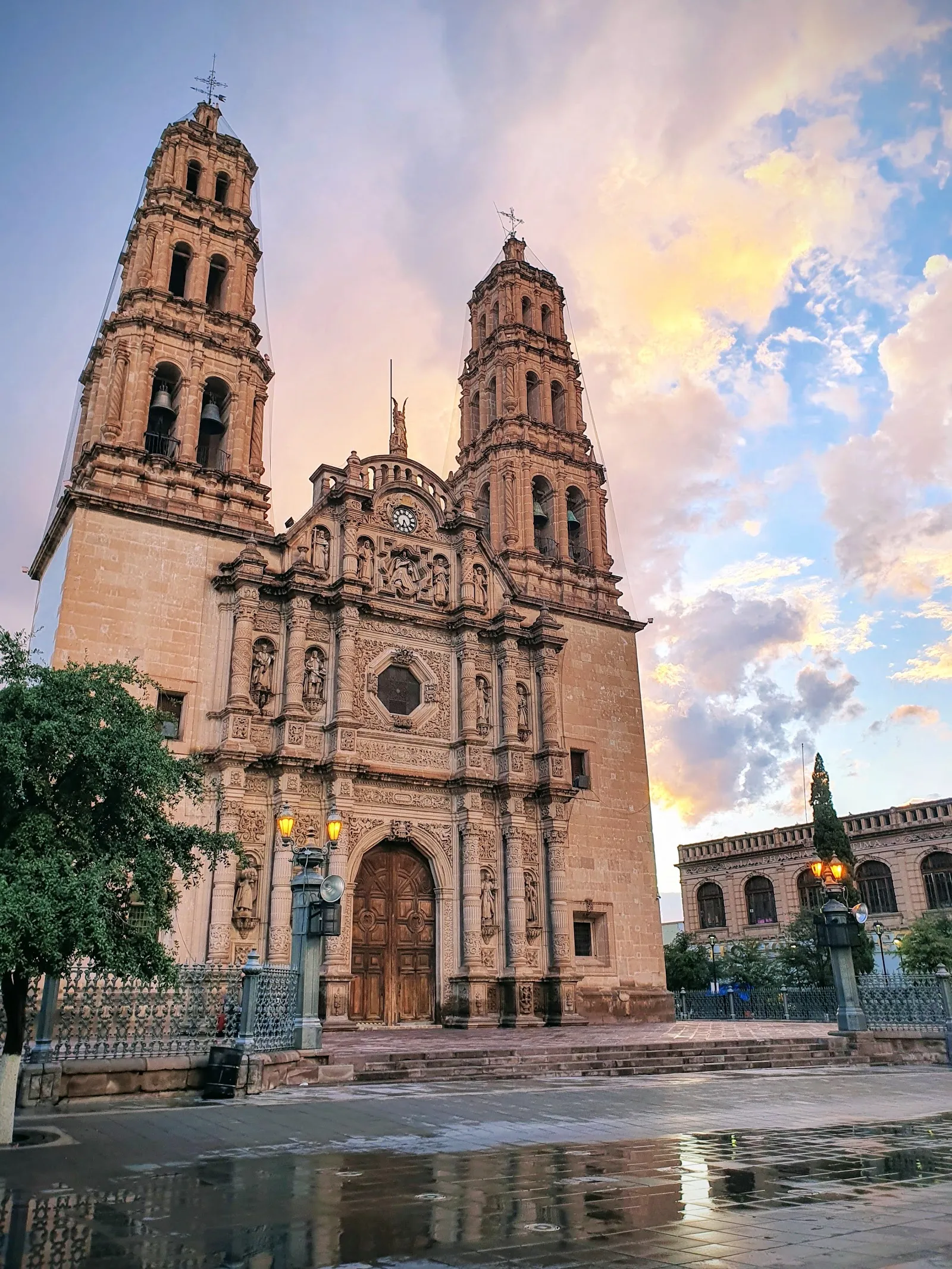
The Metropolitan Cathedral of Chihuahua is on the south side of Plaza de Armas in the city centre.

The Metropolitan Cathedral of Chihuahua is on the south side of Plaza de Armas in the city centre. It is the main Catholic church in Chihuahua and one of the most important colonial buildings in northern Mexico, built in the Spanish Baroque style. Look up at the facade, where Solomonic columns are used, and find the octagonal window made in Germany and the clock from London. Inside, the air is calm, and people come in to sit, pray or rest, even when no service is taking place. Allow time to walk the plaza and the historic centre around it.

From 1725 to today
Metropolitan Cathedral of Chihuahua

Construction of the cathedral began in 1725, and the building is one of the oldest and most famous monuments in Chihuahua. Its official name is the Metropolitan Cathedral of the Holy Cross, Our Lady of Regla, and St Francis of Assisi. It is also called the State Capital Church, and it is the seat of the Roman Catholic parish in Chihuahua.

The church follows the Spanish Baroque style. Its floor plan is shaped like a Latin cross, with a dome over the crossing. Many writers consider it the most impressive Baroque building in northern Mexico, which is why it is one of the main stops on any visit to the historic centre.

The facade
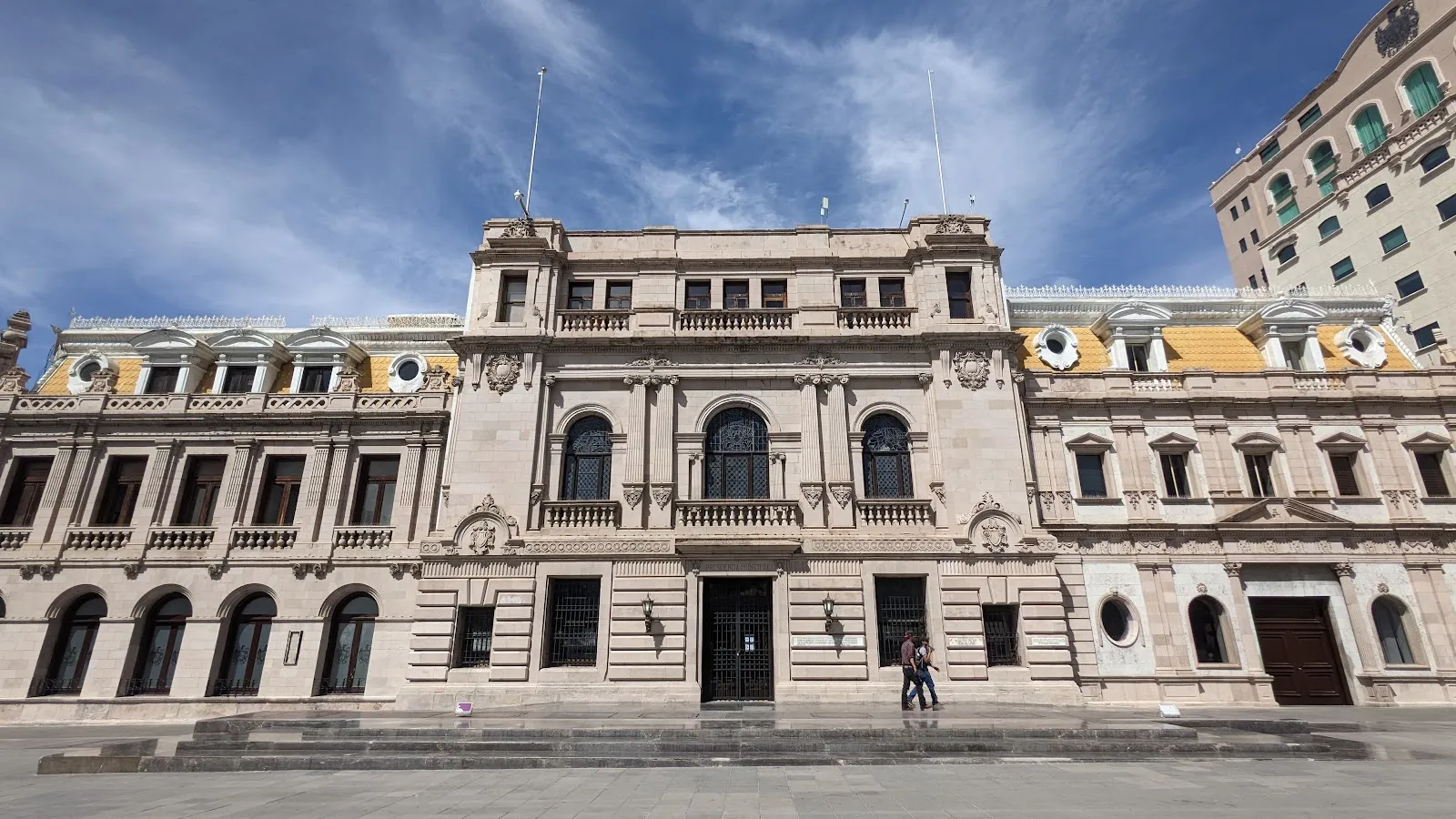
Metropolitan Cathedral of Chihuahua

The facade is the feature most visitors study first. Solomonic columns decorate it, and these twisted columns are uncommon in New Spanish Baroque architecture. The facade also has twin bell towers and carved statues.

Look for the octagonal window, which was commissioned in Germany, and the clock made in London. The clock replaced the royal Spanish coat of arms in 1874. Several details refer to older church art, including an image of St Francis holding a skull. The artist signed the work in a clever way, so a close look at the carvings is worth the time.

Inside the cathedral

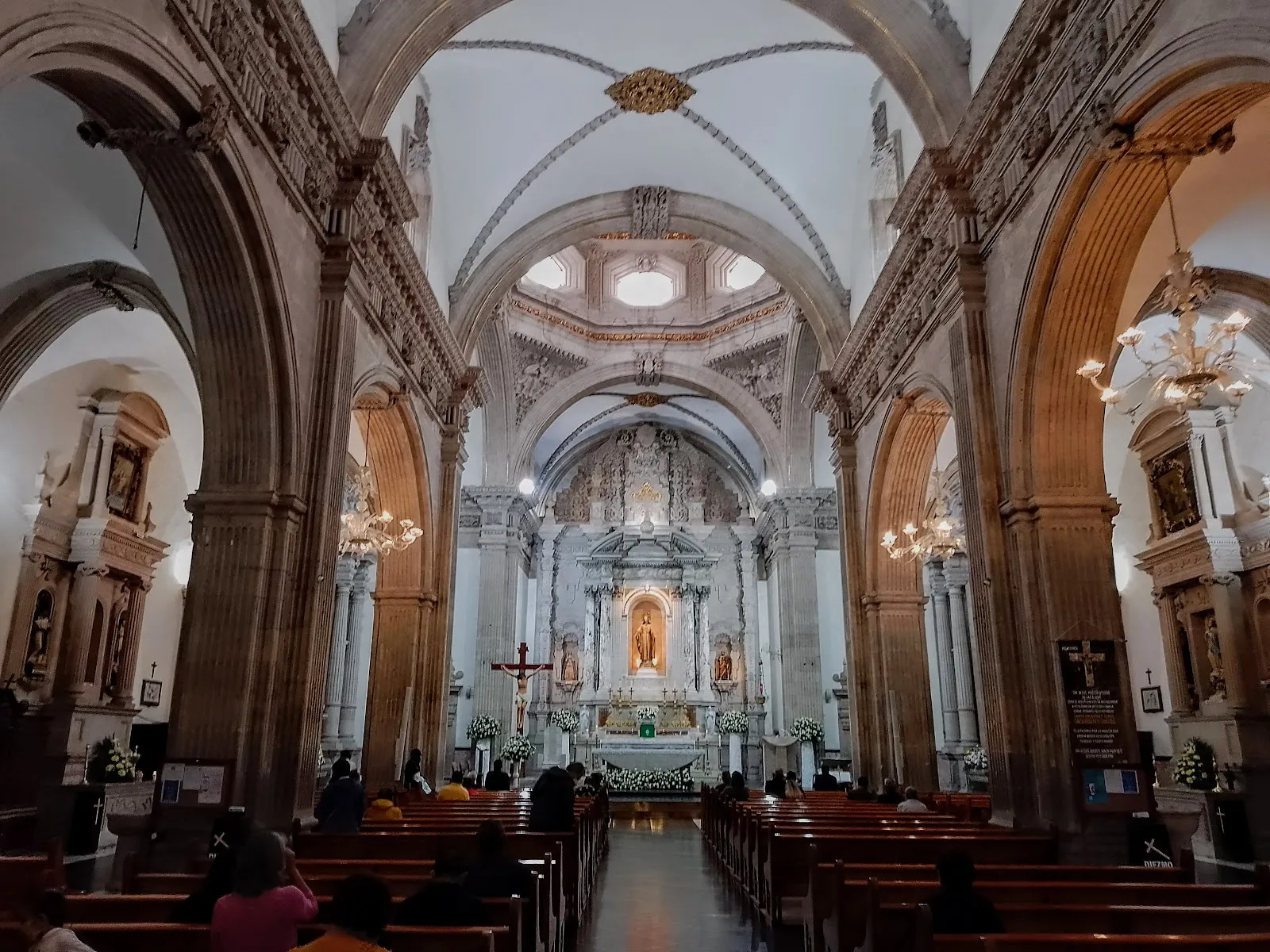
The interior is calm and well lit. Light comes in through the high windows and falls across the pews. The heavy historic doors are worth a look too, especially their metal hardware.

The interior holds altarpieces and religious artwork. Many people come in to sit in the pews to rest, reflect or pray, even on days when no service is held. A museum of sacred art is reached through the catacombs of the cathedral. Its collection includes religious works from the colonial era.

Around the cathedral

The cathedral faces Plaza de Armas, and the historic site park between the cathedral and the city hall is a good place to sit in the sun. Locals often spend time here, so it is a useful place to see daily life in the city.

The downtown area has several museums close by. The Museo de la Lealtad Republicana, in Casa Juárez, was the government headquarters in the mid-19th century. Casa Chihuahua, a cultural heritage centre, lets visitors see the prison cell of Miguel Hidalgo. One museum in the area, a former post office, hosted a Frida Kahlo exhibit. Downtown is a pedestrian area, so a walk between these sites is simple.

FAQ

Do I need to book tickets?

Advance tickets are recommended for the cathedral. Check the latest arrangements before you travel.

When is the best time to visit?

Morning is the best time, when natural light comes in through the high windows and the interior feels most peaceful.

Is the cathedral wheelchair accessible?

Yes. The entrance and the parking lot are both wheelchair accessible.

How much time should I plan?

The material does not give a set length for the cathedral alone. Downtown has more to see than one day allows, so plan for a longer stay if you want to visit the museums too.
Altre attrazioni imperdibili a Copper Canyon

Esplora tutto