
The Bock Casemates are a network of underground tunnels cut into the cliff of the Bock promontory, in the Grund district of Luxembourg City. Built over several centuries as part of the city's defences, the galleries once held cannon positions, stables and workshops. The route leads through rock passages and stone stairways, with openings that frame views over the Alzette Valley. The site is a UNESCO World Heritage site and one of the city's main historic sights, and the views from its openings are a draw in their own right.
From a cliff fort to a network of tunnels
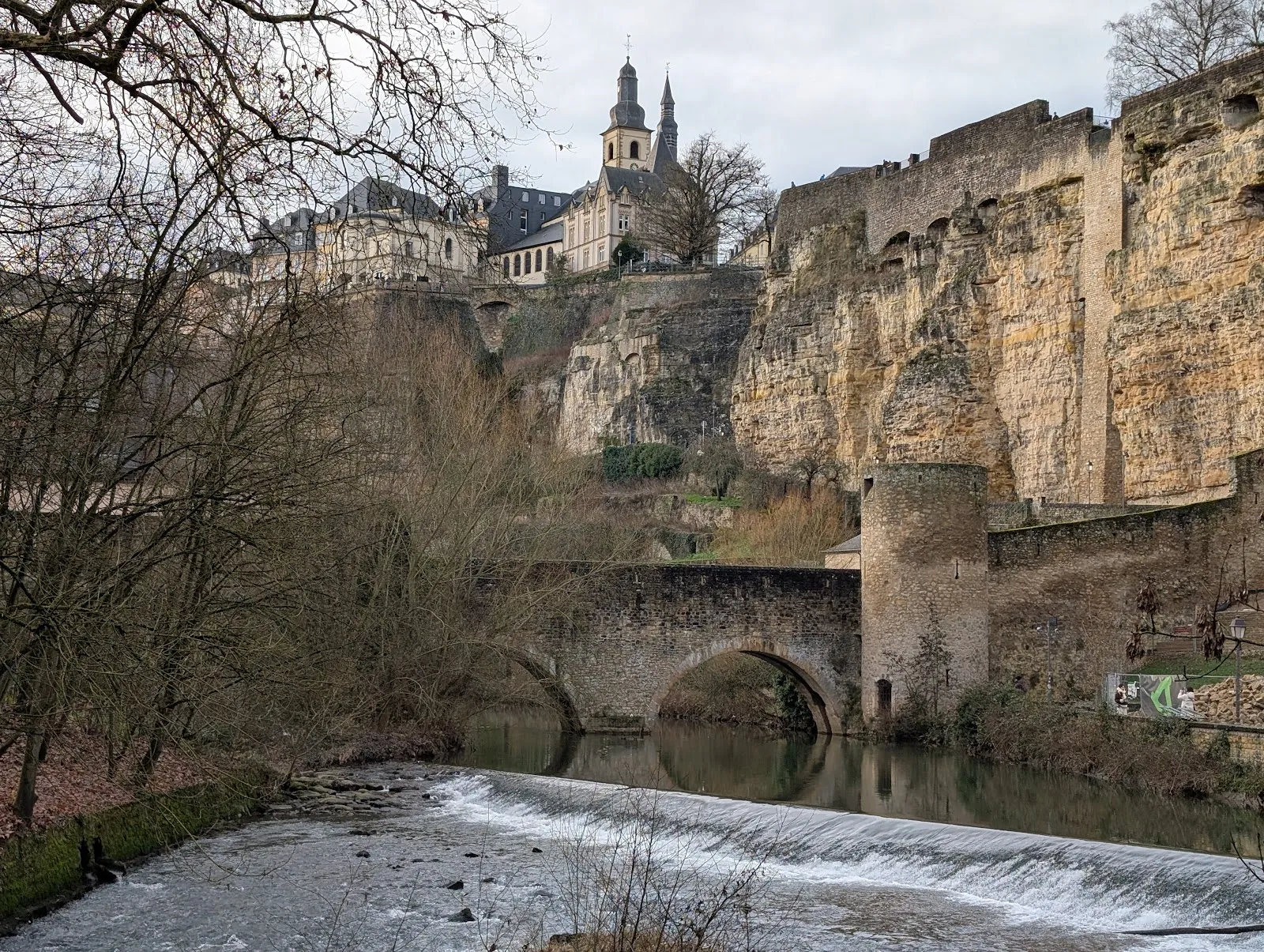
The Bock is a rocky promontory in the north-eastern corner of the old town, with cliffs above the River Alzette on three sides. That natural protection drew Count Siegfried, who built his Castle of Lucilinburhuc here in 963. The town that grew around the castle became Luxembourg.
The tunnels came much later. Work began in 1644, when the Spanish cut the first casemates into the rock. French engineers expanded the network afterwards, and Austrian rulers continued the work in the 18th century. The galleries were built to hold guns, and over time they also served as living and working space. The nickname "Gibraltar of the North" came to be linked with the city's fortifications.
In the 19th century most of the city walls were torn down. The casemates were not, and they remain the surviving part of the old defences.
Inside the tunnels
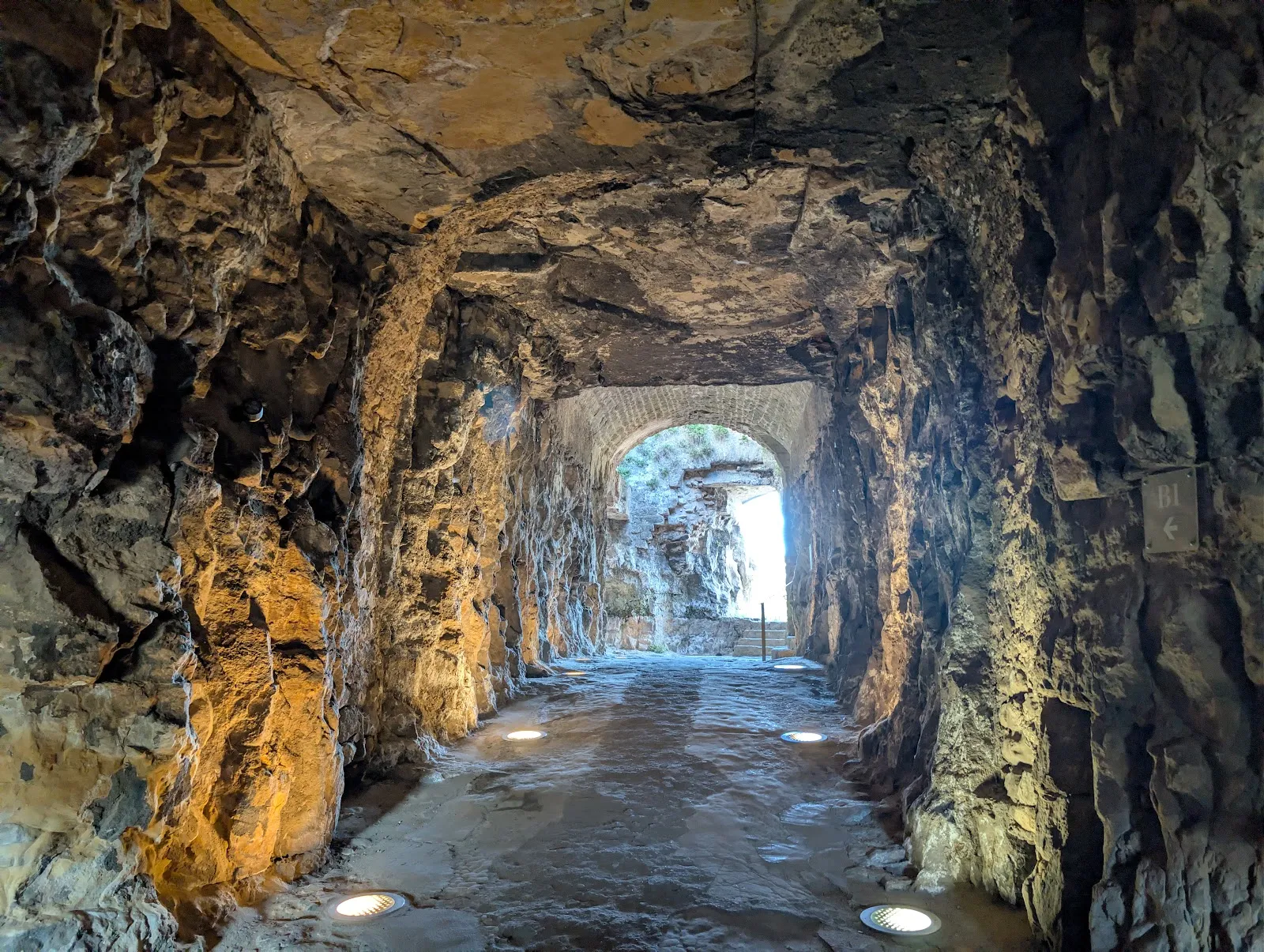
The passages are carved into solid rock. In places they run on several levels and reach as far as 40 metres below the fortress above.
Along the route you pass artillery positions, where guns once faced out over the valley. Other rooms were built as stables, storehouses, workshops, kitchens, bakeries and slaughterhouses, and there were barracks for 1,200 soldiers.
The route includes steep stairs, some of them spiral, and floors that are uneven in places. The openings cut through the walls are the main reward. From them you look down on the Grund, the Alzette Valley and Pfaffenthal.
Wartime use
During the Second World War the tunnels were used as bomb shelters. More than 35,000 residents, along with soldiers, sought refuge in them during the war.
How a visit works
Tickets can be bought at the entrance or online, and buying in advance is recommended. Free toilets are located just before the entrance, but there are none inside the tunnels.
A pamphlet with a map is available on site and explains the route. Guided tours with a local guide are also offered for visitors who want more history.
Inside the Bock Casemates, the Archaeological Crypt has an audiovisual presentation on the fortress's history. Plan about 45 minutes to an hour for the tunnels and the crypt together.
Nearby sights
The Pétrusse casemates are a separate part of the network, with their own entrance on place de la Constitution.
The Chemin de la Corniche, often called Europe's most beautiful balcony, runs close to the Bock. The Pfaffenthal panoramic lift, which is encased in glass, is about 1.6 km on foot from the casemates.
FAQ
Is there an entry fee?
Yes, there is an admission fee. It can be paid at the entrance or online, and the official website lists the current price.
How long do you need?
Plan about 45 minutes to an hour for the tunnels.
Do I need to book tickets in advance?
Buying tickets in advance is recommended, and they can be bought on the official website.
Is the Bock Casemates suitable for children?
Children tend to enjoy the tunnels as an adventure. Keep them close to you, because the passages have steep stairs and uneven floors.
Is the site wheelchair accessible?
The entrance is wheelchair accessible, but the tunnels have steep stairs, including spiral ones, and uneven surfaces.


