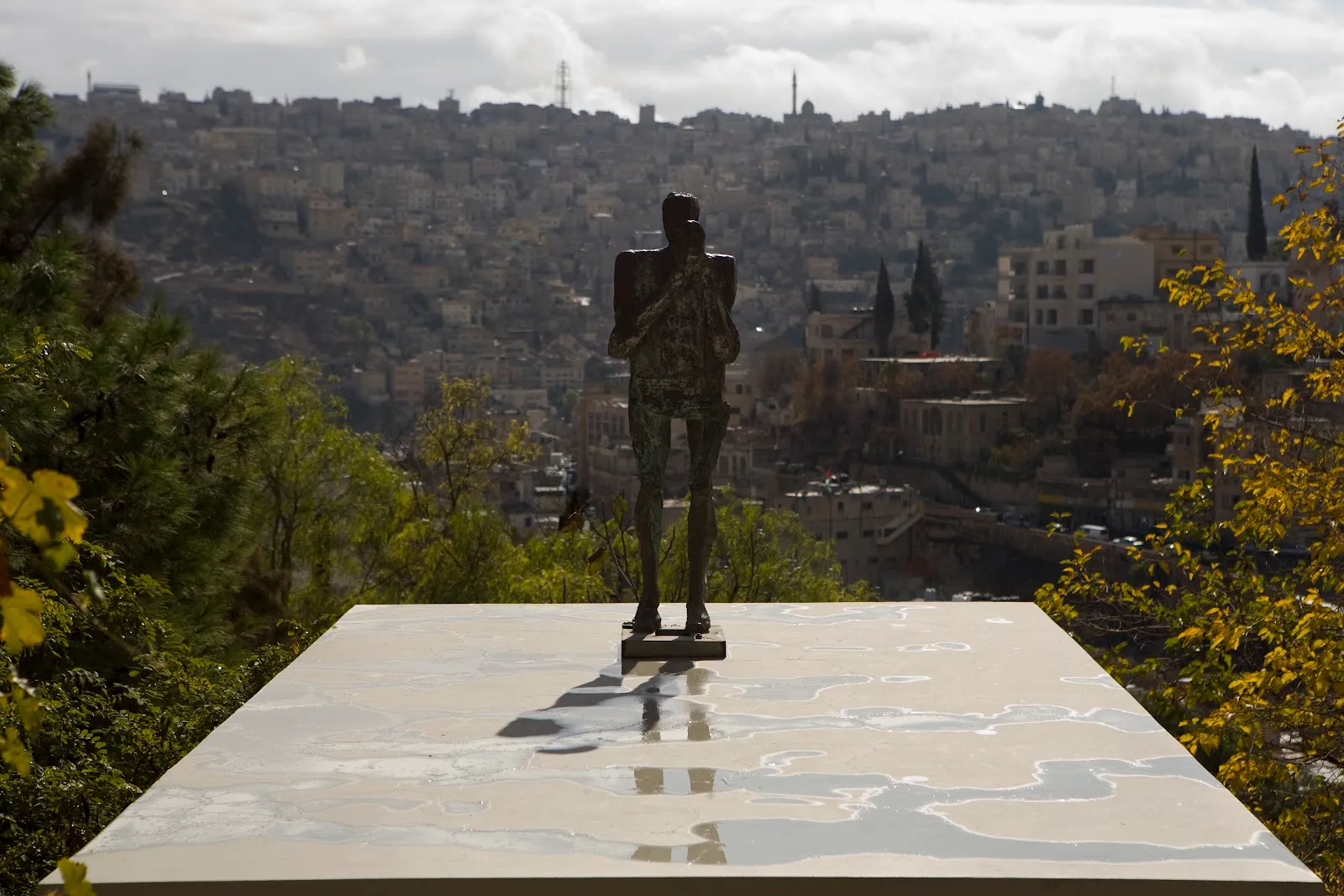
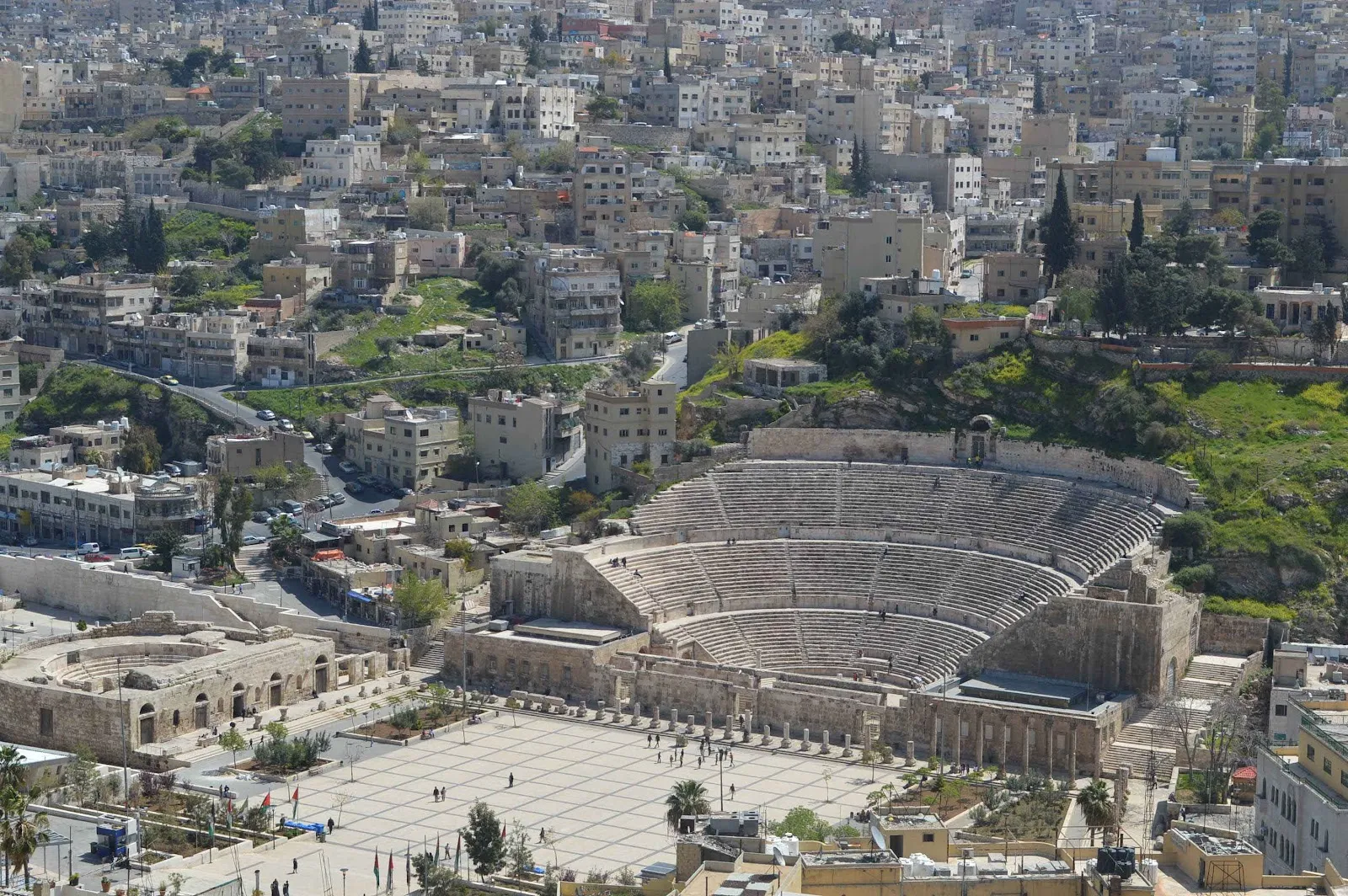
The Amman Citadel crowns Jabal al-Qala'a, the highest of the city's seven hills, at about 850 metres above sea level. The hilltop holds the remains of Roman, Byzantine and Umayyad Amman, among them the columns of the Temple of Hercules and the restored dome of the Umayyad Palace. The Jordan Archaeological Museum is on the same hill, and the lookout gives a wide view over downtown, including the Roman Theater below. Information boards are in English and Arabic. Entry is free with the Jordan Pass.
A hill occupied for thousands of years
Jabal al-Qala'a is the highest hill in Amman, about 850 metres above sea level, and it is one of the seven hills on which the city was first built. The Citadel stands on the site of ancient Rabbath-Ammon. People have lived here since at least the Bronze Age, and the hill was later held by the Kingdom of Ammon, the Assyrians, Babylonians, Persians, Ptolemies, Seleucids, Romans and Byzantines. The Romans called the city Philadelphia.
A wall about 1,700 metres long surrounds the hill. It was rebuilt many times, in the Bronze and Iron Ages and again in the Roman, Byzantine and Umayyad periods. After the Umayyad era the site was largely abandoned until the late 19th century, which is why it reads today as an open-air archaeological site, not a living quarter.
The Temple of Hercules
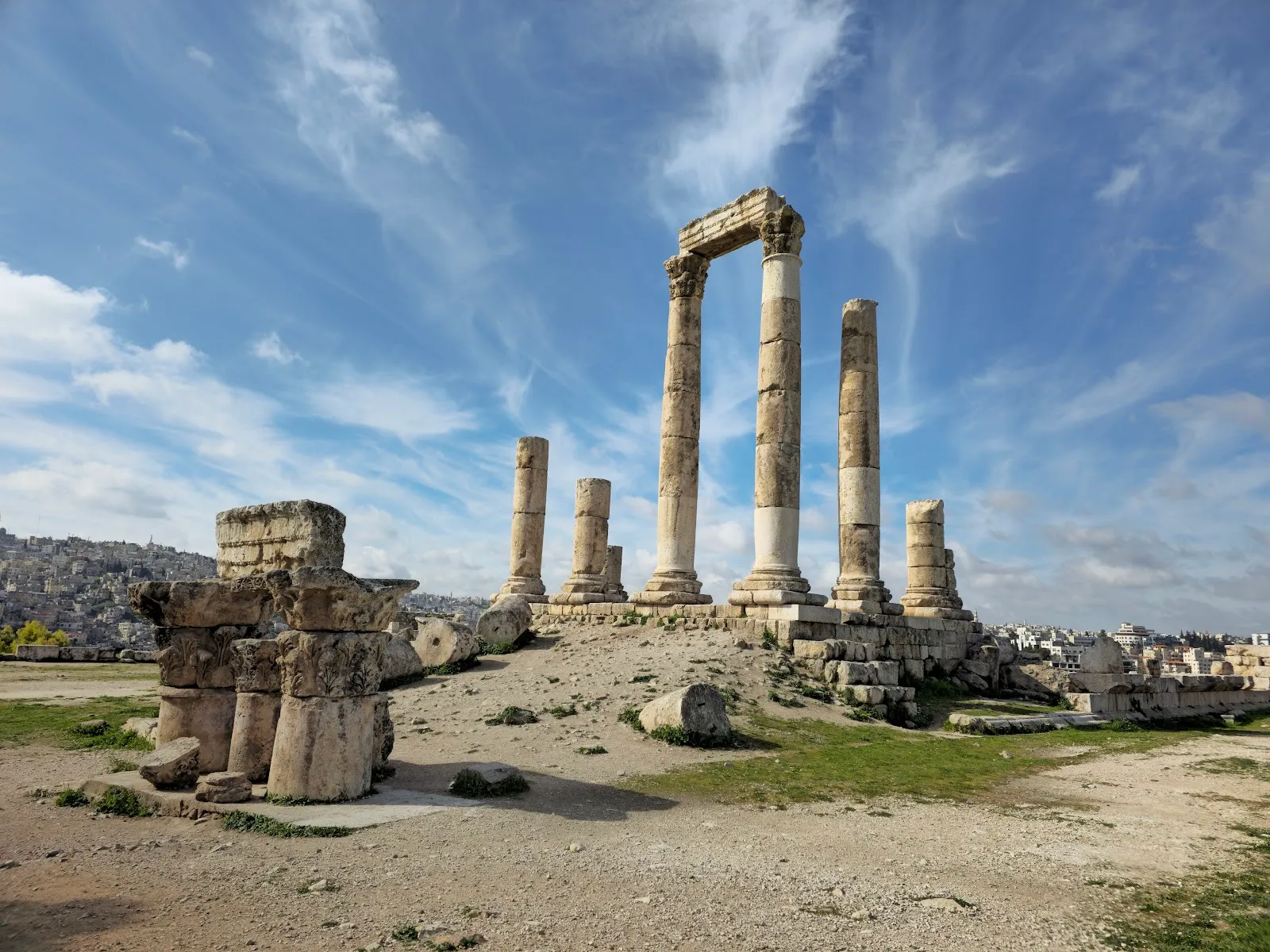
The Roman Temple of Hercules is the largest Roman structure on the hill and dates to the second century CE, in the reign of Marcus Aurelius. Today its tall, weathered columns are what remain, and they stand out clearly against the sky from many points in the city.
A fragment of a giant stone hand lies nearby. It gives a sense of how large the original statue and temple must have been. The columns are best seen up close, and the hill's ruins are laid out so that you can walk between them without a fixed route.
The Umayyad Palace and the Byzantine church
The Umayyad complex was built around AD 720 and is the main early Islamic site on the hill. An earthquake in AD 749 destroyed much of it. The restored dome is the part most visitors photograph, and the surrounding ruins show how the palace complex was arranged. Remains of an Umayyad mosque are also part of the area.
A Byzantine church from the 6th century stands nearby. Together with the Roman temple and the palace, it lets you read the hill's history in layers, from the Roman to the Byzantine to the early Islamic. Boards in English and Arabic explain each of the main structures.
Inside the Jordan Archaeological Museum
The museum is small and sits in a garden plaza on the hill. Its cases hold finds from the Byzantine, Roman and Umayyad periods and earlier, including tombs, clay pots, weapons and jewellery, each with an explanatory note. Ammonite burial vessels and life-size Roman statues are among the pieces on display.
The museum also holds Ain Ghazal statues, one of the best-known groups of prehistoric figures from Jordan. The collection here is larger than the Ain Ghazal groups shown in museums elsewhere in the world, so it is worth a stop even if you are short on time.
Getting there and planning the visit
The Citadel is a short ride from downtown Amman, and the walk from the city centre is a common way to arrive. From the Roman Theater, a set of steps leads up the hill through an old residential neighbourhood. Expect about 20 minutes on foot. You can also take a taxi or drive, as the site has a parking lot.
The entrance is wheelchair accessible, and the site is easy to walk around at your own pace. There is a cafe with clean toilets on site, and a small restaurant, Dar Ne'meh, is also mentioned near the Citadel. Below the hill is Al-Balad, the old downtown, with markets and food stalls for a meal after your visit.
FAQ
Is the Amman Citadel free with the Jordan Pass?
Yes, entry is free with the Jordan Pass. Without it you buy a ticket for a few dinars, so confirm the current price at the gate.
How long do you need at the Amman Citadel?
Allow at least 1.5 hours to see most of the site. Add time if you want to go through the Jordan Archaeological Museum.
What is there to see at the Citadel?
The main sights are the Roman Temple of Hercules, the Umayyad Palace with its restored dome, a Byzantine church and the Jordan Archaeological Museum. The hill also gives a wide view of Amman and the Roman Theater.
How do you get to the Amman Citadel?
You can walk up from the Roman Theater by a set of steps, which takes about 20 minutes. You can also go by taxi, asking for Jabal al-Qala'a, or drive and use the parking lot.
When is the best time to visit?
Late afternoon and sunset give the best light over the city and avoid the morning crowds. The hill is open to the sky, so sun cover is useful earlier in the day.