
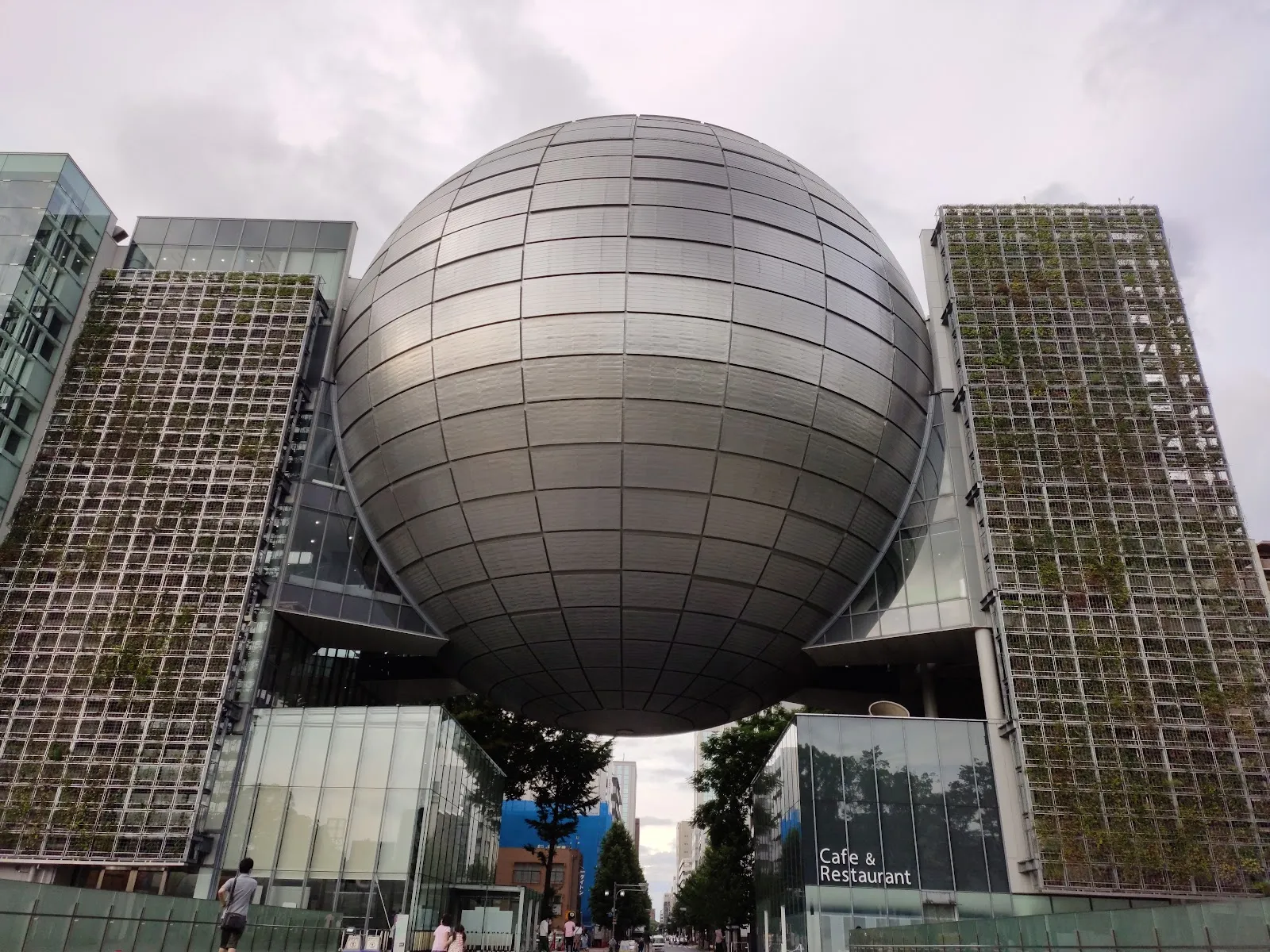
The FUJI Nagoya Science Museum sits in Shirakawa Park in central Nagoya, where a giant silver sphere rises above the trees. Inside, seven floors of hands-on exhibits cover space, life sciences, technology and general science. The sphere houses one of the world's largest planetariums, with a dome 35 meters across. The museum suits families and science fans, and adults can get a lot from the planetarium and the labs. Plan a few hours and go early in the day.
Inside the museum
The museum is spread across three buildings: Life Sciences, Science and Technology, and Astronomy. Five floors hold permanent exhibits, and temporary exhibitions take up part of the lower floors.
The Tornado Lab forms a 9-meter artificial tornado. The Deep Freeze Lab is a room at -30°C where aurora images are projected. The Electric Discharge Lab produces an electric discharge of 1.2 million volts, and Tesla coils give off purple flashes of electricity.
The walk-through human body lets you see giant replicas of organs. Robots, rockets and cars are on display to show how engineering works. The third floor has model railways in the transport section.
The planetarium
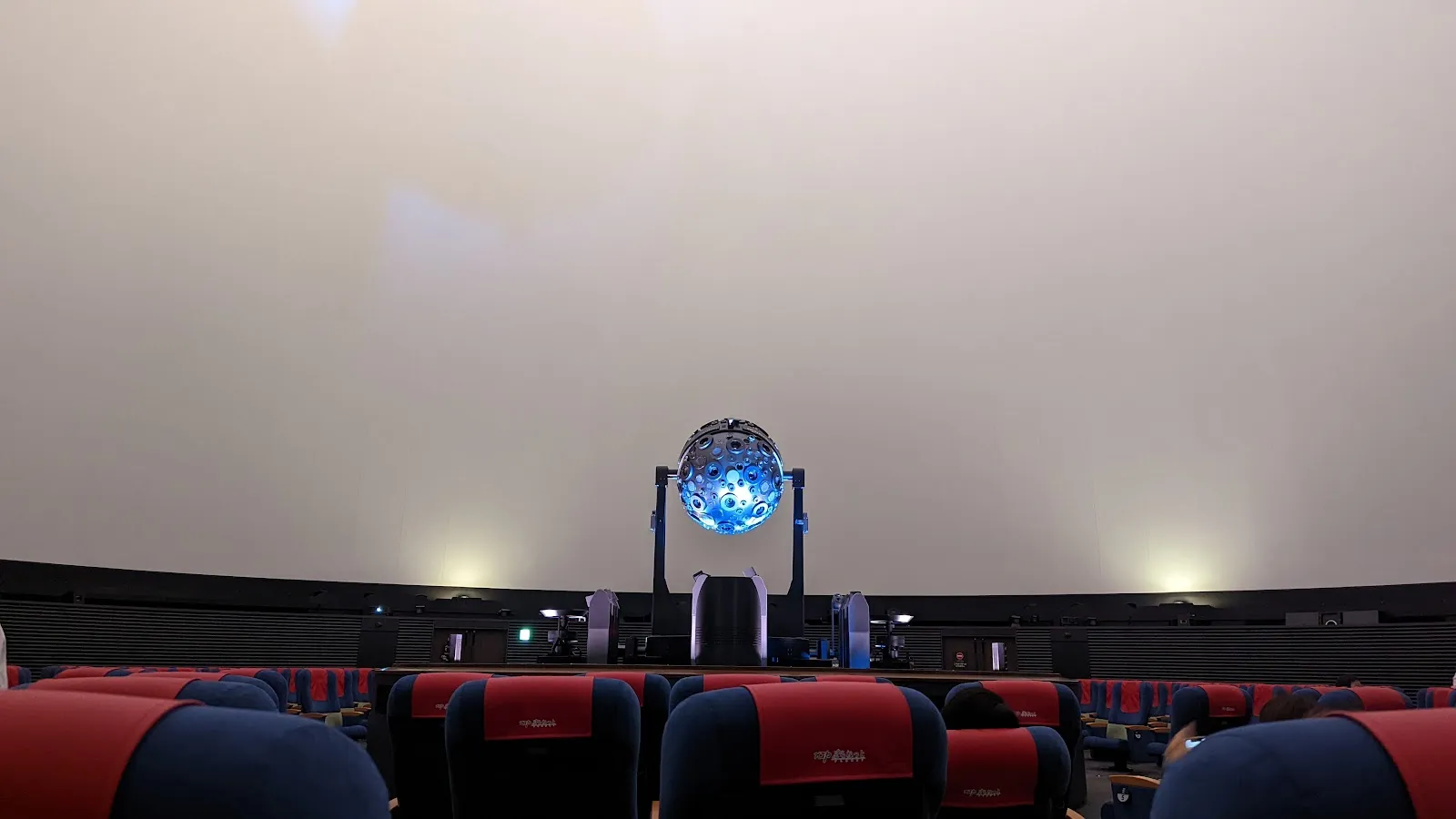
The dome is called Brother Earth. Guinness World Records recognized it as the largest planetarium in 2011.
Two systems run the shows: an optical planetarium, the Universarium Model IX, and a digital one, the Skymax DSII. Shows are given in Japanese only. Programs change monthly and cover current astronomical events. Shows run about six times a day, and the room has 350 reserved seats.
The park and the outside
The museum stands in Shirakawa Park, and the sphere can be seen from the street. The exterior and the surrounding area can be enjoyed without paying admission.
The Fureai Plaza, a free area for visitors, has science-themed outdoor exhibits and installations.
Admission and access
Prices given for September 2023 were 400 yen for the museum and 800 yen for the museum with the planetarium. Advance tickets are recommended.
Visitors who complete a short survey at the end receive a clear folder with a fossil print. The site has a wheelchair-accessible entrance, elevator, restroom and parking lot.
Visiting with children and adults
Many exhibits are written for children. Adults who come without children may get the most from the planetarium and the labs.
FAQ
Is there an entry fee?
Yes. Prices given for September 2023 were 400 yen for the museum, and 800 yen for the museum with the planetarium.
Are the planetarium shows in English?
No. The planetarium shows are given in Japanese only.
How long do you need at the museum?
Plan two to three hours for a visit.
Do I need to book tickets in advance?
Advance tickets are recommended. Timed sessions for popular experiences can sell out before noon.
Can I bring my own food?
No. Outside food and drinks are not allowed, but the museum has a restaurant and a cafeteria.


