
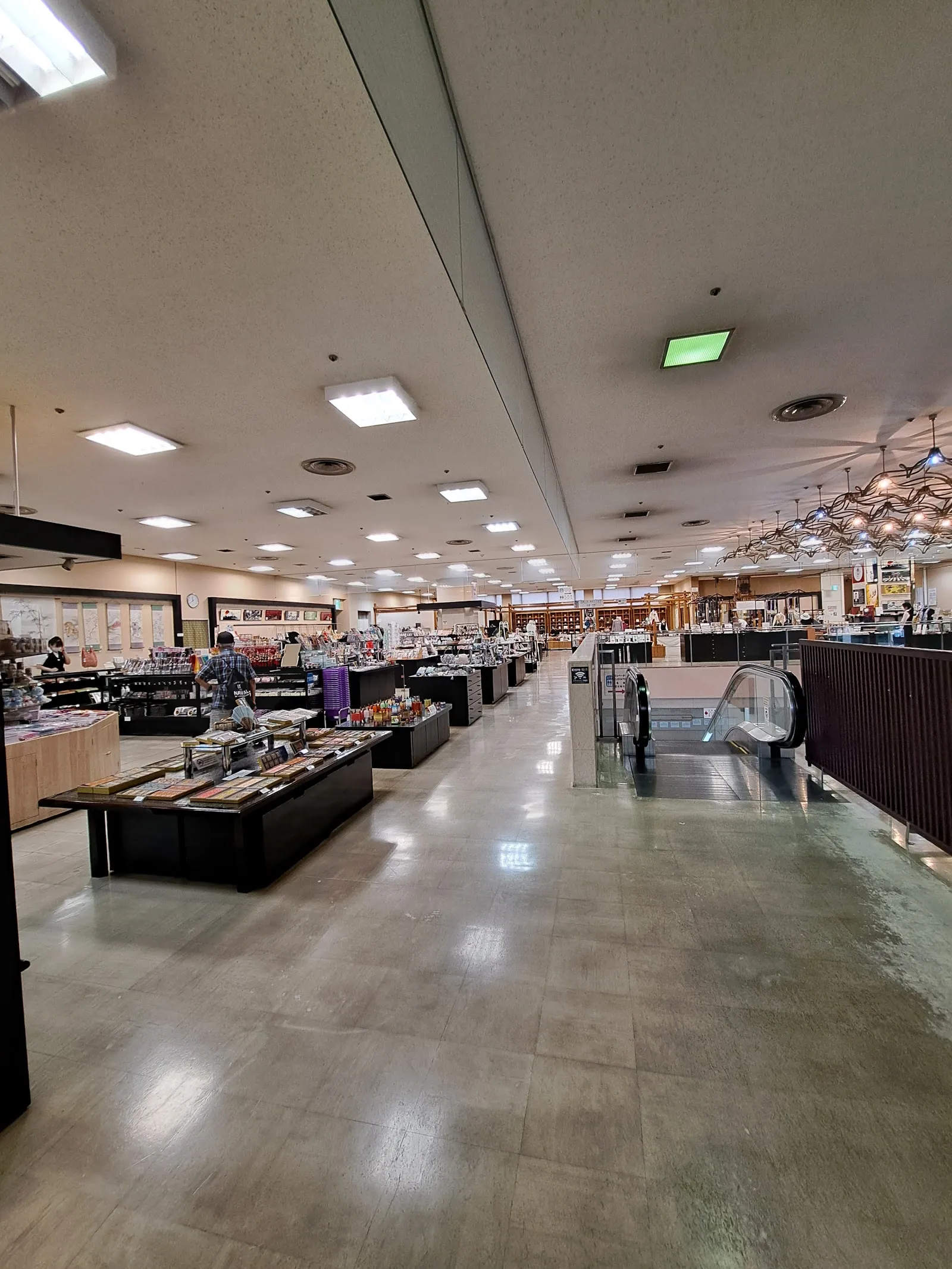
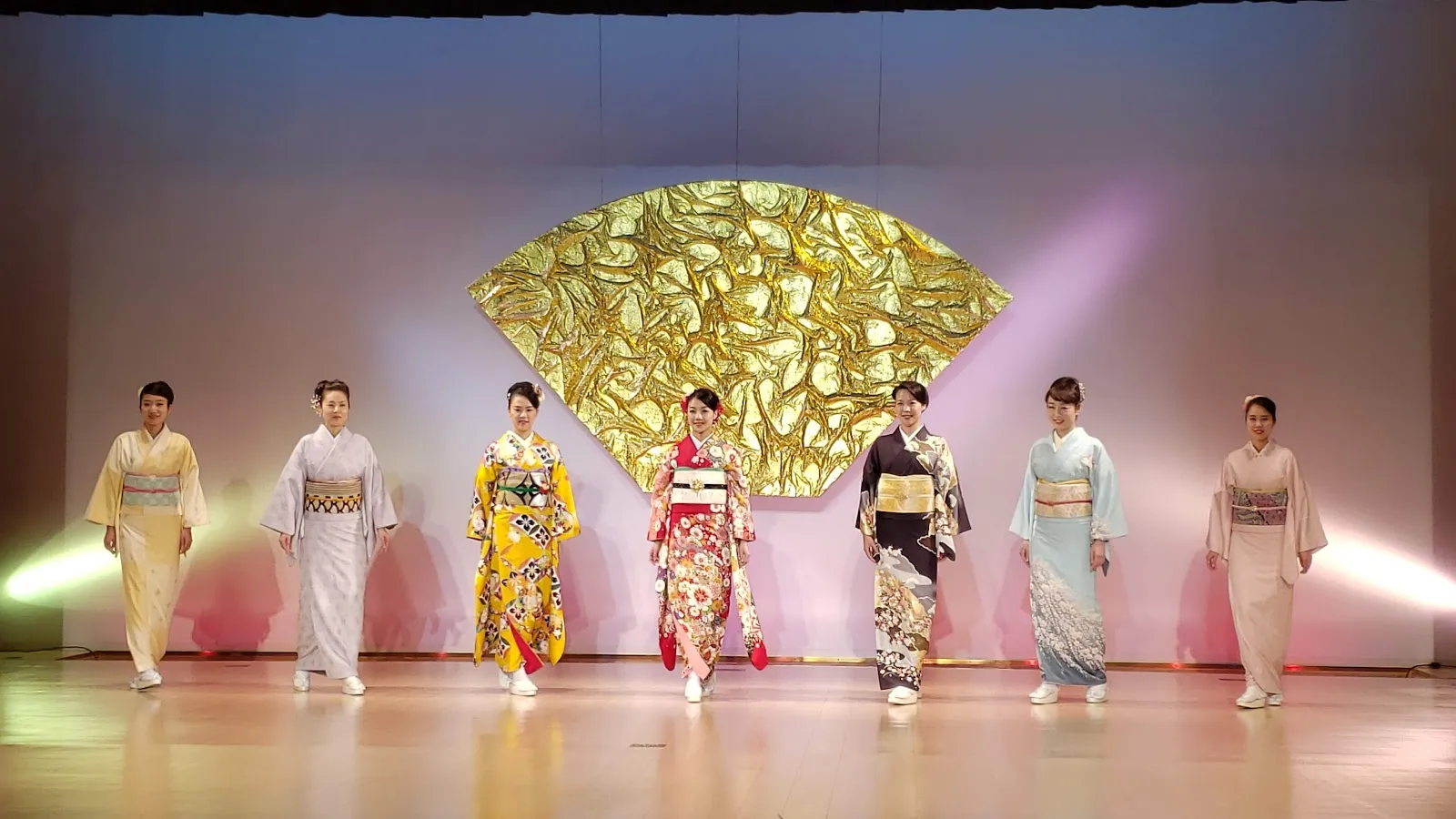
The Nishijin Textile Center is a museum, workshop and shop devoted to Nishijin weaving, Kyoto’s traditional silk textile craft. Inside, displays explain the development of the industry and show the tools, materials and patterns used to make woven cloth. On the second floor, artisans demonstrate weaving and silk spinning; exhibitions include kimono and obi with intricate designs. Entry is free, so it suits a short visit after exploring the Nishijin area. The shop sells textile goods and accessories, including scarves, bags and hair pieces.
How Nishijin textiles are made
Nishijin-ori takes its name from the Nishijin district, Kyoto’s traditional weaving area. Its silk fabrics are known for intricate designs created with coloured threads. The craft depends on the arrangement of those threads and the work of the weaver at the loom, producing patterned cloth used for kimono and obi.
Exhibits trace the material’s journey from silk thread to finished fabric. Videos and dioramas explain the stages, while displays of tools and materials help put the process in context. Handlooms show the equipment used to create woven patterns, and the exhibition includes examples of the finished textiles.
A weaving district with a long history
Nishijin was once a neighbourhood of weavers. During the Edo period, from 1603 to 1867, as many as 7,000 looms were at work in the area. Kyoto’s role as Japan’s capital for more than a thousand years supported a large community of craftspeople making elaborate clothing for the imperial family, Buddhist monks and Shinto priests.
The center is named for both the district and its weaving tradition. The surrounding area remains associated with textile production, with workshops and shops selling kimono fabrics and obi. Traditional wooden townhouses, known as machiya, can also be seen in Nishijin.
Demonstrations, displays and the shop
Artisans demonstrate weaving and silk spinning at the center, giving visitors a chance to see the work in progress rather than only the finished cloth. The displays include kimono and obi, alongside explanations of the craft’s history and production. Take time to watch the demonstrations and examine the patterns and workmanship at close range.
The shop sells Nishijin-woven goods as well as textile accessories such as scarves, bags and hair pieces. Some items use fabric samples or show the patterns as artwork. Kimono-show schedules have not always been consistent, so check ahead if seeing a show is important to your visit.
FAQ
Is admission to the Nishijin Textile Center free?
Yes. The center has free admission.
How long should I spend at the Nishijin Textile Center?
Plan for about an hour to see the displays and watch the craft demonstrations.
How do I get to the Nishijin Textile Center from Kyoto Station?
Take the Karasuma Subway Line to Imadegawa Station, then walk about 10 minutes west. Kyoto City Bus 9 also serves the Horikawa-Imadegawa stop.
Can I see a kimono show at the center?
A kimono show may not be scheduled. Check ahead if you want to plan your visit around one.


