
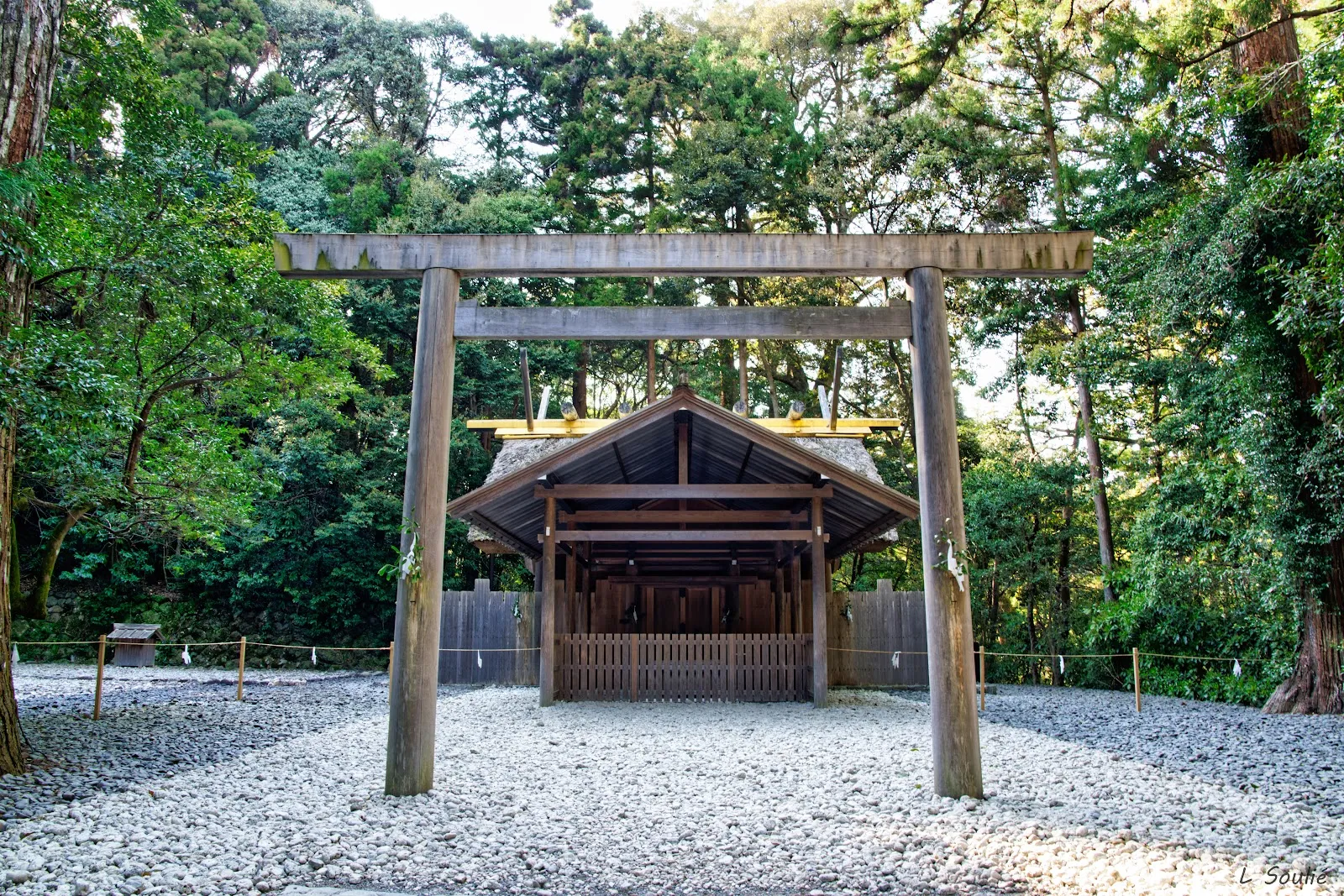
Toyouke Daijingu, called Geku or the Outer Shrine of Ise Jingu, is in the city of Ise, Mie Prefecture, a short walk from Iseshi Station. It is dedicated to Toyouke-no-Omikami, the deity of food, clothing, shelter and industry, and is about 1,500 years old. Gravel paths lead under tall camphor and cedar trees to a plain wooden sanctuary built from natural materials. Tradition asks pilgrims to come here before the Inner Shrine, Naiku. Geku is quieter than Naiku, and the grounds are compact and flat, so it suits a short, unhurried visit.
Why Geku comes first
Ise Jingu is a group of shrines, mainly the Inner Shrines (Naiku) and the Outer Shrines (Geku). The custom is to begin at Geku and then continue to Naiku. Toyouke Daijingu is the main Geku sanctuary, so most pilgrims start here.
Some travelers skip the Outer Shrine for the grander Inner Shrine. Those who go to both find that the two differ in character. Geku is more rustic and more understated, and it rewards a visit even if you read none of the information boards.
The deity and the shrine's origins
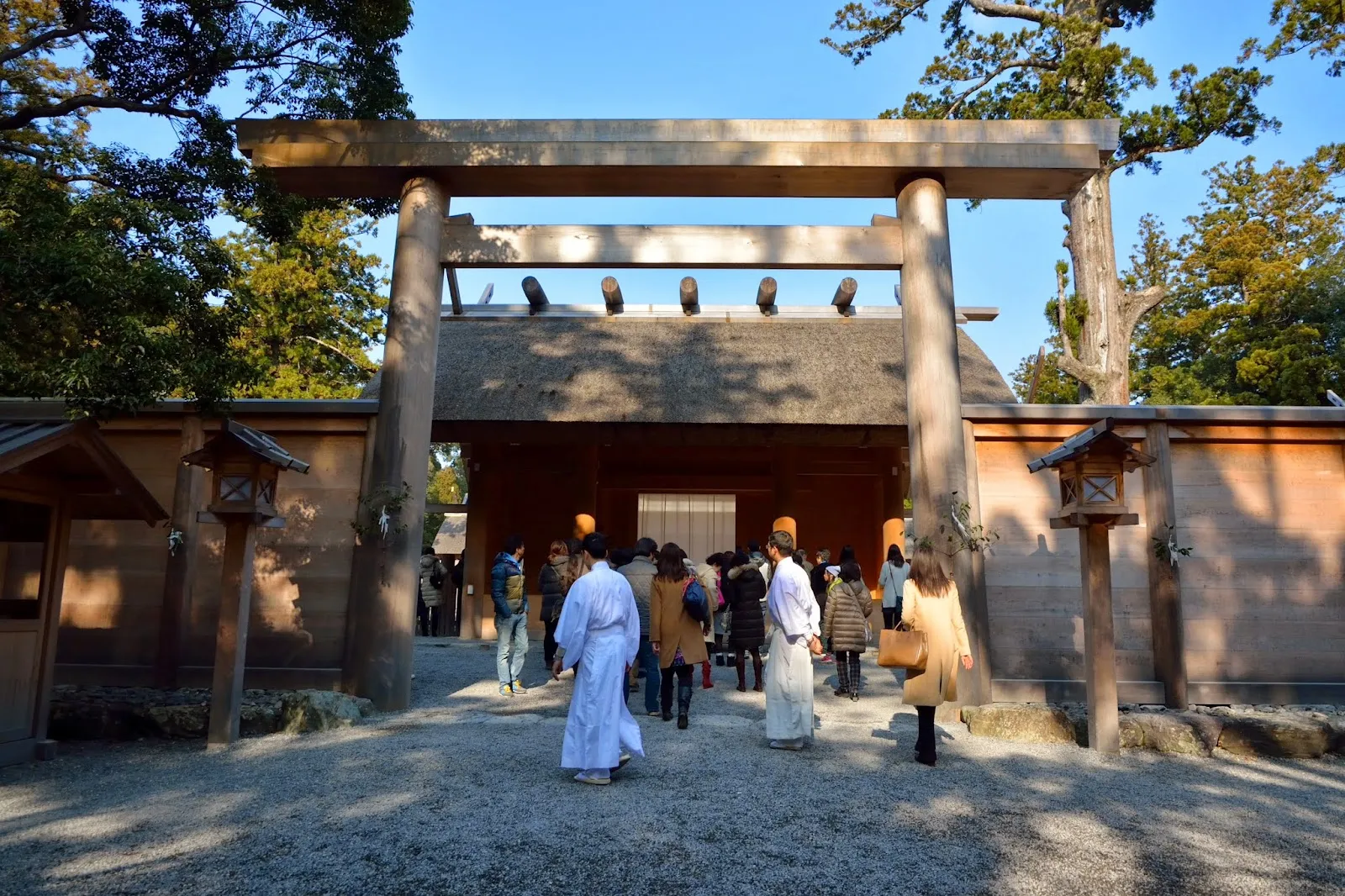
Geku is dedicated to Toyouke-no-Omikami, worshipped as the guardian of food, clothing, shelter and industry. Toyouke oversees the meals of Amaterasu-Omikami, the sun goddess enshrined at the Inner Shrine. The Outer Shrine was founded about 1,500 years ago, on the instruction of the emperor of the time, to provide food offerings to Amaterasu.
This origin shapes how many Japanese visitors approach the place. Standing before the sanctuary, they give thanks for daily meals and a place to sleep rather than make requests.
Walking the grounds
You enter through a torii gate and cross a small bridge. The Main Sanctuary is a simple wooden building, and the design stays close to natural materials and the surrounding woods. Large camphor trees line the grounds, and the air smells of cedar.
The site is more compact and flatter than Naiku. A visit includes the Main Sanctuary and the three Taka-no-miya, the auxiliary shrines on a small hill in the forest. The paths are covered in large gravel, known as tamajari, which is why sturdy flat shoes are recommended.
Sengukan and the rebuilding ritual
Close to Geku is the Sengukan Museum, which explains the ritual of Shikinen Sengu. In this ceremony a divine palace is rebuilt at an alternate site after a set number of years. It involves more than 30 rituals and has been carried out regularly since 690 CE.
The rebuilding covers more than the main sanctuaries. The Inner and Outer Shrines and the 14 Betsu-gu are all rebuilt, with their sacred objects moved. So are 65 further buildings, along with costumes, sacred treasures and the Uji Bridge. The museum sets out the technology and the meaning behind this work.
Eating on the way in
The street leading to the shrine, Geku-mae Sando, has restaurants, cafes, chocolatiers and long-established confectioners selling manju, a snack of red bean paste and rice. Two local specialties to look for are Ise udon, soft noodles in a dark, sweet soy sauce, and Akafuku mochi.
Some shops serve asagayu, a morning congee, a traditional breakfast before a day of worship. If you want to start early, ryokans and hotels near Iseshi Station and Ujiyamada Station are within walking distance of the shrine.
FAQ
Should I visit Geku or Naiku first?
Visit Geku first. It is the custom at Ise Jingu to pay respects at the Outer Shrine before going on to the Inner Shrine.
How long do you need at Toyouke Daijingu?
Allow 45 to 60 minutes. That covers the Main Sanctuary and the three Taka-no-miya on the small hill in the forest.
How do you get to Geku from Iseshi Station?
It is a 5 to 7 minute walk from Iseshi Station, on the JR and Kintetsu lines. The path leads straight to the main approach to the shrine.
What should I wear?
Casual but respectful clothes, without anything revealing. Wear flat, sturdy shoes, because the paths are covered in large gravel.
Who is enshrined at Geku?
Toyouke-no-Omikami, the deity of food, clothing, shelter and industry. Toyouke oversees the meals of Amaterasu-Omikami, who is enshrined at the Inner Shrine.
Is the shrine wheelchair accessible?
The entrance and the parking lot are both listed as wheelchair accessible. The grounds are flatter than at Naiku, though the paths are gravel.


