
Sumiyoshi Taisha is a Shinto shrine in Osaka’s Sumiyoshi Ward, founded in the 3rd century and regarded as one of Japan’s oldest. Its main halls show Sumiyoshi-zukuri, an early Japanese architectural style with straight rooflines and little influence from the Asian mainland. Walk across the vermilion Sorihashi Bridge, whose high arch is reflected in the pond, then explore the spacious grounds and smaller shrines. Dedicated to deities associated with the sea and safe journeys, the shrine remains a place of worship as well as a peaceful stop for a slow walk.
A shrine with ancient roots
Sumiyoshi Taisha is in Osaka’s Sumiyoshi Ward and is counted among Japan’s oldest Shinto shrines. Its origins are placed in the 3rd century, before Buddhism arrived in Japan. It is the head shrine of the Sumiyoshi tradition, with branches across the country.
The shrine is dedicated to deities associated with the sea, including protection for sailors and travelers. Sumiyoshi shrines are often linked to ports and maritime journeys. Osaka’s historic role as a port helps explain the connection between the shrine and safe travel by sea.
Sumiyoshi-zukuri architecture
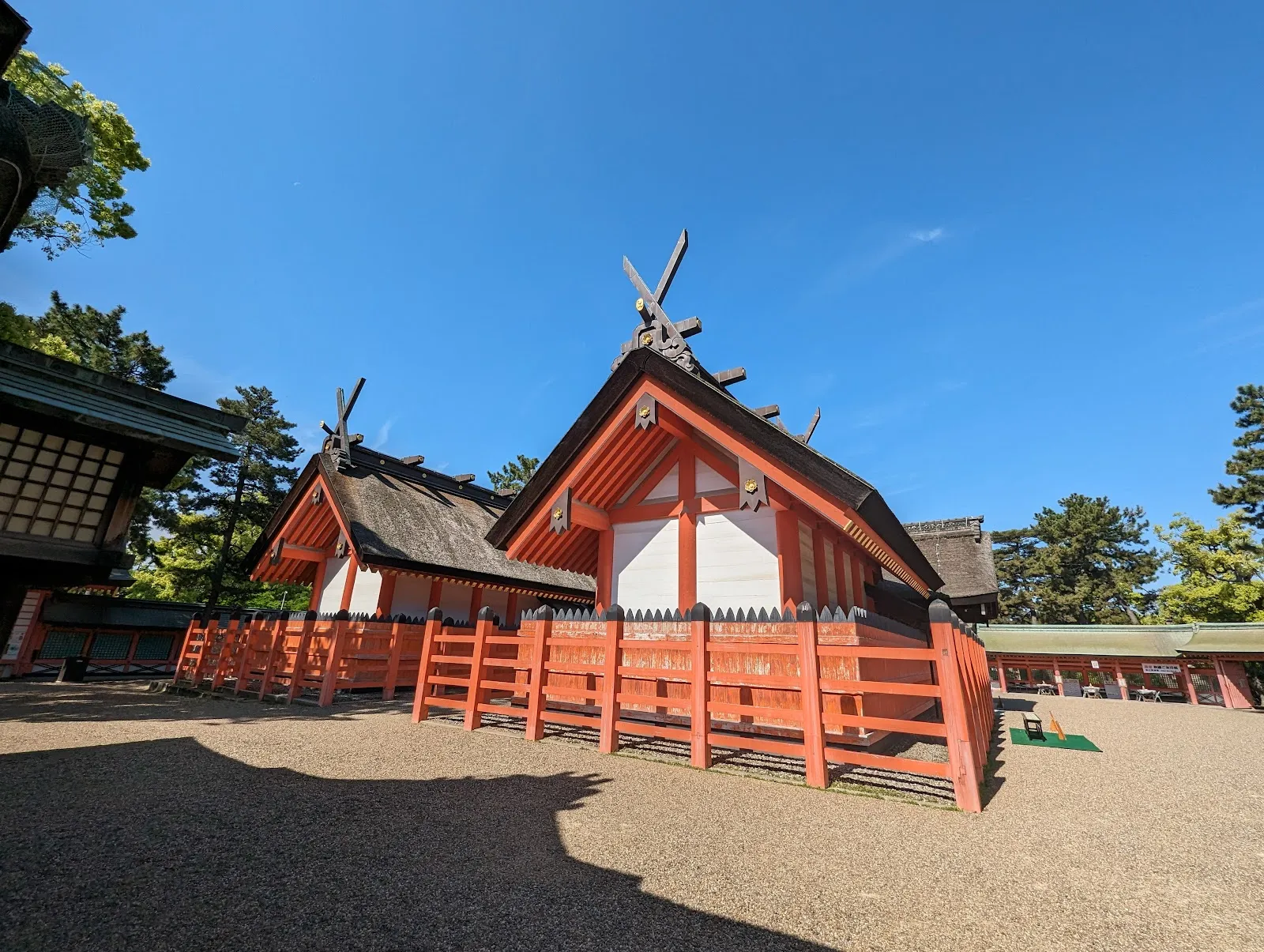
The main halls are known for Sumiyoshi-zukuri, a style that preserves an early Japanese approach to shrine design. Its features include straight rooflines and a restrained, symmetrical form. Unlike many later religious buildings, this style shows little influence from the Asian mainland.
Take time to look at the halls rather than viewing the complex only as a route to the bridge. Their clean lines and traditional construction give the shrine a distinct character. The main shrine buildings are recognized as a National Treasure.
The Sorihashi Bridge and grounds
The vermilion Sorihashi Bridge is one of the shrine’s most recognizable features. Its steep arch rises over a pond, where the reflection adds to the curved outline. The bridge is also called the drum bridge, a name associated with the shape formed by its arch and reflection. Crossing it is traditionally linked with spiritual purification.
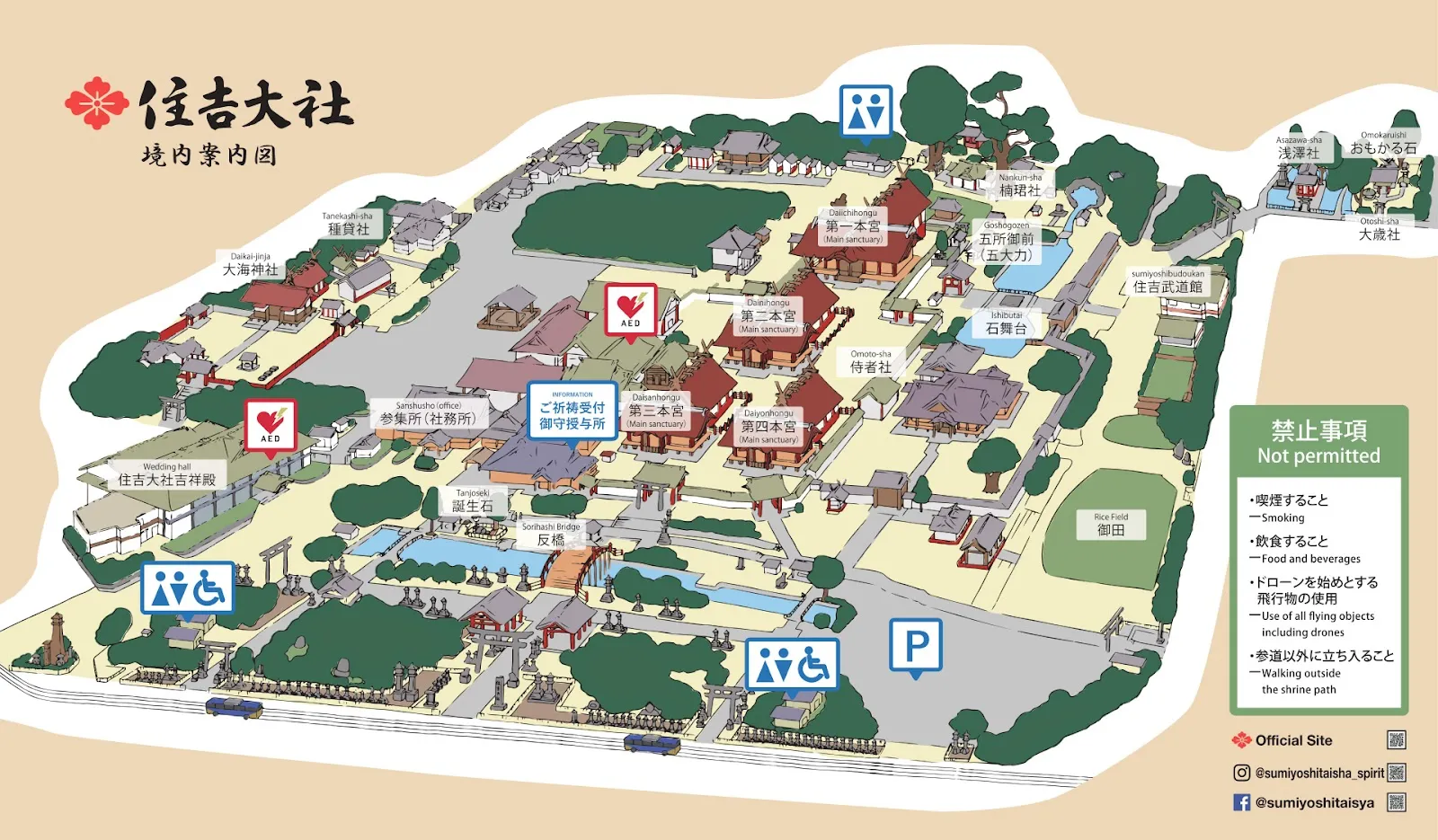
Beyond the bridge, the grounds include several smaller shrines and carefully maintained outdoor spaces. Look for the smaller shrine buildings and details around the complex, including displays of paper cranes. Some visitors also stop at Nankun-sha, known for beckoning-cat charms associated with good fortune and business prosperity.
A place of worship through the year
Sumiyoshi Taisha is an active religious site, and worshippers come for ceremonies and seasonal observances. Hatsumode, the first shrine visit of the New Year, draws especially large crowds during the first three days of January. If you prefer a quieter walk, choose another time of year.
Traditional ceremonies include Hatsumiyamairi, a visit made for a newborn child’s blessing. The shrine also holds events during the year, including the Otaue Matsuri in June, which prays for a good rice harvest. Treat the grounds with respect while exploring, and give worshippers space during ceremonies.
FAQ
Is Sumiyoshi Taisha free to enter?
The shrine grounds are free to visit.
How old is Sumiyoshi Taisha?
Its origins are dated to the 3rd century, before Buddhism arrived in Japan.
What is the Sorihashi Bridge?
It is the shrine’s high, vermilion arched bridge over a pond. Its reflection forms a drum-like outline, and crossing it is traditionally associated with spiritual purification.
When is Sumiyoshi Taisha busiest?
The shrine draws large crowds during hatsumode, the first shrine visit of the New Year, especially over the first three days of January.


