Founded in 1253, Kenchō-ji is Kamakura’s oldest Zen training monastery and the first-ranked of its Five Great Zen Temples. Its spacious grounds run from the large Sanmon gate through temple halls and gardens, with forest paths climbing behind the complex. Look for the national-treasure temple bell and the garden behind the main hall, then continue uphill toward Hansōbō Shrine for views over Kamakura and the sea. On clear days, Mount Fuji can appear in the distance.
A temple founded in 1253
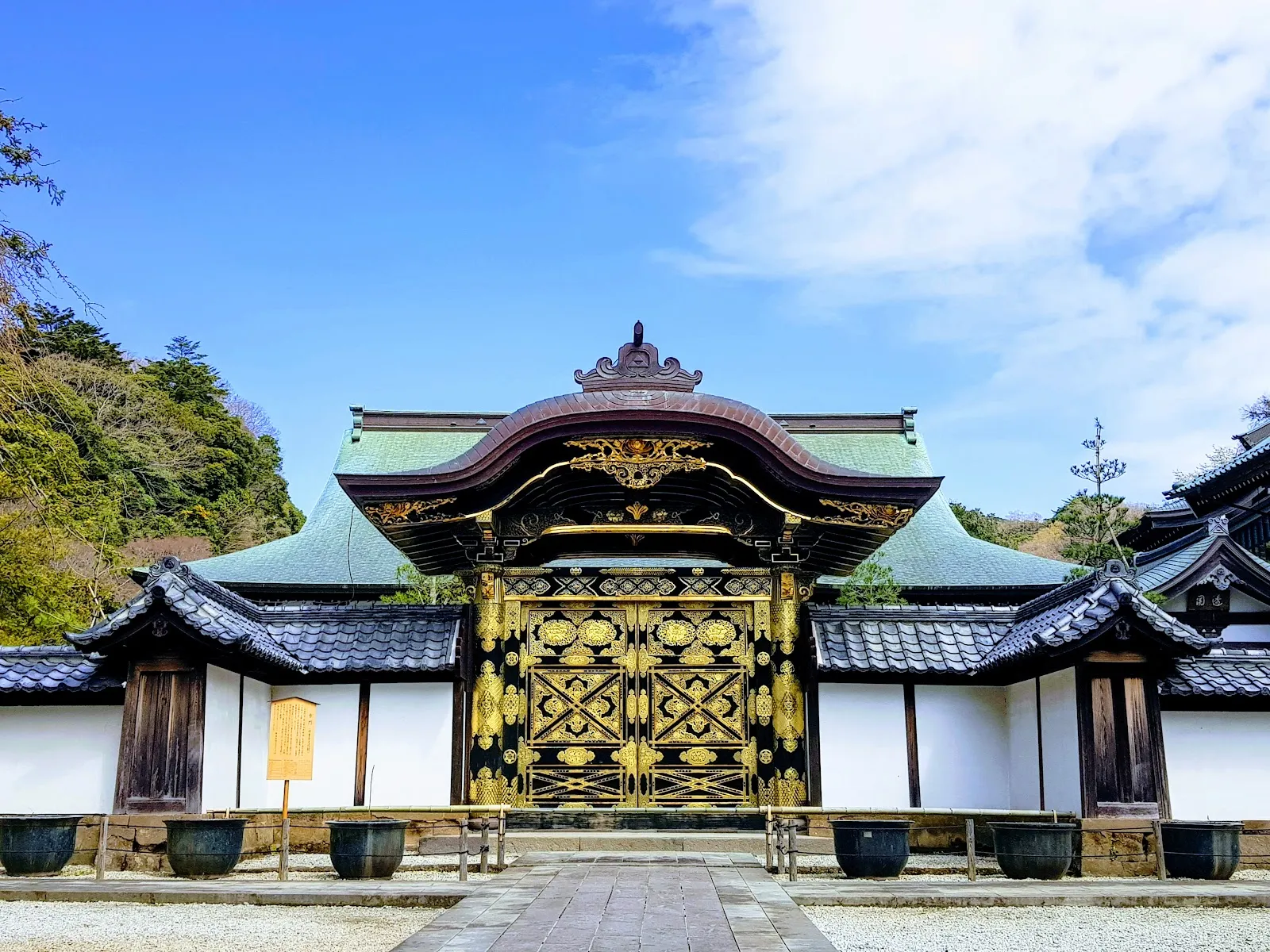
Kenchō-ji was founded in 1253 by the regent Hōjō Tokiyori, with the Chinese Zen monk Rankei Dōryū as its founding abbot. It became the foremost temple in Kamakura’s Five Great Zen Temples, a group of Rinzai Zen temples ranked within a wider system known as the Five Mountain System. Kenchō-ji remains an active Zen temple and training monastery.
The complex once included a full set of monastery buildings and many subtemples. Fires and earthquakes destroyed a number of its original structures, so the buildings standing today span different periods. The site’s long history is visible in its layout, its large gates and halls, and the grounds that extend from the valley into the wooded hills.
Following the temple layout
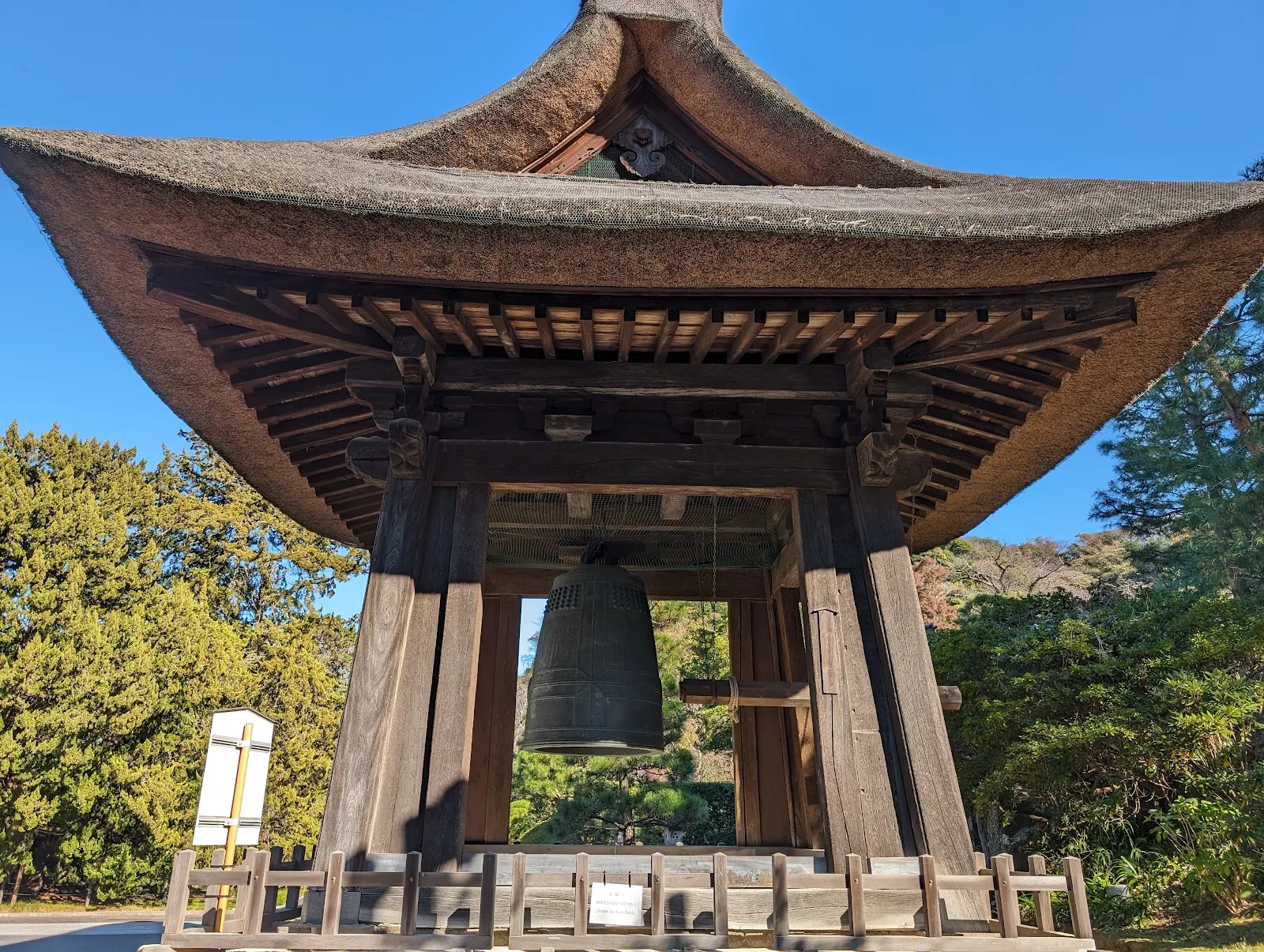
The buildings follow a straight-line arrangement associated with Zen temples: the approach leads past the Sanmon gate and bell tower toward the Buddha Hall, Dharma Hall and main hall. The large gates and communal halls show the influence of Chinese temple architecture. A grove of juniper trees lines the approach; these are said to have grown from seeds brought from China by the temple’s founder.
The Buddha Hall, or Butsuden, was moved from Tokyo in 1647. Its principal image is Jizō Bosatsu, an unusual focus for a Zen temple. The bell, cast in 1253, is designated a national treasure. Other buildings and areas of the grounds have been recognized as Important Cultural Properties.
Gardens and the path to Hansōbō
Behind the main hall, the Sanpeki Ike garden is arranged around a pond. Its design is associated with the character for heart and mind. The grounds also contain quieter spaces for walking and reflection, including the Mushizuka, a memorial mound for insects.
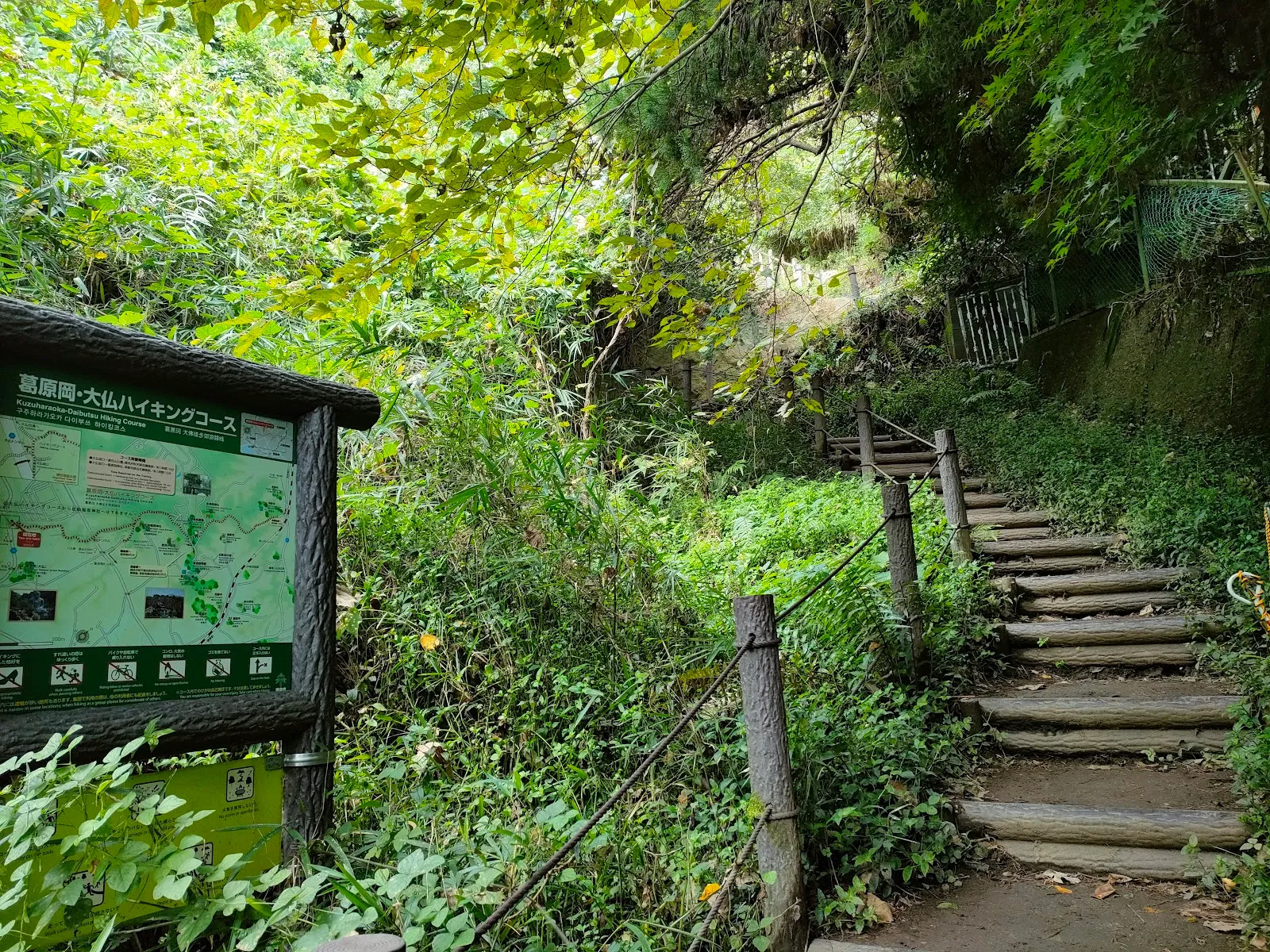
A path climbs through the forest behind the temple toward Hansōbō Shrine and a hilltop observation point. From up there, the view takes in the temple complex, Kamakura and the sea; Mount Fuji can be seen when conditions are clear. The uphill walk is an optional extension to a visit focused on the temple buildings, and it connects with the Ten-en hiking trail.
FAQ
When was Kenchō-ji founded?
Kenchō-ji was founded in 1253 by Hōjō Tokiyori, with the Zen monk Rankei Dōryū as its founding abbot.
What is Kenchō-ji known for?
It is the first-ranked of Kamakura’s Five Great Zen Temples and Japan’s oldest Zen training monastery.
Can you see Mount Fuji from Kenchō-ji?
Mount Fuji can be seen from the hilltop viewpoint on clear days. The path climbs toward Hansōbō Shrine behind the temple grounds.
How long does a visit to Kenchō-ji take?
Allow about 1 to 2 hours to see the main grounds and garden. Add time if you take the uphill path toward Hansōbō Shrine.