The Toyota Commemorative Museum of Industry and Technology is in Nishi Ward, Nagoya, in a red-brick factory built in 1911 on the site where the Toyota Group began. Its two main pavilions cover the textile machinery the company first made and the cars it later built. Staff run working looms, and the car displays include cutaway engines. Plan a few hours for a building of nearly 8,000 square metres.
From a weaving factory to the car industry
The red-brick building was completed in 1911 as a weaving factory. Sakichi Toyoda developed mechanized looms at a factory in Nagoya, and the site became the birthplace of the Toyota Group. The company made textile machinery first and moved into cars later, and the museum follows that change step by step.
The museum opened in June 1994 to give the public access to the historic building. Its aim is to teach visitors about the history of Japanese manufacturing technology, and Toyota's story is used to do that. Part of the building is a spinning mill from the Taisho era, kept as industrial heritage. The site also holds steam engines, metal processing machines and other mechanical equipment from the early years of the company.
Textile Machinery Pavilion
More than 100 tools and machines for spinning and weaving are on display, from early equipment to later models. Staff demonstrate almost all of the looms, so you watch the cloth being made rather than only reading about it. Some machines have a switch that lets you start them and see how the mechanism moves.
A display called the Circular Loom expresses the museum's core idea. The exhibits cover spinning and weaving technology over roughly the last 200 years.
Automobile Pavilion and the factory floor
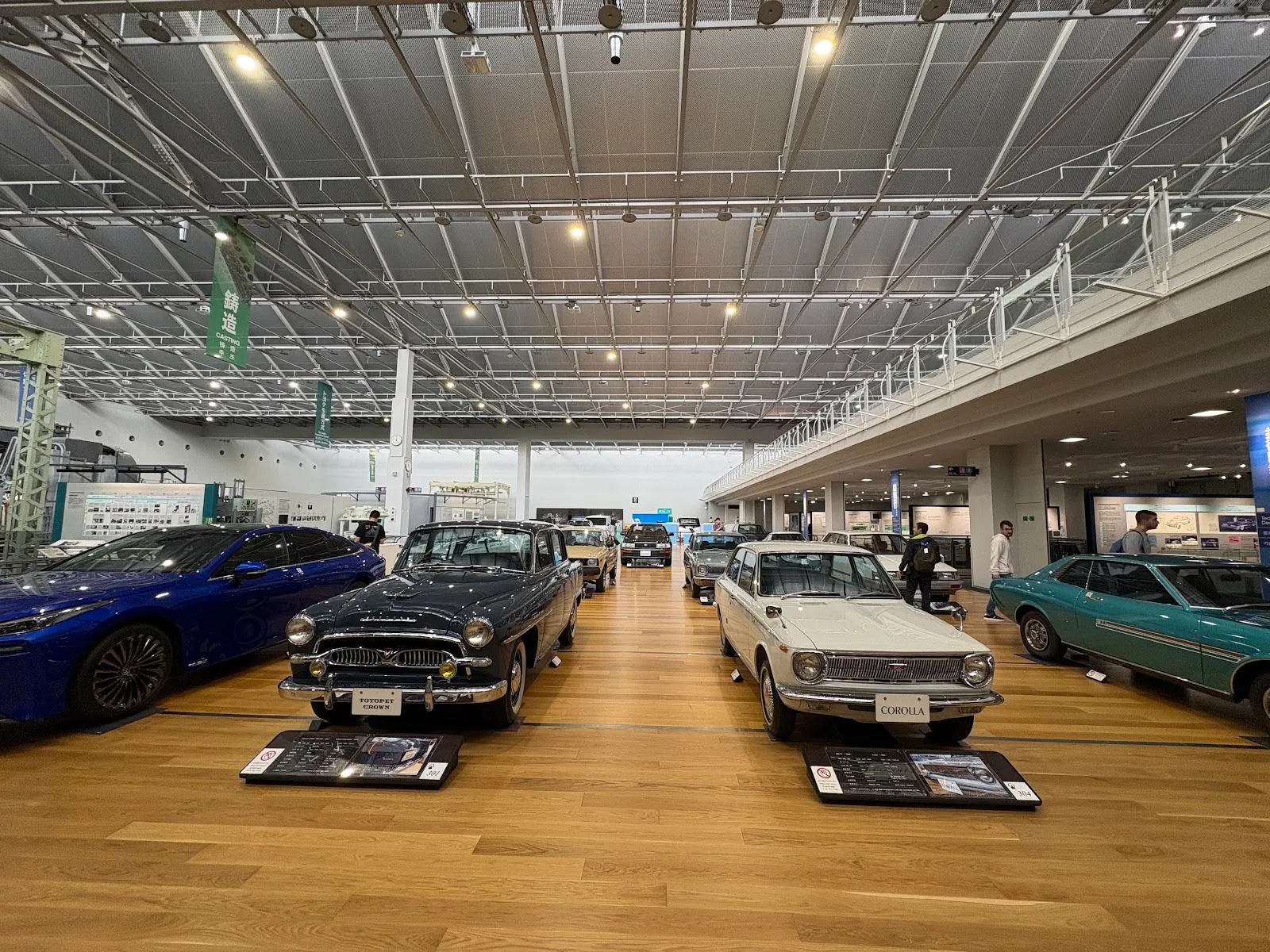
The car section begins with the earliest Toyota vehicles and runs up to the present. One of the exhibits is the Model AA, the company's first mass-production automobile. Visitors can see classic cars and trucks, along with cutaway models of engines and accessories that run as working displays. The Mirai, a hydrogen-powered car, represents recent work.
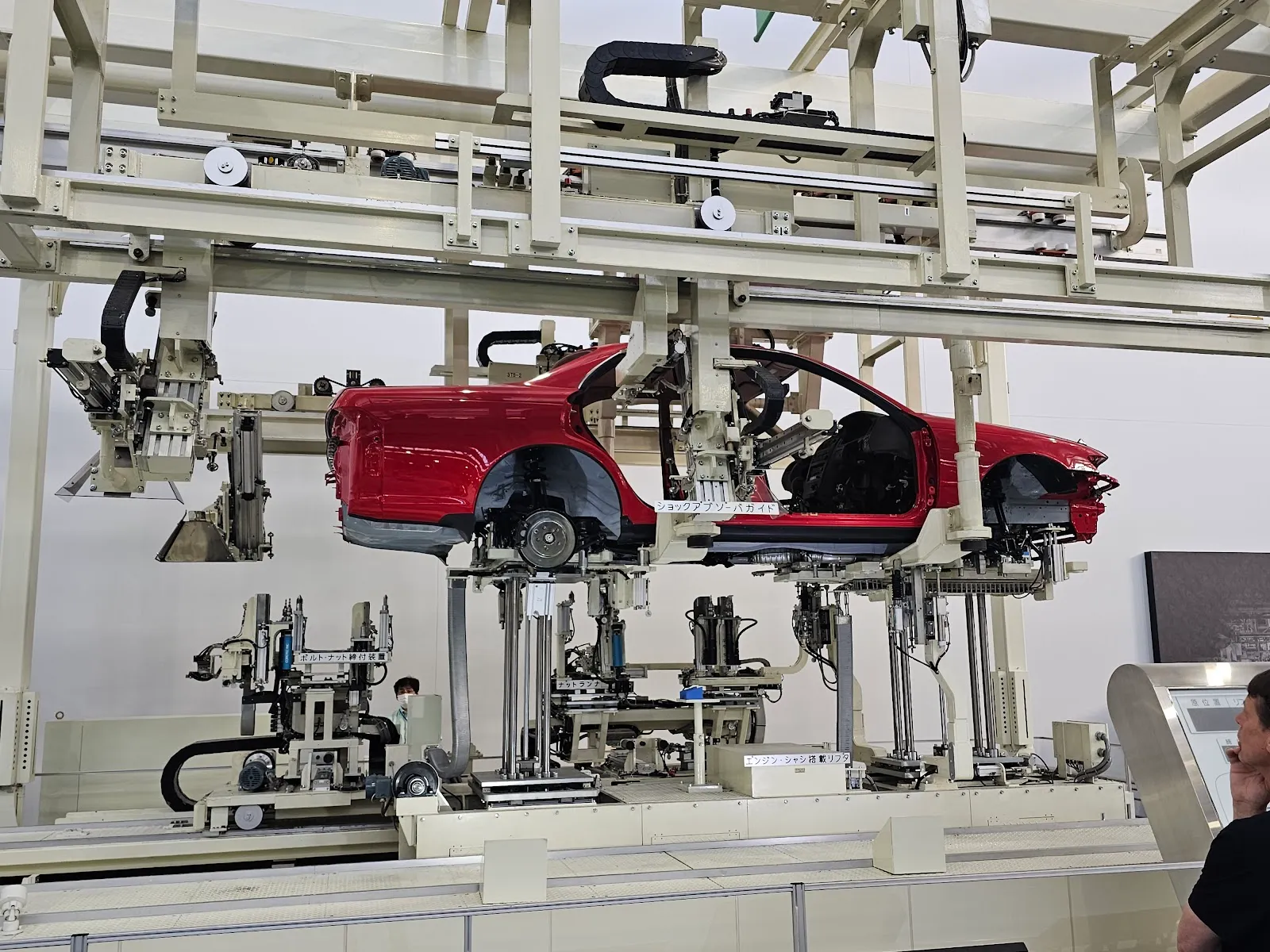
The manufacturing area shows how a sheet of metal becomes a car. Robot arms demonstrate painting and assembly, as they do on modern production lines, and large forging presses are on show. The demonstrations also include a robot that plays the violin.
Visiting with children
The Technoland area holds the onsite playground and hands-on exhibits, and the museum runs creative workshops. Children can make a small toy car with a keychain to take home. If you bring young children, book a playground timeslot when you buy your tickets.
Shop, food and getting there
The gift shop sells car-shaped Baumkuchen cakes, pens, books, shirts and other Toyota memorabilia. The museum also has a restaurant, a cafe and a library.
Take the Meitetsu Nagoya Line to Sako Station. The Me-guru sightseeing bus also loops past the museum, Nagoya Castle and the Tokugawa Art Museum. Wheelchair users will find an accessible entrance, elevator, restroom, seating and parking lot.
FAQ
Is there an entry fee?
Yes, admission is charged. Check the museum's website for current prices before you go.
How long do you need?
Plan two to three hours. If you have less time, staff can suggest a route through the museum.
Is the museum closed on any day?
Yes, it is closed on Mondays.
Is it suitable for children?
Yes. There is an onsite playground, hands-on exhibits and a workshop where children make a small toy car with a keychain.
Is the museum wheelchair accessible?
Yes. The entrance, elevator, restroom, seating and parking lot are wheelchair accessible.