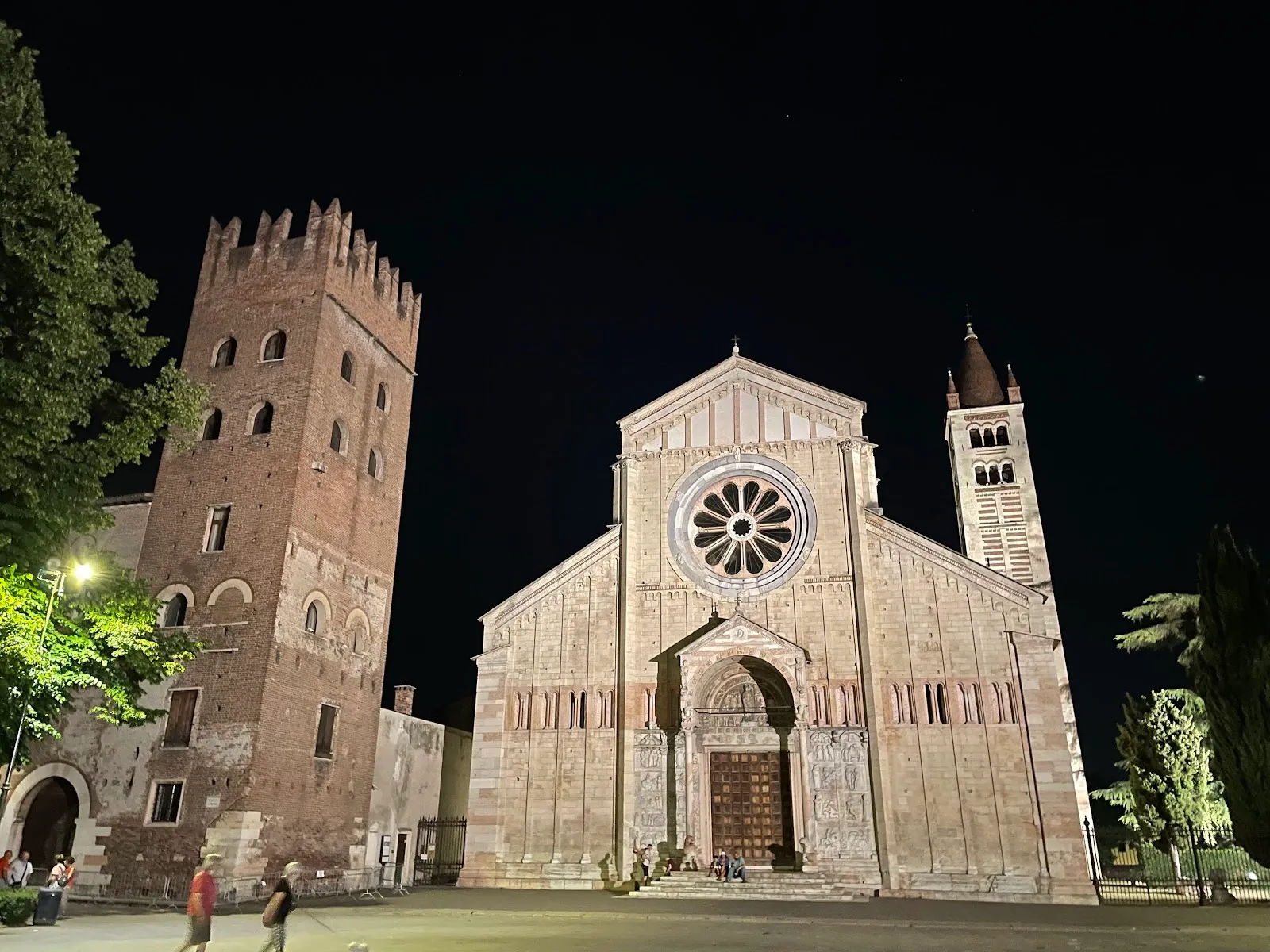
On the banks of the Adige, Castelvecchio combines a 14th-century fortress built by Verona’s Scaliger family with a museum of medieval and Renaissance art. Inside, paintings, frescoes, sculpture, jewellery and armour share space with Carlo Scarpa’s mid-20th-century redesign, where glass, steel and concrete meet old brick and stone. Look closely at how the modern walkways frame the historic rooms, then head up to the battlements for views of the river and Castelvecchio Bridge. Allow time to explore the castle as well as its collections.
A fortress beside the Adige
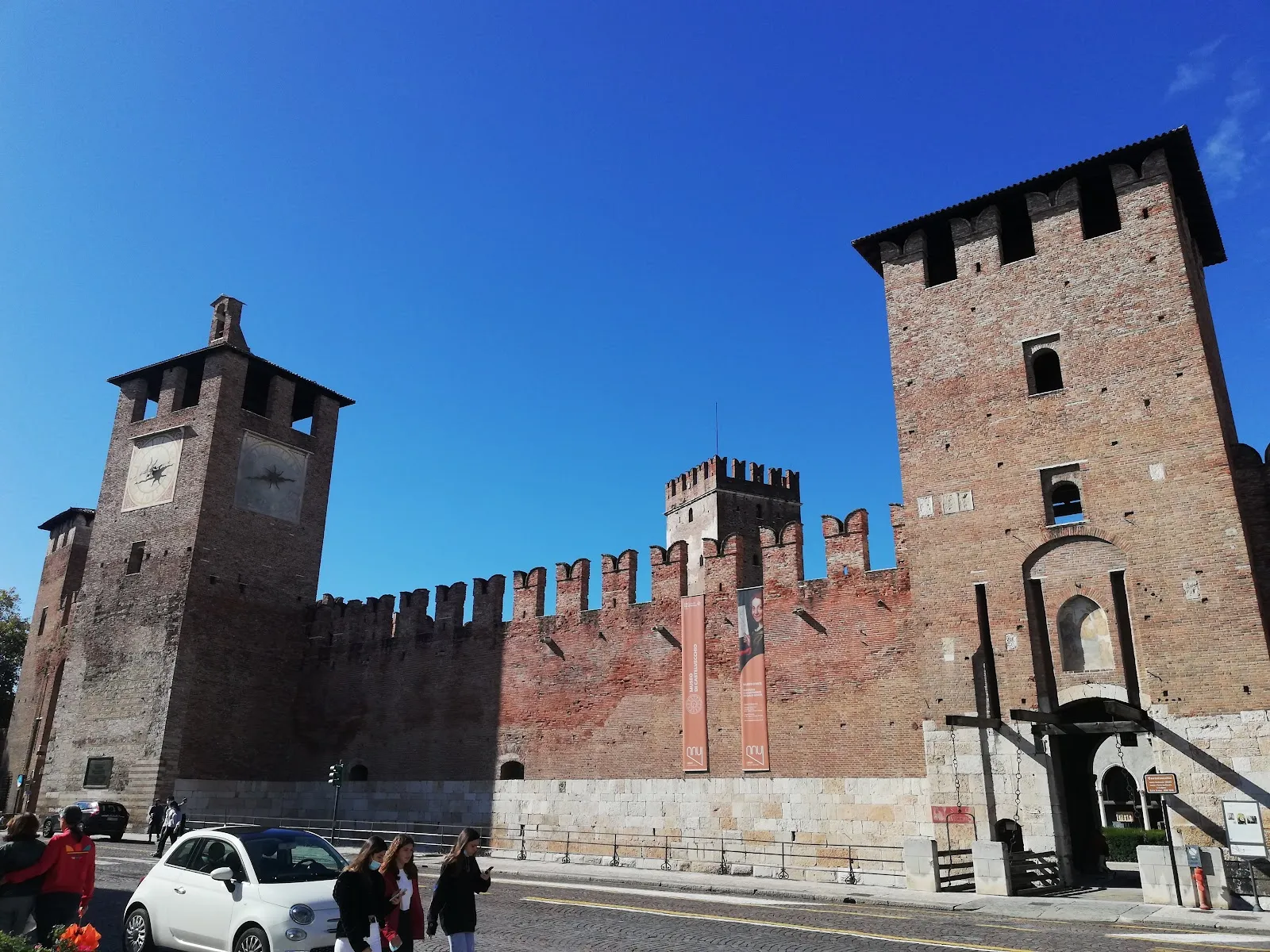
The Scaliger family built Castelvecchio in the 14th century as a fortress and residence. Its position beside the Adige gave it a role in controlling access to Verona from the river. The complex includes towers, keeps and a brick bridge across the river. A former parade ground is now the museum courtyard.
The castle has been altered over time. It was damaged during the Napoleonic period and in the Second World War, then restored and adapted for museum use. Its medieval exterior and military structure remain part of the visit, even as the rooms inside hold collections of art and historical objects.
Carlo Scarpa’s redesign
Architect Carlo Scarpa reshaped the museum in the mid-20th century. His work brings modern materials into the old fortress: glass fills openings in the masonry, and bridges cross exposed foundations. Steel supports and carefully placed walkways set the artworks against the building’s brick and stone.
Look at how the route through the rooms connects architecture and collection. Scarpa’s interventions make damage and structural layers visible instead of hiding them. The equestrian statue of Cangrande I is raised above the courtyard on a concrete support, creating a distinct focal point. The contrast between medieval fabric and modern additions is central to the museum experience.
Art and objects inside the castle
The collection spans medieval and Renaissance art, with works connected to Verona alongside religious and civic objects. You can see paintings, frescoes, sculpture, jewellery, ceramics, weapons and armour. Romanesque and Gothic sculpture appears among the displays, while the painting collection includes works by Pisanello, Paolo Veronese and other artists associated with the city.
The rooms and pathways extend through the castle and around its courtyard and walls. Take time to notice how the art is placed in relation to the building: fresco fragments sit within historic masonry, while sculptures and paintings occupy rooms reshaped for display. The collection is broad, so a visit at a steady pace gives you time for both the objects and Scarpa’s architectural details.
The bridge and upper levels
The museum visit can continue beyond the galleries. The battlements and upper levels give views over the Adige, the bridge and Verona’s rooftops. The historic Castelvecchio Bridge is a prominent part of the site, linking the fortress to the river setting that helped define its original purpose.
Allow time for the route through the castle as well as the art rooms. The upper levels involve stairs and walking, and access to the battlements can vary. If they are open during your visit, take in the views before leaving; daylight is useful for seeing the river and city clearly.
FAQ
How long do you need at Castelvecchio Museum?
Plan on about 1.5 to 2 hours to explore the collections and castle. The upper levels add more walking and stairs.
What can you see inside Castelvecchio Museum?
The collection includes paintings, frescoes, sculpture, jewellery, ceramics, weapons and armour. The museum also occupies a medieval fortress redesigned by Carlo Scarpa.
Can you visit the battlements?
The upper levels and battlements can be part of the visit, but access may vary. Check on arrival if they are open.
Do you need a ticket for Castelvecchio Museum?
A ticket is required to visit the museum. Check current admission details before your visit.