In Venice’s San Polo district, the Scuola Grande di San Rocco is a Renaissance confraternity building known for its extensive cycle of paintings by Jacopo Tintoretto. Its halls and ceilings are filled with biblical scenes, including the dramatic Crucifixion in the Sala dell’Albergo and the painted ceiling of the upper hall. Look closely at the carved woodwork by Francesco Pianta, whose intricate details sit alongside the paintings. The building was created for a charitable brotherhood dedicated to Saint Roch, traditionally associated with protection from plague.
A confraternity’s home in San Polo
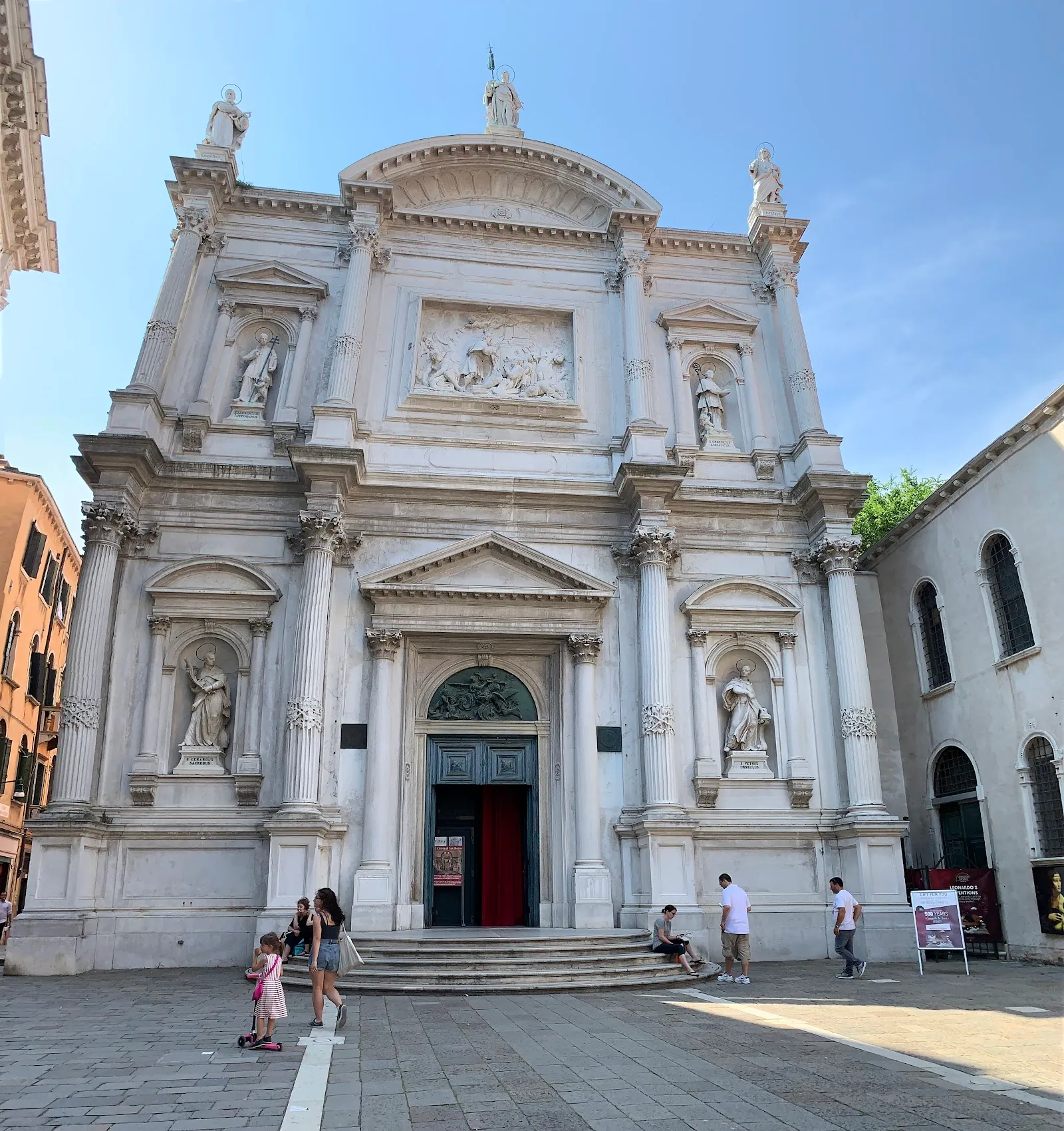
The Scuola Grande di San Rocco stands in Venice’s San Polo district. Its story begins with a confraternity founded in 1478 and dedicated to Saint Roch, a figure associated with protection from plague. Venetian scuole were lay organizations with religious and charitable purposes, and the larger institutions became important patrons of the arts.
The brotherhood built its monumental headquarters between 1515 and 1560. The building was intended as a place for the confraternity, not simply as a gallery. Its scale reflects the standing of the organization, which was among the city’s wealthiest. The Scuola Grande di San Rocco is the only Scuola Grande to have survived the fall of the Venetian Republic, and it remains active today.
Tintoretto’s painted cycle
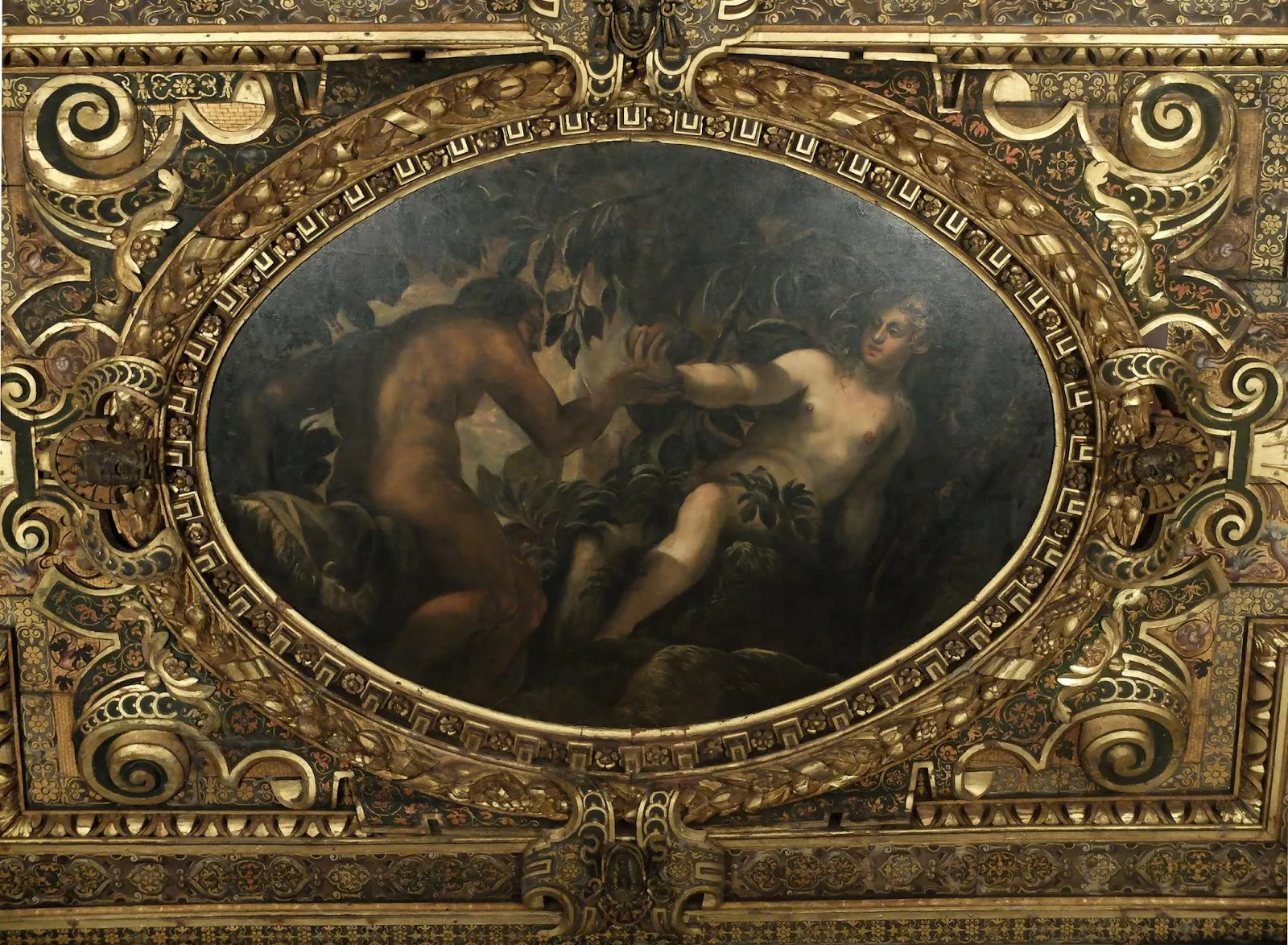
The building is best known for the works of Jacopo Tintoretto, who spent more than 20 years decorating its walls and ceilings. More than 60 of his paintings remain in their original locations. Together, they form a cycle of biblical scenes from both the Old and New Testaments, filling the rooms with large compositions and dramatic contrasts of light and shadow.
Tintoretto first won a commission for a central ceiling panel in the Sala dell’Albergo. Rather than submit a preparatory drawing during the competition, he placed a finished painting in the position intended for it. He went on to decorate the building’s halls with a much wider body of work. The Crucifixion in the Sala dell’Albergo is one of the cycle’s major works.
The Sala Superiore, or upper hall, is a focal point of a visit. Its ceiling and walls carry Tintoretto’s paintings, and the room rewards a slow look across its many panels. Handheld mirrors may be available to help visitors see the ceiling more comfortably; check for them during your visit.
Look beyond the canvases
The paintings share the rooms with detailed architectural and decorative work. Carved woodwork by Francesco Pianta includes intricate figures and details that invite closer inspection. The carved bookcase is one element to look for, and a printed guide to Pianta’s sculptures can help explain their riddles and symbolism.
The exterior combines red brick with white Istrian stone. Inside, the painted ceilings, carved surfaces and large biblical scenes create a close relationship between the building and its art. Give yourself time to look around the rooms as well as at the best-known paintings; details in the woodwork and decoration are easy to miss when attention stays on the canvases.
A local guide can add context to the religious subjects and the relationship between scenes from the Old and New Testaments. If you prefer to explore independently, take time with the painted cycle and look for the printed guide to Pianta’s sculptures. A shop and restrooms are available inside.
FAQ
What is the Scuola Grande di San Rocco?
It is a Renaissance building in Venice’s San Polo district, built as the headquarters of a charitable confraternity dedicated to Saint Roch. Today it is known for its extensive Tintoretto collection.
What can you see inside?
More than 60 paintings by Tintoretto remain in their original locations, including biblical scenes across the halls and ceilings. Look for the Crucifixion in the Sala dell’Albergo and Francesco Pianta’s carved woodwork.
How long should I spend at the Scuola Grande di San Rocco?
Allow about 1 to 2 hours to see the painted halls and look closely at the carved details.
Is there an admission fee?
Yes, admission is paid. A combined ticket may include the nearby Church of San Rocco; check the ticket details before purchasing.