Beside St. Mark’s Square, the Doge’s Palace was the residence of Venice’s ruler and a centre of government, justice and administration. Today, its museum route leads through richly decorated state rooms, the Doge’s apartments, the courtyard and former prisons. Look up at the gilded Golden Staircase, then pause in the Grand Council Chamber beneath Tintoretto’s vast Paradise. The visit also includes the Bridge of Sighs, which links the palace with the prisons. Its interior windows offer only narrow views, so take time to see the bridge from outside too.
A palace built for rule
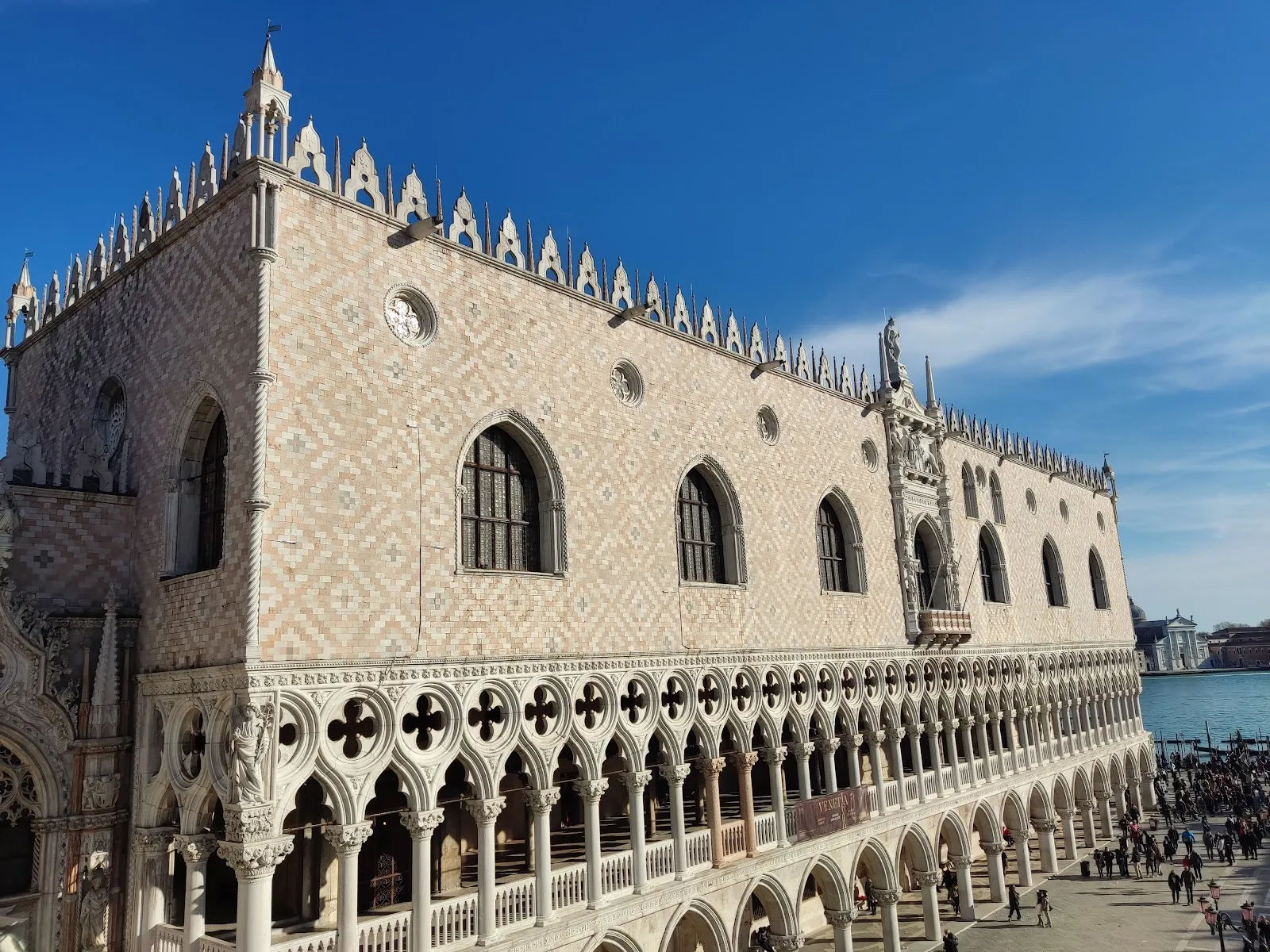
The Palazzo Ducale, or Doge’s Palace, was the home of Venice’s elected ruler and the seat of the republic’s government. Its rooms also served the work of courts and public administration. The building’s role was practical as well as ceremonial: the palace brought the Doge’s residence together with chambers used by the institutions that governed Venice.
The present complex developed over time and combines Gothic architecture with later Renaissance and Mannerist additions. Its three main sections incorporate earlier buildings. The oldest part faces St. Mark’s Basin, while other wings contain the Grand Council Chamber, the former Palace of Justice, the Doge’s residence and government offices. The palace’s patterned stone façade and carved details reward a close look before you go inside.
State rooms and works of art
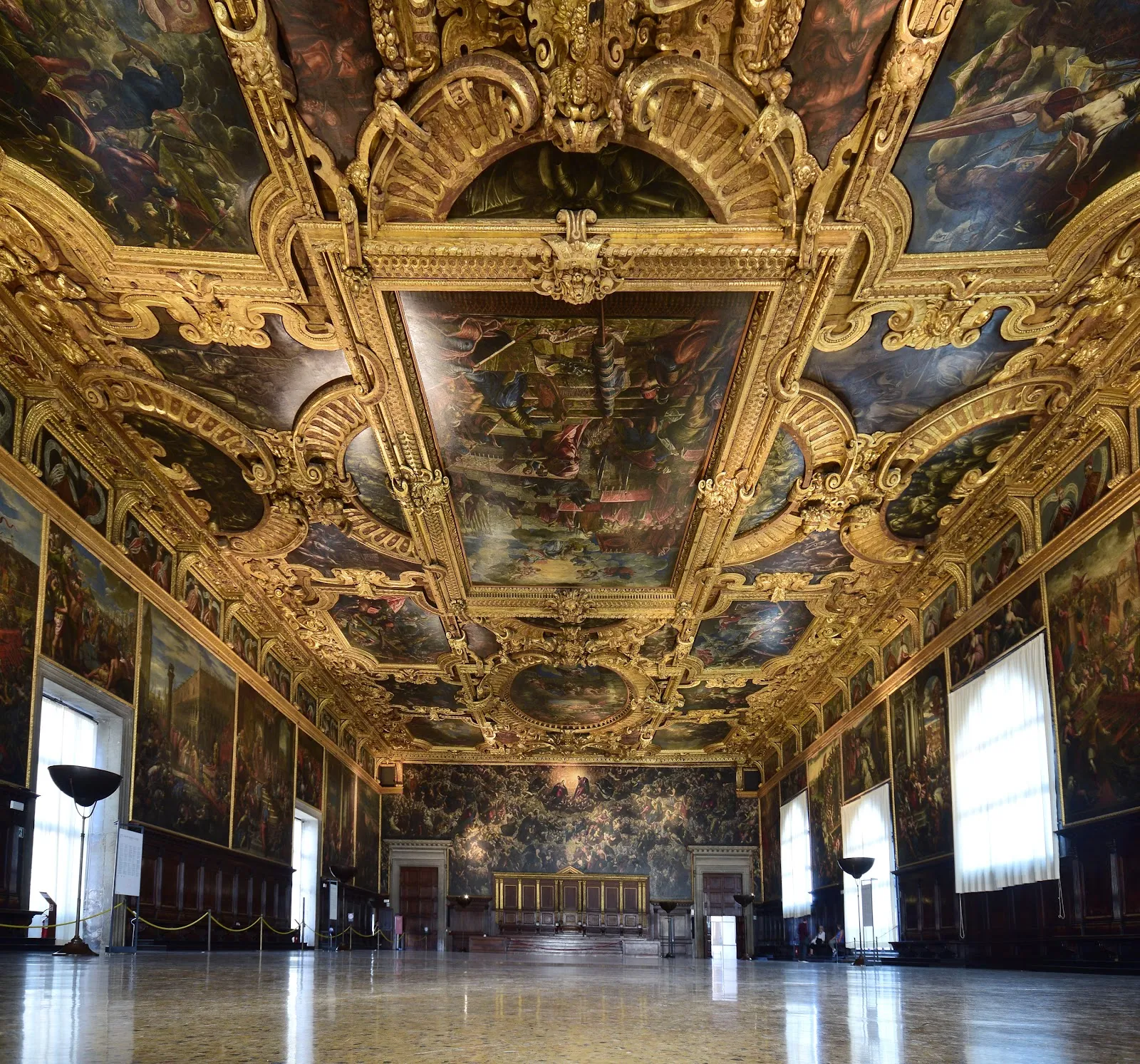
The route through the palace passes from courtyards and loggias into rooms where Venice’s leaders met and worked. The institutional chambers are decorated with paintings by Venetian artists including Tintoretto, Titian and Paolo Veronese. Their scale and decoration reflect the formal duties carried out in these rooms.
In the Grand Council Chamber, Tintoretto’s Paradise fills a vast stretch of wall. This was where the Doge and magistrates met to govern. The Chamber of the Scrutinio is another major room, with a painting depicting the Battle of Lepanto. Look up as you move between chambers: painted ceilings and elaborate decoration are part of the experience, not just details around the artworks.
The Doge’s apartments offer a different view of the palace from its official chambers. The Golden Staircase, decorated with gold leaf and paintings, was the ceremonial entrance for important guests. Elsewhere, the armory displays weapons and armor from the Middle Ages and Renaissance.
The prisons and Bridge of Sighs
The palace also held prisons, separating its grand rooms from the harsher realities of government and justice. The Bridge of Sighs forms part of the connection between the palace and the New Prisons. Its enclosed passage carried prisoners between the prison and offices of the state inquisitors. The familiar story that prisoners sighed at their last view of Venice as they crossed is a local tradition.
Inside the bridge, small openings limit the view. From outside, you can see its pale stone and enclosed form more clearly. The palace’s exterior holds details worth noticing too: column capitals carry narrative carvings, and the architecture includes elements influenced by Greek and Roman forms.
FAQ
How long does a visit to Doge’s Palace take?
Allow about 1.5 hours to explore the palace.
Can you walk through the Bridge of Sighs?
Yes. The palace visit includes the bridge, which connects the palace with the former prisons. Its small openings offer limited views, so see it from outside as well.
Should I book Doge’s Palace tickets in advance?
Advance booking is recommended. Check the ticket type carefully, since free admission slots may be reserved for Venice residents.
What are the main things to see inside Doge’s Palace?
Highlights include the Grand Council Chamber and Tintoretto’s Paradise, the Golden Staircase, the armory, the Doge’s apartments and the former prisons.