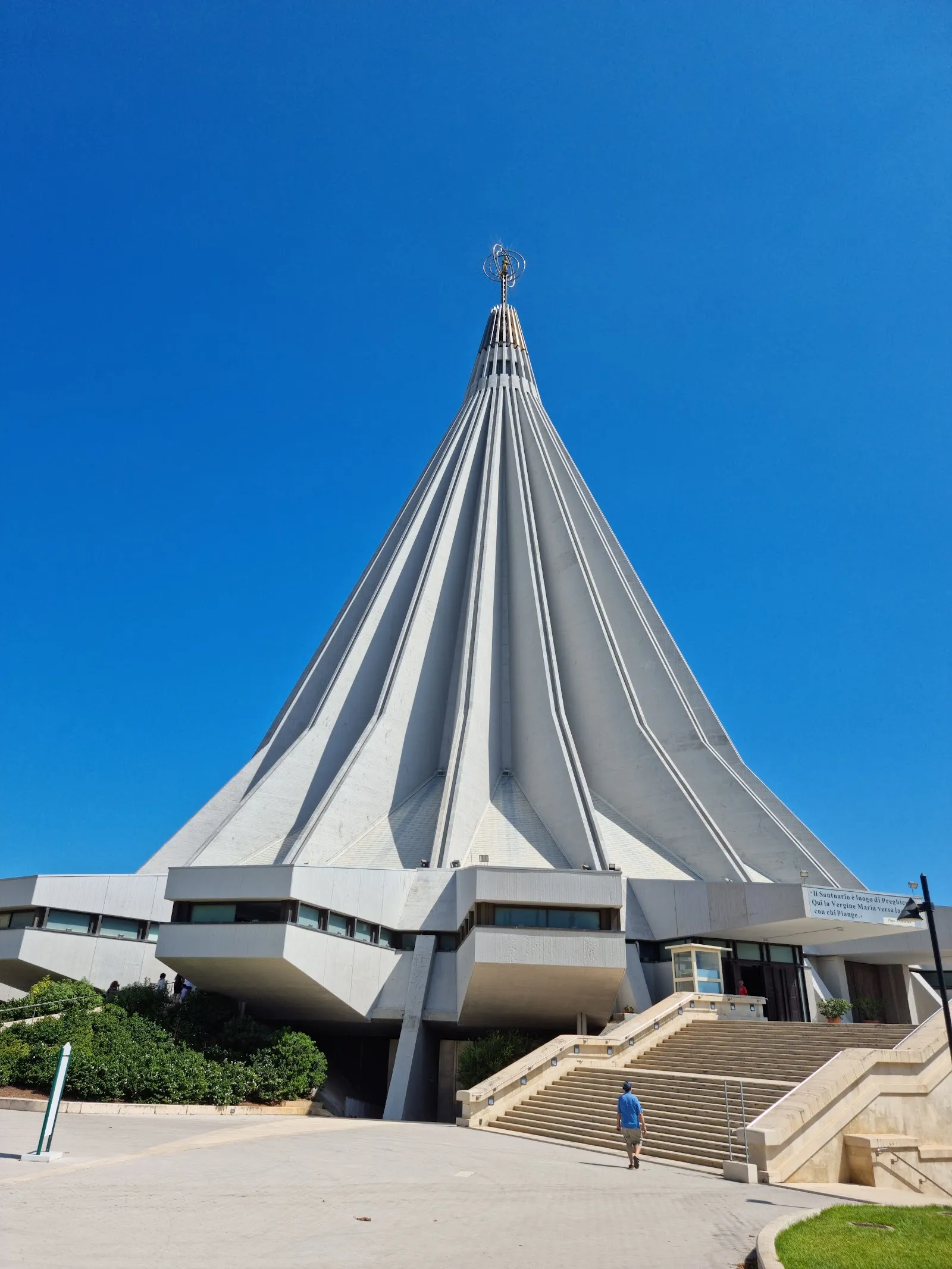
The Basilica Santuario Madonna delle Lacrime is a modern Catholic sanctuary on Via del Santuario in Syracuse, distinct from the city’s ancient and Baroque sites. Its tall concrete form is designed to suggest a tear, and the spacious interior draws the eye up toward the dome and the main altar, where the Madonna’s image is kept. Look around the side chapels, then visit the lower-level museum for context on the 1953 event the basilica commemorates. The crypt is another area of interest, though it is not always open.
A sanctuary shaped by a reported miracle
The basilica commemorates a plaster image of the Madonna that was reported to have shed tears in Syracuse from August 29 to September 1, 1953. The image belonged to a local couple, and the reported event drew crowds. It was later moved to the sanctuary, where it is kept at the main altar.
Plans for a new sanctuary followed soon after. The first stone was consecrated in 1954, but construction began in 1966 and the building was completed in 1994. In 2002, Pope John Paul II raised the sanctuary to the status of a minor basilica.
The design and its setting
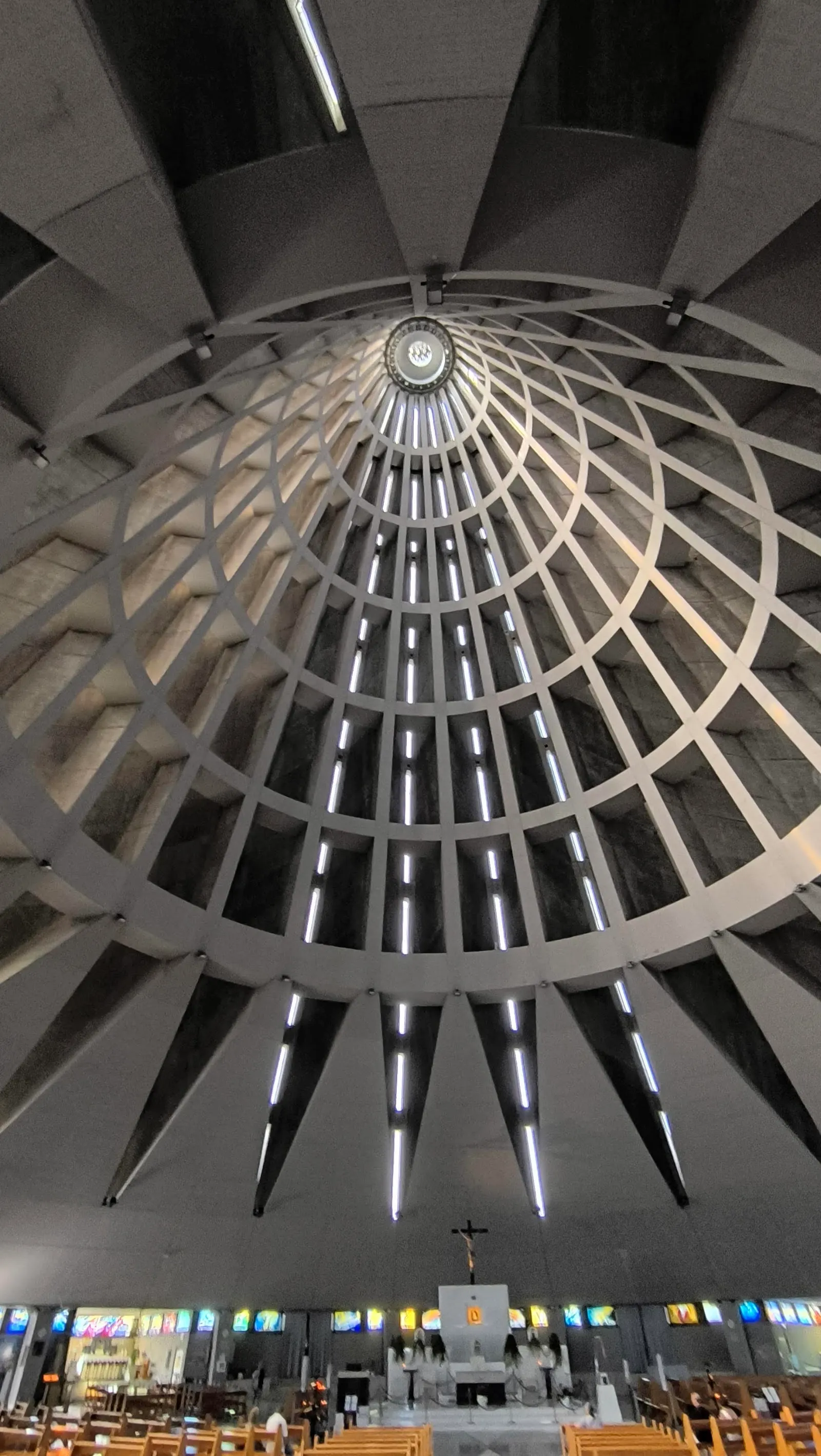
French architects Michel Andrault and Pierre Parat won an international competition to design the church. Riccardo Morandi was the principal engineer. The concrete structure rises 103 metres, with a shape commonly understood as a giant tear. Its scale and modern lines stand apart from Syracuse’s older religious buildings.
Construction was controversial. Some local residents objected to the size and appearance of the proposed building, and the site’s archaeological remains required special permission. The discovery of a crypt beneath the foundations, thought to be a possible early Christian mausoleum, added another historical layer to the site. The sanctuary stands beside the Catacombs of San Giovanni and the Basilica of San Marziano.
Inside the church and lower levels
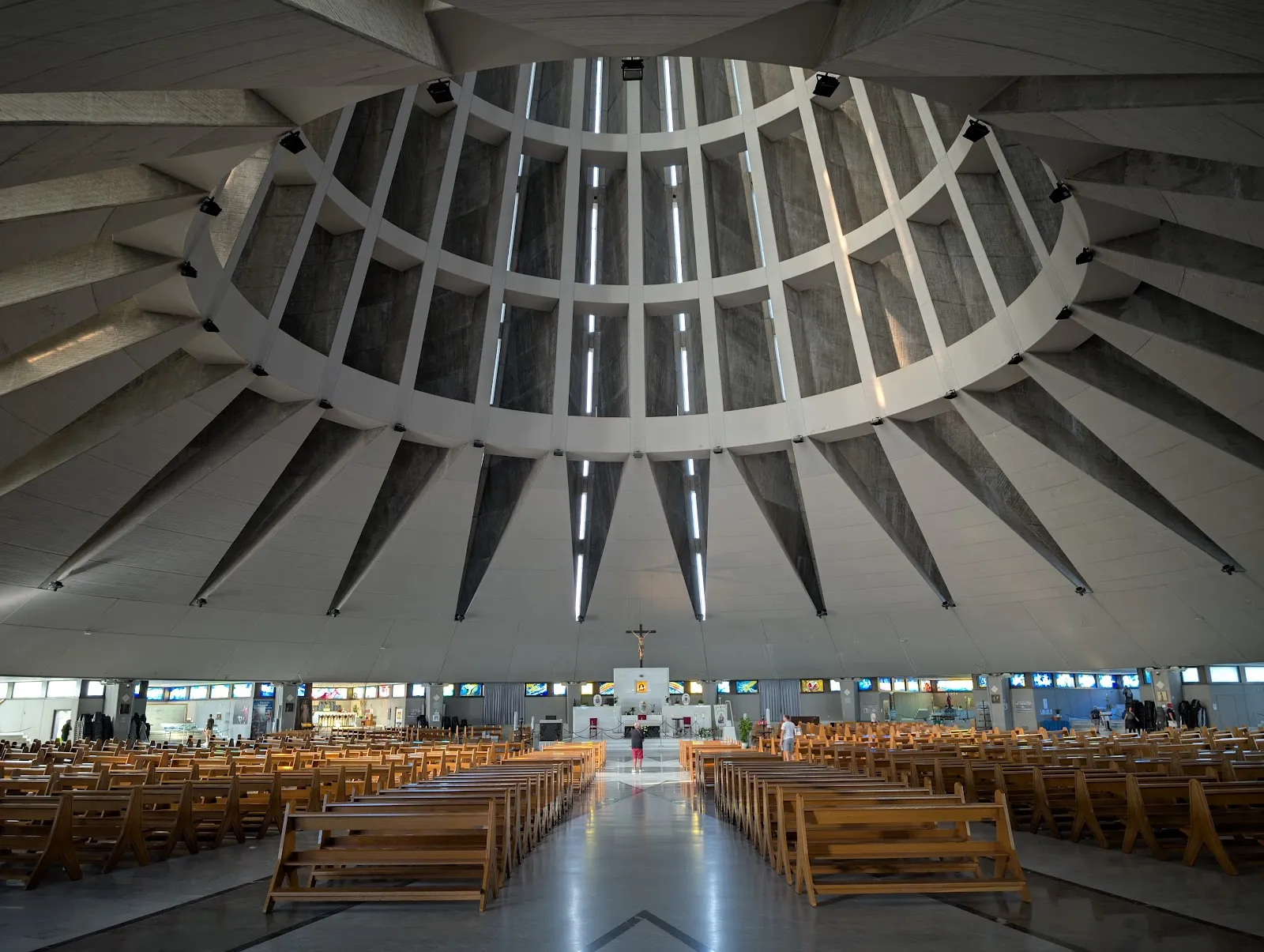
The church’s height and angular interior give the main space a different feel from more traditional Italian sanctuaries. Natural light enters from above, and the central altar is made of white marble. The Madonna image is displayed beneath a crucifix. Chapels around the interior are dedicated to saints, including Lucia, Padre Pio and John Paul II.
A chapel has a film about the story of Our Lady of Tears, and another contains a photographic copy of the Holy Shroud. The main chapel is to the left of the white altar, and daily Masses are held there. An administrative office near the altar sells devotional items.
The lower level contains the museum and the crypt. The museum provides historical context for the reported miracle. The crypt is associated with the crystallized tears and is not always open, so check access before making it a central part of your visit.
FAQ
What does the basilica commemorate?
It commemorates a plaster image of the Madonna that was reported to have shed tears in Syracuse from August 29 to September 1, 1953.
What can you see inside the basilica?
The church contains the Madonna image at the main altar, chapels dedicated to saints, a chapel with a film about Our Lady of Tears and a photographic copy of the Holy Shroud.
Is the crypt always open?
No. The crypt is not always open, so check access before your visit.
Is there a museum at the basilica?
Yes. A museum on the lower level gives historical context about the reported 1953 event.