
The Temple of Peace, also called the Forum of Peace, is an Imperial Forum beside the Roman Forum in Rome’s historic center. Built under Emperor Vespasian between 71 and 75 CE, it was conceived as a place of peace and later held artworks, libraries and the Marble Map of Rome. Much of the complex is now buried or lost, but the reconstructed western portico gives a clear sense of its scale: seven pink Aswan granite columns, each seven metres tall. Look from the surrounding walkway and include it in a wider visit to the nearby ruins.
Vespasian’s Forum of Peace
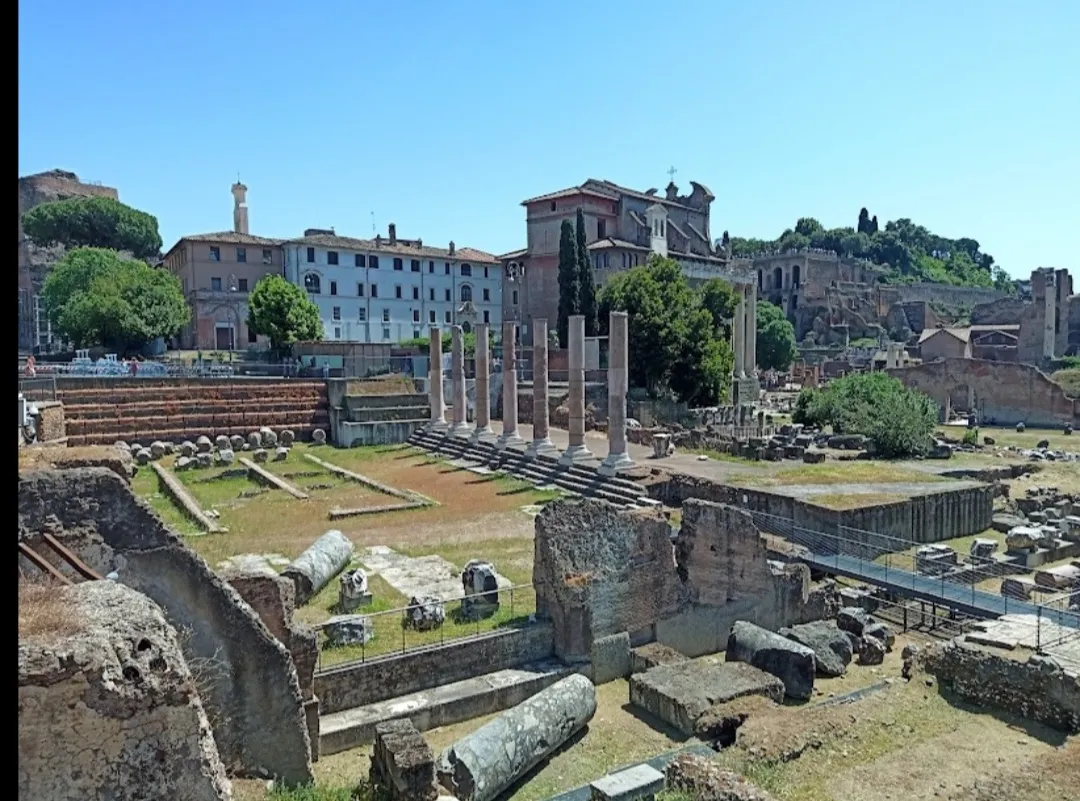
The Temple of Peace was built under Emperor Vespasian between 71 and 75 CE. Its construction was funded with spoils from the Roman conquest of Jerusalem. The complex was intended to embody peace after civil conflict, and by the fourth century it was known as the Forum of Peace.
Its role differed from that of the Roman Forum. The Temple of Peace was remembered as a garden-like public space and cultural center, with Greek and Roman artworks, libraries and objects associated with Jerusalem’s Second Temple. The complex also housed the Marble Map of Rome, a large city plan known as the Forma Urbis Romae.
The western portico
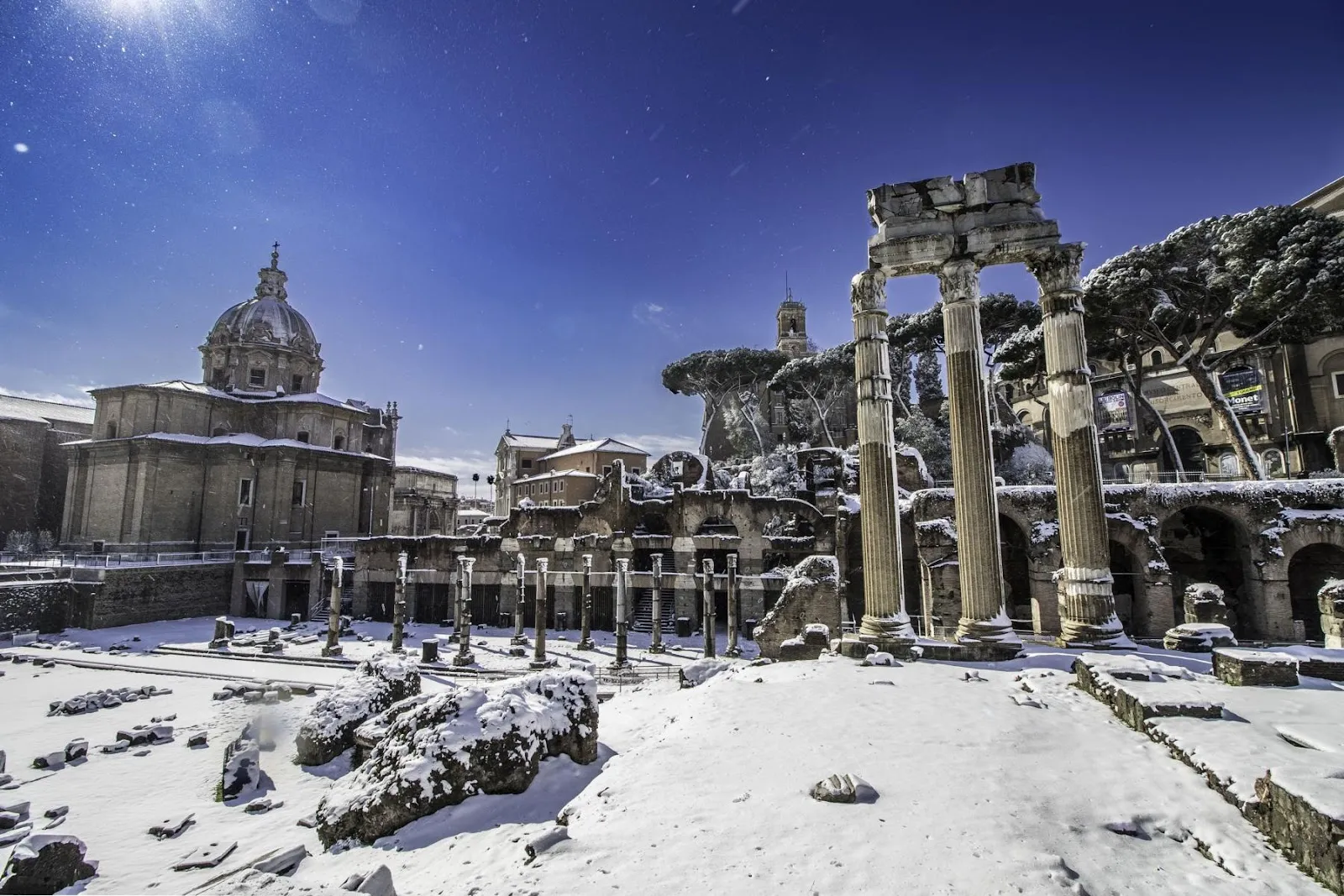
The most striking surviving feature is a reconstructed section of the western portico. Seven columns of pink Aswan granite, brought from Egypt, rise seven metres above their bases. The portico’s columns were found in fragments during excavations between 1998 and 2000, and the reconstruction was completed in 2015.
The work used surveys and analysis of the stone fragments to guide their reassembly. The surviving capital helps indicate the column’s original order. Modern restoration methods were used so interventions could be reversible and recognisable. The reconstructed section gives a sense of the original colonnade, though most of the complex is buried or no longer standing.
Understanding the ruins
The Temple of Peace and the Roman Forum are adjacent, but they belong to separate monumental complexes and different phases of Roman urban planning. The Temple formed part of the Imperial Fora, built under individual emperors. Its remains are best read as one stop among the neighboring ruins rather than as a complete, freestanding building.
Use the surrounding walkway to view the columns and surviving walls, and follow the site signs if you are exploring independently. Check your ticket’s access rules and time window ahead of your visit. The wider archaeological area requires considerable walking and has limited shade, so a cooler or partly cloudy time can make the visit more comfortable.
FAQ
When was the Temple of Peace built?
Emperor Vespasian commissioned it between 71 and 75 CE. It was funded with spoils from the Roman conquest of Jerusalem.
What can you see at the Temple of Peace?
The main visible feature is a reconstructed section of the western portico with seven pink Aswan granite columns, each seven metres tall. Surviving walls and columns also give a sense of the complex’s original scale.
Do you need to enter the site to see the remains?
The columns and remains can be viewed from the surrounding walkway. Check your ticket’s access rules and time window before visiting.
How is the Temple of Peace different from the Roman Forum?
It is a separate Imperial Forum, built under Vespasian and located beside the Roman Forum. It was remembered as a garden-like museum and cultural center.


