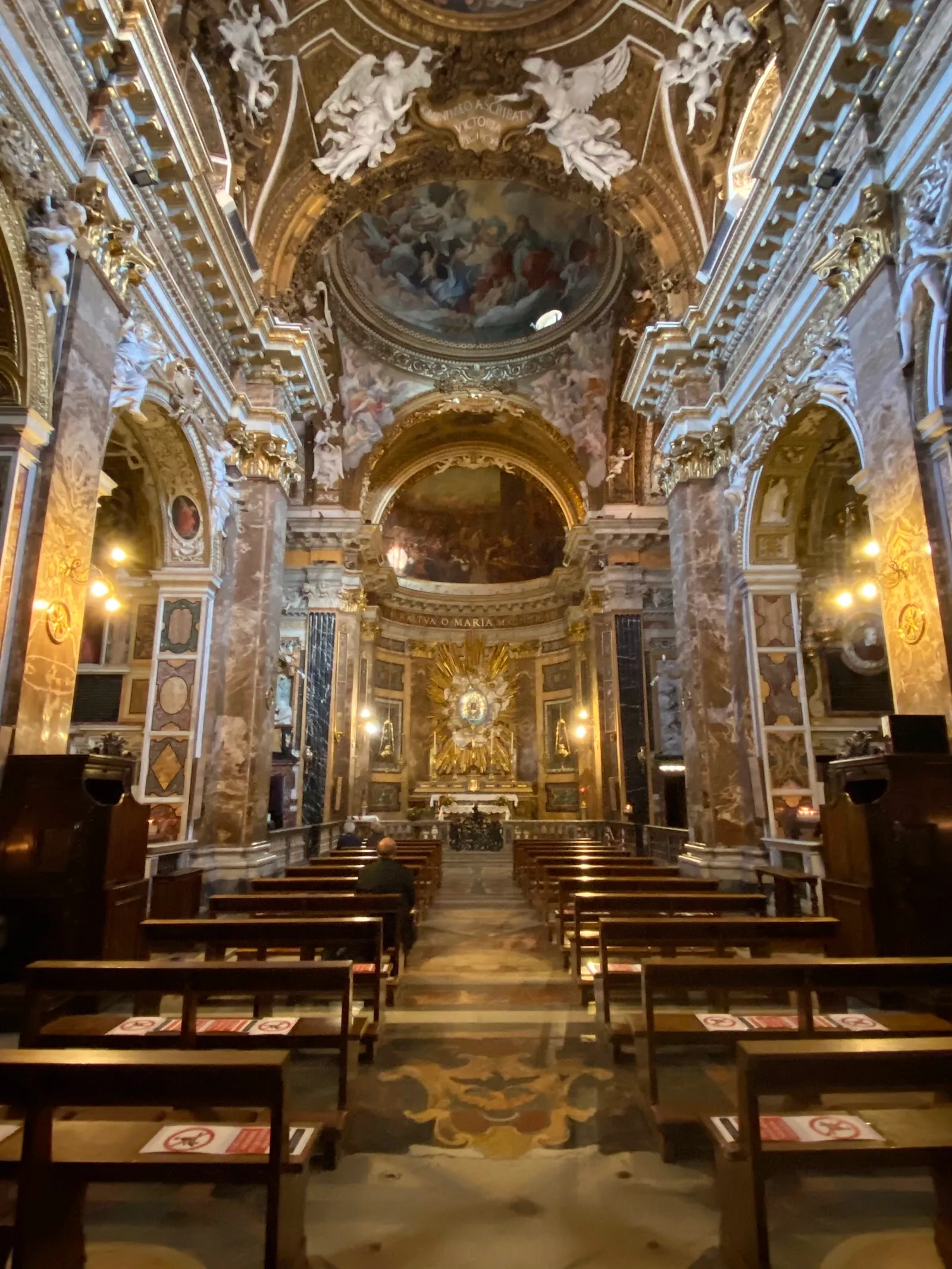
On Via Venti Settembre, near Termini station, Santa Maria della Vittoria is a small Baroque church known for Bernini’s Ecstasy of Saint Teresa. The sculpture fills the Cornaro Chapel, where marble figures, gilded rays and painted decoration combine to frame the saint’s vision. Look beyond the chapel, too: the church has a decorated ceiling, paintings, sculptures and an ornate altar. It is a focused stop for Baroque art, especially if you want to see how Bernini shaped the whole setting around one work.
A church shaped around Bernini’s chapel
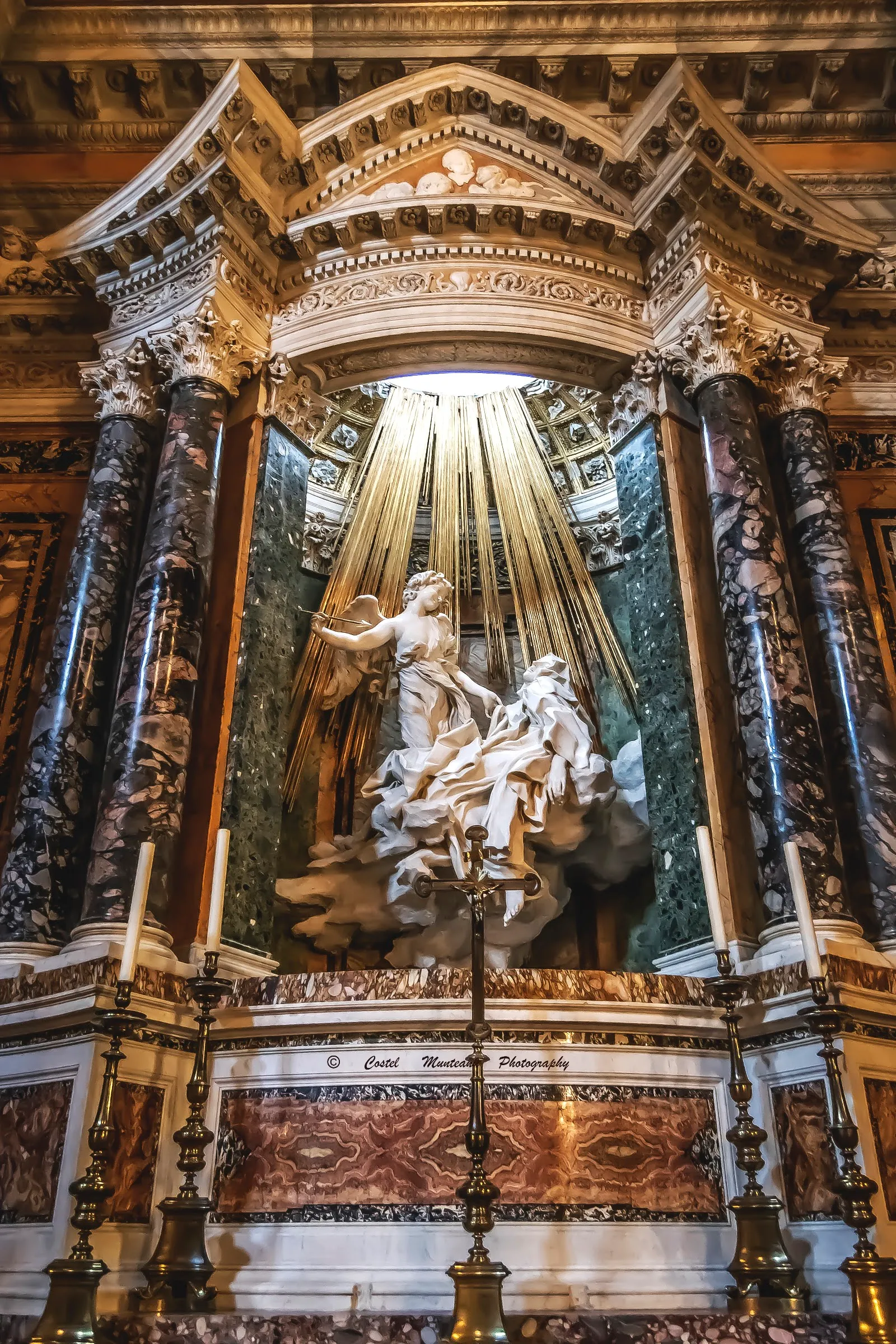
Santa Maria della Vittoria stands on Via Venti Settembre, north of Termini station. Carlo Maderno designed the church, which was built between 1608 and 1620. It began as a chapel dedicated to Saint Paul for the Discalced Carmelites. After the Catholic army’s victory at the Battle of White Mountain in 1620, it was rededicated to the Virgin Mary and given the name Santa Maria della Vittoria. A Bohemian Madonna was placed on the altar.
The church is compact, but its interior rewards a closer look. The Baroque decoration includes paintings, sculpture, gilded details and a painted ceiling. The Cornaro Chapel, the last chapel on the left as you face the altar, is its best-known feature.
The Cornaro Chapel and the Ecstasy of Saint Teresa
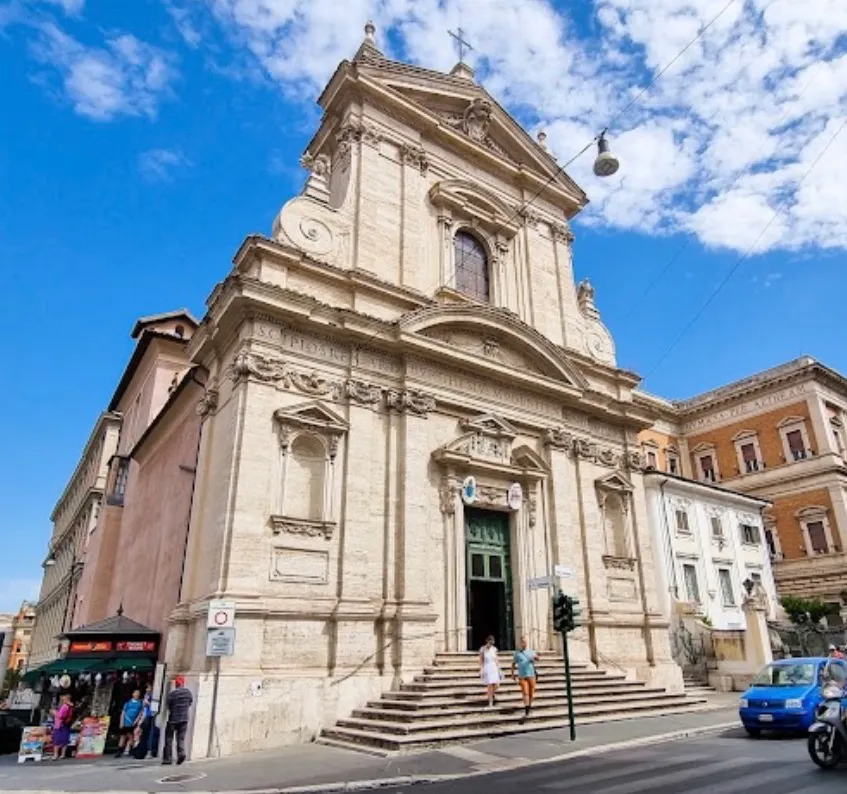
Bernini designed the Cornaro Chapel as a complete setting for his marble group, Ecstasy of Saint Teresa. The sculpture depicts Teresa of Ávila, a Spanish Carmelite nun, during a vision in which an angel holds a golden arrow. Her head leans back, and the folds of her robe tumble across the scene. The angel stands beside her, poised with the arrow.
The chapel brings together sculpture, architecture, painting and light. Gilded rays above the figures direct light toward the marble group, while the surrounding decoration gives the scene the quality of a staged vision. Bernini’s treatment can feel strikingly physical, a quality that has made the work both compelling and controversial. The composition presents Teresa’s experience as spiritual ecstasy, with the angel and saint at its center.
What to look for during your visit
Begin with the Cornaro Chapel, then step back to take in how its figures and gilded elements work together. Notice the contrast between the white marble and the darker, richly decorated setting, as well as the way light falls across the sculpture. The chapel’s theatrical design is central to the work: Bernini planned the surrounding space as part of the experience, not simply as a frame for the figures.
Allow time for the rest of the church, including the painted ceiling, altar, paintings and other sculptures. The church is open in the afternoon, and the Cornaro Chapel’s lighting effects are a particular reason to visit then. It is a religious space as well as an art destination, so keep your conduct and clothing appropriate for a church. The entrance is wheelchair accessible.
FAQ
What is Santa Maria della Vittoria famous for?
The church is best known for Bernini’s Ecstasy of Saint Teresa in the Cornaro Chapel.
Where is the Cornaro Chapel?
It is the last chapel on the left as you face the altar.
When can you visit the church?
The listed visiting hours are 4 to 6 PM daily.
How long should I allow for a visit?
The church is compact, but there is no visit duration specified. Allow enough time to see the Cornaro Chapel and the church’s other decoration.


