
Castel Nuovo, also called Maschio Angioino, is a medieval fortress beside the port in central Naples. Commissioned by Charles I of Anjou in 1279, it later served as a royal residence and stronghold for successive rulers. Five rounded towers frame its white marble triumphal arch, added in the 15th century. Inside, the Civic Museum includes historic rooms, paintings by Neapolitan artists and remains visible beneath a glass floor. Restoration work can restrict access to parts of the castle, so check what is open before planning an interior visit.
A royal fortress by the port

Castel Nuovo stands beside Naples’ port and is also known as Maschio Angioino. Its name means “New Castle”, a distinction made when it was built beside older fortresses in the city. Charles I of Anjou commissioned the castle in 1279, and construction was completed in 1282. Its position gave it a defensive role as well as a place for the royal court.
The fortress became a residence for rulers of Naples, Aragon and Spain. It remained a royal seat until 1815. Successive rulers rebuilt and enlarged it, so the building combines medieval and Renaissance elements. Its five rounded towers give it a commanding outline beside the waterfront.
The triumphal arch and outer walls
The castle’s most striking entrance is a white marble triumphal arch set between two towers. Alfonso I of Aragon ordered it in 1443 to mark his entry into Naples. Sculptures and reliefs cover the arch, which contrasts with the darker stone walls around it.
The arch and towers are worth a look even if you do not go inside. Castel Nuovo is close to the port and Piazza Municipio, making it easy to see during a walk through central Naples. The surrounding area can be busy with traffic and construction work, so allow time to approach and view the building from different sides.
Museum rooms and collections
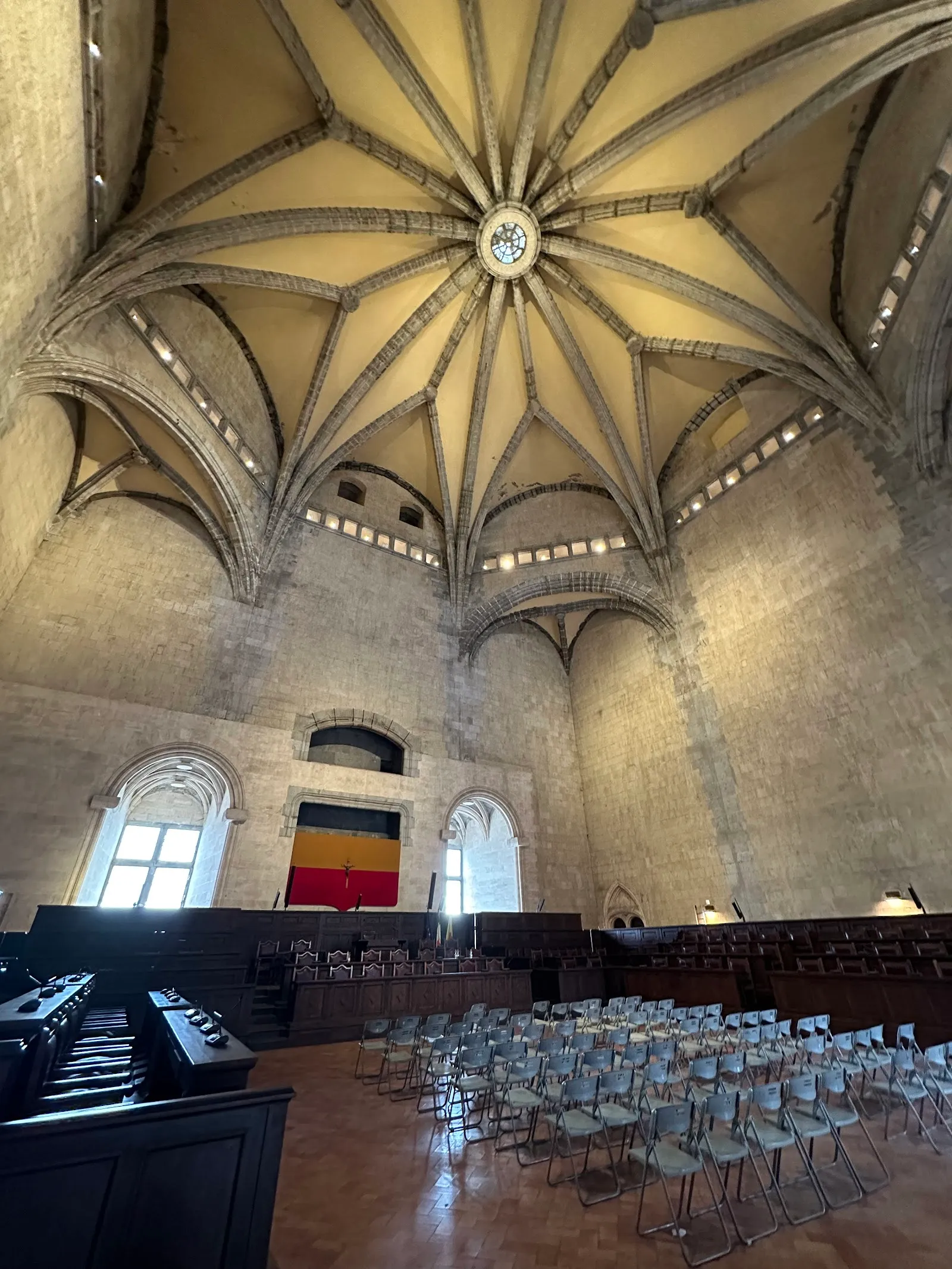
The castle houses the Civic Museum, with works by Neapolitan painters and historic objects. The Sala dei Baroni is one of its principal rooms; its vaulted ceiling is a notable detail. In the Armoury Hall, a glass floor reveals archaeological remains below. The museum also includes the Palatine Chapel, known as the Cappella Palatina, with frescoes associated with Giotto and paintings from the 14th and 15th centuries.
Access inside the castle can change when rooms are closed for restoration or other events. Some areas have been unavailable at times, including upper levels, so do not count on reaching the ramparts or getting a panoramic view on every visit. Check current access and ticket information before you go. The castle is open to the public as a museum, and advance ticket booking is recommended.
FAQ
Where is Castel Nuovo?
It is beside the port in central Naples, at Via Vittorio Emanuele III, near Piazza Municipio.
What is the other name for Castel Nuovo?
It is also known as Maschio Angioino, or the Angevin Keep.
Can you visit the inside of Castel Nuovo?
The castle is open to the public as a museum. Some rooms may be closed because of restoration or events, so check current access before visiting.
Is Castel Nuovo open on Sundays?
No. The listed opening schedule shows the castle closed on Sundays.


