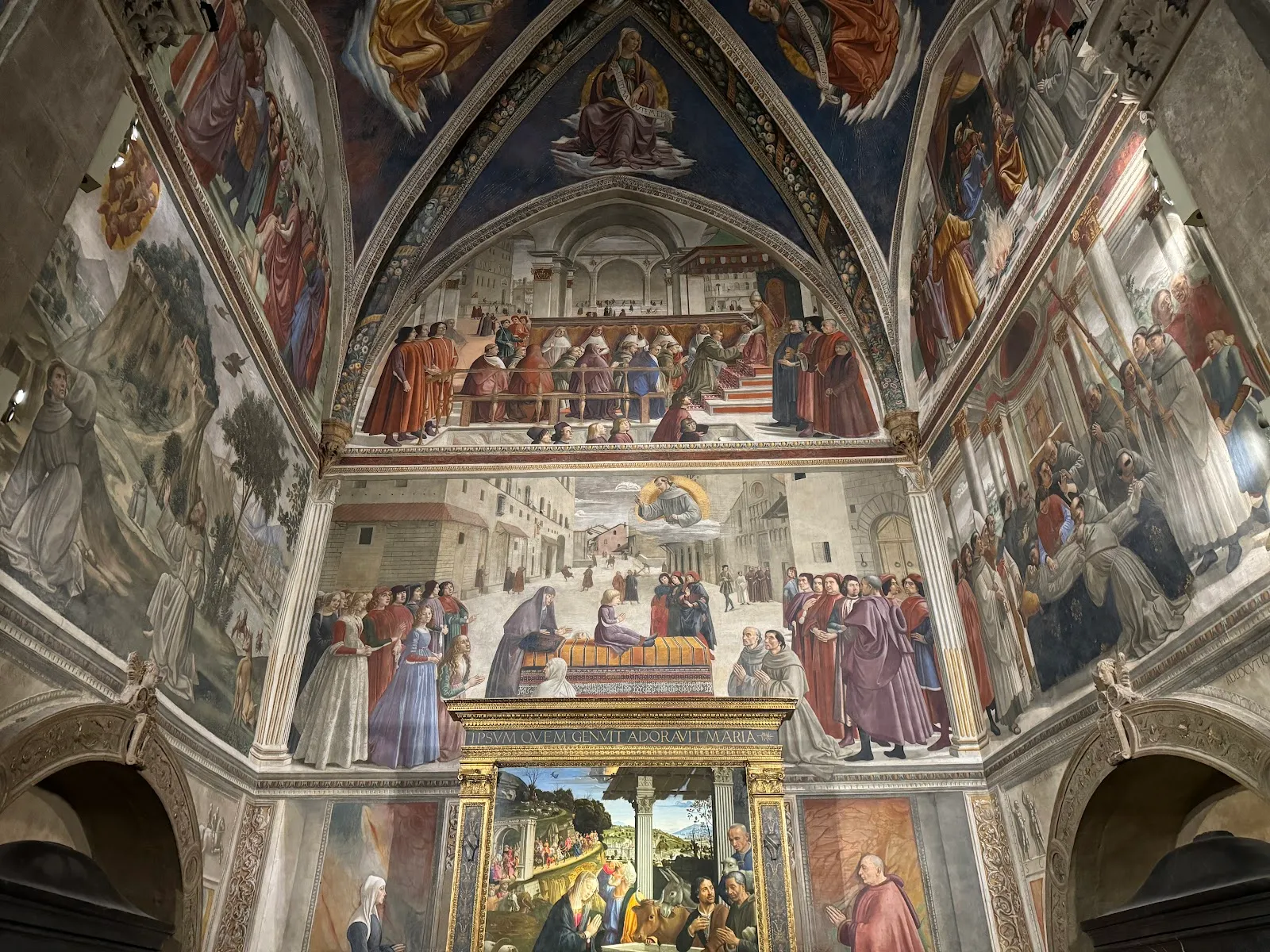
The Uffizi Galleries occupy a 16th-century palace in central Florence, between Piazza della Signoria and the Arno. Their paintings trace Italian art from the Middle Ages through the Renaissance and beyond, with rooms devoted to artists including Giotto, Botticelli, Leonardo da Vinci, Michelangelo and Caravaggio. Look for Botticelli’s The Birth of Venus and Primavera, Leonardo’s Annunciation and Michelangelo’s Tondo Doni. The Uffizi’s long corridors and views of the Arno add to the visit. Plan what you most want to see: the collection is extensive enough to fill a day.
A palace built for Florentine government
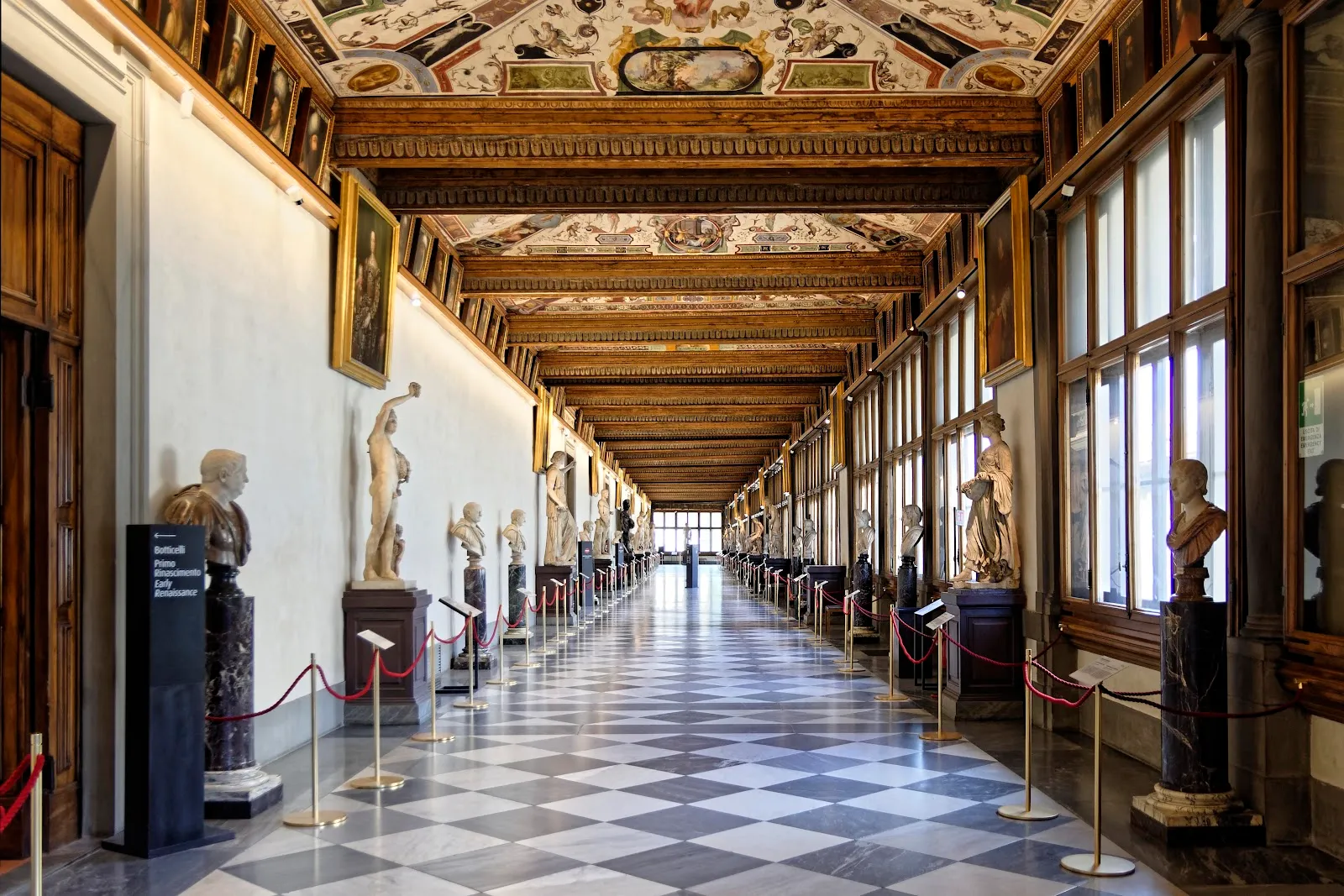
The Uffizi began as an administrative complex, not an art museum. Giorgio Vasari designed the buildings for Cosimo I de’ Medici, and construction took place between 1560 and 1580. The name comes from uffizi, the Italian word for offices.
The project gathered Florentine government departments beside Palazzo Vecchio. Its long, straight site ran from Piazza della Signoria towards the Arno. The palace’s U-shaped plan and formal corridors remain part of the experience: the artworks are displayed within a historic building rather than in a plain modern gallery.
The Medici family’s collection formed the core of the museum. Anna Maria Luisa de’ Medici, the last member of the dynasty, bequeathed the family’s art to Florence in 1737 on the condition that it stay in the city.
How the collection tells art history
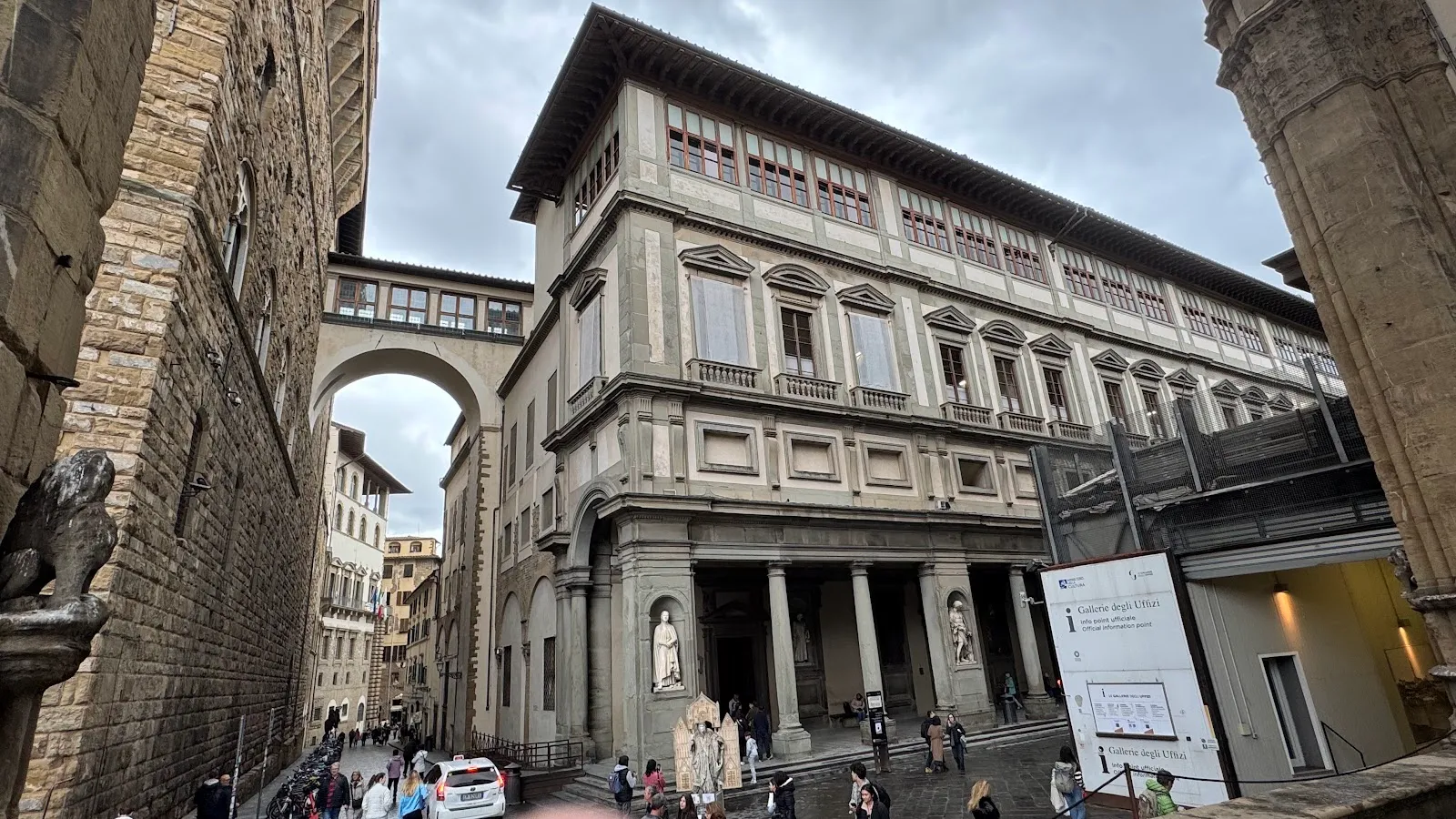
The galleries are arranged broadly in chronological order, taking visitors from medieval painting towards the Renaissance and later periods. Comparing works from different eras helps show changes in how artists represented people, space and the natural world. Earlier Byzantine images often use flatter, more formal figures; later paintings give people and settings a more natural appearance.
The collection includes 13th- and 14th-century works by Giotto and Cimabue, followed by paintings from the Renaissance in Tuscany and central Italy. Rooms bring together artists working around the same time, giving context to well-known works rather than presenting each one in isolation.
The later galleries include paintings by Caravaggio, Titian, Rubens, Van Dyck and Rembrandt, among others. Ancient Roman sculptures and busts are also part of the collection. The range makes the Uffizi relevant beyond its best-known Renaissance paintings.
Planning a route through the galleries
The collection is large, so choosing a few priorities before arrival can make it easier to pace the visit. Botticelli’s The Birth of Venus and Primavera are among the most sought-after works. Leonardo da Vinci’s Annunciation, Michelangelo’s Tondo Doni, Caravaggio’s Medusa and Titian’s Venus of Urbino are other notable stops.
The rooms containing Botticelli’s paintings are numbered 10 to 14 in the information provided. Early or late visits can offer a calmer chance to view them. A guided tour is another option if you want someone to explain the art and its historical context.
The Uffizi also has views beyond its galleries. Look through windows facing the Arno for the river and the Vasari Corridor above Ponte Vecchio. The museum has a rooftop café and terrace overlooking Piazza della Signoria and Palazzo Vecchio. Allow several hours at minimum; visitors exploring the collection in depth can spend most of a day.
FAQ
How long should I spend at the Uffizi Galleries?
Allow a few hours for a focused visit. Exploring the collection in depth can take most of a day.
Which artworks should I look for at the Uffizi?
Highlights include Botticelli’s The Birth of Venus and Primavera, Leonardo da Vinci’s Annunciation, Michelangelo’s Tondo Doni and Caravaggio’s Medusa.
Should I book Uffizi tickets in advance?
Yes. Booking online ahead of time can help you avoid a long wait at the entrance.
When is a quieter time to see Botticelli’s paintings?
Arrive near the beginning or end of the day for a quieter view.
Do children pay to enter the Uffizi?
Children up to age 18 have free entry.