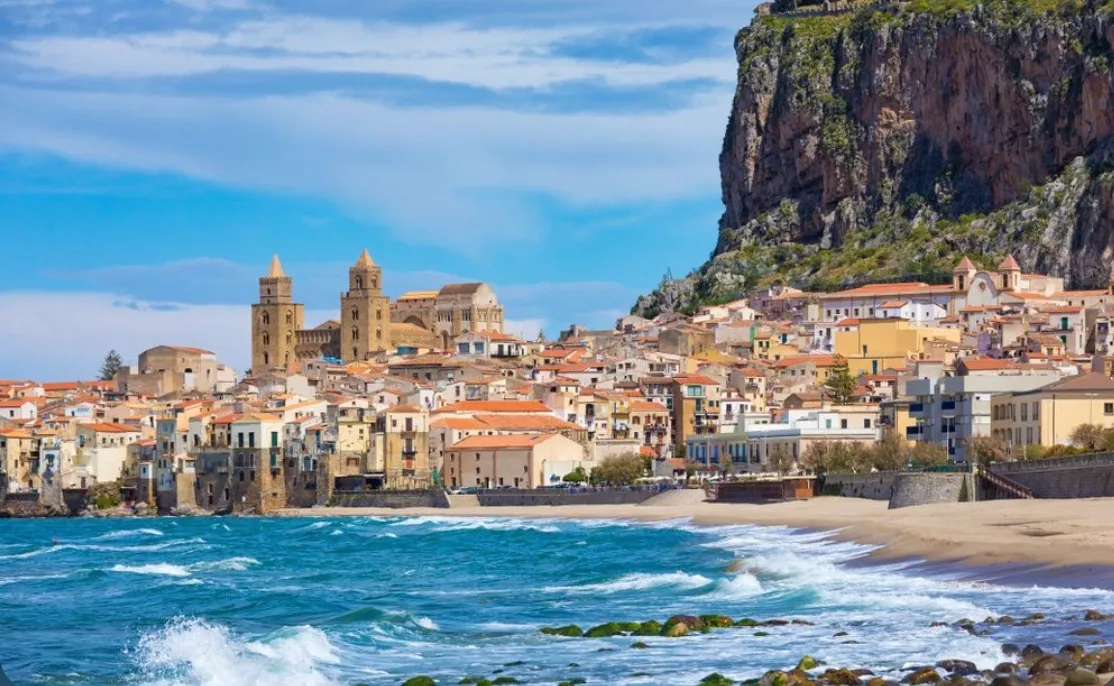
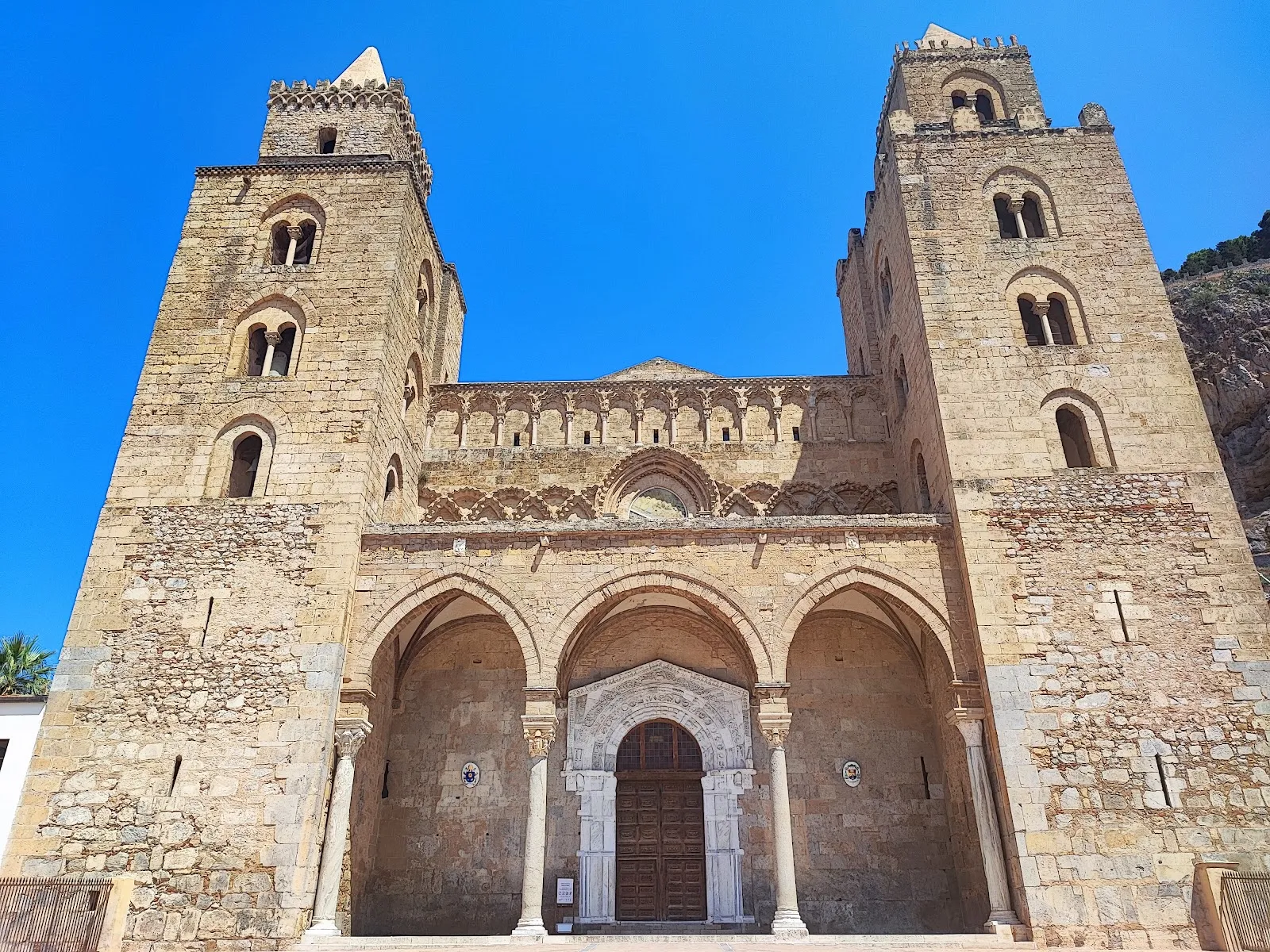
Cefalù Cathedral stands in Piazza del Duomo beneath the rocky profile of La Rocca. Commissioned by King Roger II in 1131, it is a Norman church with a twin-towered façade and Byzantine mosaics in the apse. The central image of Christ Pantocrator is the interior’s focal point, surrounded by mosaics made by Byzantine craftsmen. The cathedral forms part of the UNESCO-listed Arab-Norman Palermo and the Cathedral Churches of Cefalù and Monreale site. Take time for the square as well as the church, where cafés and restaurants line the piazza.
A cathedral commissioned by Roger II
Construction began in 1131 under Roger II, the Norman king of Sicily. A local legend connects the project to a storm at sea: after surviving it and reaching Cefalù, the king commissioned a church in gratitude. The story is part of the cathedral’s history, though it is told as legend.
The building took shape in the Arab-Norman style that developed in Sicily after the Norman conquest. Its position in the town centre and the two towers make the cathedral easy to spot from Piazza del Duomo. The towers were added in the 15th century, and the church was altered over time. Its broad façade looks out across the square, with La Rocca rising behind the town.
Cefalù Cathedral is included in the UNESCO World Heritage site known as Arab-Norman Palermo and the Cathedral Churches of Cefalù and Monreale. The serial site was inscribed in 2015 and brings together monuments in Palermo, Cefalù and Monreale. The cathedral is one of Sicily’s defining examples of Norman architecture and Sicilian Romanesque style.
The apse mosaics
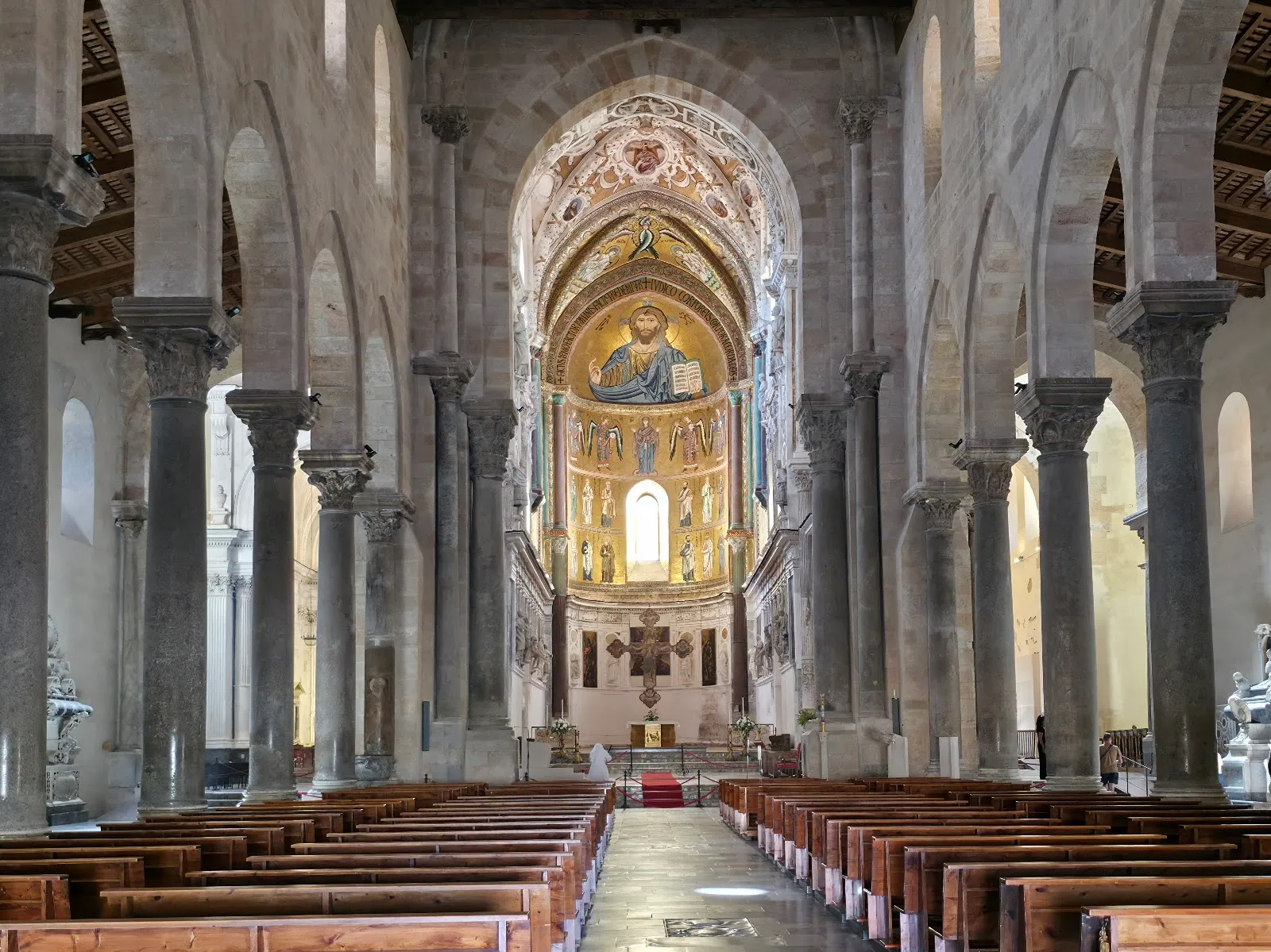
Inside, the Byzantine mosaics in the apse draw the eye upward to Christ Pantocrator, shown as a commanding central figure. The mosaics were made by Byzantine craftsmen and are among the oldest and best-preserved in Sicily. Their gold surfaces and detailed imagery offer a close look at the craftsmanship that makes the cathedral notable beyond its exterior.
The apse is the natural place to pause and take in the arrangement. The image of Christ forms its centre, with the surrounding mosaic decoration filling the space above the church interior. The mosaics predate those at Monreale by a few decades, linking the cathedral to the wider artistic history of Norman Sicily.
Look beyond the apse, too. The church has intricate details and carvings as well as the mosaic work. A visit can be a quiet one: take your time inside, then step back into the open square for a different view of the façade and its towers.
Visiting the cathedral and piazza
The cathedral stands at Piazza del Duomo, 10, in the historic centre of Cefalù. The square is part of the visit: cafés and restaurants border it, and the cathedral’s façade gives the piazza its central landmark. You can sit on the steps with ice cream or stop for espresso while taking in the surrounding scene.
The church is free to enter according to the supplied information, while tickets are required for access to some additional areas. The bell towers are among the areas that have been described as ticketed. Check the cathedral’s official website for current access details before planning a visit to those spaces.
If you prefer a quieter visit, the supplied advice is to choose an off-peak season. The cathedral’s current opening information is shown separately on the page, so check it before setting out. The piazza also works well as a short pause between sights in Cefalù’s centre.
FAQ
When was Cefalù Cathedral built?
Construction began in 1131 under King Roger II. The building was developed over time, and the Norman towers were added in the 15th century.
What should I see inside Cefalù Cathedral?
Look for the Byzantine mosaics in the apse, especially the central image of Christ Pantocrator. The church also has detailed carvings and other mosaic work.
Is entry to Cefalù Cathedral free?
The supplied information says entry to the church is free, but tickets are needed for some additional areas, including the bell towers.
Is Cefalù Cathedral a UNESCO World Heritage site?
Yes. It is part of the Arab-Norman Palermo and the Cathedral Churches of Cefalù and Monreale site, inscribed in 2015.