St Patrick's Cathedral, on St Patrick's Close in Dublin, is the National Cathedral of the Church of Ireland and the largest church in Ireland. Its Gothic interior rewards a slow look at the vaulted ceilings, stained glass, stonework and Lady Chapel. The cathedral is also linked to Jonathan Swift, author of Gulliver's Travels, who served as dean and is buried here. Set aside time for the surrounding gardens, too, and bring headphones if you plan to use the informative audio tour.
A cathedral beside an older holy site
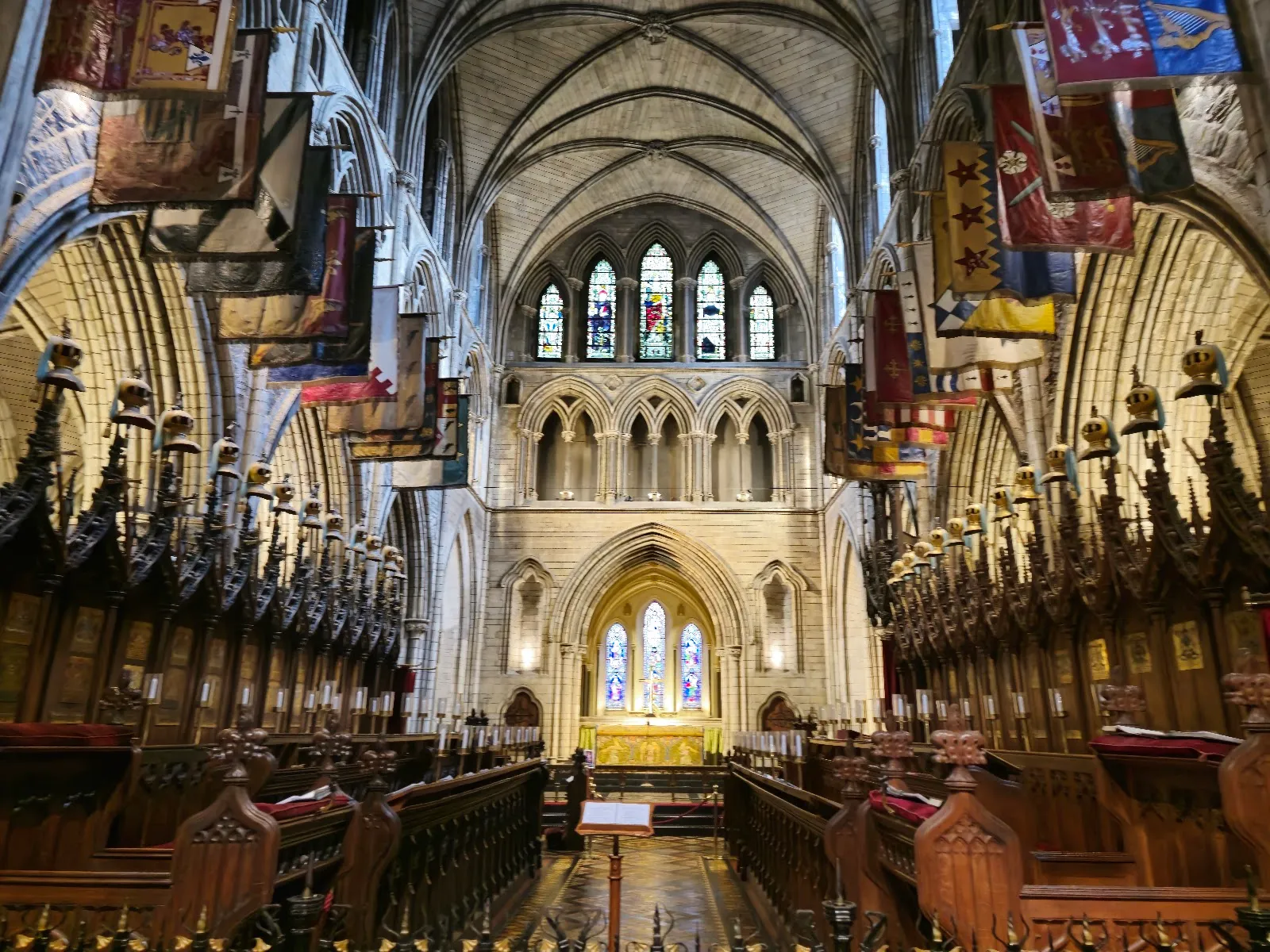
St Patrick's Cathedral is the National Cathedral of the Church of Ireland and the largest church in Ireland. The site is associated with a well where, according to tradition, St Patrick baptised converts in the fifth century. That story connects the cathedral to Ireland's patron saint, though the present building belongs to a much later period.
The parish church on the site received collegiate status in 1191 and became a cathedral in 1224. Construction of the current building began around 1220 and continued for decades. The cathedral has been part of Dublin's history for more than 800 years, and remains both a place of worship and a visitor attraction.
Gothic details inside
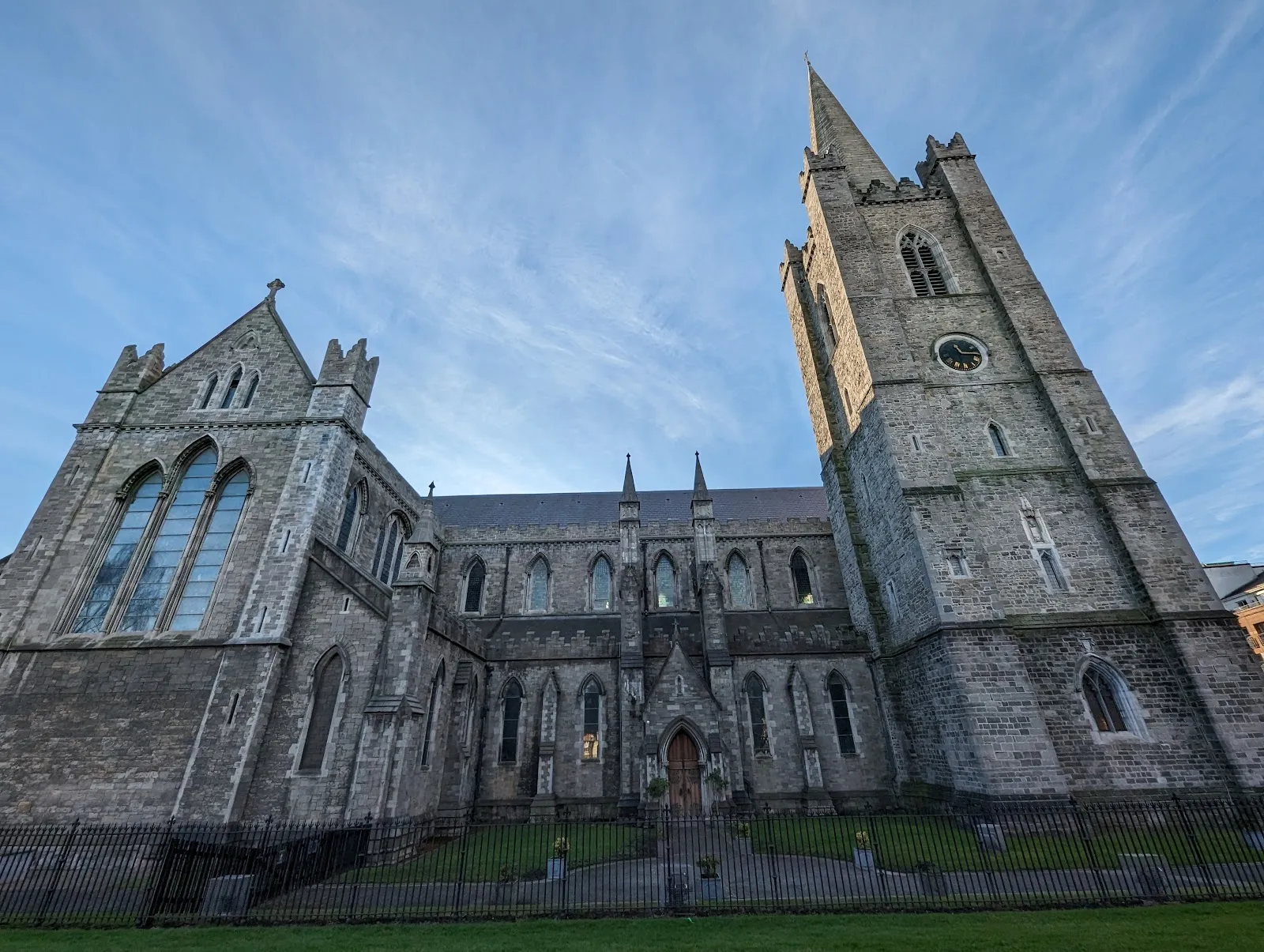
The early English Gothic building is notable for its vaulted ceilings, pointed arches and stonework. Look for the stained-glass windows, intricate floor tiles and the Lady Chapel as you make your way through the interior. The cathedral also contains a large organ and monuments connected to Dublin's past.
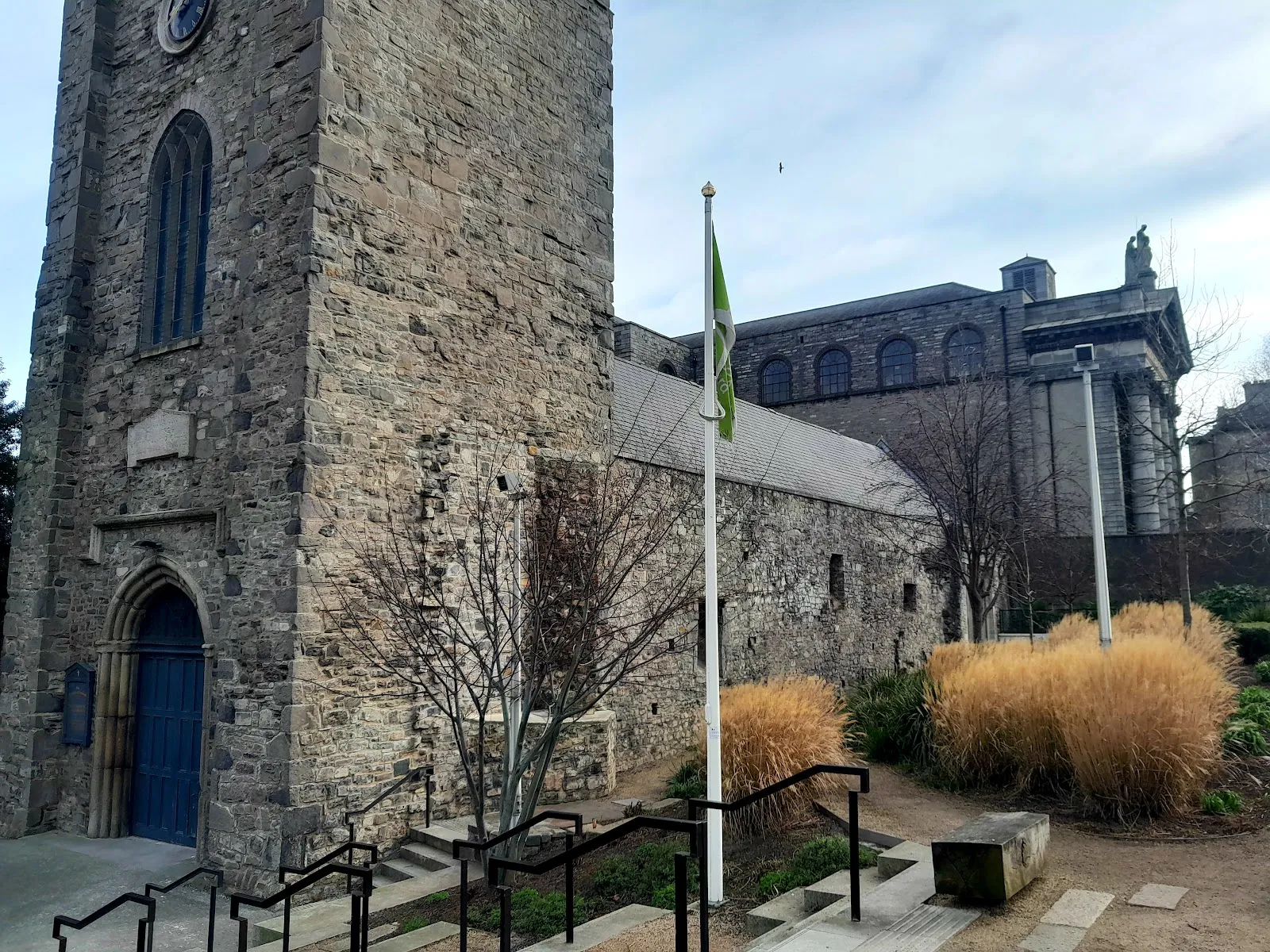
Its appearance records more than one period of building and restoration. The west tower was rebuilt after a fire in 1370, and the spire was added in 1749. The structure has also seen dramatic changes of use: during the 17th century, Oliver Cromwell's troops used the nave as a stable. These details give the building's long history a more specific shape than its medieval exterior alone suggests.
Jonathan Swift and the cathedral choir
Jonathan Swift, the writer of Gulliver's Travels, served as dean of St Patrick's Cathedral from 1713 to 1745 and is buried there. His connection gives visitors a chance to link the cathedral's religious history with one of Dublin's best-known literary figures.
The cathedral's choir dates to 1432 and is described as Ireland's oldest. It continues to perform, with weekday performances during school terms noted as an opportunity for visitors. The cathedral also has a long choir tradition, including a choir school that is the country's oldest and only remaining cathedral choir school.
The grounds and nearby library
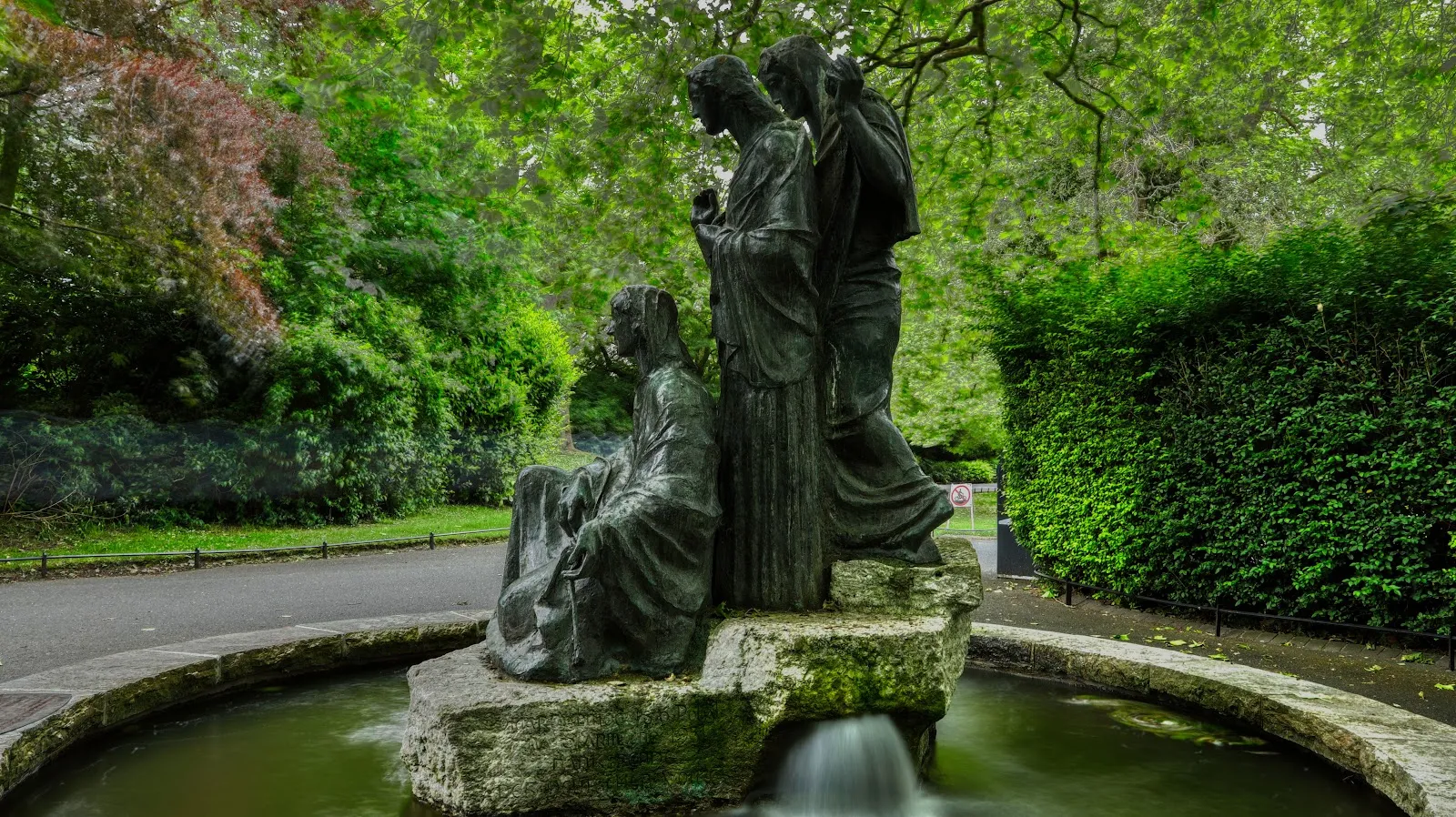
The gardens around the cathedral offer a quieter place to pause after looking through the interior. St Patrick's Park is next to the cathedral, and the well associated with the baptism story is said to be there. The green space also gives a different view of the building from its interior and close-up Gothic details.
A library on the cathedral grounds opened in 1707 and remains in use for its original purpose. Its oak bookcases still show bullet damage from the Easter Rising of 1916. The marks are a tangible reminder that the cathedral grounds and buildings have been caught up in Dublin's wider history, as well as serving religious and cultural life.
FAQ
How long do you need at St Patrick's Cathedral?
Plan for one to two hours to explore the cathedral and its grounds.
Is there an entry fee for St Patrick's Cathedral?
Sightseeing admission is charged. The available information does not confirm the current price.
Can you take photos inside St Patrick's Cathedral?
Photography is possible. Be considerate and avoid disturbing people who are worshipping.
When is a quieter time to visit?
Weekdays are suggested for fewer crowds, with Friday noted as particularly quiet.