On North Earl Street, near O’Connell Street and the Spire, this slightly larger-than-life bronze statue depicts Irish writer James Joyce with crossed legs, a walking stick and one hand in his pocket. Its textured surface gives the sculpture a distinctive look, and its street-level position makes it easy to approach. Stop for a close look or a photo, and consider the writer’s connection to Dublin: Joyce’s novel Ulysses follows Leopold Bloom through the city. The statue is outdoors and free to visit.
A literary figure on North Earl Street
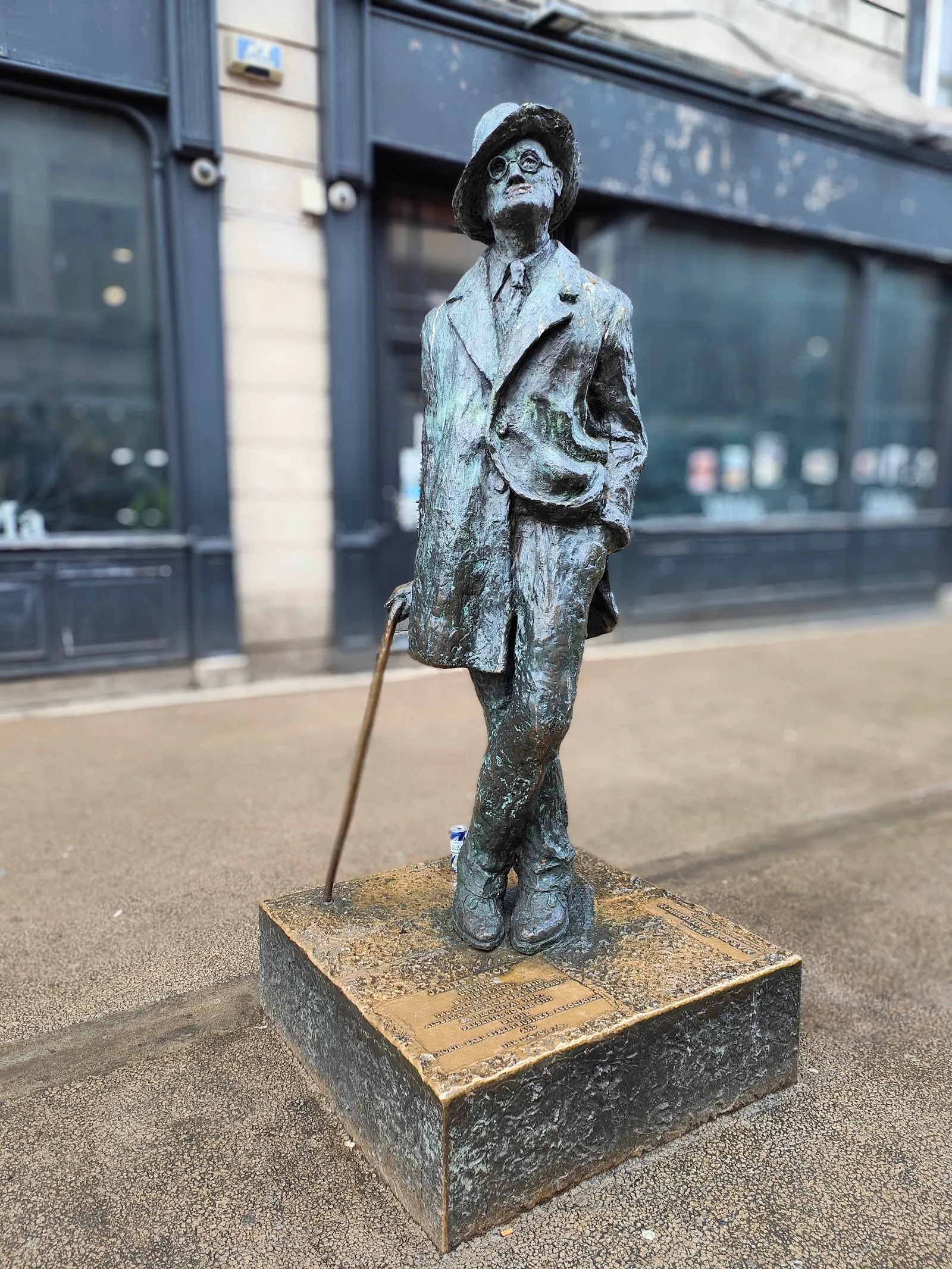
The bronze statue depicts James Joyce, the Irish novelist, poet and literary critic, in a pose that suggests a pause in a walk. He stands with his legs crossed, one hand in his pocket and the other resting on a walking stick. The sculpture is slightly larger than life and has a textured surface rather than a smooth finish.
Joyce is best known for Ulysses, his 1922 novel that follows Leopold Bloom through a day in Dublin. The city is central to the story, and this statue places a tribute to its author on North Earl Street, close to O’Connell Street.
Access and nearby sights
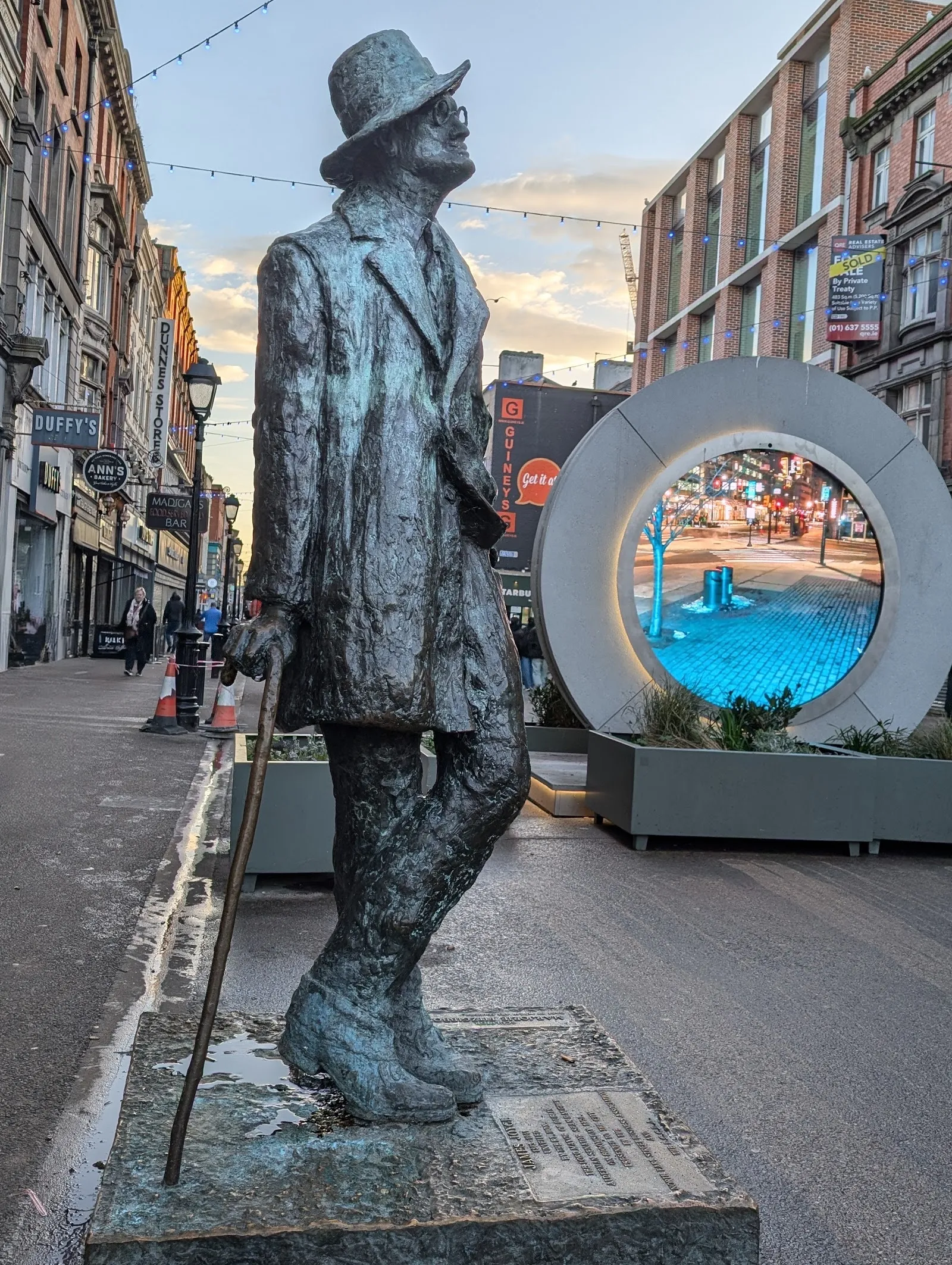
The statue stands at street level and is wheelchair accessible. Its position also allows people with vision impairments to approach and touch the sculpture. There is no admission charge.
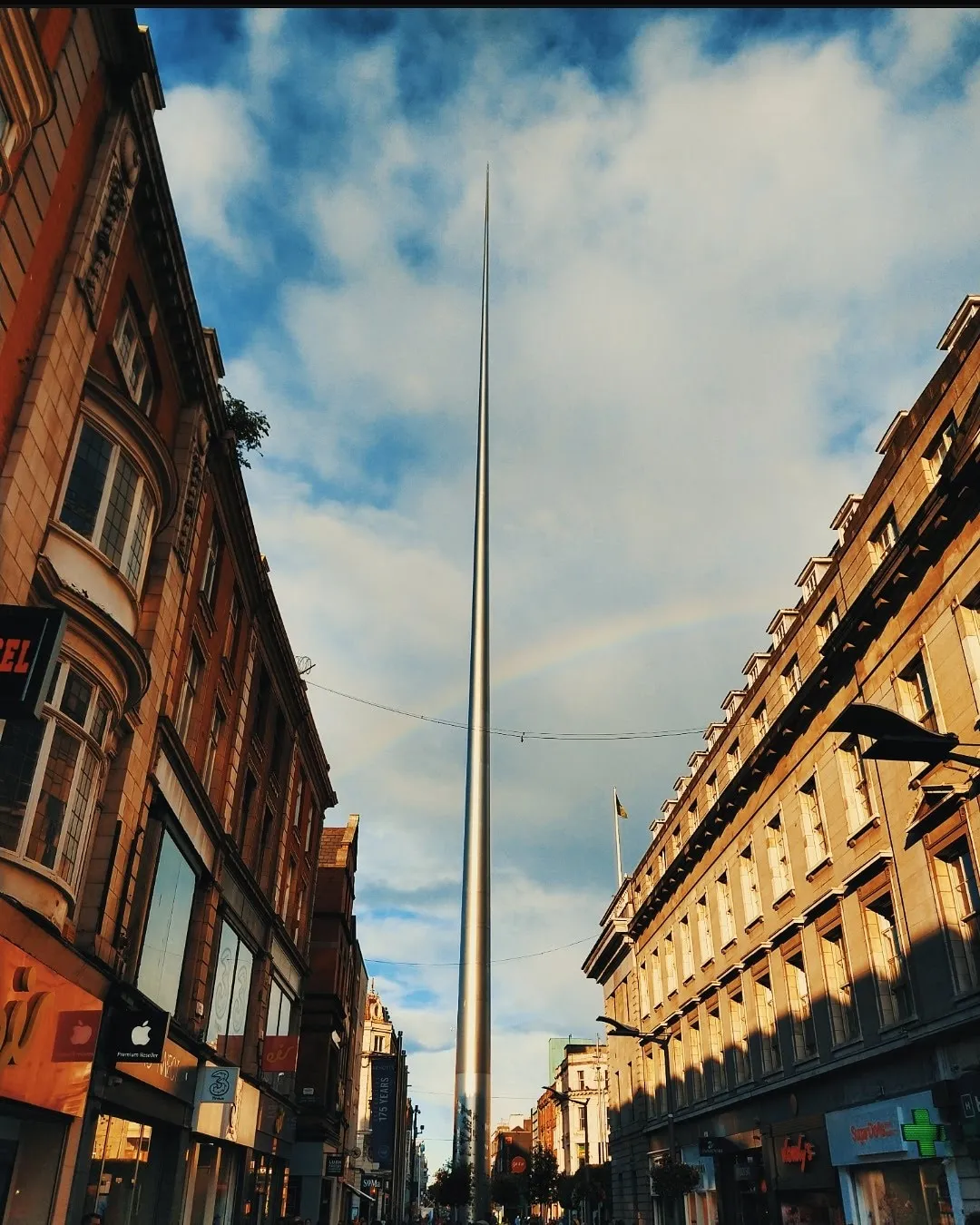
The Spire is nearby, so the statue can be included in a walk around the area. For a quieter stop, visit early in the day or on a weekday, when the streets around O’Connell Street are less crowded.
FAQ
Is the James Joyce Statue free to visit?
Yes. The outdoor statue is free to see.
Where is the James Joyce Statue?
It is on North Earl Street in Dublin, near O’Connell Street and the Spire.
Is the statue wheelchair accessible?
Yes. It is at ground level and wheelchair accessible.