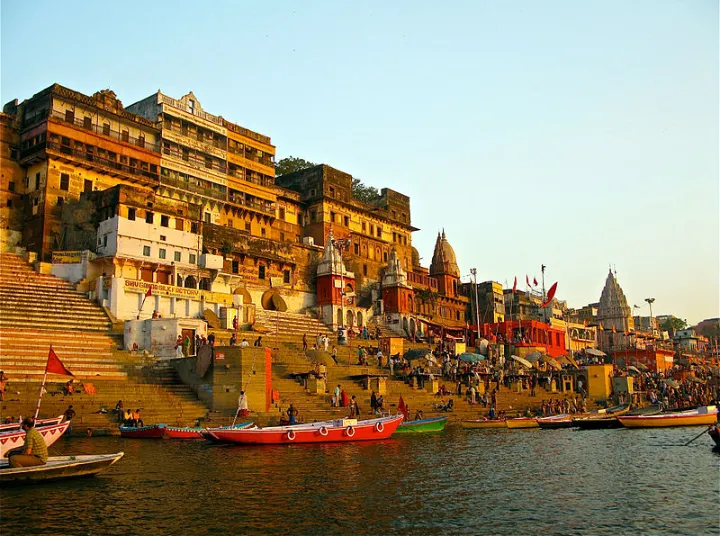
Assi Ghat is the southernmost of Varanasi's main ghats and one of the largest, at the point where the small Assi river meets the Ganges. Pilgrims bathe here and worship a Shiva lingam under a pipal tree. At sunrise the steps host Subah-e-Banaras, a program of yoga, Vedic chanting and live classical music with the Ganga Aarti, and the evening aarti draws crowds again at dusk. Boats leave from the ghat at dawn and dusk, and cafes and tea stalls line the way back. It is calmer than the central ghats.
Where the Assi meets the Ganges
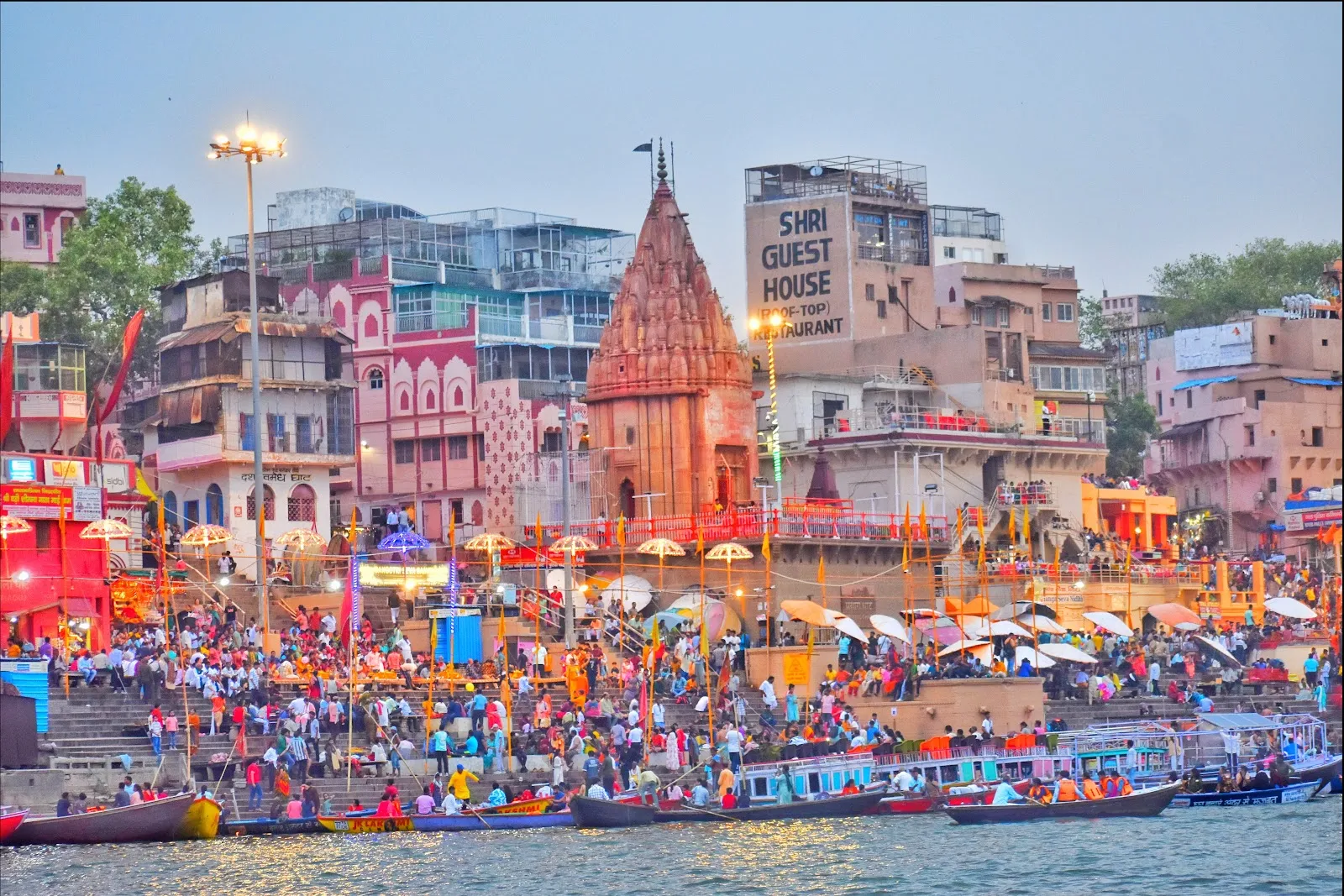
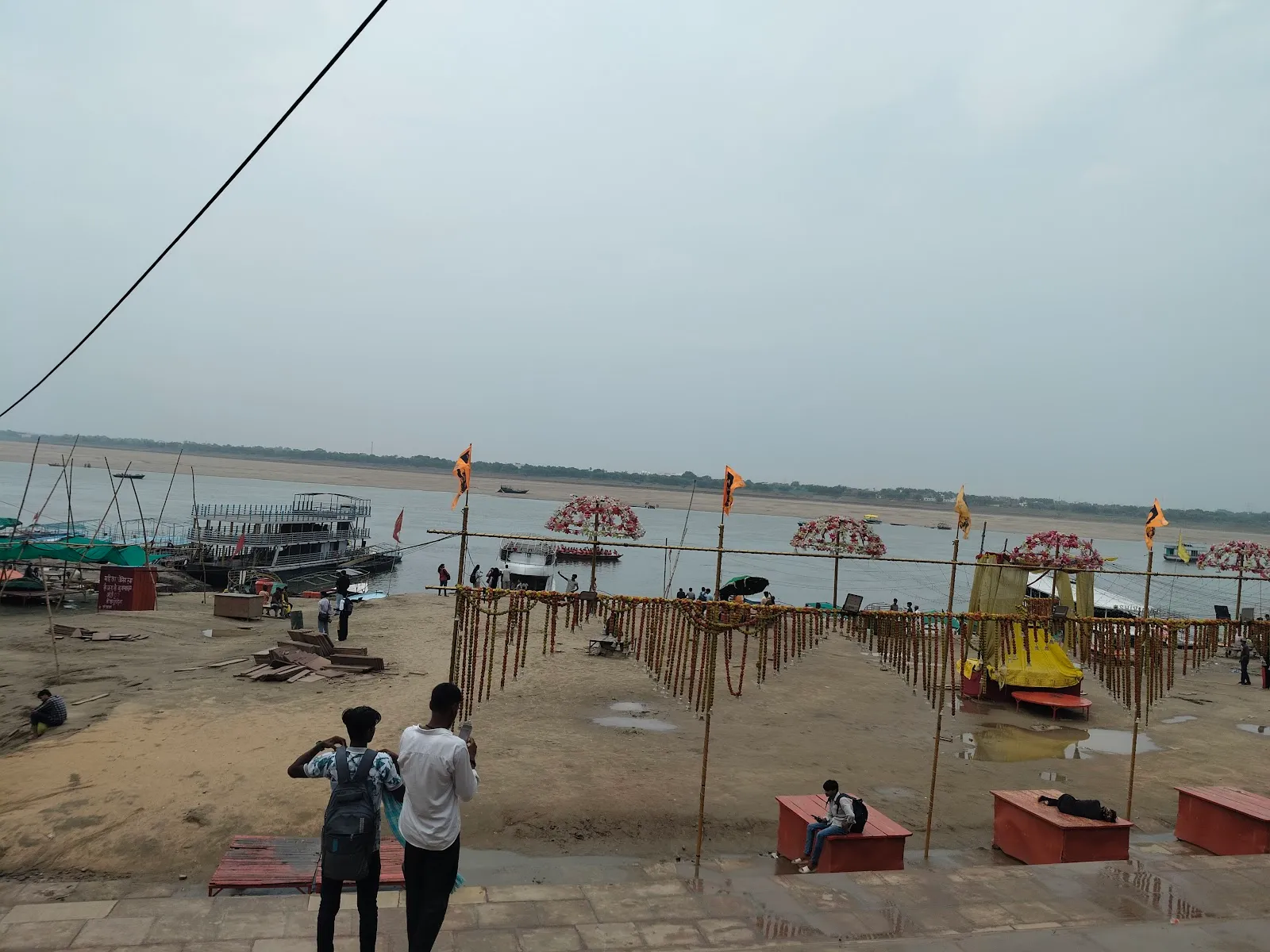
Assi Ghat sits at the far southern end of Varanasi's riverfront, past the central ghats where most visitors begin. It is the southernmost of the main ghats and among the largest, with a wide concrete area above the steps. This is where the Assi river joins the Ganges.
Because it lies away from the middle of the old city, it is less congested than the central ghats. Long-term foreign students and researchers are a familiar presence here, along with tourists, locals out for a walk and devotees.
Legend and pilgrimage
Local tradition says the Assi river began when the goddess Durga threw down her sword here after defeating the demons Shumbha and Nishumbha. The ghat takes its name from that river.
For Hindus it is an important place for ritual bathing. It is counted among the five ghats pilgrims should bathe from in a single day. Beneath a pipal tree near the water stands a large Shiva lingam, where pilgrims worship after bathing. Tradition also holds that the poet Tulsidas died at this ghat.
Subah-e-Banaras at sunrise
The morning program called Subah-e-Banaras is the ghat's best-known event. It brings together yoga, Vedic chanting, live classical music and the Ganga Aarti while the sun comes up over the river. You can attend as a spectator or take part in the cultural program.
The light on the river and the line of ghats makes this a good hour for a walk or for sitting quietly on the steps.
Evenings, boats and food
The Ganga Aarti is held every evening, and the steps fill early, so plan to be there around 5 or 5:30 pm if you want a seat. After dark the concrete area fills with hawkers and entertainers, and the mood turns livelier.
Boats leave from the ghat at sunrise and sunset and pass the temples and ghats along the bank. Street food stalls and cafes are close by, and a cup of chai in a clay kulhad by the river is a common way to end the visit.
Crowds and festivals
On an ordinary day the ghat sees roughly 300 people an hour. On festival days that can rise to about 2,500 an hour. Dev Deepawali draws the largest numbers, with more than 600,000 visitors. If you want space, choose an ordinary weekday morning and avoid festival dates.
FAQ
Is there an entry fee for Assi Ghat?
No. Assi Ghat is open to the public with free admission and is open 24 hours.
What is Subah-e-Banaras?
It is a morning cultural and spiritual program held at the ghat at sunrise. It includes yoga, Vedic chants, live classical music and the Ganga Aarti.
When is the Ganga Aarti at Assi Ghat?
The aarti takes place every evening. Arrive around 5 or 5:30 pm to get a good place to sit.
How long do you need at Assi Ghat?
Allow one to three hours. That is enough for the steps, a walk along the river and tea at a nearby stall. Add time if you plan a boat ride.
Is Assi Ghat crowded?
It is calmer than the central ghats on most days, with about 300 people an hour. Festival days can bring up to about 2,500 an hour.