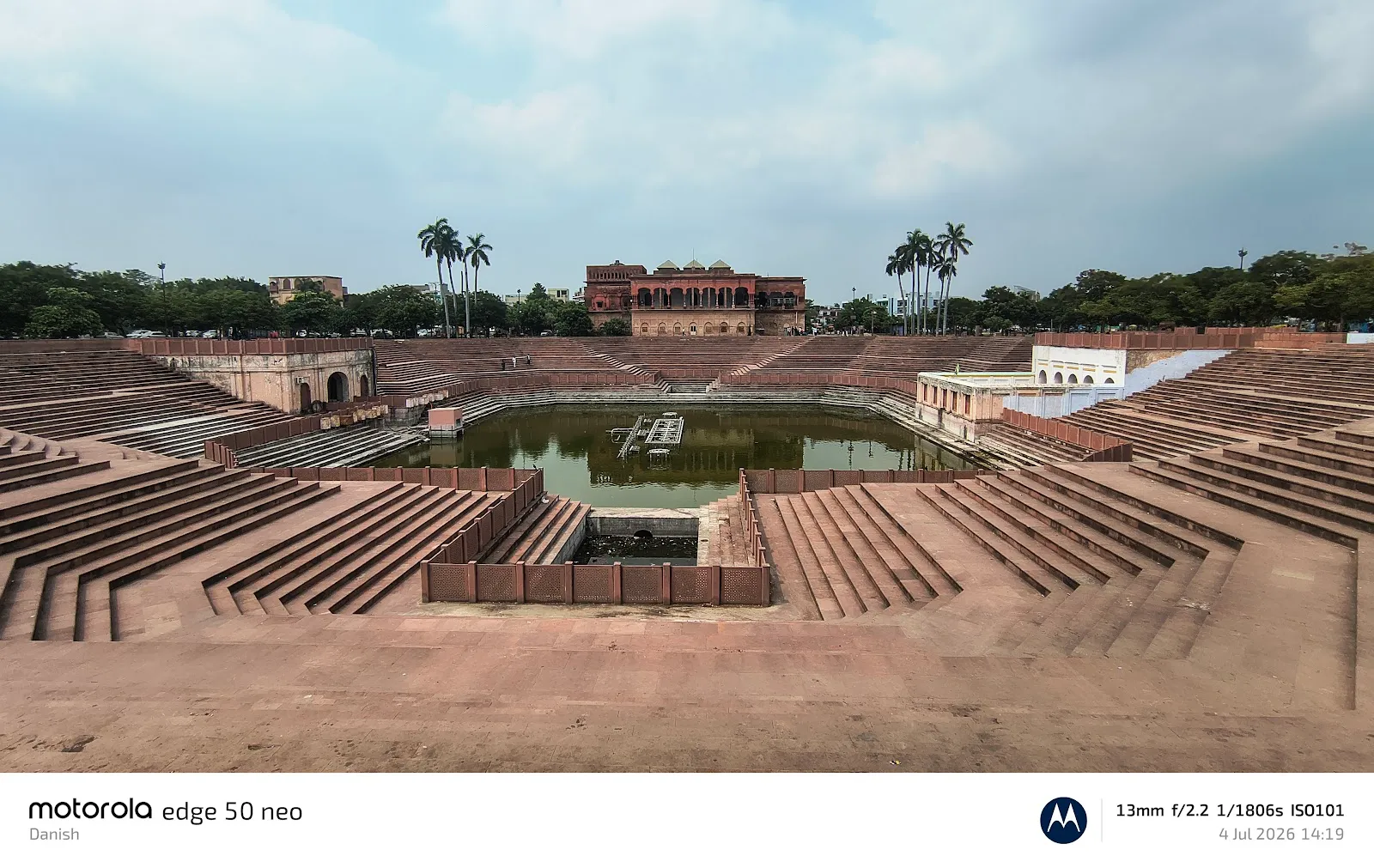
Bara Imambara is an imambara in Lucknow's old Husainabad area, built in 1784 by Asaf-ud-Daula, Nawab of Awadh. The complex holds a vast central hall roofed without beams, the Asafi Mosque, the Shahi Baoli stepwell and the Bhool Bhulaiya, a maze of corridors on the upper floor that leads up to the roof and a wide view over the city. It is a place of worship for Shia Muslims, who gather here for Muharram. Go early, expect to walk barefoot in parts, and leave time for the courtyards as well as the maze.
Built in 1784 as famine relief
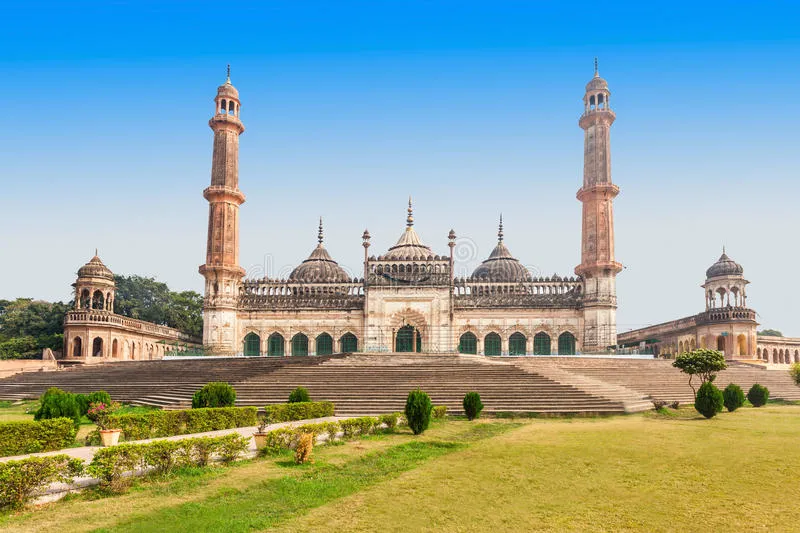
Bara Imambara was commissioned by Asaf-ud-Daula, the fourth Nawab of Awadh, in 1784. It is also called Asafi Imambara after him. Construction began during a famine that lasted about ten years, and the project gave work to many people in the region.
The design follows Mughal architecture and is credited to the architect Hafiz Kifayatullah Shahjahanabadi. It is one of the few buildings in Lucknow with no European elements.
An imambara is a gathering place for Shia Muslims. This one is an important place of worship, and people come every year to observe Muharram. The tomb of Asaf-ud-Daula is inside the complex.
The central hall
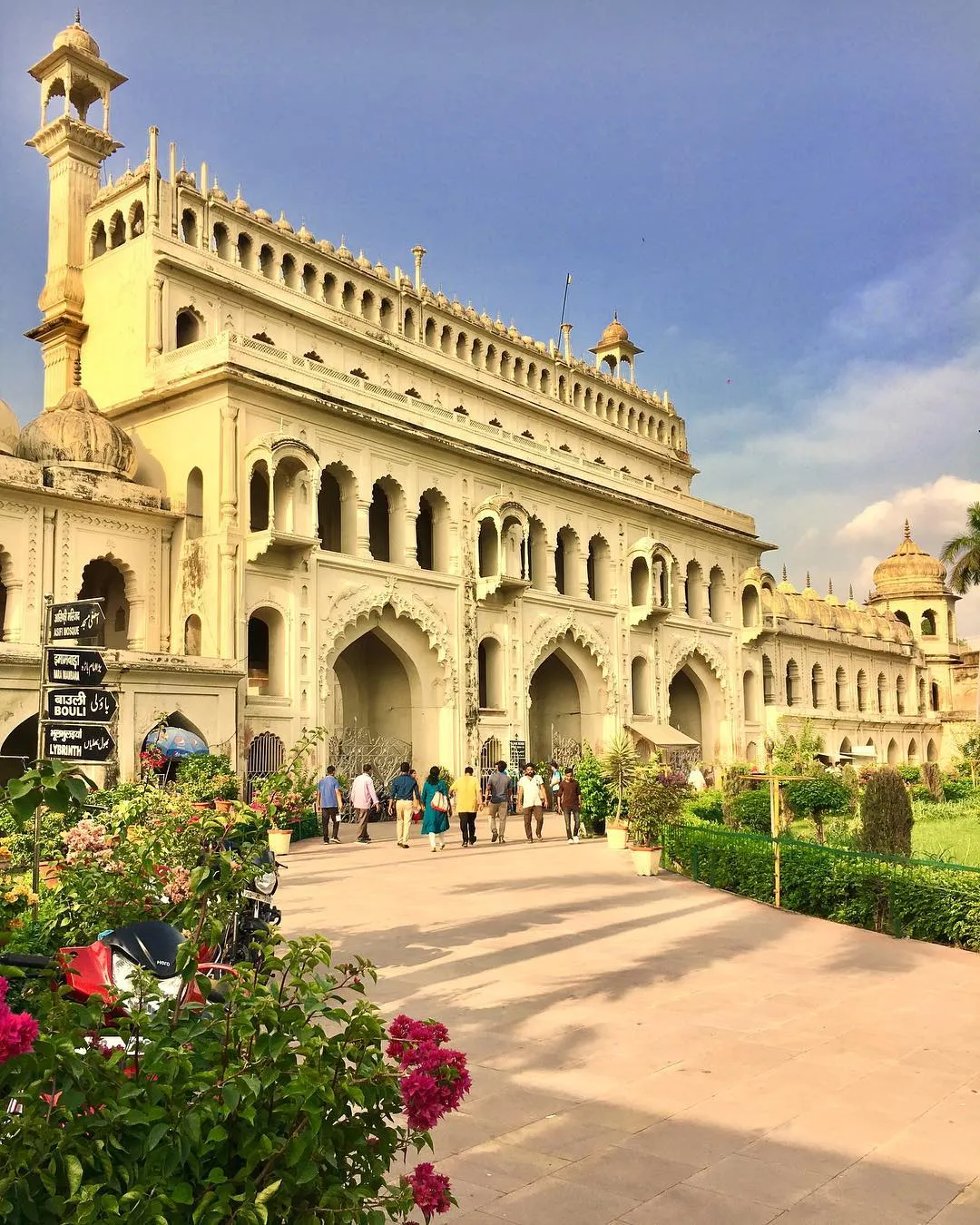
After you pass the two large gateways and cross the courtyard, you reach the central hall. It spans about 50 meters and rises about 15 meters. Its arched roof has no beams and no pillars underneath it. Apart from the interior galleries, the structure uses no timber, and it is counted among the largest arched halls anywhere.
The size is the point of the room. Take a minute at the entrance before you walk in, and keep your voice low, as this is a religious space.
The Bhool Bhulaiya and the roof
The Bhool Bhulaiya is a maze of interlinked corridors, staircases and near-identical doorways on the upper floor. Local accounts say there are far more ways in than ways back down, and the layout is built to confuse anyone who does not know it. The passages are stone and narrow, and the walk is part adventure and part climb.
The maze leads up to the roof. From there you look out over Lucknow's skyline, and the view is clearest in the early morning. If you do not want to risk getting lost, a guide can lead you through. Many visitors also manage on their own by following the other groups.
Please do not scratch names or marks into the walls. The stone is old and the damage stays.
Mosque, stepwell and courtyards
The Asafi Mosque stands next to the imambara. The Shahi Baoli, a royal stepwell, is also in the complex, and it still has water running in it. There is a garden too, with lawns and water features, and the open courtyards are quiet places to walk between the buildings.
The complex is in Husainabad, about 6 km from Lucknow Junction railway station. The Rumi Darwaza gateway, the Husainabad Clock Tower and the Chota Imambara are all close by, so the imambara fits easily into a day on foot through the old city.
Tickets, guides and etiquette
The entry fee is ₹50 for Indian citizens and ₹500 for foreign nationals. It covers the main areas of the complex: the hall, the maze and the mosque. Buying tickets in advance is recommended.
Guides wait near the entrance. They are optional and charged on top of the ticket, and they usually cover the three main areas. Some will suggest stops at shops selling chikankari clothing. You can say no and carry on. If you want a longer, more detailed account of the history, a guided heritage walk of the old city is another option.
You walk barefoot inside, so the stone can be uncomfortable in the hot months. There is paid parking and a wheelchair accessible entrance and parking lot. The site is also good for children, though the maze stairs are steep.
FAQ
How much does Bara Imambara cost to enter?
The entry fee is ₹50 for Indian citizens and ₹500 for foreign nationals. A guide costs extra and is optional.
Do you need a guide at Bara Imambara?
No. Guides are optional and charged separately. One is useful inside the Bhool Bhulaiya if you worry about getting lost, but you can also explore on your own.
When is the best time to visit Bara Imambara?
Go in the early morning for fewer people, good light and the best views from the roof. November to March is cooler, which matters because you walk barefoot on stone.
What is there to see at Bara Imambara?
The main sights are the central hall with its beamless arched roof, the Bhool Bhulaiya maze, the Asafi Mosque, the Shahi Baoli stepwell and the tomb of Asaf-ud-Daula.
Is Bara Imambara accessible for wheelchair users?
The entrance and the parking lot are wheelchair accessible. The maze has narrow stone passages and stairs, so it is hard to move through with a wheelchair.