Mattancherry Palace, also called the Dutch Palace, is on Palace Road in Mattancherry, Kochi, close to Jew Town. The Portuguese built it in the mid-16th century and presented it to the Raja of Kochi, Veera Kerala Varma. The Dutch renovated it in 1663, which gave the palace its second name. It is now a museum. The main draw is the Hindu murals with scenes from the Ramayana and Mahabharata, shown alongside royal portraits, costumes and weapons. The building is compact, and most visitors see it in under an hour.
From Portuguese gift to Dutch Palace
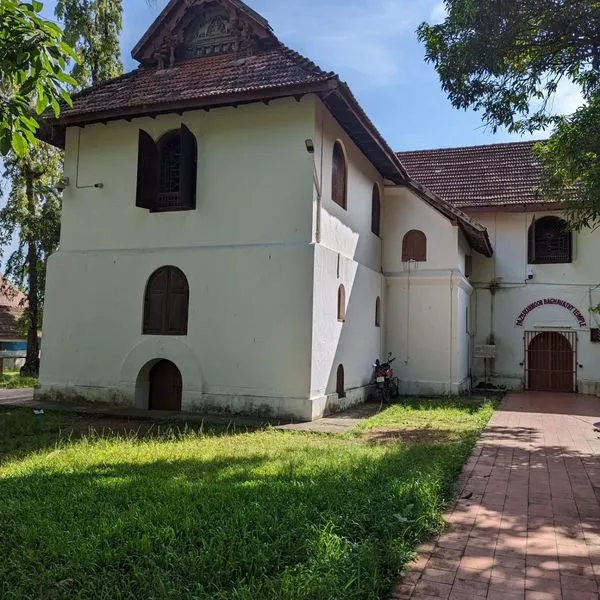
The Portuguese built the palace in the mid-16th century and presented it to Veera Kerala Varma, the Raja of Kochi. It was a gesture of goodwill toward the ruler, and it came at a time when the Portuguese were active in trade on the Malabar coast.
In 1663 the Dutch defeated the Portuguese and took control of Kochi. They renovated and extended the palace, and that work gave it the name Dutch Palace, which is still the common one. The building was never the Raja's everyday home. For centuries it served as the coronation palace of the Kochi rulers.
The neighbourhood name has its own story. Mattancherry is said to come from an old Brahmin house called Ancherry Mattom, a name the European colonists pronounced as Mattancherry.
A Kerala house with European touches
From the street the palace looks plain: a white two-storey building with sloping, gabled roofs. The design follows the nalukettu plan, the traditional Kerala house of four wings around an open courtyard. The wooden balconies and the pitched roof follow Kerala temple architecture, while the overall form shows Portuguese influence.
The courtyard holds a small temple to Pazhayannur Bhagavati, the protective goddess of the Kochi royal family. Two more temples stand on either side of the palace, one to Krishna and one to Shiva. Please treat them as active places of worship.
Look down as well as up. The floors shine like polished black marble, but they are made in the traditional Kerala way from burnt coconut shells, lime, charcoal and egg white. The upper rooms have carved wooden ceilings.
The murals and the museum rooms
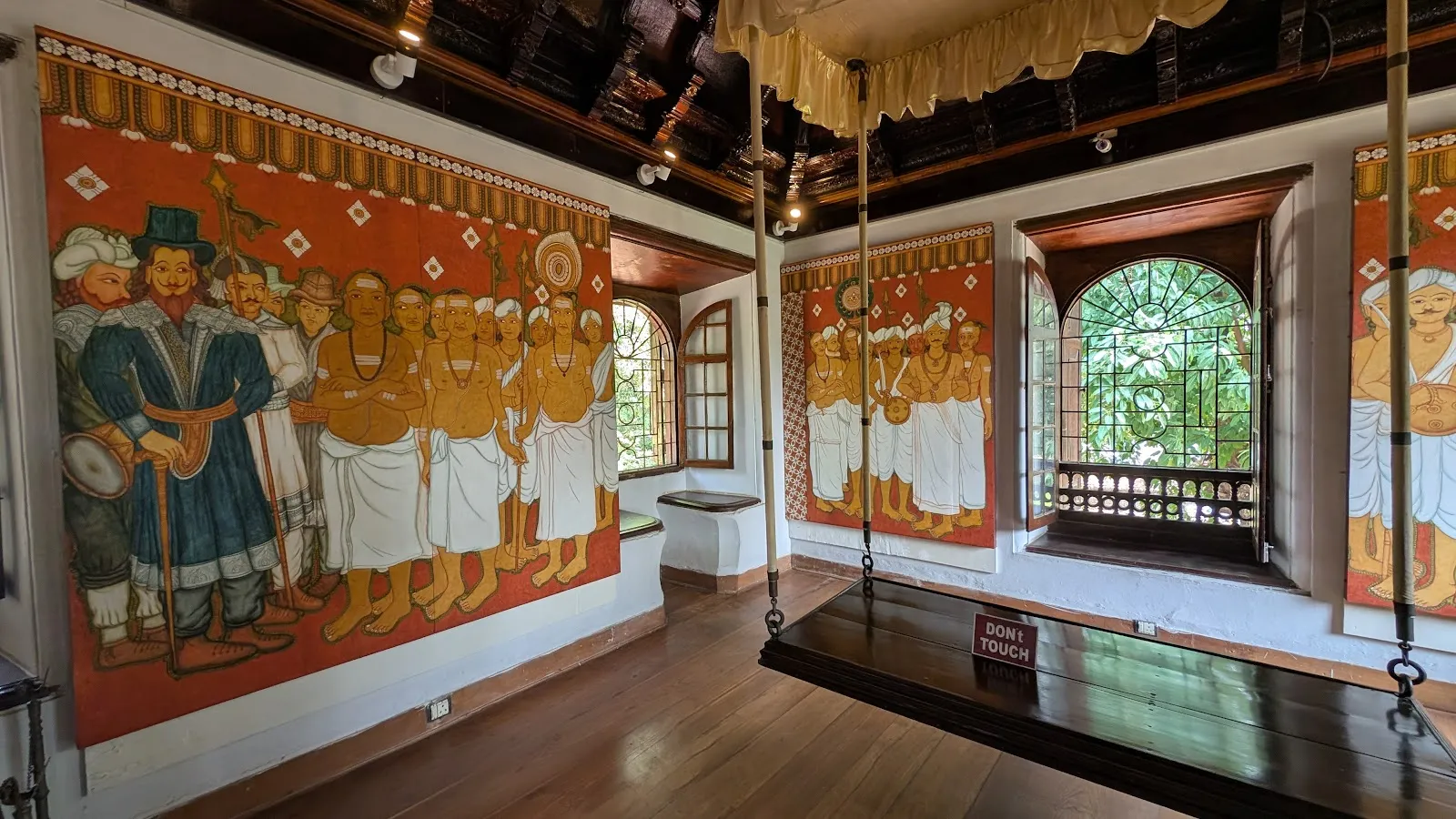
The murals are the reason most people come. The best known are in the royal bedchamber, where Hindu paintings from the 17th to 19th centuries cover the walls. They tell episodes from the Ramayana, the Mahabharata and Puranic legends, with figures such as Vishnu and Lakshmi. Some panels are very well preserved and others are heavily damaged, so allow time to look closely.
The other rooms work as a museum of Kochi's royal history. You will see portraits of the Kochi rajas, royal costumes, weapons, palanquins, coins, stamps, period furniture and old maps, including Dutch maps. Together they show how the royal household lived and how dress and customs changed over time. Information boards explain the murals.
The museum is not large, and a visit takes about 30 minutes to an hour, depending on how long you spend with the paintings.
Planning the visit
The palace is on Palace Road, near Jew Town, the old bazaar district known for antiques and spices. From the palace, Jew Town runs toward the Paradesi Synagogue, which has hand-painted Chinese tiles and Belgian chandeliers. Both can be done on foot in one outing.
The entrance, a lift and parking have wheelchair access. Restrooms are on site. Entry is cheap, and admission has been free on International Museum Day. The palace is closed on Fridays.
FAQ
Is there an entry fee for Mattancherry Palace?
Yes, but it is small: about ₹5 for adults, and children under 15 are reported to enter free. Admission has been free on International Museum Day.
How long do you need at Mattancherry Palace?
Allow 30 to 60 minutes. The museum is compact, and the murals are where you will spend most of the time.
Why is it called the Dutch Palace?
The Portuguese built it and presented it to the Raja of Kochi. The Dutch renovated and extended it in 1663, and the palace has carried their name since.
Is the palace open on Fridays?
No, it is closed on Fridays. It is open on the other days of the week.
Can you take photos inside?
Photography is allowed without flash, and camera use is free. Video recording costs extra. You must take off your shoes before entering.
What else is nearby?
Jew Town is a short walk away, with antique shops, spice stalls and the Paradesi Synagogue.