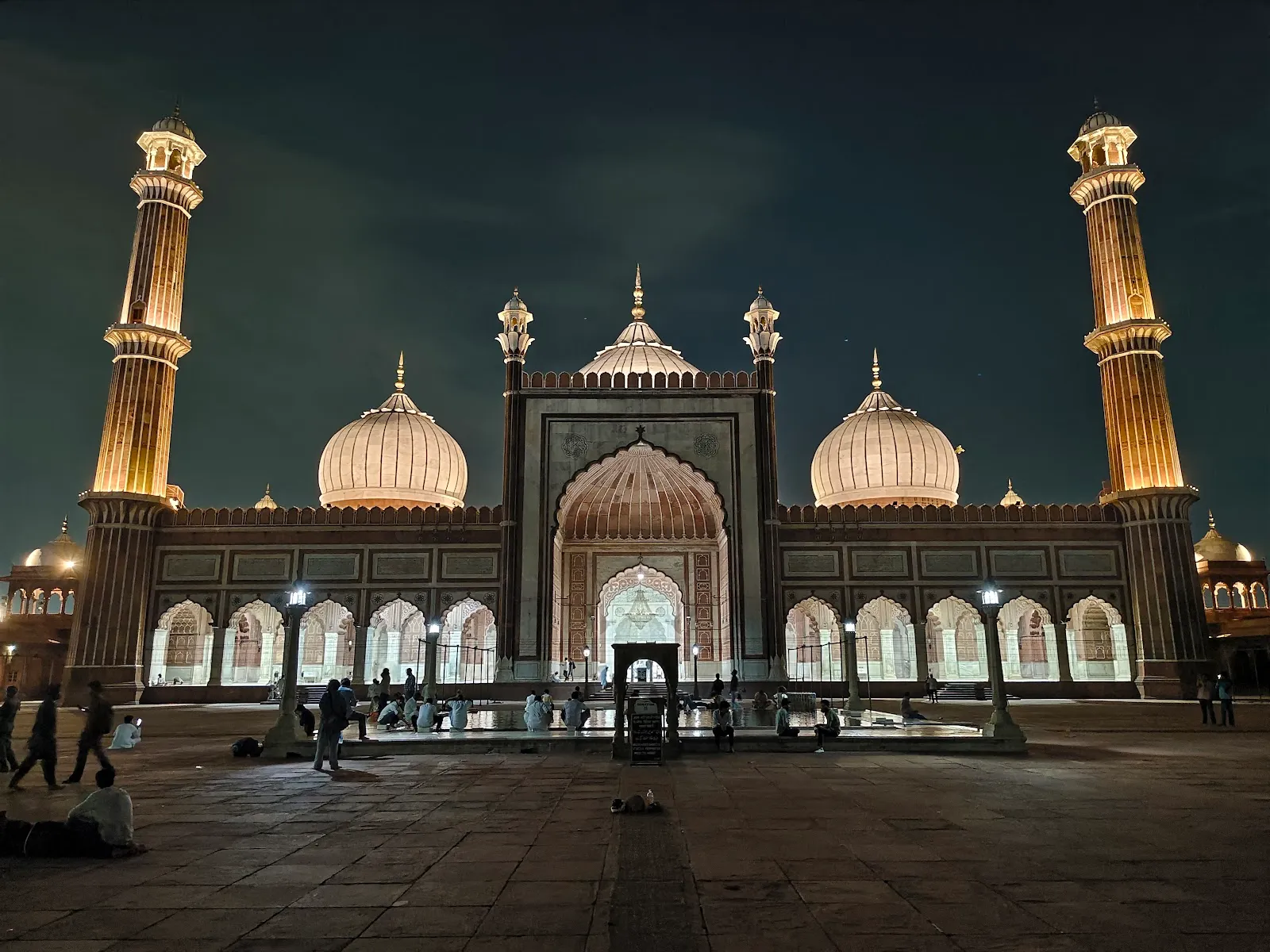
Red Fort, or Lal Qila, is a Mughal fortress in Old Delhi, on Netaji Subhash Marg near Chandni Chowk. Shah Jahan commissioned it as a palace and defensive complex when he moved his capital from Agra to Delhi. Behind its red sandstone walls, walk through gardens and courtyards to audience halls such as the Diwan-i-Aam and Diwan-i-Khas, then visit the museums and covered Chhatta Chowk market. The fort’s architecture and its role in India’s national ceremonies give the visit both historical and present-day context.
A Mughal palace in Old Delhi
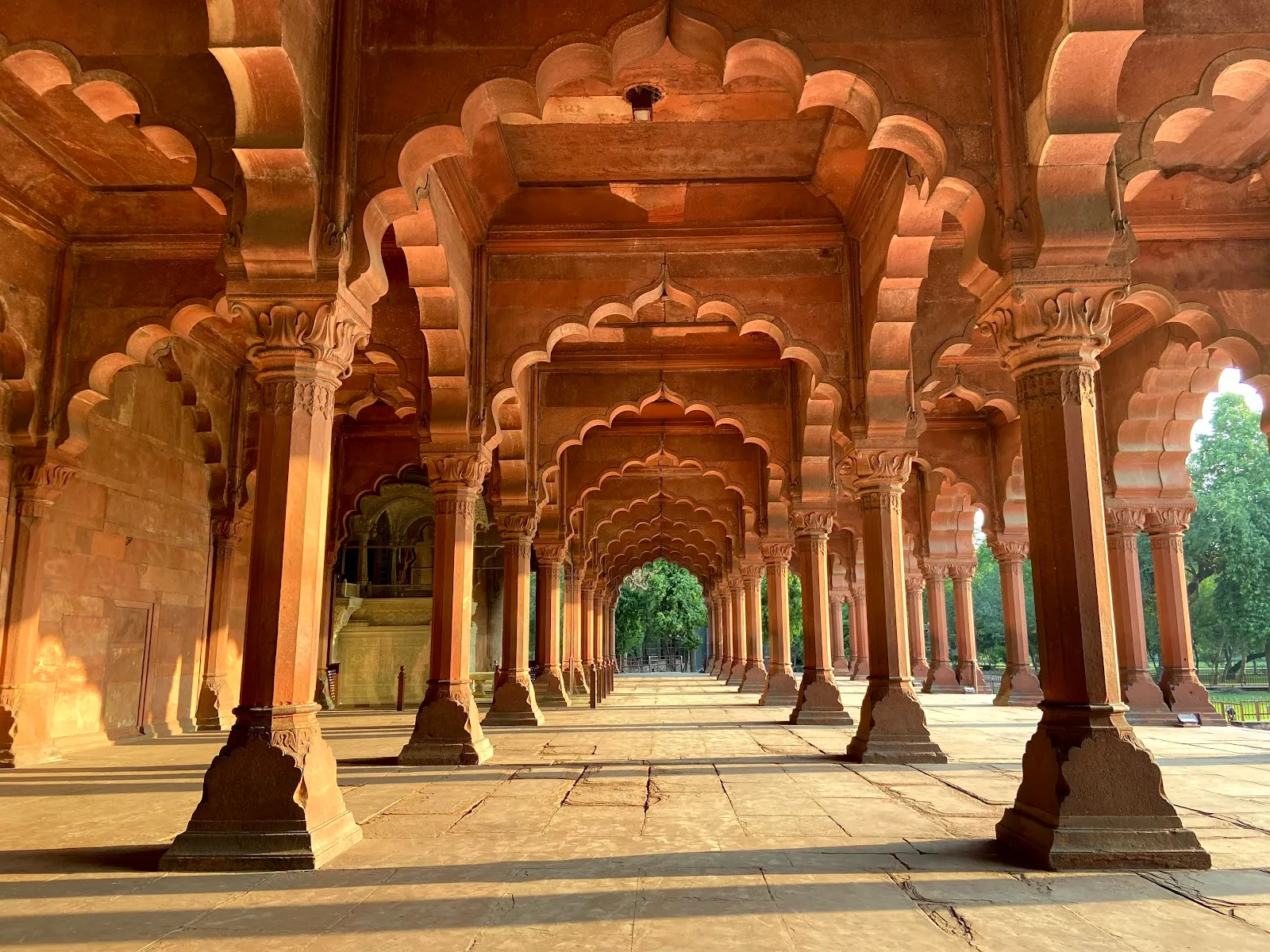
Known as Lal Qila, the Red Fort was commissioned by Mughal emperor Shah Jahan as a new palace and defensive complex. Construction began in 1638 and was completed in 1648, the year associated with his move of the capital from Agra to Delhi. The fort became the principal residence of Mughal rulers until 1857.
Its name comes from the red sandstone used for the enclosing walls. The complex covers a broad area in Old Delhi, and the walls rise high above the surrounding streets. Inside, the scale changes from the imposing exterior to courtyards, gardens, halls and palace structures. The design draws on Mughal, Persian, Timurid and Indian traditions, with carved details and marble work among its features.
From Lahori Gate to the palace halls
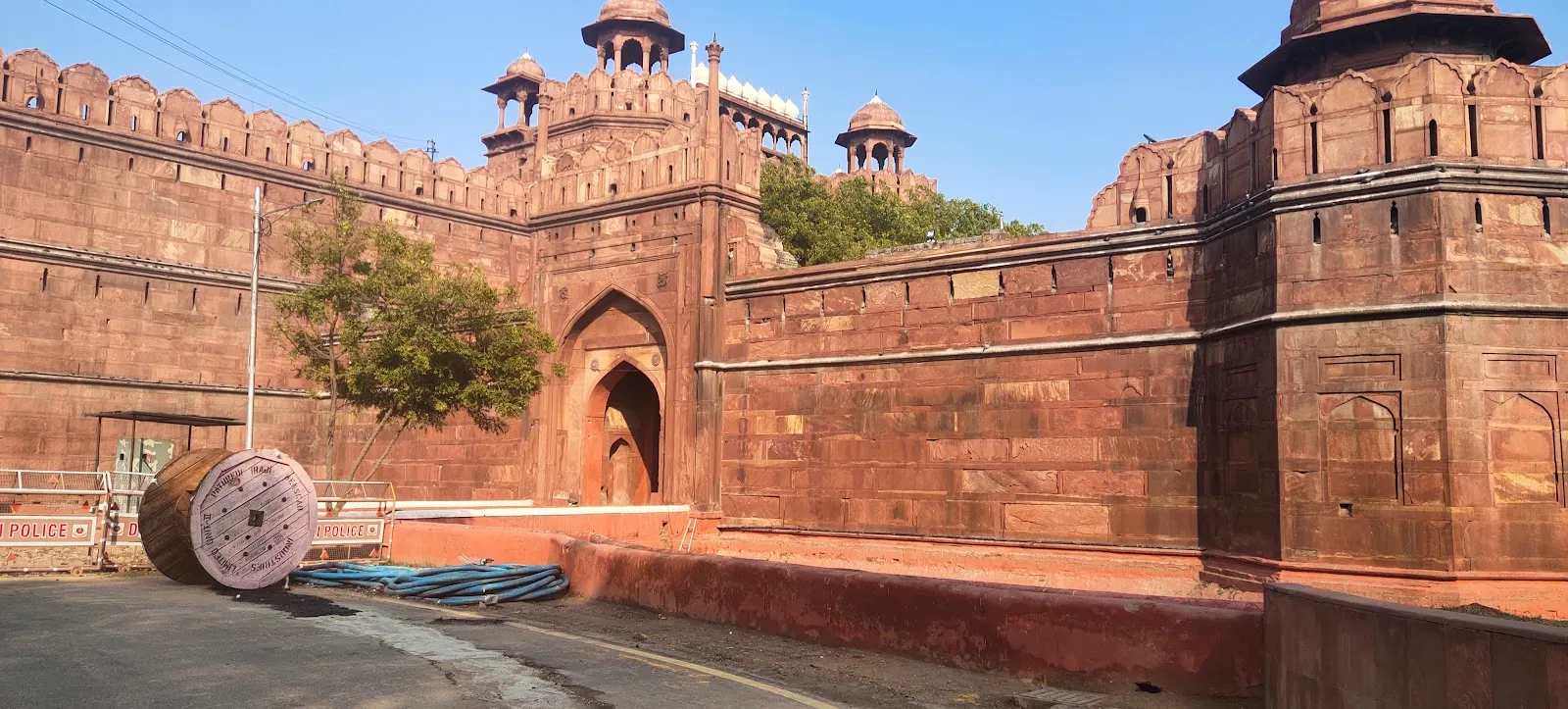
Lahori Gate is the main entrance. Its name refers to its orientation towards Lahore. After passing through the gate, visitors reach Chhatta Chowk, a covered market street with shops. This route leads into the fort’s inner spaces, so it is a useful starting point for exploring the complex.
The Diwan-i-Aam, or Hall of Public Audience, was used for public gatherings with the emperor. The Diwan-i-Khas was associated with private royal audiences. Other structures named among the fort’s notable buildings include Rang Mahal, Khas Mahal, the hammam, Naubat Khana, Moti Masjid and Hira Mahal. The site also contains gardens and smaller museums, with displays that include historical artefacts and material about India’s past.
A landmark in India’s public life
The fort’s history continued beyond its years as a royal residence. It was involved in the events of 1857, and it remains connected to India’s national ceremonies. Each Independence Day, on 15 August, the prime minister raises the national flag at Lahori Gate and addresses the country from the fort.
That ongoing role gives the complex a place in contemporary public life as well as Mughal history. The museums and displays add context to a walk through the grounds, while the audience halls and palace remains help visitors understand how the complex was used. An evening sound-and-light show is also held at the fort; the schedule varies by season and language, so check current details before planning around it.
FAQ
Where is the Red Fort?
It is on Netaji Subhash Marg in Old Delhi, near Chandni Chowk.
How long should I plan for a visit?
Allow about two to three hours to explore the fort complex.
What should I see inside the Red Fort?
Look for Lahori Gate, Chhatta Chowk, the Diwan-i-Aam, the Diwan-i-Khas, the gardens and the museums.
Is there a sound-and-light show at the Red Fort?
Yes. An evening show is held at the fort, with performances in Hindi and English. Timings vary by season.