Sukhna Lake is an artificial lake in Sector 1 of Chandigarh, at the foot of the Shivalik Hills. It was formed in 1958 by damming a seasonal stream that comes down from the hills, and it is one of the city's best-known places for a walk by the water. Most visitors come for the promenade, the view of the hills and the light at sunrise and sunset. Paddle boats are available, and food stalls and benches sit near the shore. In winter, migratory birds gather here.
Why the lake exists
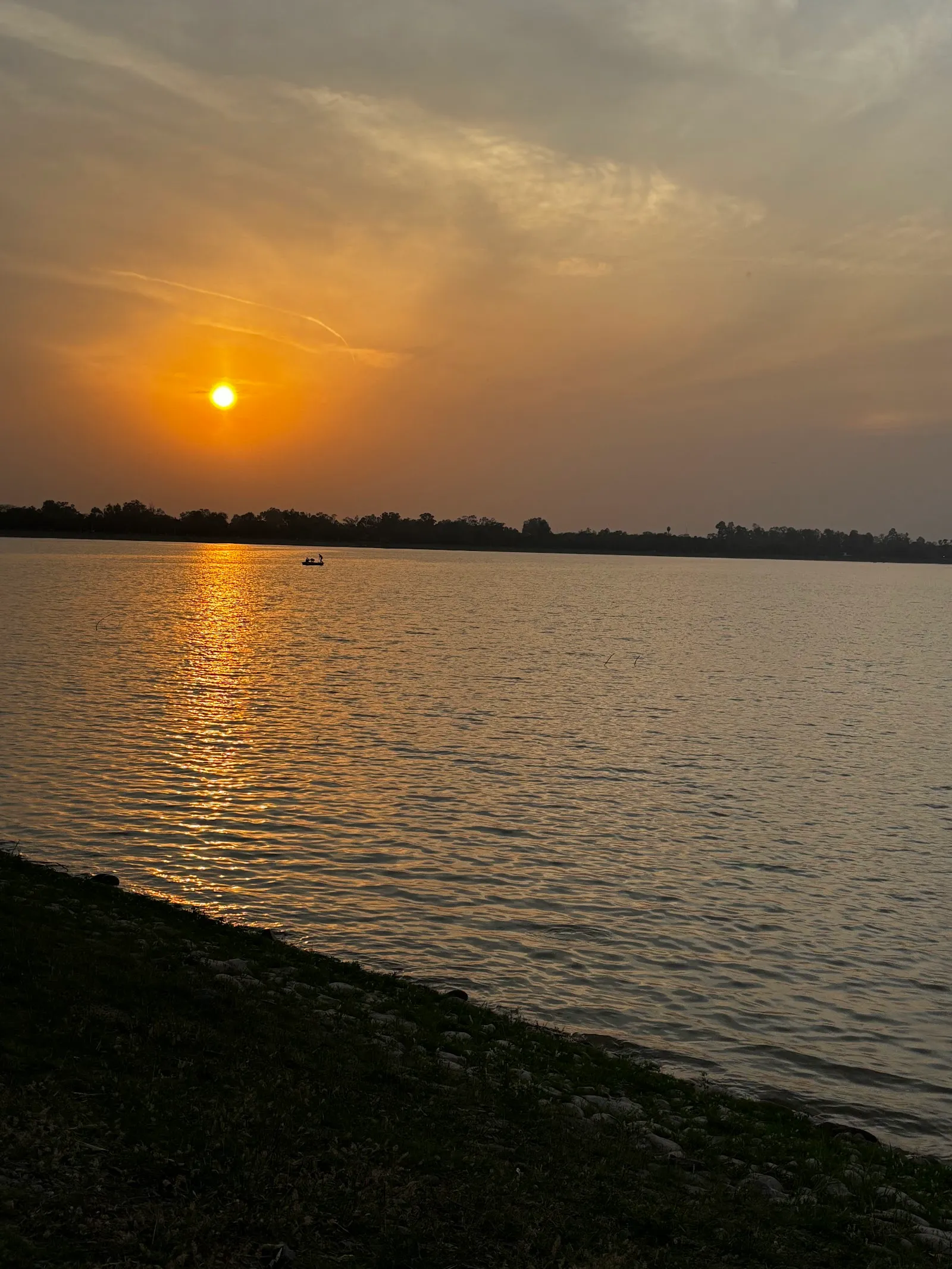
Sukhna Lake was made in 1958 by damming the Sukhna Choe, a seasonal stream that runs down from the Shivalik Hills. Le Corbusier and the chief engineer P L Verma are credited with the plan.
The dam was built partly to stop the stream's seasonal flow from carrying heavy silt into the lake. The lake was planned at the foothills of the Shivalik range for its scenic beauty and to give residents a serene getaway close to home.
The setting and the hills
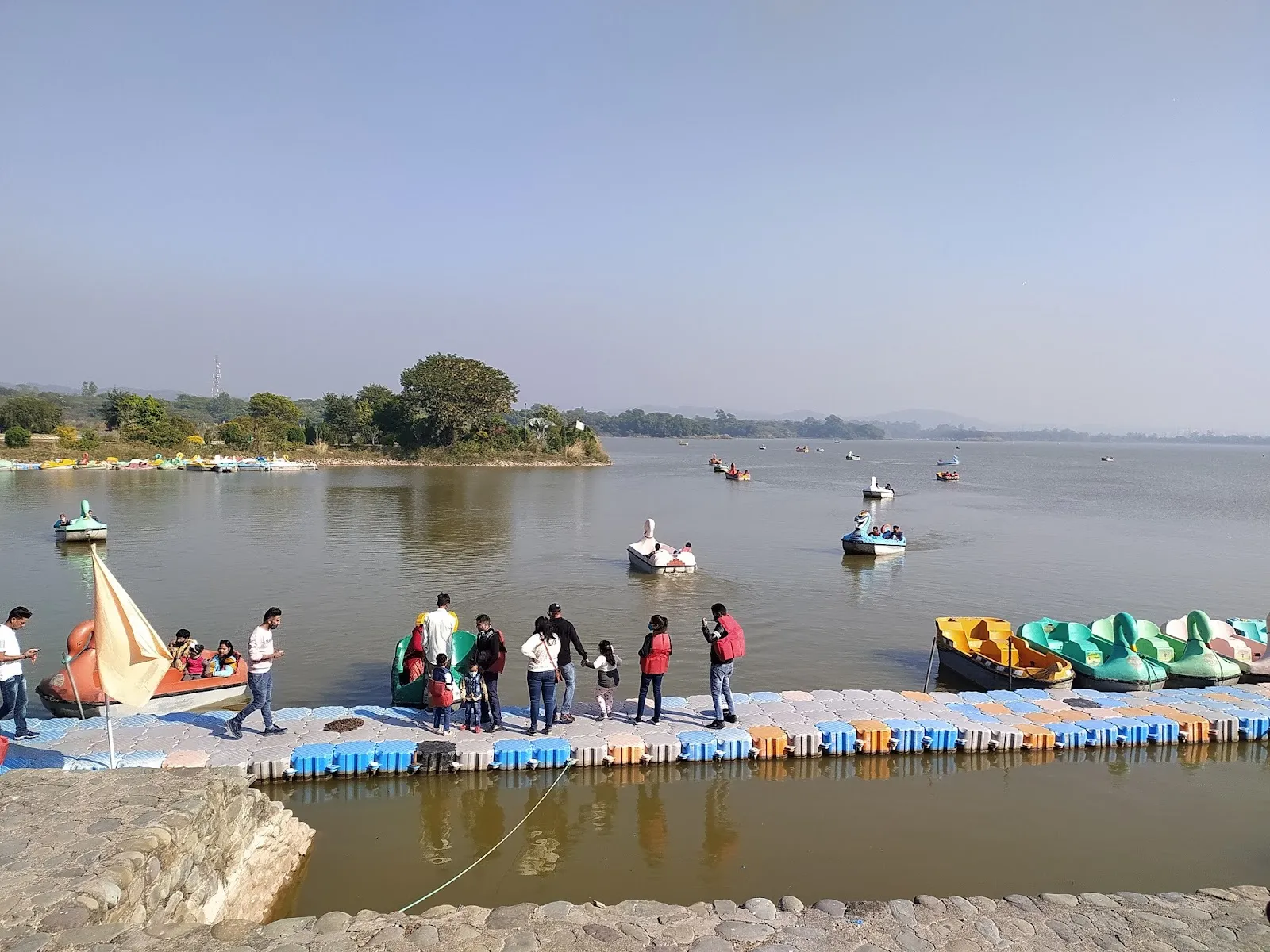
The lake lies at the foot of the Shivalik range, and the hills form its backdrop. On clear days the mountains around the lake are easy to see, and the view is often at its clearest after rain.
The lake looks different through the year. Winter brings migratory birds, including Siberian ducks, cranes and storks, and the monsoon brings lotus flowers to the water. Birdwatching is a common reason to visit in the colder months.
Architecture at the boat club
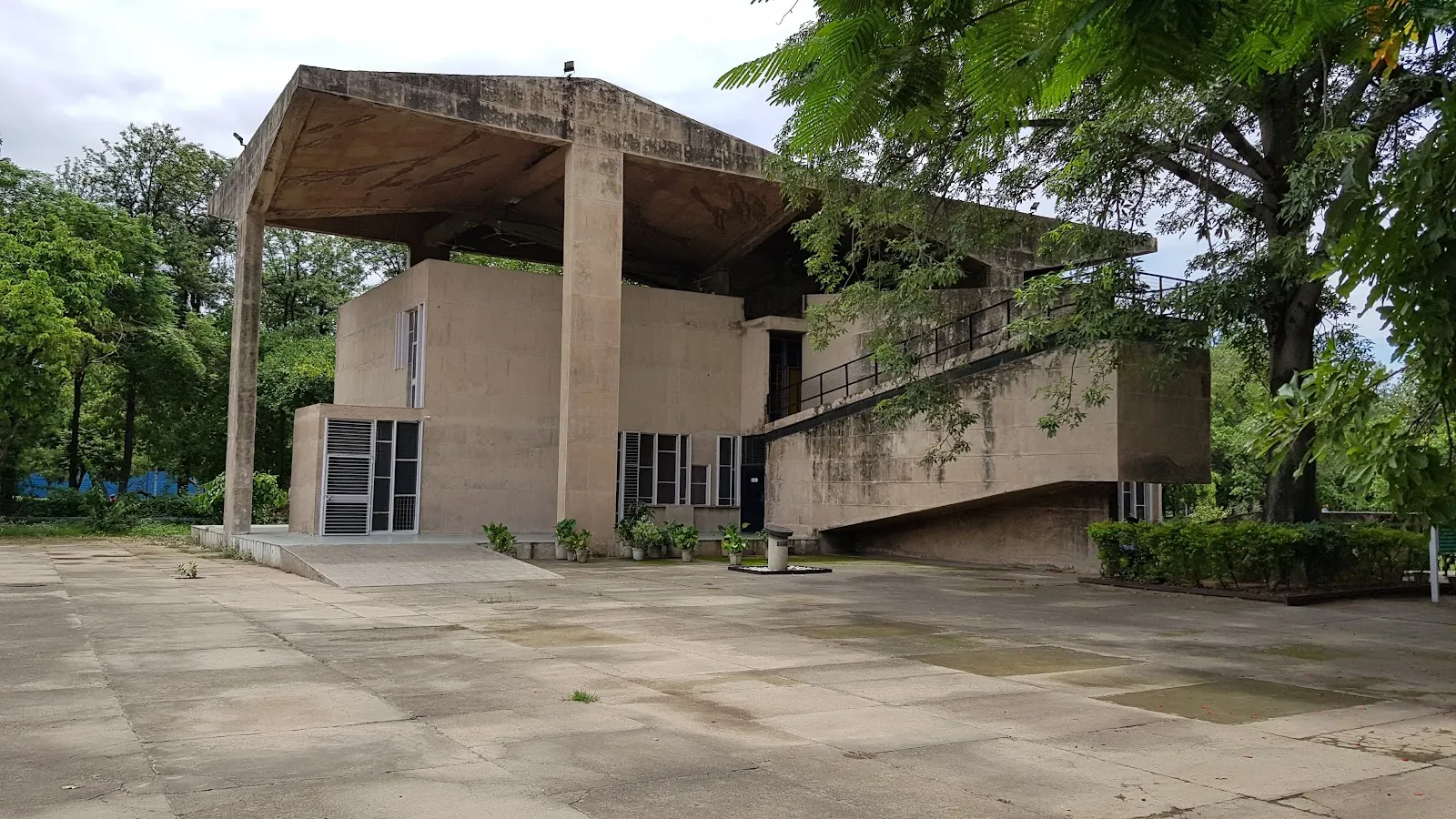
The boat club deck is set into the ground so that the view of the water stays open. A cantilevered staircase leads down to it, held in place by a river stone wall and a plain black railing. These two materials recur elsewhere in the city.
A curved glass wall follows the plan of the boat club lounge. Low concrete uplights give soft light into the evening, chosen so that they do not disturb migratory birds. Stairs from the rubble embankment at the lake edge lead down to the boats.
Walking, boating and the lakeside
The walking track runs along the edge of the lake for about 2 km. It is busy with morning walkers, joggers and families, and flowers line parts of the path. A Buddha statue stands near one corner of the walk, with an open lawn beside it.
A children's playground and a lawn tennis area are close by. Food stalls and benches are near the water for a quick snack or a coffee. Paddle boats seat two people and can be hired for half an hour. Motorboats are not allowed on the lake, and vehicles are kept away from the shore, so the water stays quiet.
Planning the visit
Sukhna Lake is close to the Rock Garden and lies just south of the Capitol Complex, so the two can be combined in one day.
Early morning and sunset are the most common times for photographs. Pre-wedding photographers often choose early morning or the golden hours for the light on the water.
FAQ
Is there parking at Sukhna Lake?
Yes, paid parking is available at the entrance. Spaces can be hard to find on weekends, so weekdays are easier.
Can you go boating on Sukhna Lake?
Paddle boats are available, and boat rides at sunset are a popular choice. Boating has at times been limited to evening hours, so ask at the boat point when you arrive.
When is the best time to visit Sukhna Lake?
Early morning and sunset are the most popular times. Weekday visits are quieter, and winter is the season for migratory birds.
Why was Sukhna Lake built?
It was formed in 1958 by damming the seasonal Sukhna Choe stream. Part of the aim was to stop heavy silt from the stream's seasonal flow entering the lake.
What birds can you see at Sukhna Lake?
In winter the lake hosts migratory birds such as Siberian ducks, cranes and storks.