Sabarmati Ashram sits on the west bank of the Sabarmati River in Ahmedabad, about 8 km from Ahmedabad Junction. Mahatma Gandhi lived and worked here from 1917 to 1930, and the Dandi March set out from its grounds. Today it is a memorial with his plain living quarters, a museum of his letters, photographs and belongings, and a library. Entry is free. Walk the open grounds at your own pace, look at the cottages and the charkha, and allow a couple of hours. Some sections may be closed during the ongoing redevelopment.
Gandhi's home from 1917 to 1930
Gandhi came back from South Africa in 1915 and made the riverbank ashram his home and headquarters from 1917 until 1930. He lived here with his wife Kasturba and a community of followers, among them Vinoba Bhave. The ashram was planned on the lines of Tolstoy Farm and Phoenix Ashram, the settlements he had set up in South Africa.
Daily life here centred on practical work: khadi spinning and weaving, agriculture and animal husbandry. The site is also known as Gandhi Ashram, Satyagraha Ashram and Harijan Ashram.
A story passed down in Ahmedabad says Gandhi chose the spot because it lies between a jail and a cemetery. A satyagrahi, a nonviolent resister, would sooner or later end up in one or the other.
The Dandi March and the salt law
On 12 March 1930 Gandhi set out from this ashram on the Dandi March, also called the Salt Satyagraha, to protest the British salt law. The campaign made the ashram a national monument. Photographs and archival material at the museum follow the events that led up to the march and the decisions taken here during the independence movement.
Cottages and grounds
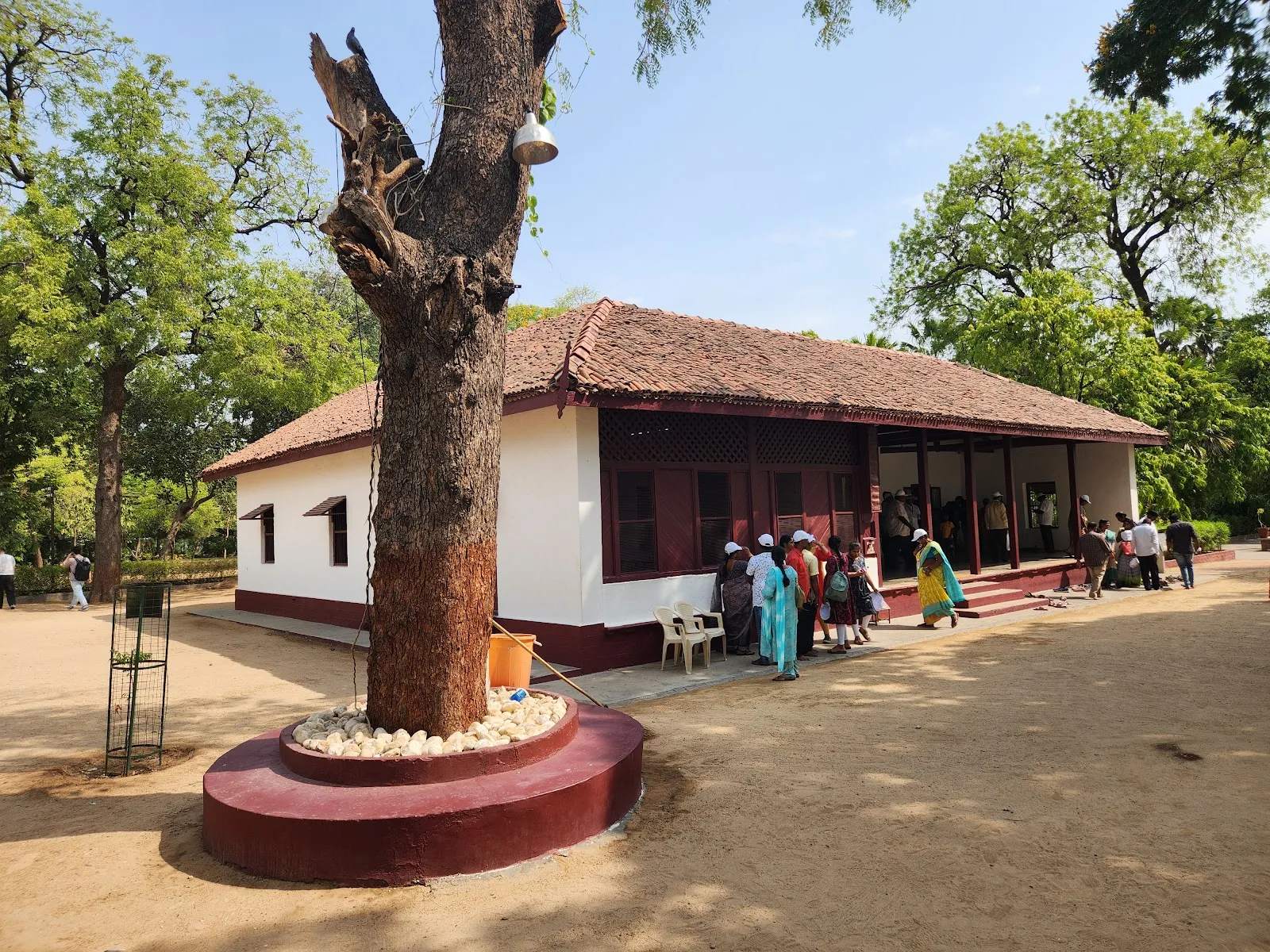
The campus is a group of simple tiled buildings with open space between them. Names to look for include Hriday Kunj, Magan Niwas, Nandini, Udyog Mandir, Vinoba-Mira Kutir, Somnath Chhatralaya and Upasana Mandir, the prayer ground.
Hriday Kunj was the living quarters of Gandhi and Kasturba. It is sparsely furnished and the charkha he used is kept here. The ashram can be crowded at weekends and on holidays. On quieter days the grounds are calm, with birdsong, greenery and a view over the river.
Walking is part of the visit. The paths are clean, and there is drinking water, seating, restrooms and parking on site. The entrance, one restroom and the parking area are wheelchair accessible.
The museum and library
The Gandhi Smarak Sangrahalaya was designed by the architect Charles Correa. He built it in brick and stone, in line with the Swadeshi ideas Gandhi promoted, from modular units of the same size. The repeated unit stands for a whole made of similar parts.
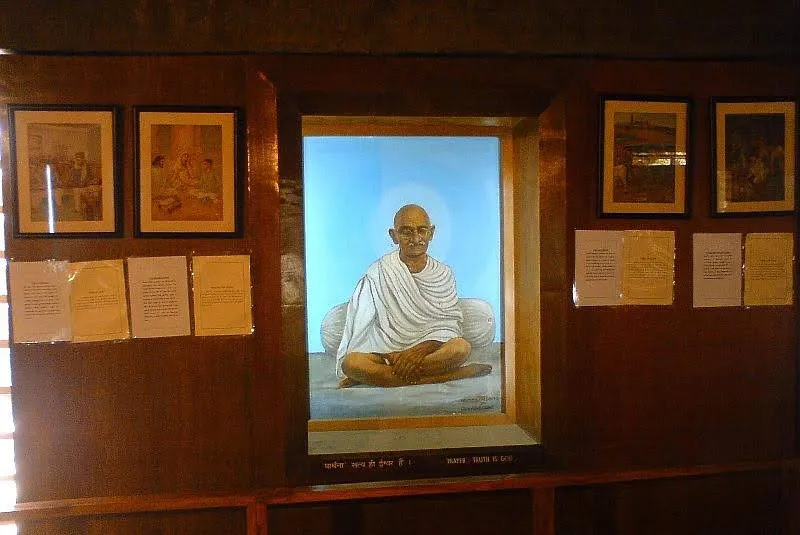
Inside you find Gandhi's personal belongings: his glasses, wooden slippers and charkha, along with letters, paintings and photographs. Two photo galleries trace the main stages of his life, and there is an auditorium. The letters include exchanges with other leaders of the time, and displays also cover the leaders who worked beside him. Information panels are in several languages.
The library has about 35,000 books in Gujarati, Hindi and English, plus manuscripts and films. It is mainly a research resource, and students and historians come here for educational tours and academic projects.
Redevelopment under way
The ashram is being redeveloped and expanded under the Sabarmati Ashram Memorial Project, which aims to improve facilities while keeping the site's historical character. One visitor account mentions a planned growth from about 5 acres to 55 acres.
The work affects what you can enter. Some areas have been closed or under construction, and Hriday Kunj has been closed on some visits. The museum, the open grounds and the exhibits have stayed available, so the visit still gives a full picture of Gandhi's years here.
FAQ
Is there an entry fee for Sabarmati Ashram?
No. Entry to the ashram is free.
How long do you need at Sabarmati Ashram?
Allow two to three hours to see the museum and walk the grounds. The site is large, so there is a fair amount of walking.
Where is Sabarmati Ashram?
It is on Ashram Road, on the west bank of the Sabarmati River in Ahmedabad, about 8 km from Ahmedabad Junction. Free parking is available on site.
Is Hriday Kunj open to visitors?
Not always. Redevelopment work has closed Hriday Kunj and other sections on some visits, so check on arrival which parts are open.
When is the best time to visit Sabarmati Ashram?
October to March is the best season, and mornings are the quietest time. Midday in summer is hot, and the riverfront side has little shade.