At Andrássy út 60 in Budapest, the House of Terror Museum examines Hungary under fascist and communist rule and commemorates people persecuted by both regimes. The building served first as the headquarters of the Arrow Cross Party and later as a base for the communist secret police. Across several floors, photographs, artefacts, film and multimedia installations trace this history; the reconstructed basement cells are among the most affecting spaces. Much of the exhibit text is in Hungarian, so use the English-language handouts or audio guide to follow the displays.
A building tied to two regimes
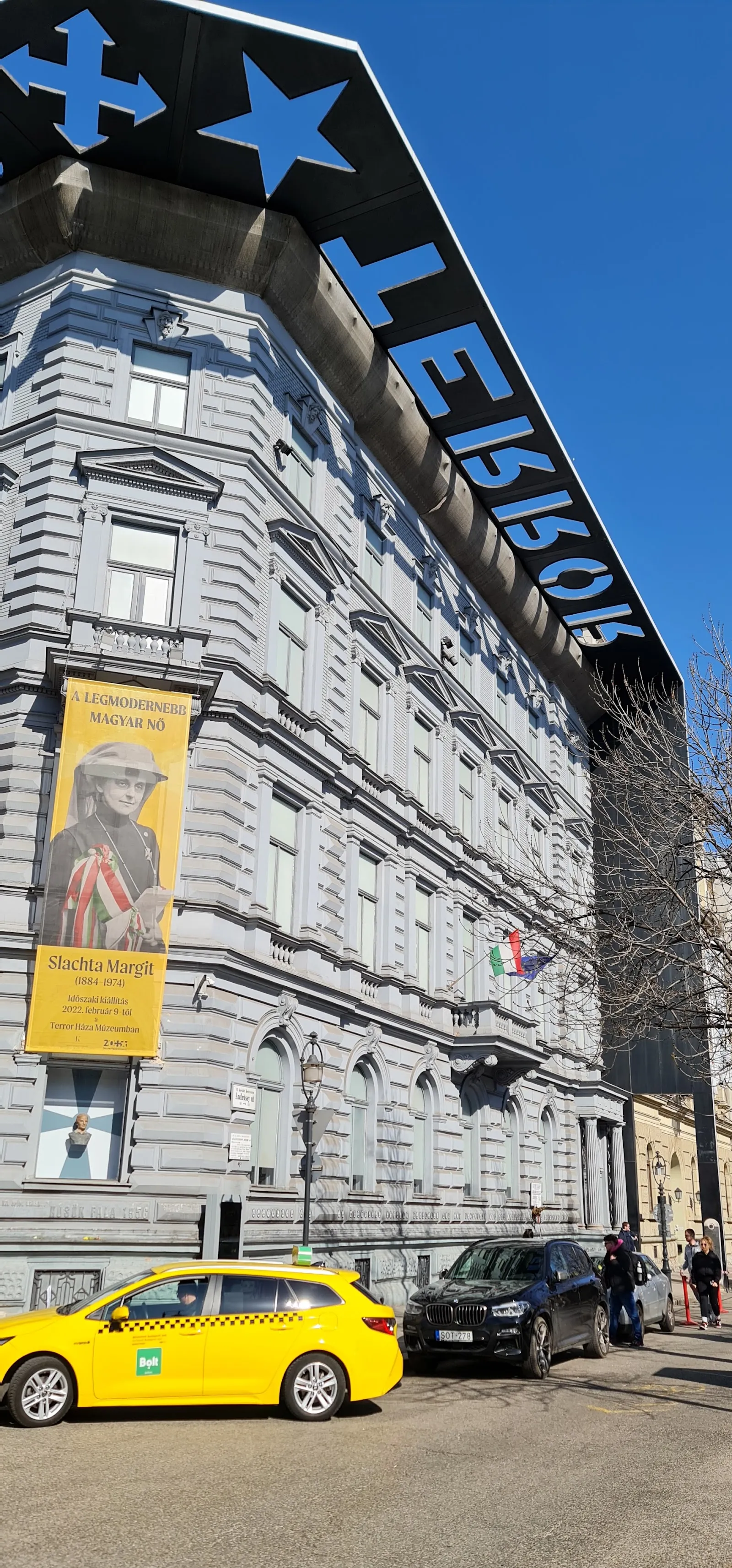
At 60 Andrássy út, the museum occupies a building that served as the headquarters of Hungary’s Arrow Cross Party and later the communist secret police. Both regimes used the premises to detain and interrogate people. The museum commemorates those persecuted under fascist and communist rule and presents the building itself as part of that history.
The museum opened in 2002. Its subject is Hungary’s 20th-century experience under these regimes, including the country’s relationship with Nazi Germany and the Soviet Union. The exhibitions also address what life was like under political repression.
Following the exhibition
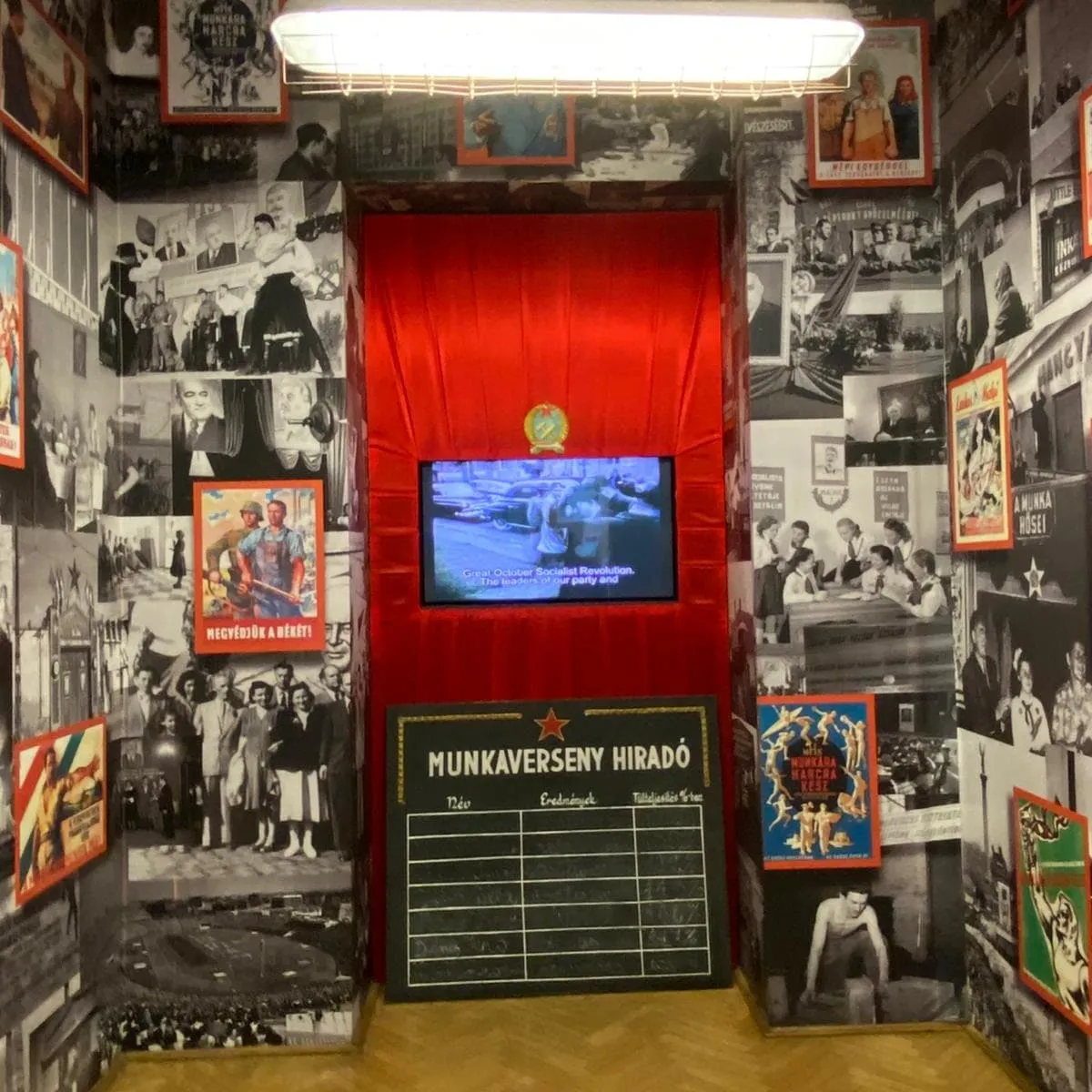
The displays span several floors and combine photographs, documents, artefacts, video accounts and multimedia installations. The material traces Hungary’s history through successive periods of rule, with substantial attention to the years after the Second World War and the communist period. Personal accounts and recorded survivor testimony add individual experiences to the historical displays.
Some installations use symbolic objects to convey aspects of daily life under the regime. One room, for example, uses blocks of lard to represent the forced transfer of agricultural produce. The museum also includes a gallery of photographs of people associated with the machinery of repression.
The basement cells
The basement contains reconstructed prison cells, including narrow solitary cells. These spaces show how the building was used to confine political prisoners. The displays are stark and may be disturbing; consider the subject matter when deciding whether to visit with children.
The museum’s account of this history has drawn criticism over its perspective. If you want to compare interpretations, make time to consult other material on Hungary’s 20th-century history alongside the exhibition.
Understanding the exhibits
Much of the exhibit text is in Hungarian, though English-language handouts are available, and video sections include English subtitles. An audio guide can help explain displays that are not translated on site. A guided tour is another option for visitors who want more context as they move through the rooms.
Set aside at least two hours so you can take in the material without rushing. The museum is closed on Mondays and can be busier at peak times, so a weekday visit outside those periods may feel more relaxed. Photography and filming are restricted inside, with exceptions for the lobby and the area around the tank.
FAQ
How long should I spend at the House of Terror Museum?
Allow at least two hours to explore the exhibits. The displays span several floors and include the basement cells.
Are the exhibits available in English?
Much of the exhibit text is in Hungarian. English-language handouts are available, video sections have English subtitles, and an audio guide can help you follow the displays.
Is the House of Terror Museum suitable for young children?
The subject matter and reconstructed prison cells can be disturbing. Consider whether the intense material is suitable for the children in your group.
Can I take photos inside the museum?
Photography and filming are restricted inside, except in the lobby and around the tank.
When is the museum closed?
The museum is closed on Mondays.