Akrotiri is a Bronze Age settlement in the south of Santorini, preserved beneath volcanic ash and now explored from wooden walkways under a protective roof. The route passes streets, multi-storey buildings, pottery and large storage jars, with information boards, maps and an audio guide to help explain the remains. The settlement’s layout and drainage system give a glimpse of a developed ancient port. Most of the frescoes and other finds are kept at the Museum of Prehistoric Thera in Fira, so pairing the two sites adds context.
A settlement preserved by volcanic ash
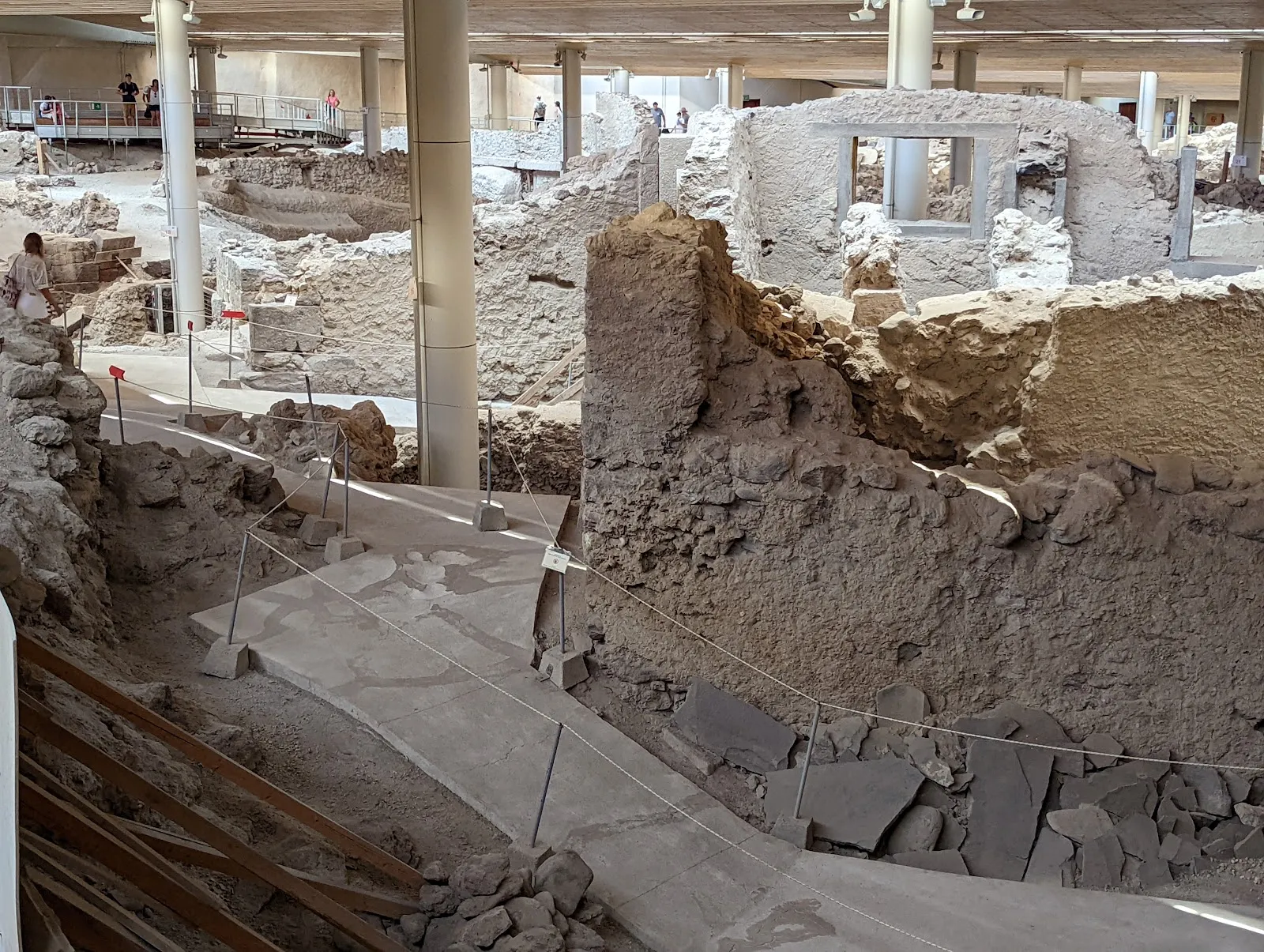
Akrotiri is a prehistoric settlement on Santorini, often linked with the Minoan world. A volcanic eruption buried the town in ash, preserving parts of its buildings, streets and household objects. Excavation began in 1967, and work at the site continues.
The settlement gives a view of an organized community with multi-storey buildings, paved streets and a drainage system. Pottery and large storage jars are among the objects found here. The site also contains evidence of advanced plumbing, including indoor toilets. The remains show aspects of daily life, as well as the town’s connections to trade and seafaring.
Following the walkways
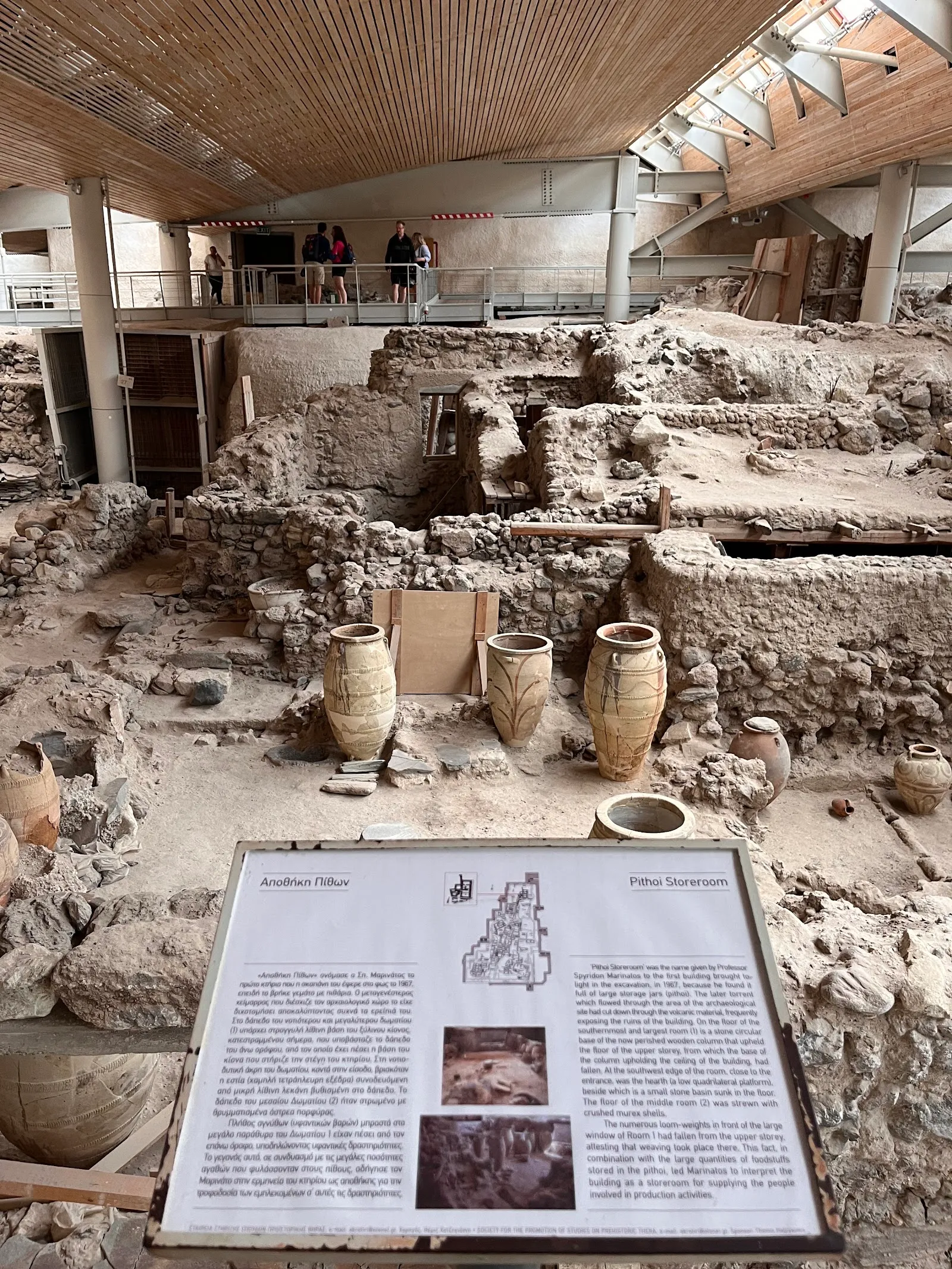
A roof covers the excavation area, and suspended wooden paths let you look down into the streets and buildings without walking among the ruins. From the walkways, you can see building walls and rooms at different levels. Some structures rose several storeys, and the scale of the excavated area helps explain why Akrotiri was more than a small settlement.
Information boards, photographs and maps provide orientation as you move through the site. An audio guide is also available. A guide can explain details that are easy to miss when looking at the remains independently, including how the streets and drainage system worked. Access to some sections may be restricted for safety, so the route can vary.
Frescoes and finds in Fira
Many of the frescoes and objects recovered from Akrotiri are not on display at the excavation site. The Museum of Prehistoric Thera in Fira holds frescoes and other finds from the settlement, making it a useful companion visit. Seeing the objects there helps fill in details that are not visible from the walkways.
The frescoes are known for their colour and detail, while pottery and everyday objects offer another view of life in the town. If you plan to visit both places, allow time to explore each rather than expecting the excavation alone to show the full range of discoveries.
Planning your visit
The covered setting keeps the archaeological remains sheltered from direct sun. Parking is available near the site, with both free and paid options listed. The site is wheelchair accessible, including its entrance and restrooms.
For a fuller explanation, choose an audio guide or arrange a guide at the entrance. If you are especially interested in the artwork and objects found here, add the Museum of Prehistoric Thera in Fira to your plans. Akrotiri is an archaeological site rather than a hands-on exhibit, so the visit is centered on looking at the ruins and understanding their layout.
FAQ
How long do you need at Akrotiri?
Allow about 1 to 1.5 hours to follow the walkways and explore the site.
Is Akrotiri covered?
Yes. A protective roof covers the excavation area, with wooden walkways above the remains.
Are the frescoes displayed at the site?
Most frescoes and other finds from Akrotiri are held at the Museum of Prehistoric Thera in Fira.
Is Akrotiri wheelchair accessible?
The site has a wheelchair-accessible entrance, seating, restroom and parking.