The Propylaea is the monumental entrance to the Acropolis of Athens, reached by a broad marble staircase on the western side of the plateau. Built in the fifth century BC under the architect Mnesikles, it was designed as a grand passage into the sacred complex. Pause among its columns to take in the scale of the gateway and look across Athens from the elevated approach. The route leads onward to the Parthenon and other Acropolis monuments, so the Propylaea is both an architectural stop and part of the approach to the wider site.
A monumental entrance to the Acropolis
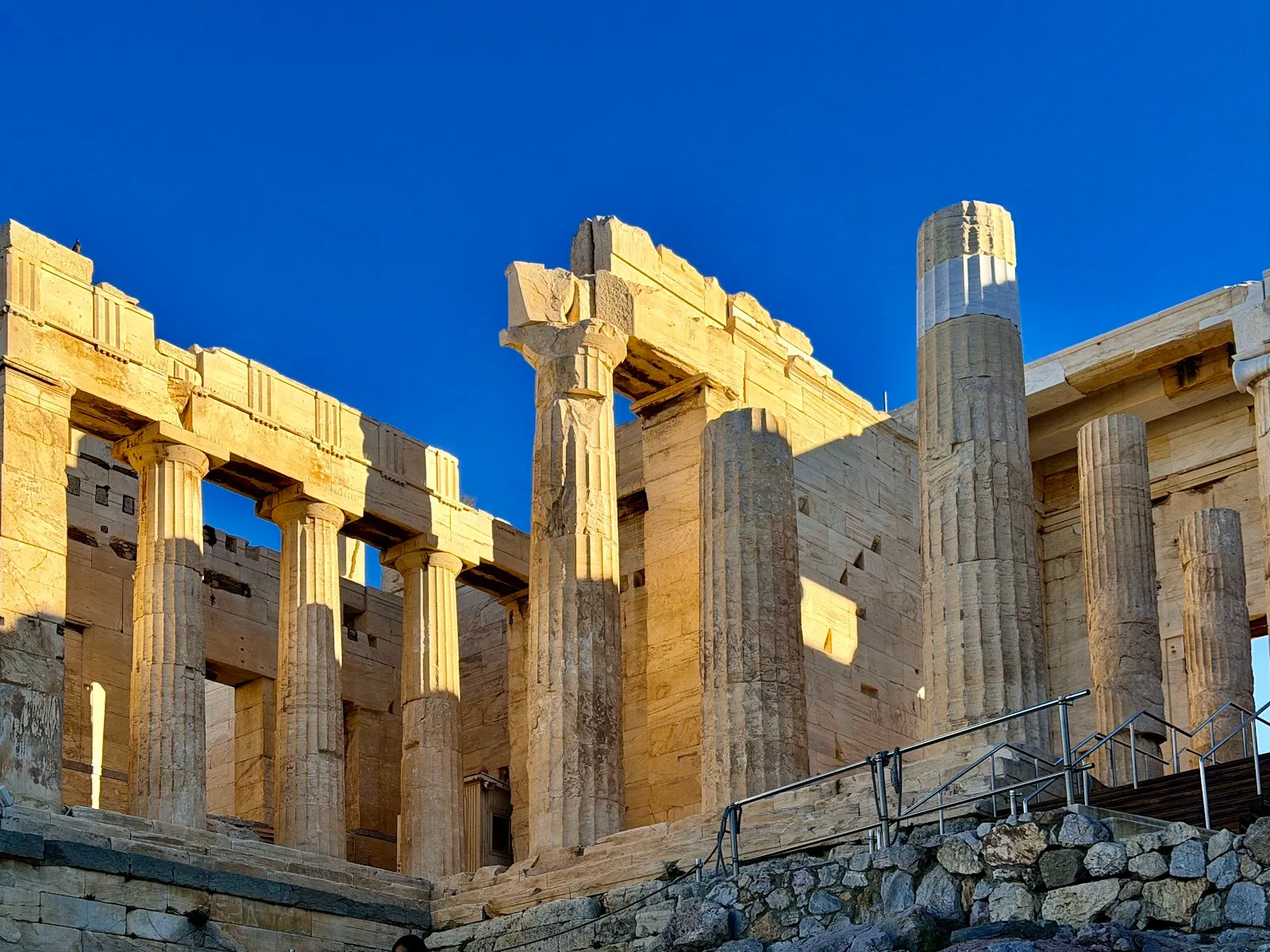
The Propylaea stands at the western entrance to the Acropolis of Athens. Its name comes from a Greek word for a gateway, and its purpose was to form a grand approach to the plateau and its temples. Visitors climbed a broad marble staircase and passed through the structure on the way to the sacred precinct.
The building was part of the major rebuilding programme associated with Pericles. Work began in 437 BC under the architect Mnesikles and stopped after the Peloponnesian War began in 431 BC. The project was left unfinished. Even in its incomplete state, the gateway’s scale and carefully arranged columns make a strong impression as you approach the Acropolis monuments beyond it.
Columns, wings and five entrances
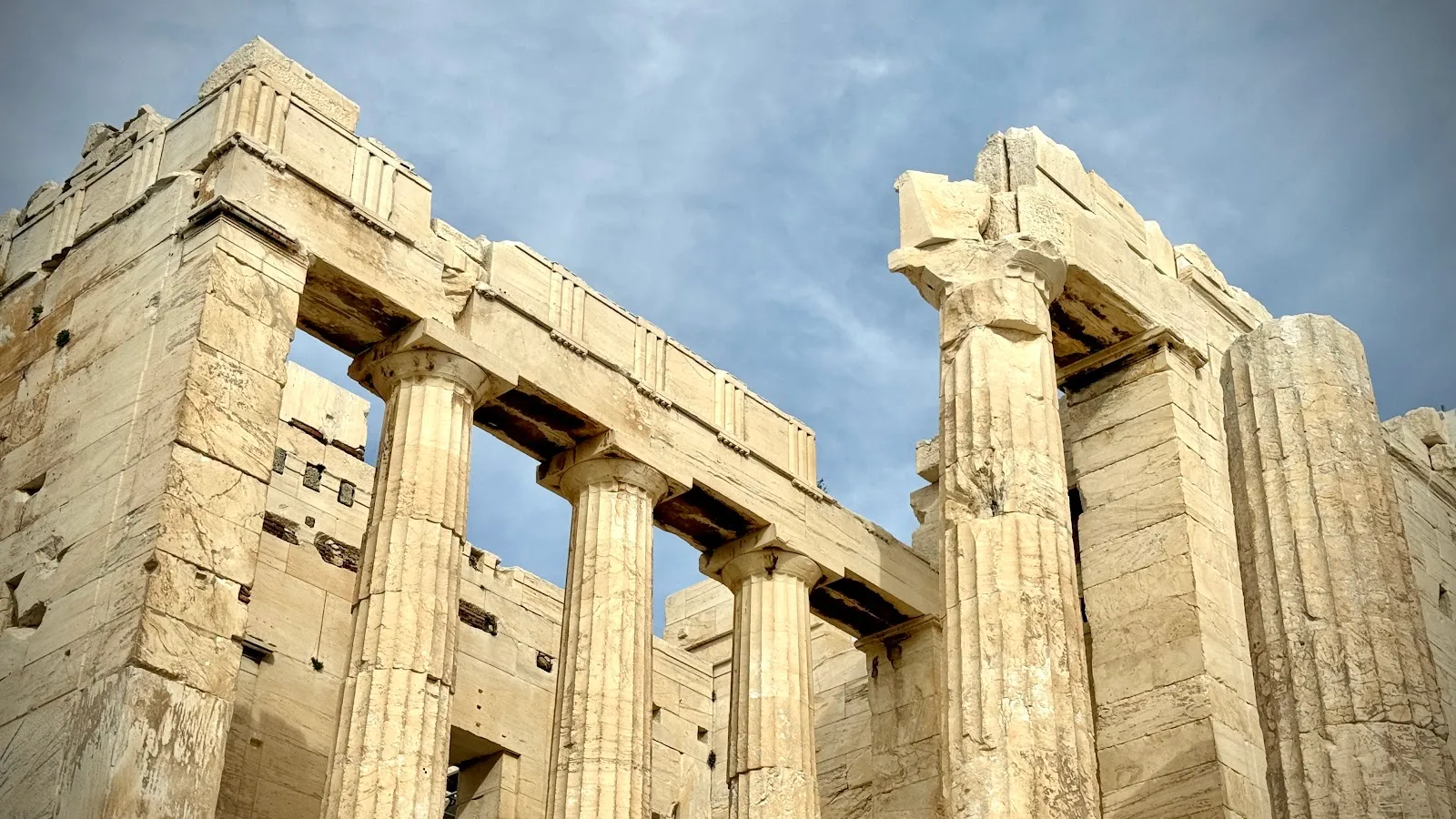
The Propylaea was built from white Pentelic marble. Its design brings together a central hall and two side wings, with a large staircase leading visitors toward the plateau. The gateway had five passages through it. The combination of a broad stair and columned entrance gave the route a ceremonial character while serving as the main way into the Acropolis.
From the steps, look back toward Athens and notice how the changing elevation frames different views. The columns are close enough to examine as you pass through, and the structure’s position makes the entrance part of the wider experience of approaching the Acropolis. Its relationship to the sacred site is clear: crossing the gateway meant leaving the everyday city behind and entering a precinct of temples and monuments.
Continuing across the plateau
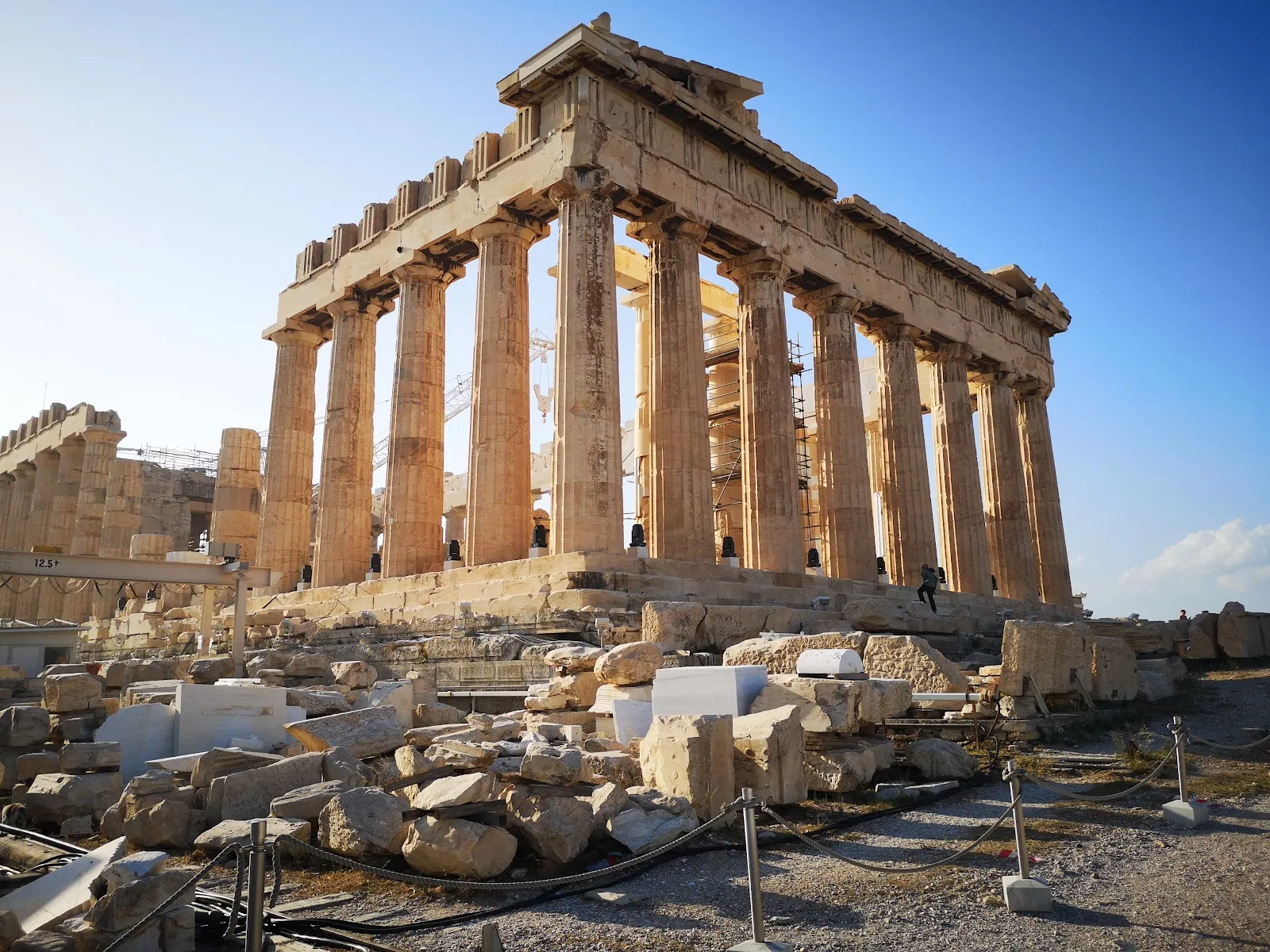
The Propylaea is one part of an Acropolis visit rather than a separate destination. Beyond the gateway are landmarks including the Parthenon, the Erechtheion and the Temple of Athena Nike. The transition through the entrance helps orient you before you explore those buildings and their setting above Athens.
Crowds can gather at the entrance, and the marble steps are worn underfoot. Give yourself time to move carefully, especially when the approach is busy. The route through the Acropolis does not use the same point for entry and exit, so expect some walking between higher and lower ground. From the elevated approach, pause for views over the city before continuing through the site.
FAQ
Where is the Propylaea?
It stands at the western entrance to the Acropolis of Athens, above the city.
When was the Propylaea built?
Construction began in 437 BC under the architect Mnesikles. Work stopped after the Peloponnesian War began in 431 BC, and the project was not completed.
How long should I allow for a visit?
About two hours is a reasonable guide for visiting the Acropolis, including the Propylaea and other monuments on the plateau.
Are the steps slippery?
The marble steps are worn and can be slippery. Take care as you climb.