The Philopappos Monument crowns Mouseion Hill, southwest of the Acropolis, and pairs an ancient funerary monument with broad views across Athens to the coast. Paths wind through pine and cypress trees, passing viewpoints and ancient remains, including the place traditionally identified as Socrates’ prison. The climb is manageable on the main routes, though some sections have steps or loose stones. Come for the carved marble and inscriptions, then take time to look back towards the Acropolis and across the city.
A monument for Philopappos
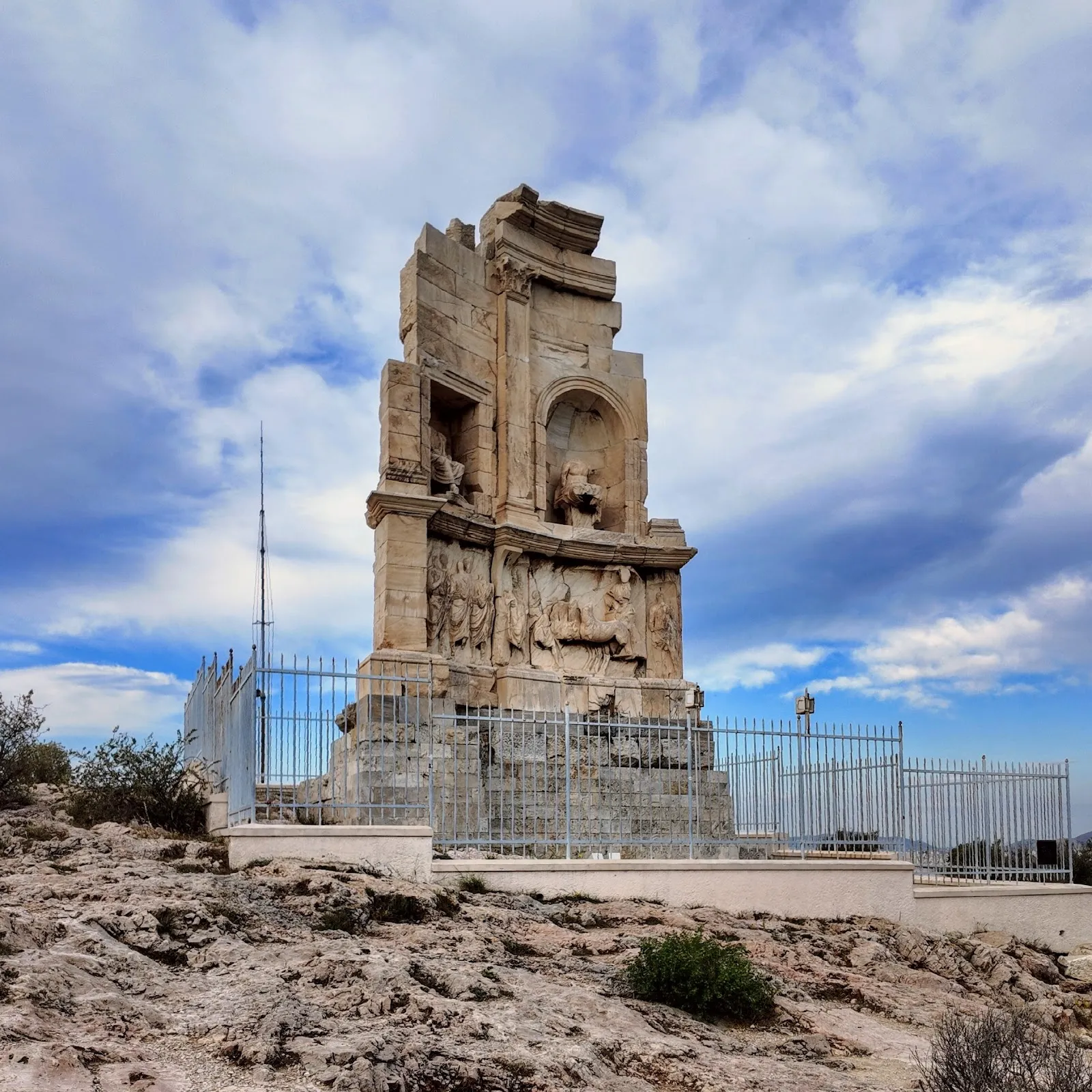
The monument is a funerary structure for Gaius Julius Antiochus Epiphanes Philopappos, a prince of the Kingdom of Commagene. After his death in 116 AD, his sister Julia Balbilla and the people of Athens built the tomb in his honour. Its position on Mouseion Hill, opposite the Acropolis and within the ancient city’s boundaries, reflects the standing Philopappos held in Athens.
The structure once had two storeys. Its marble façade carries carved figures and inscriptions, though much of the monument has been damaged. Take a closer look at what remains: the reliefs and lettering give the site interest beyond its hilltop setting. The hill was known in antiquity as the Hill of the Muses; it later took the name of the monument.
The monument is often described as dating to the second century AD. It sits at the summit of a hill that rises 147 metres above sea level, with the Acropolis nearby to the northeast.
Paths, ruins and viewpoints
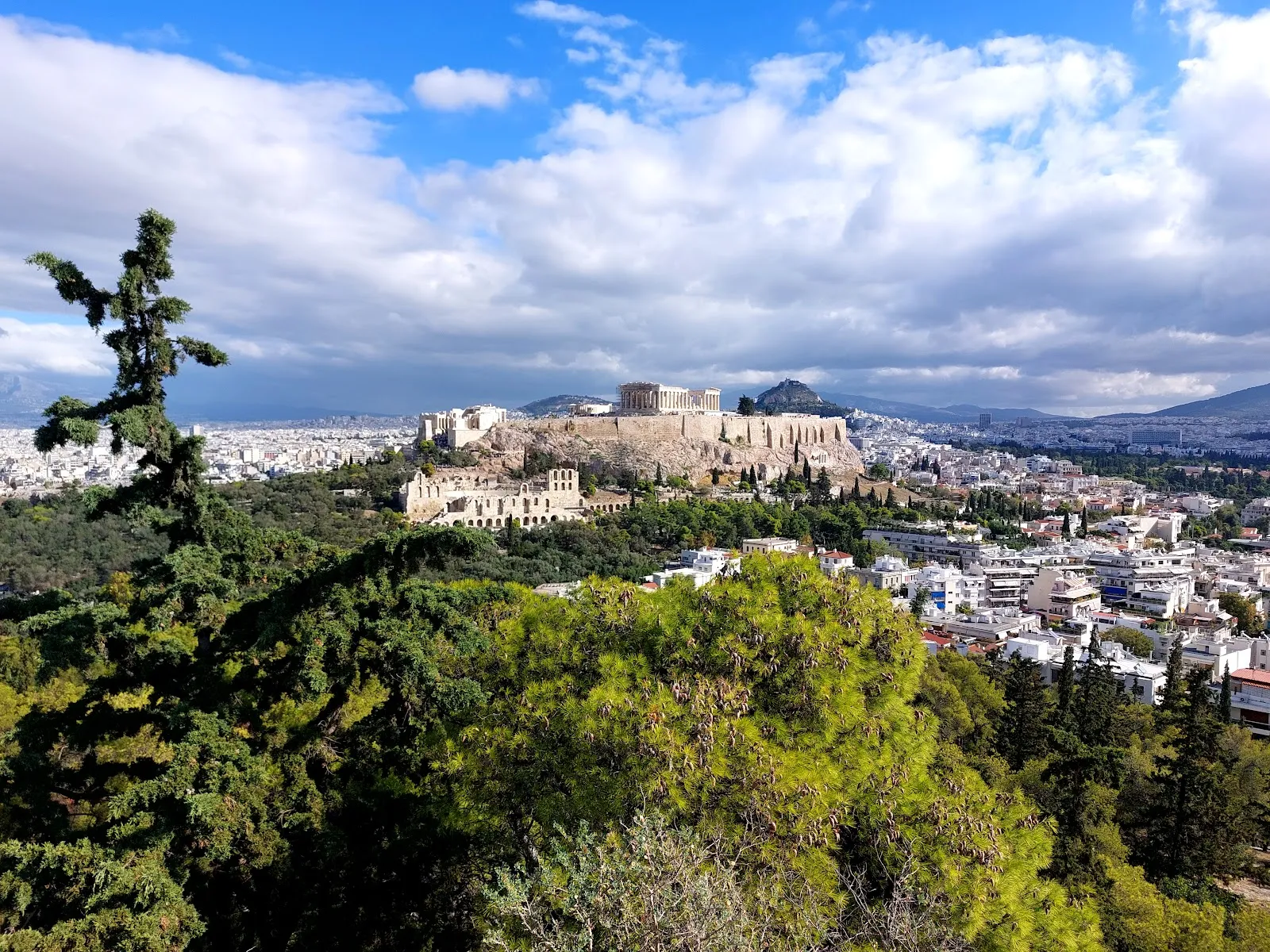
Several routes cross the hill, with paved stretches, steps and smaller, well-worn trails. The climb is not especially strenuous on the main approach, but it is uphill, and uneven ground calls for sensible footwear. A walk around the hilltop takes about an hour and a half, leaving time to pause at different outlooks.
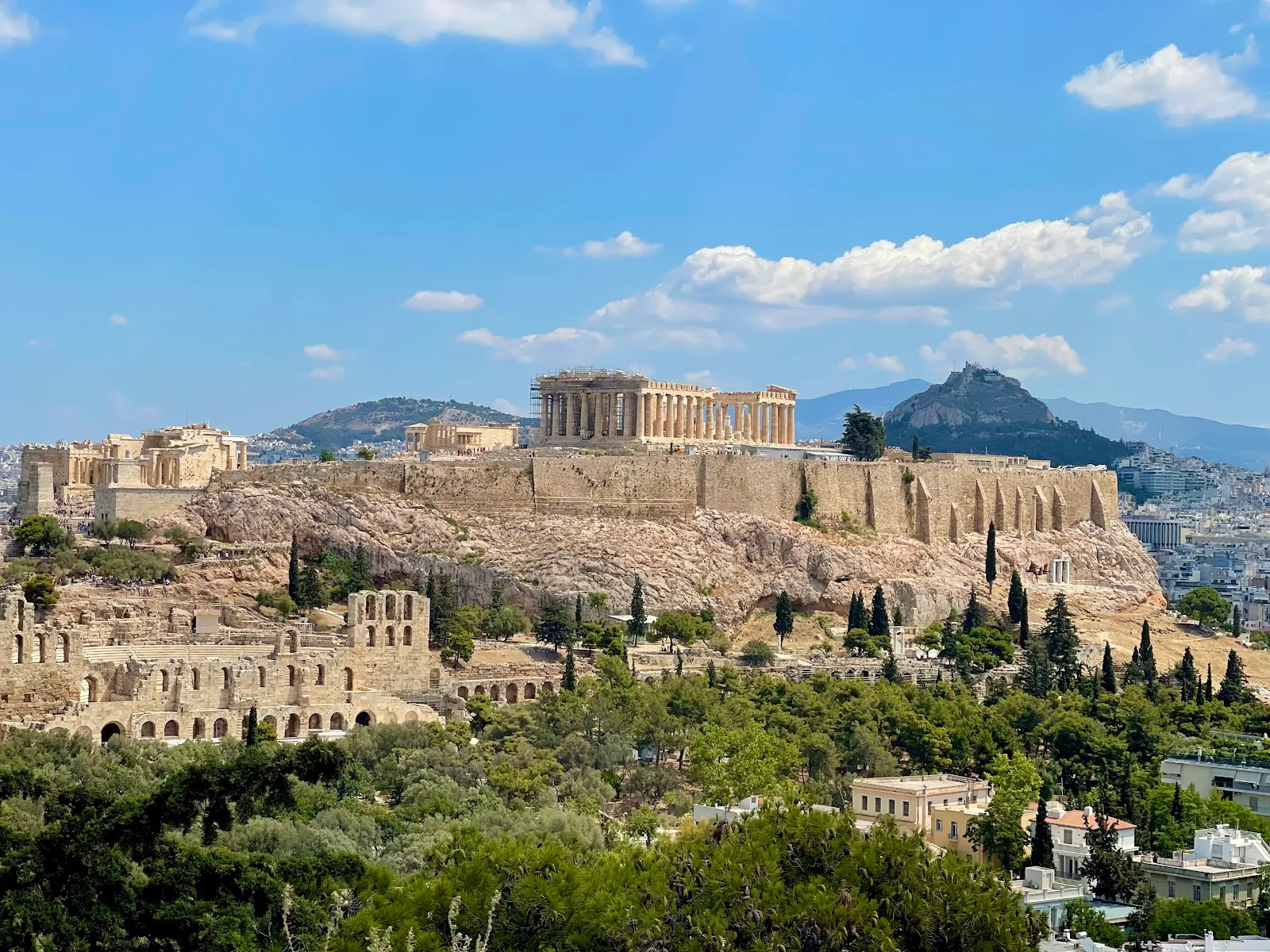
Along the way, look for the Seven Thrones Plateau and the place traditionally identified as Socrates’ prison. The paths pass through pine and cypress trees, with ancient remains scattered around the slopes. A main paved promenade leads towards the monument; signs point the way. The hill’s many viewpoints let you see the Acropolis from different angles, as well as the city and, in clear views, the coastline and Piraeus.
Choosing when to go
Morning and evening bring gentler light across the city. Around sunset, the view takes in the Acropolis, the rooftops and the sea beyond; after dark, the monument itself can be seen lit up. The hill is also a peaceful place to pause between visits to Athens’ busier archaeological sites.
A guided walk is an option if you want more context on the monument and surrounding remains. If you go independently, take water and leave time for the smaller paths as well as the summit. The area is not adequately lit in every spot at night, so take extra care on the way back and avoid assuming that every path will be easy to see after dark.
FAQ
How long do you need at Philopappos Hill?
Allow about 1.5 hours to walk around the hilltop and stop at viewpoints. You may want longer to explore the paths and monument at an unhurried pace.
What can you see from the Philopappos Monument?
The hill offers views of the Acropolis and Athens, with the coastline and Piraeus visible from the higher viewpoints.
Is the walk up Philopappos Hill difficult?
The main climb is manageable, but it is uphill and some paths have steps or loose stones. Bring water and wear footwear suited to uneven ground.
Is Philopappos Hill safe to visit at night?
Parts of the area are poorly lit after dark. Take care on the footpaths and uneven ground.