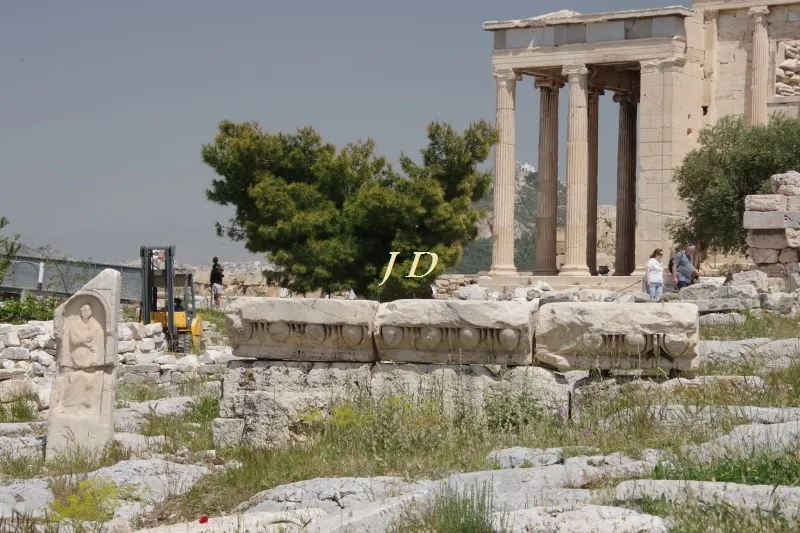
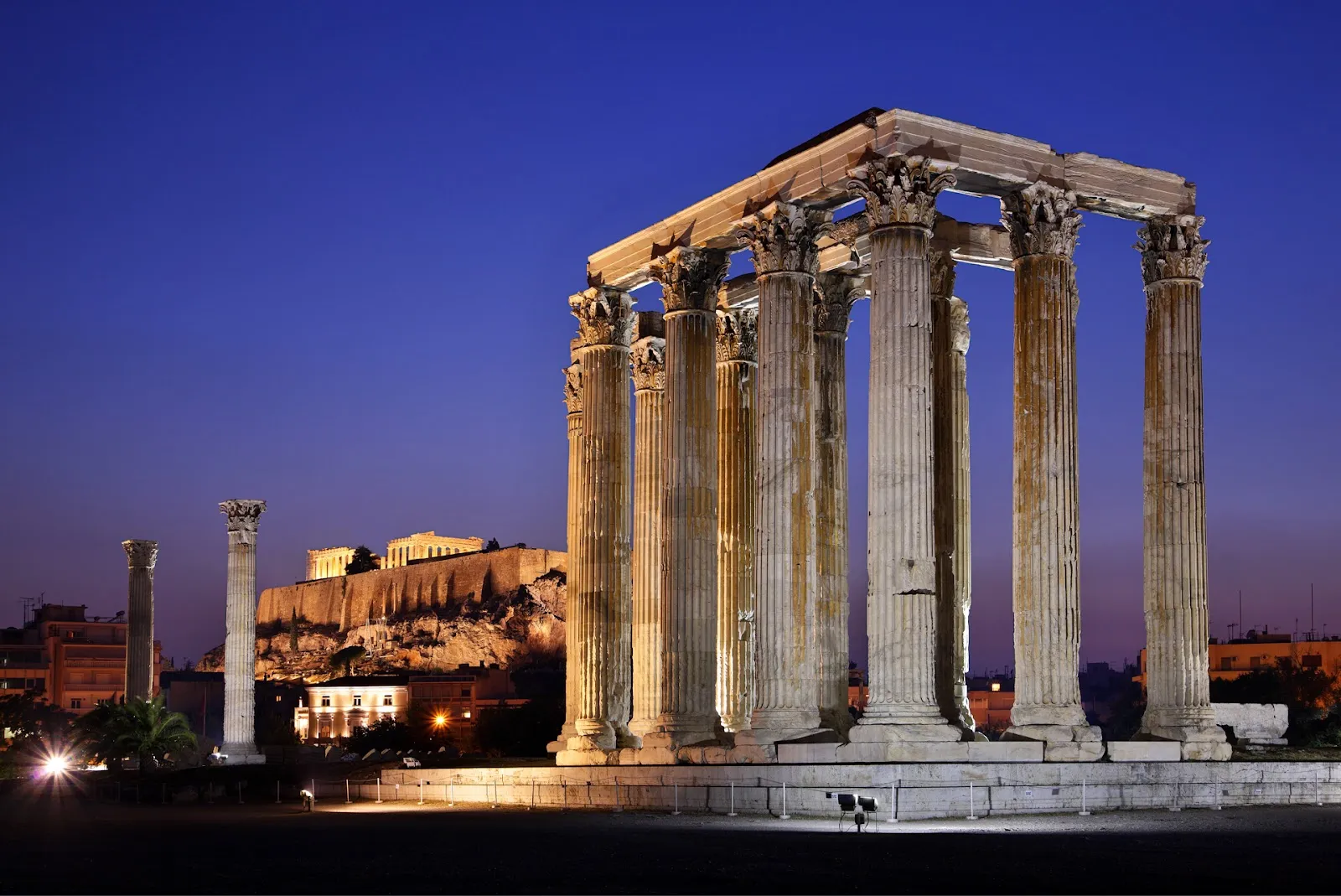
Near Monastiraki Square, Hadrian’s Library is the surviving remains of a large cultural complex built by the Roman emperor in AD 132. Walk among the columns and high walls to get a sense of its scale, then look for traces of the courtyard and later Christian buildings. The site is a compact stop on a walk through central Athens, with the Roman Agora and Ancient Agora nearby. Clear information boards help explain what the ruins once contained.
A Roman cultural complex in Athens
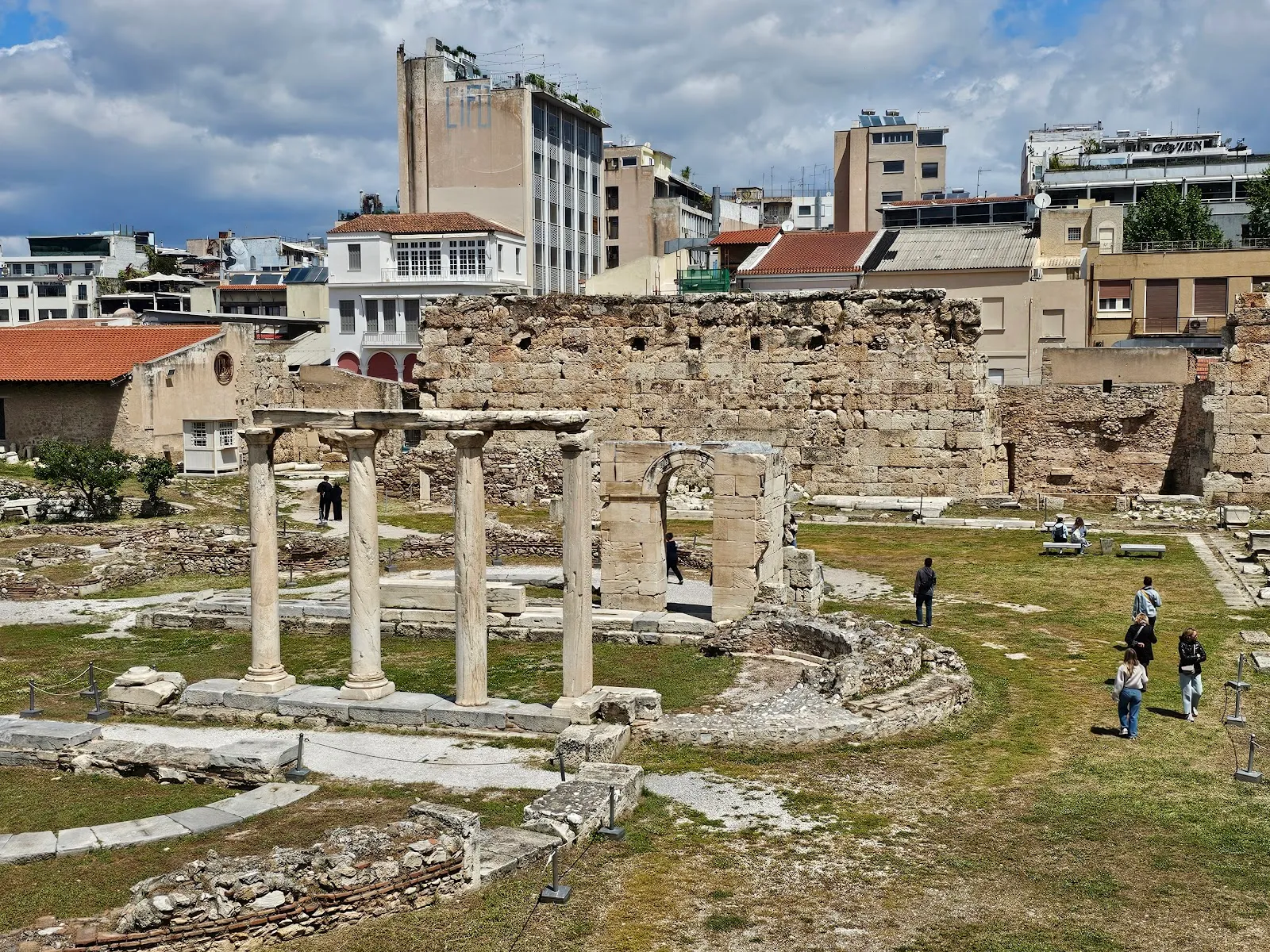
Emperor Hadrian built the complex in AD 132. It was much more than a room for storing books: the site included reading spaces and lecture halls, as well as areas for music and study. The library held thousands of scrolls, and the complex became a centre for learning in Roman Athens.
Its plan followed a Roman forum style, with a large courtyard at its centre. A pool stood in the courtyard, which was bordered by columns. The building’s scale and layout become easier to picture as you move around the surviving walls and columns, though much of the structure is now reduced to foundations.
What remains to see
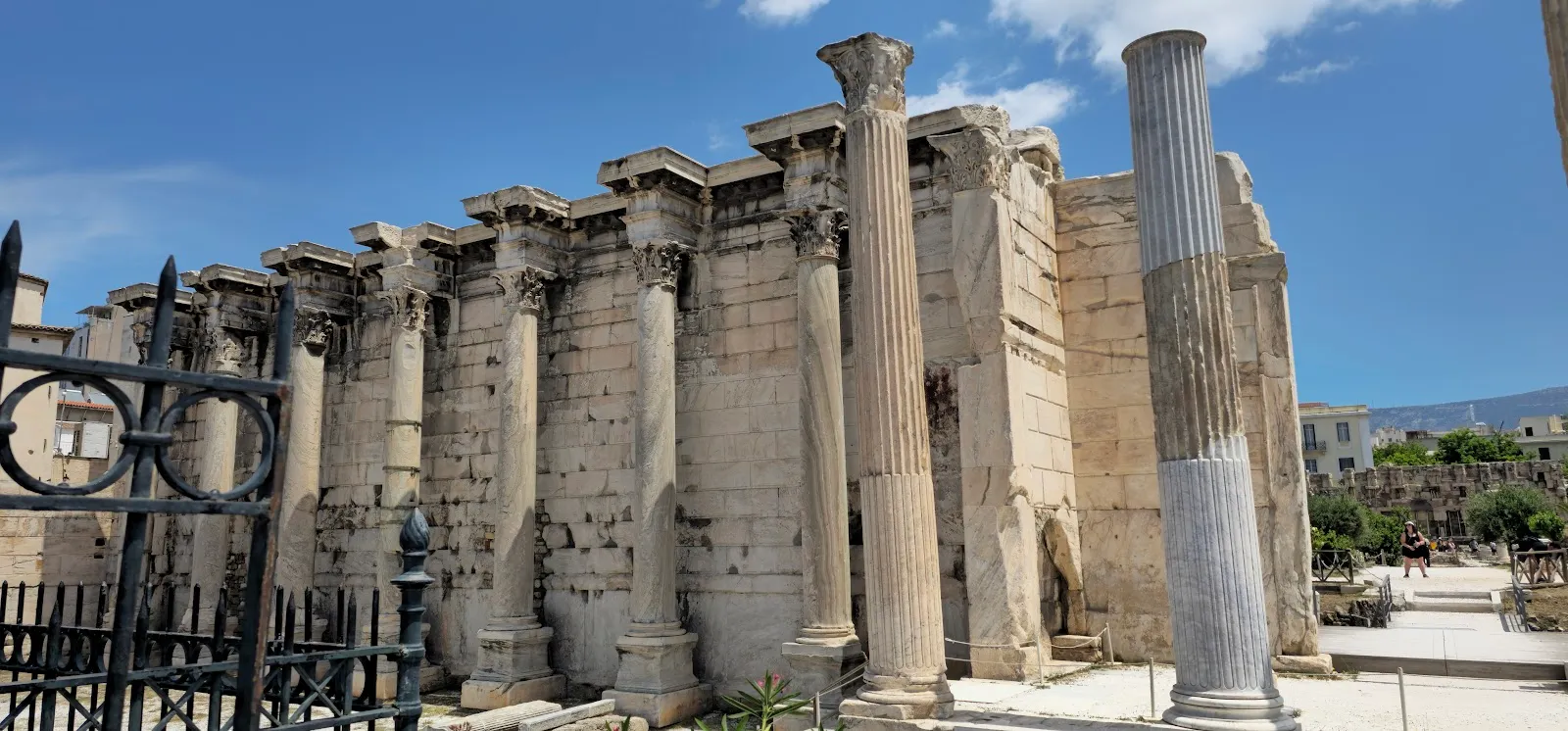
The surviving entrance and line of columns give the clearest impression of the complex’s monumental front. High sections of the surrounding walls also remain. Walk around the site to see how the foundations mark out the former rooms and courtyard; some parts require a little imagination because only low remains survive.
Information boards help explain the layout and history. An audio guide is another option, though the available material may not add much detail. Much of the site can be seen from the street, while entering brings you closer to the ruins and the displays within the grounds.
Later layers of the site
The remains also record how the area changed after the library’s Roman period. Christian buildings were constructed within the complex, including the ruins of the fifth-century Megali Panagia, identified as the oldest known church in Athens. These later remains sit alongside the Roman architecture, giving the site more than one historical layer.
Hadrian’s Library stands close to Monastiraki Square, with the Roman Agora and Ancient Agora within walking distance. It works well as a brief stop between those larger archaeological areas. The contrast between the ruins and the busy streets around Monastiraki is part of the visit: the site is close to cafés, shops and the square, yet its walls preserve a quieter view of ancient Athens.
FAQ
When was Hadrian’s Library built?
The Roman emperor Hadrian built the complex in AD 132.
What was Hadrian’s Library used for?
It held scrolls and included spaces for reading, lectures and music. The complex also had a courtyard with a pool.
Can you see Hadrian’s Library without entering?
Much of the site is visible from outside. Entering lets you get closer to the ruins and see the information boards.