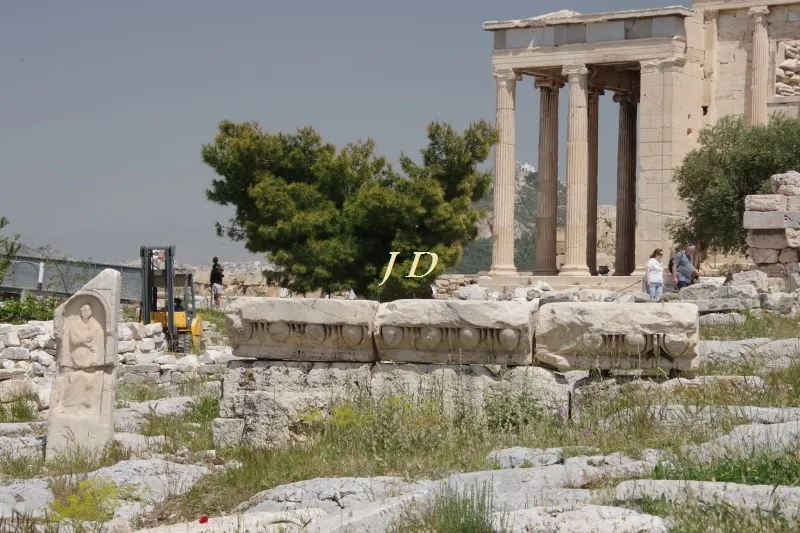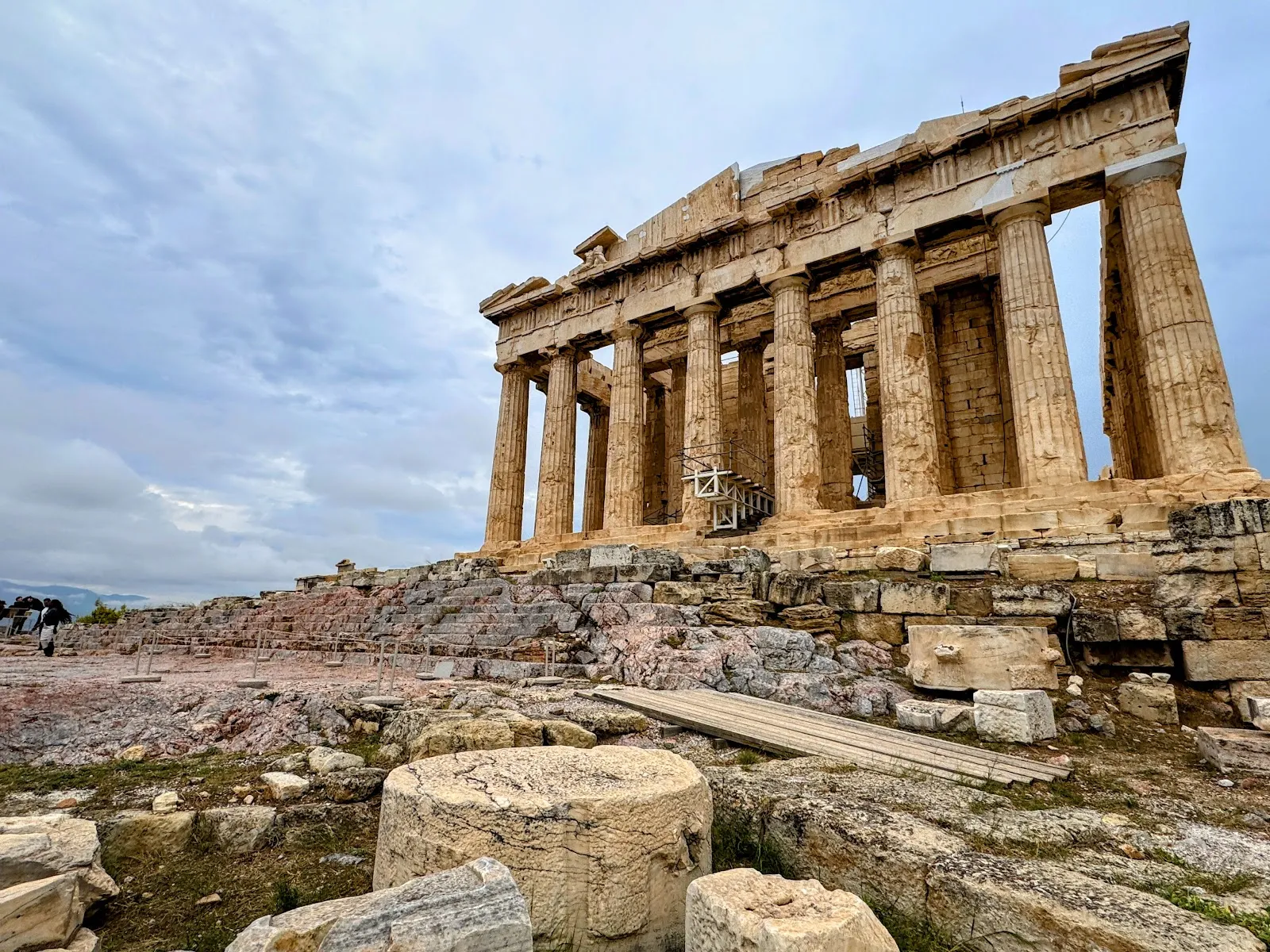
The Acropolis is the ancient citadel above central Athens, crowned by the Parthenon, a temple built in 438 BC and dedicated to the goddess Athena. The site is a UNESCO World Heritage Site and is the main reason many travelers come to Athens. Walk the paths past the Propylaia, the Erechtheion and the Temple of Athena Nike, then spend time at the top, where the view covers the city and the plain of Attica. Plan for marble underfoot, strong sun and crowds, and go early or late in the day.
Built under Pericles
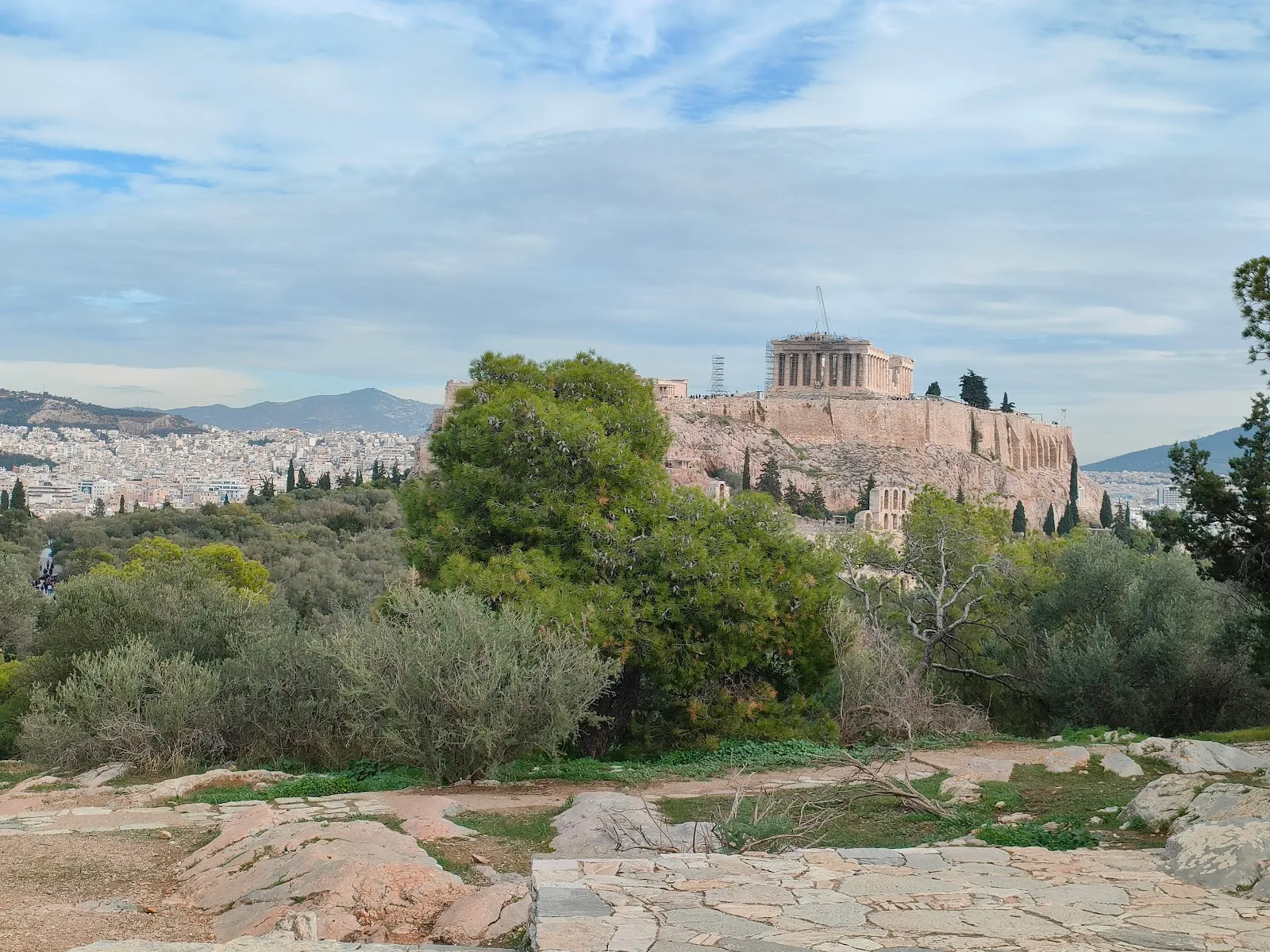
Construction of the sacred site began in the 5th century BC under Pericles. The hill was chosen because it rises high above the plain of Attica, where the city below could be watched from the top.
The word acropolis comes from the Greek akron, meaning high point, and polis, meaning city. The Parthenon was finished in 438 BC and dedicated to Athena. UNESCO regards the monuments on the hill as symbols of classical Greek civilization.
Legend gives the hill an older name, Cecropia, after Cecrops, the first king of Athens. He is described as half man, half snake.
What is on the hill
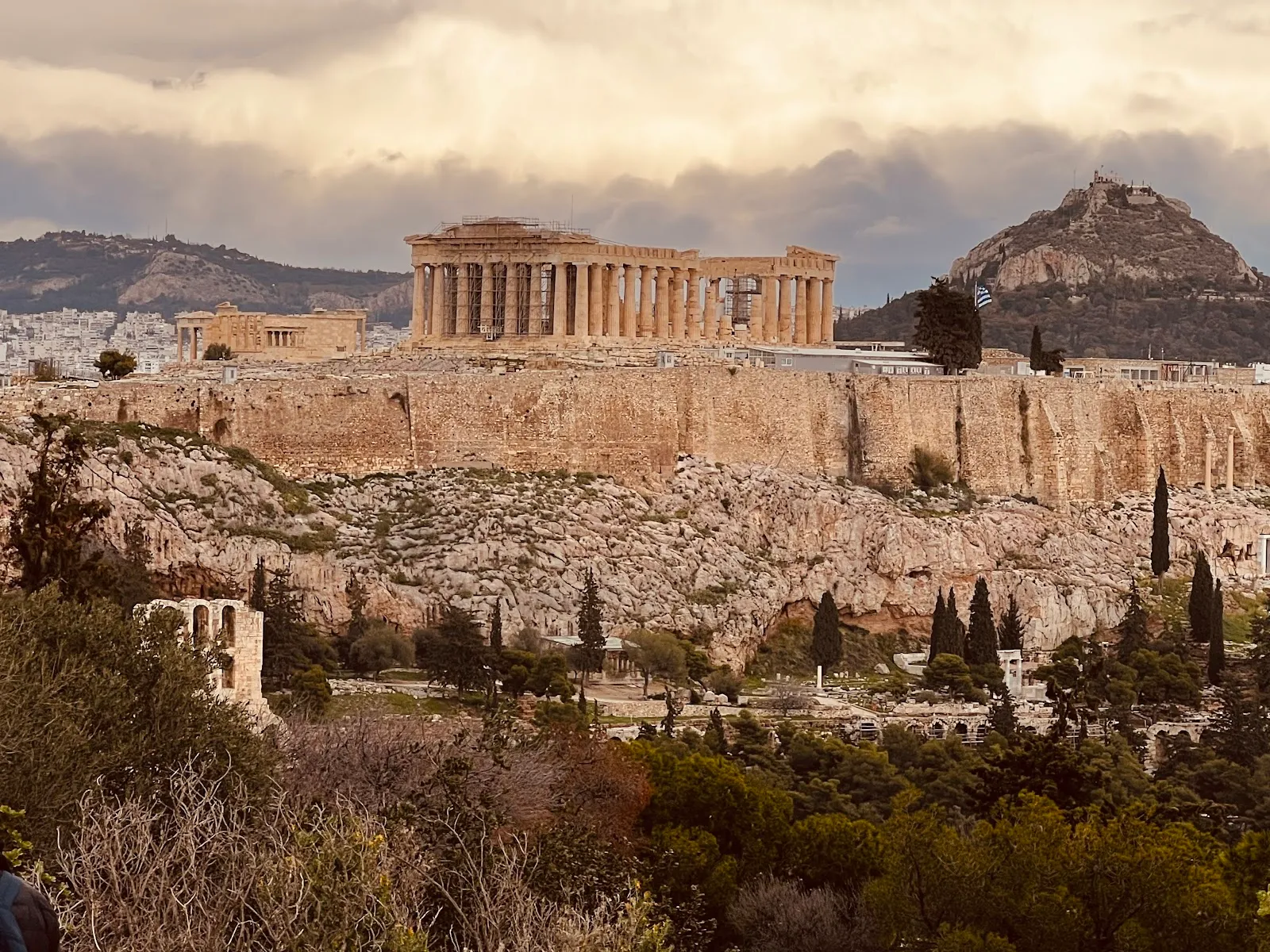
The Propylaia is the monumental entranceway, and the Erechtheion on the north side is worth a close look. The Erechtheion is known for its Caryatids, the columns carved in the form of women.
Restoration has been under way for decades, and the Parthenon is currently undergoing major renovation. Scaffolding can cover parts of it, so look at it from several angles.
The Acropolis Museum is at the foot of the hill, and its glass walls give views over the Parthenon. It is a useful stop for context before or after the climb.
How a visit works
Tickets are sold at the entrance gates and online. The main path climbs to the top, and the way down follows a different path with more to see.
A lift is available for visitors who cannot climb because of a disability.
Large bags and food are not allowed inside. Strollers are not allowed on the site, so leave them in the storage at the entrance.
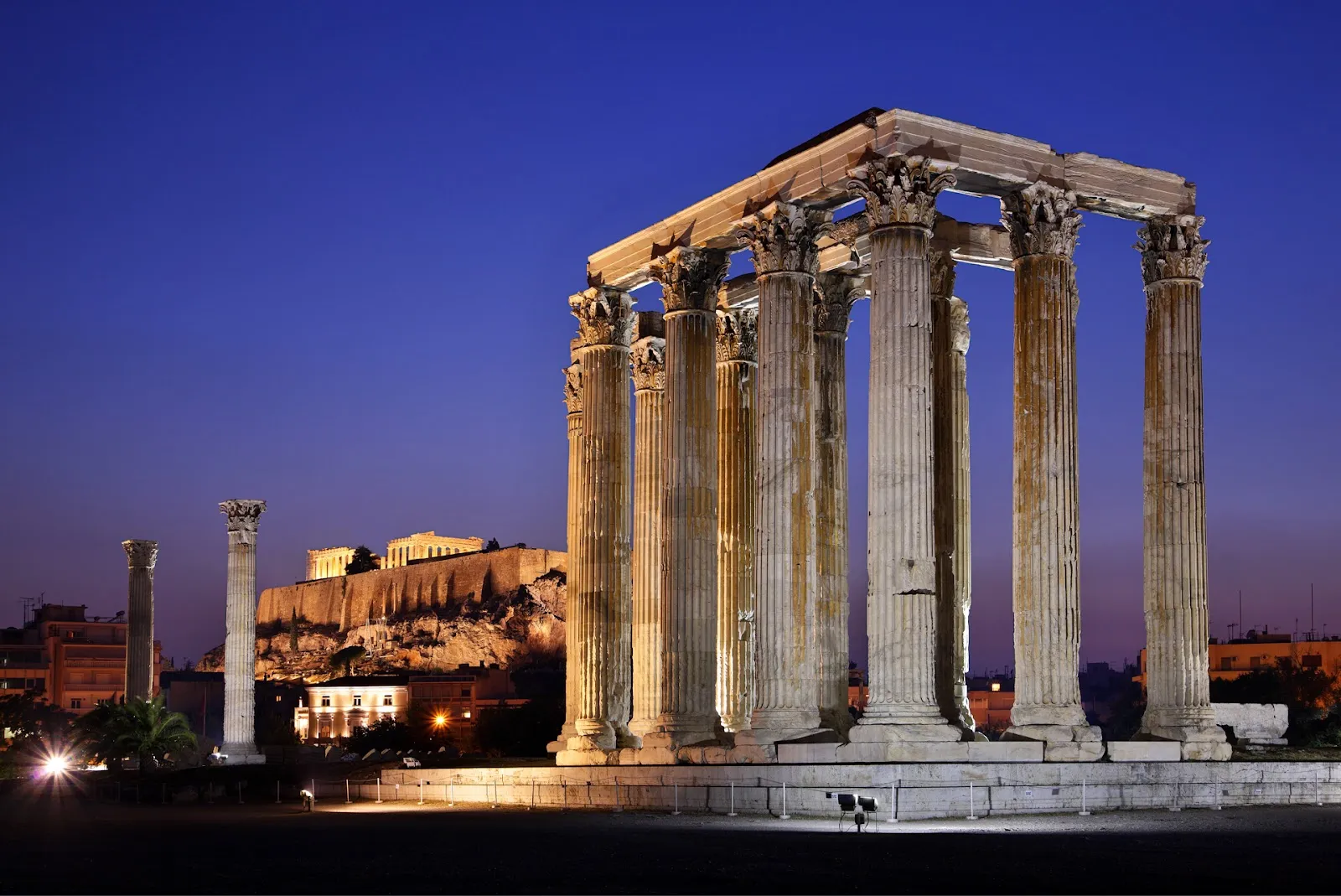
A combined ticket covers the Acropolis and several other archaeological sites in Athens, including the Ancient Agora, the Roman Agora, Kerameikos, Hadrian's Library and the Temple of Olympian Zeus.
Entry is free on some dates: 6 March, 18 April, 18 May, the last weekend of September, 28 October, and every first Sunday from 1 November to 31 March. Check the dates before you plan a visit.
Getting there
Akropoli metro station on Line 2 is within walking distance of the site, the Plaka and the Acropolis Museum. Syntagma is the most convenient metro stop for the centre of Athens.
You can also walk from Syntagma Square, crossing Monastiraki and Thissio. The pedestrian street Dionysiou Areopagitou runs outside the Acropolis Museum.
Nearby on the same walk
Filopappou Hill sits next to the Acropolis, with pine-lined paths and views over the city and the port of Piraeus.
The Areopagus, the rocky hill across from the entrance to the site, is a good place to rest. Walking all the way around the ancient hill also takes in the Theatre of Dionysus.
FAQ
Is there an entry fee?
Yes. Tickets can be bought online or at the gates. A combined ticket covers the Acropolis and several other archaeological sites in Athens, and entry is free on some dates.
How long do you need?
Plan about 1.5 to 2 hours for the site itself.
Is the Acropolis accessible for visitors with limited mobility?
Yes. A lift is available for visitors who cannot climb because of a disability.
How do I get there by metro?
Take Line 2 to Akropoli station, which is within walking distance of the site.
Is there shade at the top?
Very little. The top has almost no shade, so bring a hat, sunscreen and water.