
The Glyptothek is a museum of ancient Greek and Roman sculpture on Königsplatz in Munich’s Kunstareal. Its neoclassical building, designed by Leo von Klenze for King Ludwig I, gives the marble works room to be viewed in natural light. Look for the Barberini Faun, the Medusa Rondanini and sculptures from the Temple of Aphaia on Aegina. The collection is compact, so you can focus on individual works without rushing through a large museum. An audio guide adds context, and the courtyard café is a place to pause afterward.
A museum built for ancient sculpture
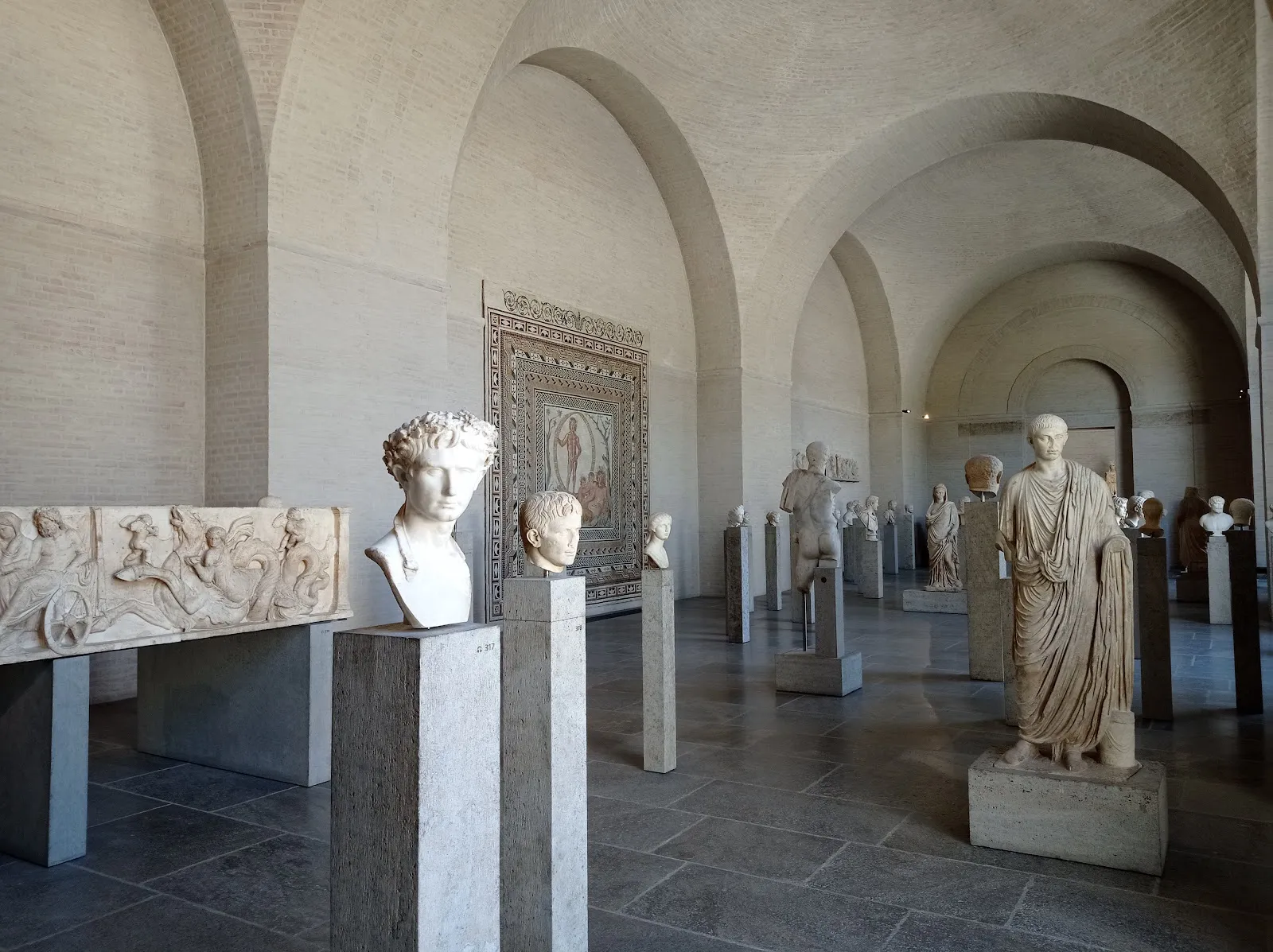
The Glyptothek stands on Königsplatz in Munich’s Kunstareal, the city’s museum quarter. Bavarian King Ludwig I commissioned the building to house his collection of Greek and Roman sculpture. Designed by Leo von Klenze in the neoclassical style, it was built between 1816 and 1830 and opened to the public in 1830. The museum is regarded as Munich’s oldest public museum.
The building formed part of Ludwig I’s vision of Munich as a “German Athens”. Its temple-inspired exterior faces Königsplatz, alongside the State Collections of Antiquities across the square. The Glyptothek is devoted to sculpture, making it a focused stop for visitors interested in ancient art.
Works to look for
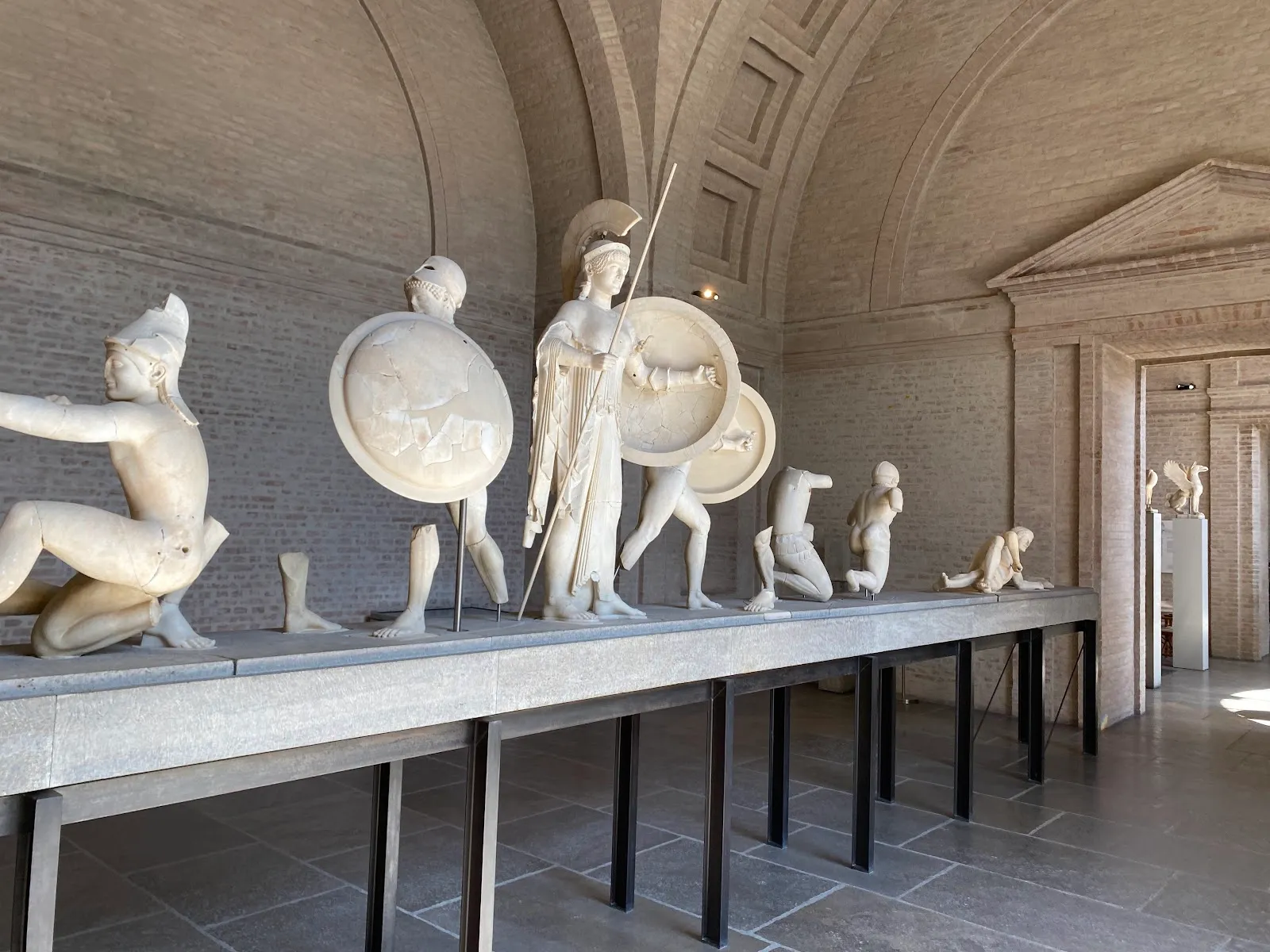
The collection spans ancient Greek and Roman sculpture, with works dating from around 700 BC to 550 AD. Many pieces came from Ludwig I’s collection. Among the best-known works are the Barberini Faun, a Hellenistic marble figure of a sleeping satyr, and the Medusa Rondanini.
Look, too, for the sculptures from the Temple of Aphaia on the Greek island of Aegina. The figures show changes in Greek sculpture, from the more rigid Archaic style toward the movement of the Early Classical period. Portrait busts of Roman emperors Nero and Augustus are other works identified among the collection’s highlights.
The galleries and courtyard
The sculptures stand on pedestals in naturally lit galleries, where you can view them from different angles. The display is arranged to give the works space, and information boards are available in English and German. An audio guide provides further commentary if you want more background as you move through the rooms.
The museum’s inner courtyard has a café with outdoor seating. It is a convenient place to sit after viewing the collection. The courtyard is also used for theatre performances in summer.
Planning a visit
The Glyptothek is at Königsplatz 3, in the Maxvorstadt district. It is a short walk from Königsplatz underground station, and the State Collections of Antiquities are directly across the square, making it possible to pair the museums in one visit.
The museum is closed on Mondays and stays open later on Thursdays than on other open days. Advance ticket booking is recommended. Sunday admission costs €1. Allow at least an hour for the collection; the audio guide and time spent studying the sculptures can extend the visit.
FAQ
How much does admission cost on Sunday?
Sunday admission costs €1.
How long should I allow for the Glyptothek?
Allow at least an hour to see the collection. Using the audio guide or spending longer with individual works can extend your visit.
What are the main works to see?
Look for the Barberini Faun, the Medusa Rondanini, the Aegina sculptures from the Temple of Aphaia, and portrait busts of Nero and Augustus.
Is the Glyptothek near other museums?
Yes. It is in Munich’s Kunstareal, and the State Collections of Antiquities are directly across Königsplatz.


